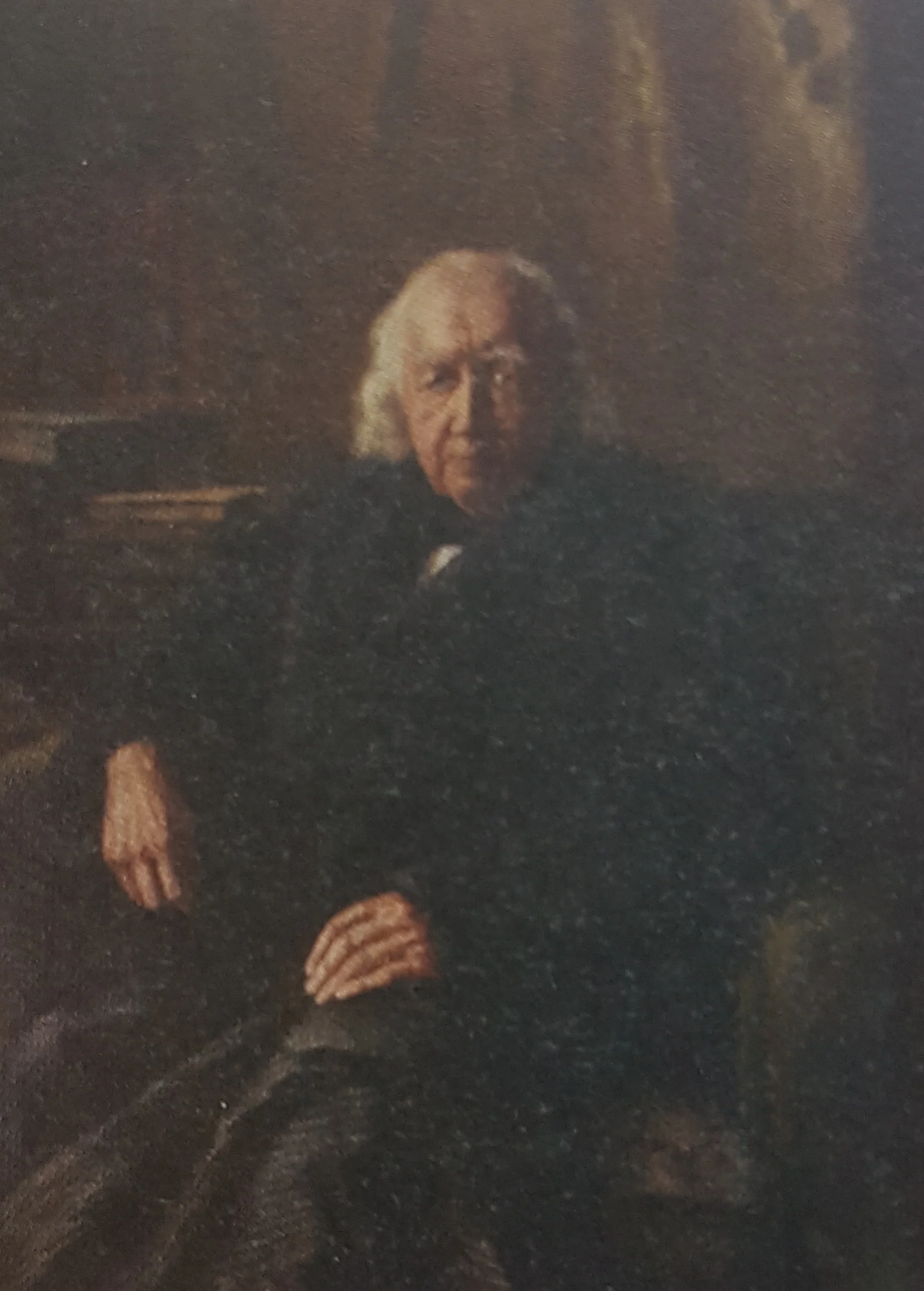
Karl Weierstraß
mathematician•university teacher•physicist
Also known as: Karl Theodor Wilhelm Weierstrass, Father of Modern Analysis
Birthday
October 31, 1815
Birth Sign
Sagittarius
Birthplace
Ostenfelde, Westphalia, Prussia
Age
Died at 81
About
Karl Theodor Wilhelm Weierstrass was a German mathematician who transformed the foundations of calculus and analysis. Often called the father of modern analysis, he brought rigorous logical proof to a field that had relied too heavily on intuition. His work established the epsilon-delta definition of limits and formalized the concept of continuity, creating a framework that remains essential to mathematics today.
Despite never earning a formal university degree, Weierstrass became one of the most influential figures in 19th-century science. He served as a professor at the University of Berlin for over forty years, where he mentored a generation of leading mathematicians including David Hilbert and Sofia Kovalevskaya. His legacy endures through countless theorems, functions, and concepts bearing his name.
Early Life & Background
Weierstrass was born into a middle-class family in Ostenfelde, a village near Paderborn in the Prussian province of Westphalia. His father, Karl Theodor Weierstrass, worked as a government official and police officer. From an early age, the young Karl displayed a strong aptitude for languages and poetry while struggling with mathematics, much to his father's disappointment. His father hoped he would pursue a career in law or commerce rather than pure science.
In 1834, Weierstrass enrolled at the University of Bonn to study law as instructed by his family. However, he found himself more drawn to mathematics and physics during his time there. He neglected his legal studies and frequently missed lectures, which led to disciplinary reprimands. He left the university in 1836 without graduating, returning home to take up a position as a secondary school teacher. This period marked the beginning of his self-directed education in advanced mathematics, where he began studying the works of Lagrange, Gauss, and Cauchy in secret while teaching subjects like gymnastics and botany.
Career Growth
Weierstrass began publishing significant mathematical papers while working as a high school teacher. In 1842, he released On the Theory of Elliptic Functions, a work that demonstrated his mastery of complex analysis and caught the attention of prominent mathematicians like Carl Gustav Jacob Jacobi. This publication validated his skills despite his lack of a formal degree.
In 1854, the University of Königsberg awarded him an honorary doctorate, a pivotal moment that recognized his academic standing. Two years later, he was appointed as a professor of mathematics at the University of Berlin, a position he held until his death. During his tenure in Berlin, he developed the epsilon-delta definition of limits and proved the Bolzano–Weierstrass theorem. He also introduced the Weierstrass function in the 1870s, a continuous but nowhere differentiable function that challenged existing notions of continuity. His rigorous approach eliminated ambiguities in calculus and laid the groundwork for modern mathematical analysis.
Career Timeline
Public Image & Style
Weierstrass is portrayed as a meticulous and rigorous mathematician who prioritized precision over intuition. His work emphasized the importance of logical proof and careful definition, setting a new standard for mathematical inquiry. He is remembered as a quiet, dedicated scholar who worked tirelessly to advance the field of analysis. His reputation as the father of modern analysis stems from his ability to transform calculus from a collection of intuitive arguments into a rigorous discipline.
Fame & Fandom
iFANN has not yet collected fame data for Karl Weierstrass. As a historical figure from the 19th century, he does not appear in current global fame rankings based on modern digital signals. His recognition exists within the academic community rather than the general public sphere.
The mathematician maintains a devoted following among historians of science and professional mathematicians. While there is no organized fandom with a specific name, scholars and students actively engage with his work through the annual Weierstrass Lectures. These events feature leading researchers discussing topics related to his theories. Academic conferences and the study of his original manuscripts serve as the primary forms of engagement with his legacy.
Interesting Facts and Legends
Weierstrass is famous for creating the Weierstrass function, a curve that is continuous everywhere but differentiable nowhere. When he first presented this discovery, many contemporaries described it as a "deplorable evil" because it contradicted the prevailing belief that all continuous functions must be differentiable at some points.
Despite becoming one of the greatest mathematicians of his era, Weierstrass never earned a formal university degree. He received only an honorary doctorate from the University of Königsberg in 1854 after years of independent study and teaching. He often worked late into the night, dedicating his life entirely to his research and avoiding public attention.
His influence extended far beyond his own publications. He mentored notable students such as David Hilbert, Hermann Minkowski, and Sofia Kovalevskaya, ensuring his methods shaped the trajectory of mathematics well into the 20th century.
Notable Quotes
“I have learned to think like a mathematician.”
“Mathematics is the queen of the sciences.”
Family & Personal Life
Weierstrass never married and had no children. He lived a relatively solitary life, focusing exclusively on his mathematical pursuits. He remained close to his family in Ostenfelde during his early years but spent most of his adult life in Berlin. His personal life was characterized by a deep commitment to his craft rather than romantic relationships or social engagements. He was known for his intense focus and dedication, often working late into the night.
Notable Connections
Relationships & Dating History
Karl Weierstrass never married and had no recorded romantic relationships. He remained single throughout his life, focusing exclusively on his mathematical pursuits. There are no credible sources indicating any public romantic partnerships, engagements, or marriages. His personal life was private, and he did not leave behind any documented accounts of romantic interests. He dedicated his entire existence to his work, living a solitary life centered around his research and teaching duties.
Death & Aftermath
Died
February 19, 1897 (aged 81)
Death Place
Berlin, Germany
Cause of Death
Old age and general frailty
The mathematical community in Berlin offered a quiet but profound tribute to Karl Weierstraß, recognizing the passing of the man who had fundamentally reshaped their discipline. Peers and former students honored him as the father of modern analysis, acknowledging his rigorous framework for calculus rather than staging public vigils or chart surges that defined celebrity culture. The funeral was a private affair held at the Alter St.-Matthäus-Kirchhof cemetery, attended by colleagues, family members, and those who had studied under his intense guidance. He passed away peacefully on February 19, 1897, in the city where he spent most of his academic career, having largely retired from active teaching while remaining intellectually engaged until the end.
His legacy was cemented immediately through the continued citation of his work and the enduring relevance of concepts like the Weierstrass function. Posthumous honors included the establishment of the Weierstrass Institute for Applied Analysis and Stochastics in Berlin and the naming of lecture series at universities across Germany. Modern research continues to apply his theories, including the rediscovery of his work on the P function for space mission planning in 2014.
Net Worth (Estate Value)
$0
iFANN Editorial Team estimate
Karl Weierstrass died in 1897 and does not possess a net worth in the traditional sense. As a historical figure, his financial legacy is measured through the enduring value of his intellectual contributions rather than personal assets. The institutions named after him, such as the Weierstrass Institute for Applied Analysis and Stochastics (WIAS) in Berlin, continue to manage research projects and collaborations that contribute to the global mathematical community.
Posthumous publications, lectures, and educational materials bearing his name generate revenue managed by academic institutions rather than an estate. The Weierstrass Lectures series, featuring leading mathematicians annually, serves as a lasting tribute to his work. While no specific monetary figure applies to his personal estate, his influence remains invaluable to the field of mathematics.
Awards Won (2)
Weierstrass received an honorary doctorate from the University of Königsberg in 1854. He was elected to the Prussian Academy of Sciences and other European academies. Posthumously, he has been honored with the Weierstrass Lectures series and numerous mathematical concepts bearing his name.
1854 · Academic Honor
University of Königsberg
1860 · Academic Society
Prussian Academy of Sciences
Known For
Foundations of Modern Analysis
1872 · Mathematician
The Weierstrass Function
1872 · Discoverer
Epsilon-Delta Definition
1860 · Developer
Keywords
Sources
Quick Facts
- Profession
- mathematician, university teacher, physicist
- Born
- October 31, 1815
- Birthplace
- Ostenfelde, Westphalia
- Died
- February 19, 1897
- Death Place
- Berlin
- Gender
- Male
- Birth Sign
- Sagittarius
Personal Details
- Full Name
- Karl Theodor Wilhelm Weierstrass
- Children
- Education
- Gymnasium in Paderborn; University of Bonn (attended but did not graduate)
Frequently Asked Questions
Who was Karl Weierstrass?
Did Karl Weierstrass ever marry?
What is the Weierstrass function?
How did Karl Weierstrass start his career?
Where did Karl Weierstrass die?
Similar People
Join the community
fans discussing