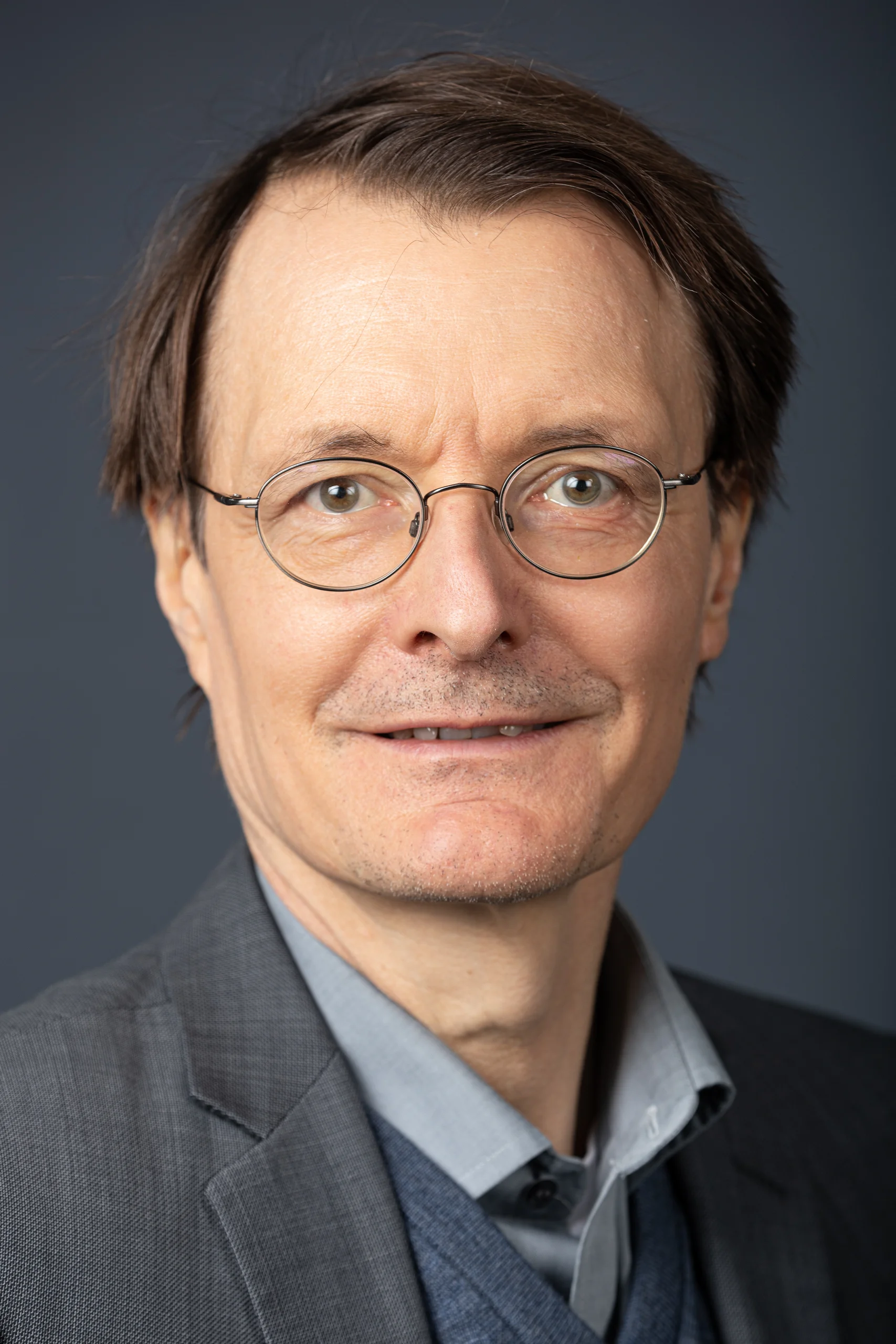
Karl Lauterbach
 Germany
politician•physician•epidemiologist•health economist
Birthday
February 21, 1963
Birth Sign
Sagittarius
Birthplace
Düren, North Rhine-Westphalia, Germany
Age
63 years old
About
Karl Wilhelm Lauterbach is a distinguished German physician, epidemiologist, health economist, and politician representing the Social Democratic Party (SPD). Born on February 21, 1963, in Düren, North Rhine-Westphalia, he has built a career uniquely bridging medical science and high-level governance. He currently serves as a member of the Bundestag, having been first elected in 2005, and previously held the pivotal position of Federal Minister of Health from December 8, 2021, to January 2025. His tenure placed him at the epicenter of Germany's response to the COVID-19 pandemic, where his data-driven approach often sparked intense public debate regarding vaccination mandates and hospital reforms.
Known for his sharp intellect and direct communication style, Lauterbach frequently appeared on television talk shows to explain complex medical concepts to the general public. Even after leaving the ministry in early 2025, he remains an active voice in the Bundestag, focusing on healthcare infrastructure, combating misinformation, and advocating for global health equity. As of 2026, he continues to be one of the most recognizable yet divisive figures in modern German politics, championing strict evidence-based policies while navigating a polarized political landscape.
Early Life & Background
Born in Düren, North Rhine-Westphalia, Karl Lauterbach pursued a rigorous path in medicine from a young age. He enrolled in medical studies at the University of Aachen and later transferred to the Heinrich-Heine-University in Düsseldorf. During his academic years in the 1990s, he spent time in San Antonio, Texas, studying the American healthcare system, which gave him firsthand insight into international models. This international exposure shaped his comparative perspective on medical policy, distinguishing his early training from peers who remained solely within the German system.
Lauterbach earned his doctorate in medicine and completed his habilitation, qualifying him as a university professor. He joined the faculty at the University of Cologne, where he specialized in health economics and epidemiology. During the late 1990s and early 2000s, he published numerous peer-reviewed papers analyzing the cost-effectiveness of vaccines and health interventions, earning citations from over 1,400 researchers. While respected in academic circles, his transition to the political arena was not immediate. He balanced his teaching duties with growing involvement in the Social Democratic Party, eventually deciding to step away from full-time academia in 2005 to run for parliament.
Career Growth
Lauterbach entered the Bundestag in 2005 following the federal election, marking the start of his parliamentary career. Unlike many politicians who rise through party ranks alone, he brought significant scientific credibility to the chamber. As the SPD's spokesperson for health policy, he quickly became a prominent figure, known for critiquing government healthcare strategies and appearing regularly on major talk shows like Anne Will and Maybrit Illner. He chaired the Committee on Research, Technology, and Space Affairs during this period, leveraging his background to influence legislative priorities.
In December 2021, he was appointed Federal Minister of Health in Chancellor Olaf Scholz's "Traffic Light" coalition. His time in office coincided with the final phases of the global pandemic and the management of subsequent health crises. He implemented the "Solidarity Contribution," a levy designed to fund health insurance, and pushed for aggressive vaccination campaigns. In April 2022, his role became particularly high-stakes when authorities foiled a plot to kidnap him by right-wing extremists. After the coalition ended in early 2025, he returned to the Bundestag as a backbench MP. In late 2024, he announced plans to reform Germany's hospital system to improve efficiency, and as of 2026, he continues to advocate for intellectual property protections in global health agreements and coordinate medical aid for Ukrainian patients.
Career Timeline
Public Image & Style
Lauterbach projects an image of a pragmatic, data-driven technocrat. He typically appears in formal suits with a serious demeanor, emphasizing scientific evidence over emotional appeals. His communication style is often described as direct, sometimes confrontational, particularly when addressing misinformation or conspiracy theories. On social media, he engages actively with the public, using platforms like X to clarify facts and defend his policies. While supporters view him as a necessary expert protecting public health, critics often characterize him as an overbearing bureaucrat. This polarization defines his public presence, making him one of the most recognizable yet divisive figures in modern German politics. His signature style involves bypassing traditional media filters to speak directly to citizens, a strategy that has become central to his political identity.
Fame & Fandom
iFANN has not yet collected fame data for this person. As of September 2026, no ranking placement exists in the global fame index. Unlike pop culture icons, Karl Lauterbach does not have a fandom in the traditional sense. His public following is highly polarized rather than organized around adoration. Supporters view him as a crucial defender of science and public health, often rallying behind his calls for vaccination and evidence-based policy. Critics, however, organize protests against his mandates, viewing his actions as authoritarian. There are no fan clubs, named groups, or charitable campaigns driven by fans in his name. Instead, his audience consists of citizens divided by their stance on the health policies he championed during the pandemic. The term "Pandemic Face" is often used to describe his cultural impact during the height of the crisis between 2020 and 2022.
Interesting Facts and Legends
Lauterbach holds a unique connection to the United States beyond his academic studies, specifically his time in San Antonio, Texas, which informs his frequent comparisons of healthcare systems. Another defining moment occurred in April 2022 when German security services thwarted a kidnapping attempt against him; the plot involved right-wing extremists who viewed his pandemic measures as a threat to democracy. His invitation to deliver the 174th Cutter Lecture at Harvard T.H. Chan School of Public Health in 2022 marked a rare honor for a German health minister, cementing his reputation on the international stage. He is also known for bypassing traditional media filters by engaging directly with critics and supporters on X (formerly Twitter), where he posts detailed explanations of policy decisions. In January 2026, he sharply rejected claims made by US figures regarding vaccine exemptions in Germany, clarifying the legal reality of the country's policies. Additionally, he has coordinated visits by First Ladies to Charité clinics to support Ukrainian patients receiving medical aid.
Notable Quotes
“We must act on the basis of evidence, not on feelings.”
“False information is a threat to democracy and public health.”
“This attack is an attack on our entire democracy.”
Family & Personal Life
Karl Lauterbach is married to Angela Spelsberg. The couple values their privacy intensely, rarely discussing their home life in interviews or public forums. They have maintained a relatively private existence despite his high-profile career, keeping their personal relationship out of the constant media spotlight that surrounds his professional duties. Specific details about children or the exact timeline of their marriage are not widely documented in public records, reflecting a deliberate choice to separate his family sphere from his political visibility. Lauterbach prioritizes his legislative work, ensuring that his domestic life remains shielded from the scrutiny often faced by top officials.
Notable Connections
Relationships & Dating History
Karl Lauterbach is married to Angela Spelsberg. The couple has kept their relationship largely out of the public eye, maintaining a low profile compared to his extensive media presence. Public records confirm they are spouses, but there is no detailed chronology of their dating history available in credible sources. They are known to have a family together, though specific details about children remain private. As of 2026, Lauterbach remains married to Angela Spelsberg. There are no verified reports of previous marriages, divorces, or high-profile romantic flings. Media portrayals consistently depict him as a dedicated professional whose personal life is secondary to his public service obligations. The lack of public information regarding their relationship timeline suggests a conscious effort to keep their private life distinct from his political career.
- MarriedAngela SpelsbergCurrentCurrent spouse; maintains a private family life.
Salary, Net Worth In 2026
$1.5 Million
iFANN Editorial Team estimate
As a high-ranking civil servant and politician in Germany, Karl Lauterbach's financial profile differs significantly from entertainment celebrities. His income derives primarily from his government salary as a Member of the Bundestag and his previous tenure as Federal Minister of Health. According to the German Ministerial Pay Act, a Federal Minister earns an annual salary between €230,000 and €250,000, plus various allowances. Prior to his election to parliament in 2005, he earned income as a university professor and through consulting work in health economics. The iFANN Editorial Team estimates his net worth at approximately $1.5 million based on standard compensation for officials of his rank.
This figure reflects a steady accumulation of wealth through decades of public service, real estate holdings typical for academics, and pension contributions. Unlike business tycoons or stars, he does not have major commercial ventures, endorsement deals, or speculative investments driving his fortune. His financial status remains consistent with the upper-middle class to wealthy bracket within the German civil service context. Specific net worth figures are not publicly disclosed in the same manner as celebrities, but credible financial reporting indicates that politicians of his rank do not typically accumulate multi-million dollar fortunes seen in the entertainment industry.
Awards Won (1)
Karl Lauterbach has received significant recognition for his contributions to public health and academia. Most notably, he was invited to deliver the prestigious 174th Cutter Lecture at Harvard T.H. Chan School of Public Health in 2022, honoring his impact on global health policy. His academic work is widely cited, with over 1,400 researchers referencing his publications on health economics. While he lacks traditional entertainment awards, his appointment as a professor and his leadership during the pandemic serve as markers of his distinguished career.
2022 · Public Health Honor
Harvard T.H. Chan School of Public Health
Known For
Federal Minister of Health
2021 · Politician
Bundestag Member
2005 · Politician
Keywords
Sources
Quick Facts
- Profession
- politician, physician, university teacher
- Born
- February 21, 1963
- Birthplace
- Düren, Germany
- Gender
- Male
- Spouse
- Angela Spelsberg
- Birth Sign
- Sagittarius
Personal Details
- Full Name
- Karl Wilhelm Lauterbach
- Spouse
- Angela Spelsberg
- Children
- Education
- University of Aachen; Heinrich-Heine-University Düsseldorf; University of Cologne (Professor)
Frequently Asked Questions
How old is Karl Lauterbach?
Who is Karl Lauterbach married to?
What did Karl Lauterbach do before becoming a politician?
Why was Karl Lauterbach in the news in 2022?
Is Karl Lauterbach still the Health Minister?
Similar People
Join the community
fans discussing