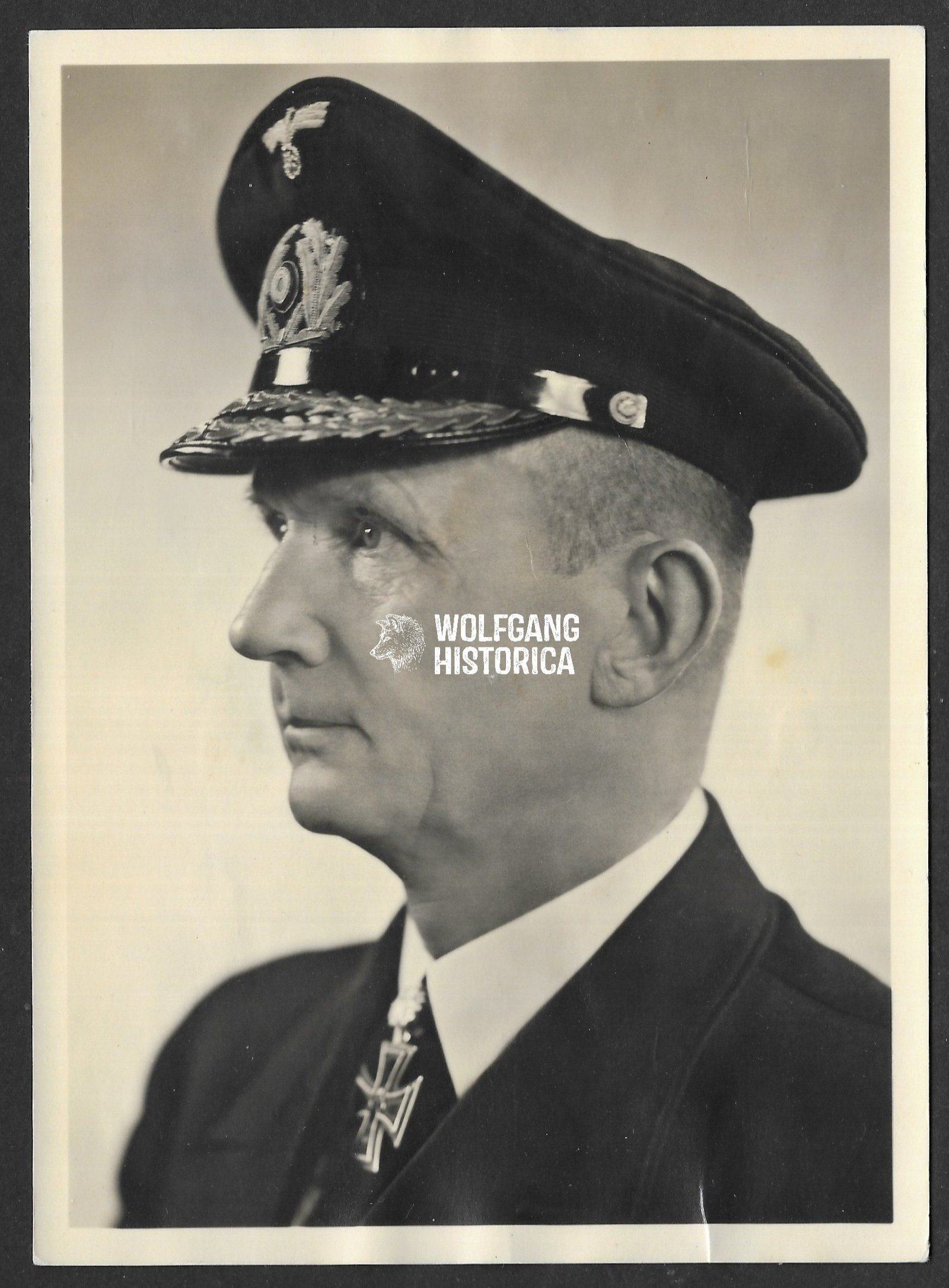
Karl Dönitz
 Germany
politician•autobiographer•submariner
Also known as: Großadmiral Dönitz, Grand Admiral Donitz, Karl Doenitz
Birthday
September 16, 1891
Birth Sign
Virgo
Birthplace
Grünau, Berlin, Germany
Age
Died at 89
Height
5 ft 10 in (1.78 m)
About
Karl Dönitz stands as a monumental yet controversial figure in naval history, renowned for revolutionizing submarine warfare and briefly holding the highest office in Nazi Germany. Born on September 16, 1891, in Grünau, he rose from a mechanical engineer's son to become the Grand Admiral of the Kriegsmarine. His legacy is defined by the "wolfpack" (*Rudeltaktik*) strategy, which coordinated U-boats to devastate Allied shipping lanes during the Battle of the Atlantic. This tactical innovation allowed German submarines to sink thousands of tons of Allied cargo in the early years of World War II, earning him the Knight's Cross of the Iron Cross with Oak Leaves in 1940. In January 1943, he succeeded Erich Raeder as Commander-in-Chief of the entire German Navy, a position that placed him at the apex of military command.
Following Adolf Hitler's suicide on April 30, 1945, Dönitz was named his successor in accordance with Hitler's political testament. He established the Flensburg Government, serving as Reich President for 23 days while attempting to negotiate a separate peace with Western Allies before authorizing the unconditional surrender of all German forces on May 7, 1945. His career culminated in a conviction at the Nuremberg Trials for war crimes related to unrestricted submarine warfare, resulting in a ten-year prison sentence. Despite this, he remains a subject of intense historical study regarding naval strategy, leadership under pressure, and the moral complexities of serving a criminal regime.
Early Life & Background
Karl Dönitz entered the world on September 16, 1891, in Grünau, a district that would later become part of Berlin. His father, Friedrich Dönitz, worked as a mechanical engineer, instilling in young Karl an appreciation for technical precision and practical skills. From an early age, Karl displayed a profound fascination with the sea, spending his formative years exploring maritime interests long before committing to a formal naval career. After completing his secondary education, he pursued his passion by joining the Imperial German Navy in 1910 at the age of 19. During World War I, he initially served on various surface ships, gaining foundational experience in naval operations.
His destiny shifted dramatically in 1916 when he transferred to submarine service. Commanding the U-boat UB-68, Dönitz quickly demonstrated exceptional tactical acumen, earning the Iron Cross, First Class, for his bravery and skill. This period of intense combat exposure fundamentally shaped his understanding of underwater warfare and laid the intellectual groundwork for future innovations. Following Germany's defeat in 1918, he was held as a prisoner of war by British forces until 1920, a time that allowed him to reflect deeply on naval strategy and observe Allied anti-submarine tactics firsthand. Upon returning to Germany, Dönitz joined the Reichswehr and later the newly formed Kriegsmarine. He dedicated himself to refining the concept of coordinated submarine attacks, a doctrine that would eventually bear his name. Throughout the 1930s, he held various command roles while secretly rebuilding the German submarine force in violation of the Treaty of Versailles. By the late 1930s, his reputation as a strategic thinker had grown significantly, setting the stage for his pivotal role at the outbreak of World War II.
Career Growth
At the outbreak of World War II in September 1939, Dönitz was appointed Commander of the U-boat force, a position that placed him at the center of the Battle of the Atlantic. His "wolfpack" tactics proved devastatingly effective in the early years of the conflict, allowing German submarines to sink thousands of tons of Allied shipping. In 1940, he received the Knight's Cross of the Iron Cross with Oak Leaves for these successes. By January 1943, he had been promoted to Grand Admiral and became Commander-in-Chief of the entire German Navy, succeeding Erich Raeder. He also received the Grand Cross of the War Merit Cross with Swords in 1944 for his continued leadership. Despite the eventual turning of the tide against the U-boats due to improved Allied anti-submarine warfare, Dönitz continued to direct naval operations until the end of the war.
In the final days of the Third Reich, following Hitler's suicide on April 30, 1945, Dönitz was named Hitler's successor in accordance with Hitler's last political testament. He established the Flensburg Government, which attempted to negotiate a separate peace with the Western Allies while continuing hostilities against the Soviet Union. On May 7, 1945, Dönitz authorized the unconditional surrender of all German forces, effective May 8, 1945. The Allied powers dissolved his government on May 23, 1945, and he was arrested. At the Nuremberg Trials, Dönitz was charged with crimes against peace and war crimes, specifically regarding unrestricted submarine warfare. Unlike many of his co-defendants, he was not found guilty of participating in the planning of aggressive wars or the Holocaust. On October 1, 1946, he was sentenced to ten years' imprisonment. He served his full term at Spandau Prison in Berlin, becoming the sole inmate there after the other prisoners either died or were released between 1956 and 1966. Following his release in 1956, Dönitz wrote his memoirs, Zehn Jahre und Zwanzig Tage (Ten Years and Twenty Days), published in 1958, which provided a detailed account of his perspective on the war and the collapse of the Third Reich.
Career Timeline
Public Image & Style
Karl Dönitz is portrayed in media and historical discourse as a complex figure: a highly competent naval commander and tactician, yet also a convicted war criminal. His image is one of professionalism and strategic brilliance, overshadowed by his allegiance to the Nazi regime. He is often depicted as a man of few words, focused on duty and the navy, rather than the ideological fervor of other Nazi leaders. His memoirs present a self-portrait of a soldier who followed orders, though historians continue to debate the extent of his moral responsibility for the actions of the U-boat fleet. He is frequently cited in military history texts as a key figure in the development of submarine warfare tactics, distinguishing him from other high-ranking Nazis due to his specific naval focus and lack of involvement in the Holocaust.
Fame & Fandom (iFAMOUS Rankings)
Karl Dönitz never cultivated a fandom in the modern sense. No crowds gathered to cheer his release from Spandau Prison, and no organized groups campaigned for his legacy with billboards or streaming drives. His audience consists of historians, military enthusiasts, and students studying the Kriegsmarine's final chapter. He remains a figure of academic scrutiny rather than celebrity adoration, defined by the weight of his role as the last head of state of Nazi Germany and his conviction for war crimes. The silence surrounding him today reflects a closed historical chapter, not the absence of a fanbase waiting to be discovered. While some confuse his name with the fashion icon Karl Lagerfeld, Dönitz himself holds no cult following, no viral rituals, and no collective identity among admirers. His story is one of infamy and strategic innovation, remembered for the wolfpack tactics that once terrified Allied convoys and the brief, desperate tenure he held at the end of the Third Reich. Yet, despite this lack of traditional fandom, his global recognition persists through the sheer scale of historical record. According to the iFANN Global Fame Rankings, Karl Dönitz is currently the 72nd most famous person from Germany, a position holding steady from the previous cycle.
Interesting Facts and Legends
Karl Dönitz is often referred to as the "Last Führer" because he was the only person officially designated by Hitler as his successor. After his release from Spandau Prison in 1956, he was the only former Nazi leader left alive in the world for several years, as the other inmates had either been released or died. His memoirs, Ten Years and Twenty Days, have sold millions of copies worldwide and are considered essential reading for students of World War II. The "wolfpack" tactic he developed revolutionized submarine warfare and influenced naval strategies globally, even among Allied forces after the war. Some legends suggest Dönitz was a reluctant participant in Nazi ideology, focusing solely on military matters. While he was not a member of the SS and had some reservations about certain Nazi policies, historical evidence shows he was a committed Nazi who implemented the regime's orders. He was approximately 1.78 meters (5 feet 10 inches) tall with an average build for his era.
Notable Quotes
“I have done my duty.”
“The war was lost when we could no longer replace our losses.”
“We fought for Germany, not for the Party.”
Family & Personal Life
Karl Dönitz married Ingeborg Weber in 1916, shortly after meeting her during his early naval service. Their marriage was stable and long-lasting, producing one daughter, Hella Dönitz. Ingeborg managed their household and supported her husband through his demanding military career and subsequent post-war imprisonment. She remained a constant presence until her death in 1967, after which Dönitz never remarried. After her passing, he lived alone with his daughter and granddaughter in Aumühle near Hamburg. The family maintained a low profile, avoiding public attention while preserving the memory of their past. Ingeborg's support was instrumental in navigating the difficulties of life during the war and the isolation of the prison years.
Notable Connections
Relationships & Dating History
Karl Dönitz maintained a monogamous marriage for the majority of his adult life. He married Ingeborg Weber in 1916, and they remained together until her death in 1967. They met during his early naval service, and the marriage was stable and long-lasting, producing one daughter, Hella. Ingeborg managed their household and supported her husband through his military career and post-war imprisonment. She died in 1967, and Dönitz never remarried. From 1967 until his death in 1980, Dönitz was widowed and lived alone with his daughter and granddaughter. There are no records of romantic relationships or engagements during this period.
- MarriedIngeborg Weber1916 - 1967Met during early naval service; had one daughter, Hella.
Death & Aftermath
Died
December 24, 1980 (aged 89)
Death Place
Aumühle near Hamburg, Germany
Cause of Death
Natural causes associated with old age
The final chapter of the Third Reich's naval leadership closed quietly in a small German town, ending a life that had outlasted the war by decades. Karl Dönitz passed away on December 24, 1980, at his residence in Aumühle near Hamburg, Germany. He was 89 years old when natural causes associated with old age claimed him. His final days were spent in complete seclusion following his release from Spandau Prison in 1956 after serving a ten-year sentence for war crimes. Public reaction to his death remained muted compared to other world leaders of the era, reflecting the enduring weight of his controversial legacy. Tributes were largely confined to specialized military history circles and former naval colleagues who acknowledged his professional competence while avoiding overt praise due to his association with the Nazi regime.
No official moments of silence were observed by major international institutions, nor did any fan vigils or memorial murals appear. The funeral was a private affair held shortly after his death in Aumühle, attended primarily by family members and close friends rather than state officials or public dignitaries. He was buried in the local cemetery without notable performances or public ceremonies accompanying the burial. His autobiography, Ten Years and Twenty Days, remains a significant primary source for historians studying the final days of the Third Reich and is frequently cited in academic works and documentaries. The film Downfall and various historical documentaries feature his perspective, though often critically. His estate was handled privately by his heirs without public disclosure of its contents or distribution. In 2025, various historical outlets revisited his tenure as the "Last Führer" and his trial at Nuremberg, often in the context of broader discussions about the fall of Nazi Germany. These reports do not involve new biographical discoveries but rather re-evaluations of existing historical records.
Net Worth (Estate Value)
$0
iFANN Editorial Team estimate
As a deceased individual whose estate was handled privately without public disclosure, there is no verified net worth or estate value available for Karl Dönitz as of 2026. Historical records indicate that he lived frugally after his release from prison, relying on a small pension and royalties from his book sales. Any assets he possessed were likely modest compared to modern standards and have been absorbed into his heirs' estates without public valuation. Therefore, no credible sources provide a specific dollar figure for his net worth or estate value.
Awards Won (5)
Karl Dönitz received numerous military decorations during his career, including the Iron Cross, Second and First Class, the Knight's Cross of the Iron Cross with Oak Leaves, and the Grand Cross of the War Merit Cross with Swords. These awards recognized his leadership in U-boat warfare and his service to the German Navy. Despite his high rank and military achievements, he received no civilian awards, honorary degrees, or Hall of Fame inductions after the war.
1914 · Military Decoration
World War I Service
1916 · Military Decoration
Command of U-boat UB-68
Known For
Downfall
2004 · Self (Documentary)
The War That Never Ends
1958 · Author
Keywords
Sources
Quick Facts
- Profession
- politician, autobiographer, submariner
- Born
- September 16, 1891
- Birthplace
- Grünau, Berlin, Germany
- Died
- December 24, 1980
- Death Place
- Aumühle, Germany
- Gender
- Male
- Spouse
- Ingeborg Weber
- Birth Sign
- Virgo
Personal Details
- Full Name
- Karl Dönitz
- Height
- 5 ft 10 in (1.78 m)
- Spouse
- Ingeborg Weber
- Children
- Hella Dönitz
- Education
- Imperial German Navy Academy
Filmography
2
Total
1
Film
1
TV
Frequently Asked Questions
Who was Karl Dönitz?
How did Karl Dönitz die?
What was Karl Dönitz's role in World War II?
Was Karl Dönitz a war criminal?
Did Karl Dönitz marry?
Similar People
Join the community
fans discussing