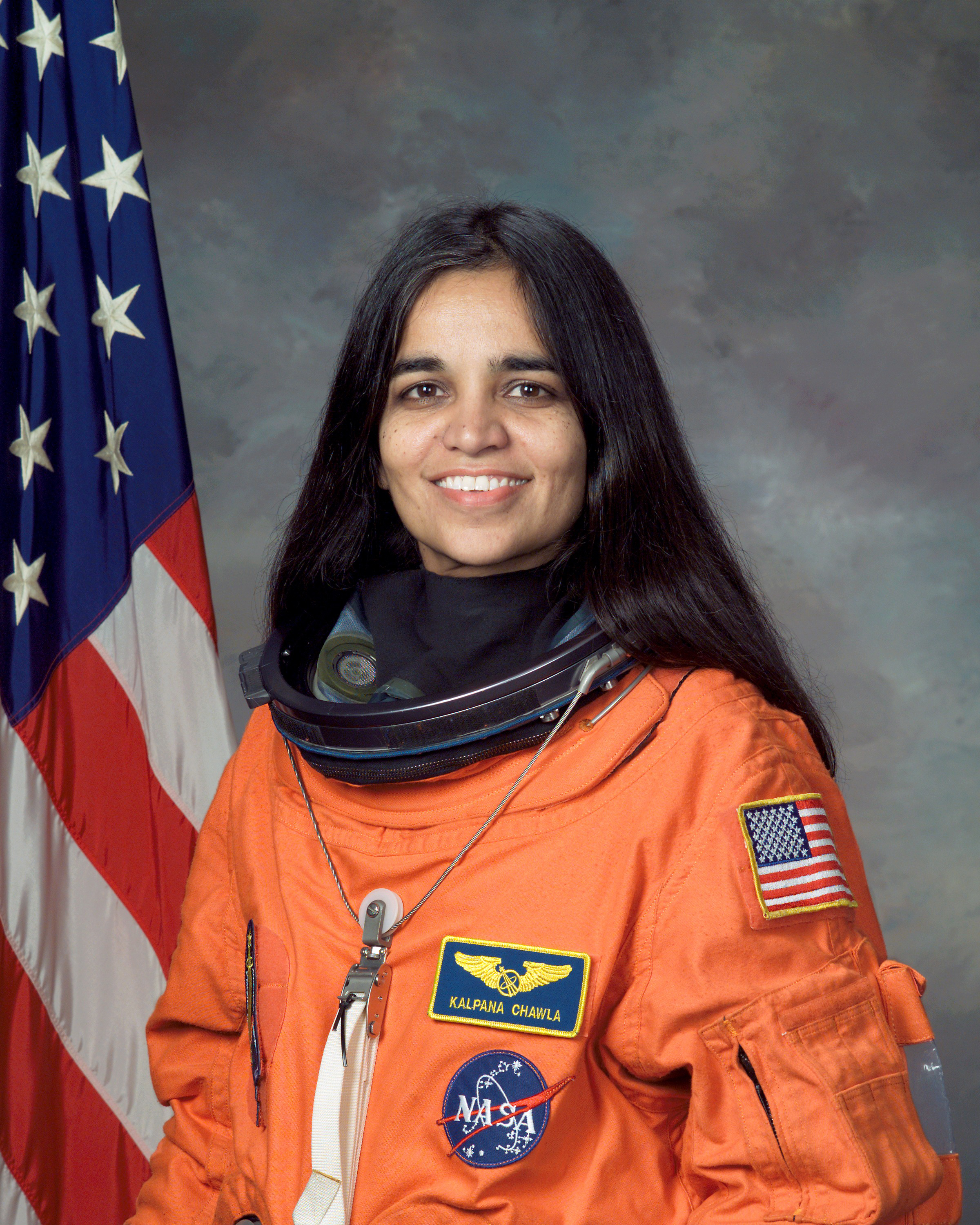
Kalpana Chawla
 India
Indiamilitary flight engineer•astronaut•amateur radio operator
Birthday
+1962-03-17
Birth Sign
Pisces
Birthplace
Karnal
Age
Died at 40
About
Born in Karnal, India, on March 17, 1962, Kalpana Chawla was an aerospace engineer and astronaut who etched her name in history as the first Indian woman to journey into space. Her fascination with flight began early, sparked by planes flying overhead in her childhood. This passion led her to pursue engineering, eventually earning a Bachelor of Engineering degree despite initial family opposition. She then moved to the United States, where she earned advanced degrees from the University of Texas at Arlington and the University of Colorado Boulder, also obtaining pilot licenses. Chawla's career at NASA started in 1988, focusing on computational fluid dynamics research. She later moved into private industry before returning to NASA in 1994 with aspirations of becoming an astronaut. Her dedication paid off when she was selected and underwent rigorous training. She made her first spaceflight in 1997 aboard the Space Shuttle Columbia as a mission specialist and robotic arm operator during the STS-87 mission. Her second and final mission was STS-107, a space science expedition in 2003, where she conducted numerous experiments. Tragically, on February 1, 2003, the Space Shuttle Columbia disintegrated during its re-entry into Earth's atmosphere, claiming the lives of all seven crew members, including Chawla. She was 40 years old. Posthumously, she received significant honors, including the Congressional Space Medal of Honor. Her legacy continues to inspire, with many educational programs and awards established in her name, particularly to encourage women and those of Indian heritage in space exploration.
Fame & Fandom
Kalpana Chawla commands a global audience defined by historical reverence rather than the volatile metrics of contemporary celebrity culture. Her fame rests on her status as a pioneering aerospace engineer and the first Indian woman to journey into space, a legacy that endures through educational institutions and scientific communities worldwide. According to the iFANN Global Fame Engine evaluation conducted in August 2026, Kalpana Chawla is currently evaluated but holds no placement in the published rankings, including the Global Top 1,000 or any Top-100 scope list. This absence of a numerical rank reflects a distinct category of influence where historical significance outweighs current search volume or media consumption signals. The fanbase associated with Chawla has no formal name documented in authoritative records; it consists instead of students, educators, scientists, and the broader Indian-American community who view her as a foundational figure for women and South Asians in STEM. Unlike modern icons who inspire organized rituals or fan-funded campaigns, admiration for Chawla manifests as institutional memorialization and the citation of her achievements in academic settings. There are no recorded fan-led projects, birthday billboards, or interactive engagements specific to her name. Her impact remains a shared cultural admiration for her technical expertise during missions like STS-87 and STS-107, and her tragic death aboard the Space Shuttle Columbia, which cemented her place as a global martyr for exploration.
Interesting Facts and Legends
Chawla logged a total of 30 days, 14 hours, and 54 minutes in space across two missions before her death. She earned pilot licenses while pursuing advanced degrees at the University of Texas at Arlington and the University of Colorado Boulder. A recurring narrative from her career involves receiving a call from then-Prime Minister I.K. Gujral while she was working at NASA, an event often cited to illustrate her standing as a national hero even while abroad. During her 16-day mission on STS-87 in November 1997, she deployed the Spartan Satellite using the shuttle's robotic arm, a technical feat frequently highlighted in educational materials to demonstrate her engineering capabilities. The central legend surrounding her life is the verified tragedy of the Space Shuttle Columbia disaster on February 1, 2003, where the vehicle disintegrated upon re-entry over Texas, killing all seven crew members. This event transformed her biography from one of professional achievement to a story of ultimate sacrifice. Memorials established in her honor include the Kalpana Chawla Memorial Display at the University of Texas at Arlington and her induction into the National Air and Space Museum's Wall of Honor. The annual Kalpana Chawla Award continues to recognize individuals for extraordinary efforts, reinforcing her legacy as a symbol of bravery.
Death & Aftermath
Died
+2003-02-01 (aged 40)
Death Place
Northeast Texas and Louisiana
Cause of Death
Catastrophic structural failure during re-entry
Kalpana Chawla died on February 1, 2003, at approximately 9:00 a.m. CST while the Space Shuttle Columbia disintegrated over northeast Texas and Louisiana during atmospheric re-entry. She was 41 years old when the orbiter suffered catastrophic structural failure caused by superheated gases penetrating the left wing after damage from a piece of insulating foam detached during launch. Following the disaster, President George W. Bush addressed the nation, and Indian Prime Minister Atal Bihari Vajpayee honored Chawla as a symbol of India's achievement while tributes poured in from international space agencies. A joint memorial service for all nine crew members took place at the Kennedy Space Center Visitor Complex on March 18, 2003, attended by government officials and family members.
Her remains were subsequently cremated according to Hindu rites, with ashes scattered in the Bay of Bengal off Chennai following a private ceremony involving her husband Jean-Pierre Harrison. Posthumous recognition included induction into the National Aviation Hall of Fame and receipt of the Congressional Space Medal of Honor in 2003, alongside the establishment of the Kalpana Chawla Memorial Scholarship to support students in science and engineering. The Columbia Accident Investigation Board also identified systemic management failures within NASA, leading to significant safety reforms and the eventual retirement of the Space Shuttle program in 2011.
Awards & Accolades
Keywords
Quick Facts
- Profession
- military flight engineer, astronaut, amateur radio operator
- Born
- +1962-03-17
- Birthplace
- Karnal
- Died
- +2003-02-01
- Death Place
- Texas
- Gender
- Female
- Birth Sign
- Pisces
Join the community
fans discussing