 Germany
About
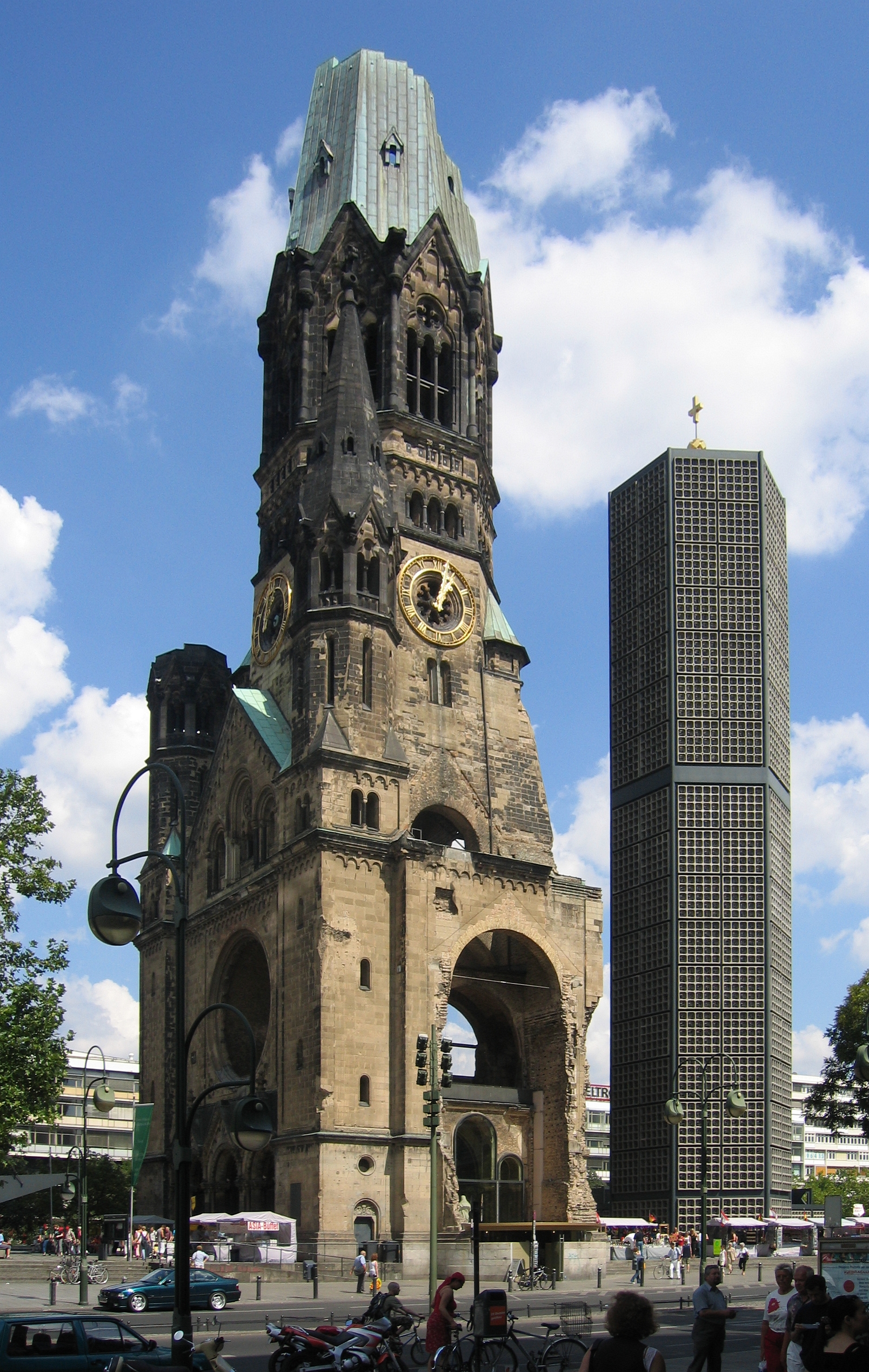
The blackened brick skeleton of the western tower stands as a silent witness to the night of November 23, 1943. That Allied air raid turned the once-magnificent Neo-Romanesque structure into a jagged ruin that locals called 'der hohle Zahn' or the hollow tooth. Today this scarred spire anchors Breitscheidplatz in Berlin's City West, serving as a permanent reminder of the devastation while a modern church complex rises beside it.
Designed by architect Egon Eiermann and consecrated in 1961, the new building features an octagonal worship space wrapped in over 30,000 blue glass panes. At night these panels glow with a soft light that contrasts sharply with the dark, charred masonry of the old tower. The juxtaposition creates a visual metaphor for the city's journey from destruction to renewal.
As an active parish within the Evangelical Church in Berlin, Brandenburg and Silesian Upper Lusatia, the site hosts regular services and concerts. Visitors flock to the adjacent Christmas market every December or walk through the memorial hall inside the ruins to see artifacts like the 'Madonna of Stalingrad.' This charcoal drawing created by Pastor Kurt Reuber during the 1942 battle has become an international icon of reconciliation.
Mission
This institution functions as both a place of worship and a war memorial. Its goal is to preserve the memory of the Second World War without glorifying conflict. Through music, prayer, and guided tours, the church encourages reflection on peace and reconciliation. It connects the trauma of the past with contemporary values by maintaining the ruins as a testament to loss while using the new building to offer hope.
History
Emperor Wilhelm II commissioned the original church in 1891 to commemorate his grandfather. Construction finished in 1895 under the direction of Franz Schwechten. The Neo-Romanesque building featured a towering spire that reached 113 meters and became one of Berlin's most significant Protestant sites. The structure stood as a symbol of imperial power until the bombing raids of World War II.
The night of November 23, 1943 marked a turning point when Allied bombs destroyed the nave and roof but left the western tower standing. Berliners gave the ruined spire the nickname 'the hollow tooth' because of its jagged appearance against the skyline. Post-war leaders decided against rebuilding the original design. Instead they chose to keep the ruins as a permanent memorial to the horrors of war.
A design competition selected Egon Eiermann to create a new complex. His team built an octagonal main church, a chapel, and a foyer with a belfry. The project was consecrated in 1961 and featured a facade made of over 30,000 blue glass panes. In November 2023 Heneghan Peng Architects won an international competition to restore and expand the Old Tower ruin. This ongoing project aims to transform the site sensitively while preserving its character as a memorial.
Subdivisions
The Ruin
The preserved western tower housing a memorial hall with historical exhibits about the church's destruction.
The New Church
An octagonal worship space featuring the signature blue glass facade designed by Egon Eiermann.
The Chapel
A smaller intimate space for prayer and quiet reflection located within the new complex.
Memorial Hall Artifacts
Houses significant items including the 'Madonna of Stalingrad' drawing and other wartime relics.
Notable People
Wilhelm II
founder · 1891-1895
Commissioned the original church in honor of his grandfather Kaiser Wilhelm I
Franz Schwechten
architect · 1891-1895
Designed the original Neo-Romanesque structure with its 113-meter tower
Egon Eiermann
architect · 1959-1961
Designed the post-war complex known for its blue glass facade
Kurt Reuber
artist · 1942
Created the 'Madonna of Stalingrad' charcoal drawing displayed in the memorial hall
Helmuth Hoeft
organist · present
Leads organ tours highlighting the instrument's role in the church's history
Milestones
1891
Construction of the original church begins, commissioned by Emperor Wilhelm II
1895
Consecration of the original church
1943-11-23
The church is heavily damaged by an Allied air raid
1961
Consecration of the new church complex designed by Egon Eiermann
2016-12-19
A terrorist attack at the adjacent Christmas market kills 12 people; the church becomes a focal point for mourning
2023-11
Heneghan Peng Architects wins competition for restoration of the Old Tower ruin
Sources
Organization Info
- Founded
- 1891-01-01
- Headquarters
- Breitscheidplatz, 10789 Berlin, Germany
- Country
- Germany
- Parent
- Evangelical Church in Berlin, Brandenburg and Silesian Upper Lusatia
- Type
- Religious
- Founder
- Wilhelm II
- Architect (new church)
- Egon Eiermann
- Height of original tower
- 113 meters
- Number of glass panes in new church
- Over 30,000
Official Website
www.gedaechtniskirche-berlin.de/
Join the community
fans discussing