 United States
“Kurosawa has created a film of such visual splendor and emotional depth that it stands as a testament to the power of cinema to transcend language and culture.”
Roger Ebert
Chicago Sun-Times

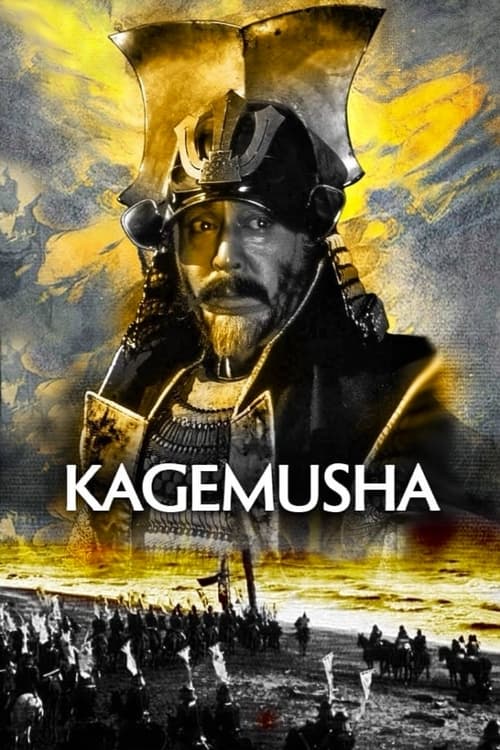
Akira Kurosawa returns to the battlefield with a stark meditation on identity and power in his 1980 feudal epic. The story follows a lowly thief who finds himself thrust into the role of a mighty warlord, tasked with shielding his clan from enemies through deception. This ambitious project required a massive budget of $6 million to bring the sprawling armies and intricate court politics of Sengoku-era Japan to life. While the film earned $4 million at the box office, it secured a strong critical standing with a rating near 7.8 out of 10.
Tatsuya Nakadai anchors the production with a dual performance that shifts seamlessly between the cold calculation of Lord Shingen Takeda and the bumbling confusion of his double. Supporting him are Tsutomu Yamazaki as the loyal brother Nobukado and Kenichi Hagiwara as the heir Katsuyori, all navigating a world where loyalty is fragile. The narrative blends action sequences with deep psychological drama, exploring how easily a man can lose himself when wearing another's mask. This historical war drama stands apart from typical genre fare by focusing less on glory and more on the terrifying weight of a lie.
Availability and pricing can change. Confirm on the provider's site before purchasing.
The year is 1573, and the Sengoku period grips Japan in a vice of constant warfare. Lord Takeda Shingen lies dying from an arrow wound sustained during a failed siege, yet his death must remain hidden to prevent his rivals from striking while the iron is cold. His brother, Nobukado, discovers a petty thief stealing food in the snow who bears an uncanny resemblance to the dying warlord. Shingen spares the criminal's life on the condition he serves as a decoy. The thief undergoes grueling training to mimic Shingen's voice, posture, and aura until even the most skeptical retainers believe they are looking at their master.
As the impostor steps into the role of lord, he navigates a treacherous court filled with ambitious generals and a young heir, Katsuyori, who lacks the experience to command respect. The thief struggles with the sudden burden of authority, oscillating between fear and a strange sense of purpose. He begins to understand the weight of leadership and the fragility of the bonds that hold the clan together. His presence stabilizes the Takeda forces, allowing them to maintain order while the real Shingen passes away in secret. The film captures the intimate moments of this transformation, showing the thief learning to walk like a samurai and speak with the gravity of a warlord.
External threats loom large as Oda Nobunaga prepares a massive army to crush the Takeda clan. The impostor must lead the charge against overwhelming odds while keeping the secret of his identity alive. The tension mounts as the line between the man and the mask blurs. He develops a deep connection with the clan, particularly the women of the household and the loyal retainers who rely on his presence for morale. The cinematography highlights the stark contrast between the grandeur of the battlefield and the internal struggle of the impostor. As the Battle of Nagashino approaches, the stakes reach their peak, forcing the thief to confront whether he can truly embody the spirit of Shingen when the reality of war threatens to expose the truth.
The narrative builds toward a confrontation where the impostor faces the ultimate test of his new identity. The film explores themes of identity, the performative nature of power, and the spiritual weight of history. The climax approaches with the Takeda cavalry charging against the fortified lines of Nobunaga's forces. The impostor must decide if he will fight for the clan that has accepted him or flee to save his own skin. The story sets the stage for a tragic resolution regarding the fate of the Takeda clan and the identity of the shadow warrior, leaving the audience to ponder the cost of deception in a world governed by harsh realities.
Kagemusha (1980) Original Trailer [4K]
Critical Consensus
Akira Kurosawa's Kagemusha is a visually stunning and thematically rich masterpiece that explores the fluidity of identity and the burden of power. While the pacing may feel deliberate to some, the film's epic scope, dual performance by Tatsuya Nakadai, and profound meditation on the nature of leadership cement its status as one of the greatest samurai films ever made.
“Kurosawa has created a film of such visual splendor and emotional depth that it stands as a testament to the power of cinema to transcend language and culture.”
Roger Ebert
Chicago Sun-Times
“A magnificent, if occasionally overlong, epic that showcases Kurosawa's mastery of the historical drama genre and his ability to capture the essence of human nature.”
Vincent Canby
The New York Times
“Kagemusha is a film of great beauty and complexity, where the distinction between the real and the imagined blurs in a way that is both terrifying and mesmerizing.”
Pauline Kael
The New Yorker
“A triumph of visual storytelling, with Nakadai delivering a tour-de-force performance that anchors the film's exploration of identity and power.”
Variety Staff
Variety
“Kurosawa's final great epic is a haunting meditation on the cost of deception, beautifully photographed and deeply moving.”
Peter Bradshaw
The Guardian
Tatsuya Nakadai
Shingen Takeda / Kagemusha
Tsutomu Yamazaki
Nobukado Takeda
Kenichi Hagiwara
Katsuyori Takeda
Jinpachi Nezu
Sohachiro Tsuchiya
Hideji Ōtaki
Masakage Yamagata
Daisuke Ryū
Oda Nobunaga
Masayuki Yui
Ieyasu Tokugawa
Kaori Momoi
Otsuyanokata
Mitsuko Baisho
Oyunokata
Hideo Murota
Nobufusa Baba
Director
Akira Kurosawa
Writers
Akira Kurosawa, Masato Ide
Composer
Shinichiro Ikebe
Cinematographers
Shoji Ueda, Takao Saitō
Producer
Akira Kurosawa
Academy Awards (1981)
Best Foreign Language Film: Nominated
Academy Awards (1981)
Best Art Direction-Set Decoration: Nominated
Cannes Film Festival (1980)
Palme d'Or: Won
BAFTA Awards (1982)
Best Film Not in the English Language: Nominated
David di Donatello Awards (1981)
Best Foreign Film: Won
National Society of Film Critics Awards (1981)
Best Foreign Language Film: Won
New York Film Critics Circle Awards (1980)
Best Foreign Language Film: Won
Join the community
fans discussing