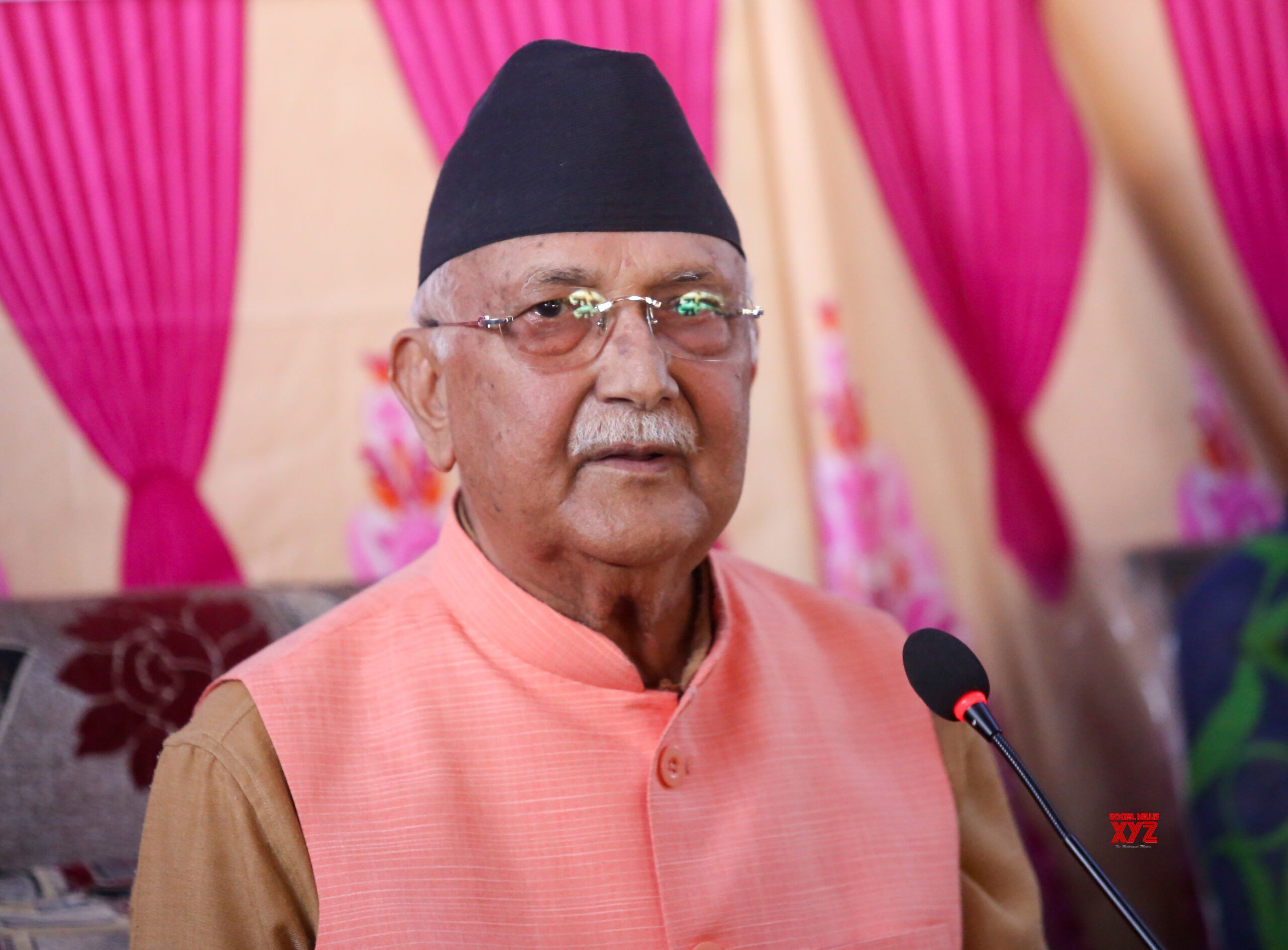
K. P. Sharma Oli
 Nepal
NepalAlso known as: KP Oli, Khadga Prasad Oli
Birthday
February 22, 1952
Birth Sign
Pisces
Birthplace
Tehrathum District, Nepal
Age
74 years old
About
Khadga Prasad Sharma Oli is a Nepalese politician who has served as Prime Minister of Nepal three times, most recently from July 2024 to March 2026. He has led the Communist Party of Nepal (Unified Marxist–Leninist) as chairman since 2014, making him one of the most enduring figures in the country's modern political landscape. Oli is known for his sharp tongue, his willingness to take on critics directly, and his efforts to rebalance Nepal's foreign relations toward China.
His premierships have been marked by both ambitious infrastructure projects and recurring accusations of authoritarian drift, cronyism, and mismanagement. Supporters see him as a decisive leader who stands up to foreign pressure; detractors point to democratic backsliding and economic stagnation. In 2026, Oli was arrested in connection with a crackdown on youth protests, a moment that has reshaped his legacy and thrown his party into turmoil.
Early Life & Background
Khadga Prasad Sharma Oli was born on February 22, 1952, in the Tehrathum District of eastern Nepal, a hilly region near the Indian border. Details of his childhood are scarce, but he grew up in a rural, agrarian setting that would later shape his political identity as a champion of the common people. He was drawn to leftist politics in his youth, joining the Communist movement during a period of intense political repression under the Panchayat system, which banned political parties.
Oli's early activism landed him in prison for a total of more than four years across several stints in the 1970s. He used that time to study political theory and Marxist ideology. After his release, he rose through the ranks of the underground Communist Party of Nepal, eventually becoming a key organizer in the eastern region. His first major political breakthrough came in 1991, when he was elected to parliament as a member of the CPN (UML), following the restoration of multiparty democracy. He quickly gained a reputation as a hardline ideologue with a pragmatic streak, willing to work within the system to achieve party goals.
Career Growth
Oli's first taste of national power came in 2006 when he became Deputy Prime Minister and Minister of Home Affairs in the interim government, a role that saw him manage the early years of the peace process after the Maoist insurgency. He became chairman of the CPN (UML) in 2014, consolidating his control over the party. His first term as Prime Minister ran from October 2015 to August 2016, a period dominated by the aftermath of the devastating earthquake and the Indian blockade. He navigated the crisis by deepening ties with China, signing a transit treaty that allowed Nepal landlocked access to Chinese ports, a strategic move that reduced dependence on India.
His second term, from February 2018 to July 2021, was more turbulent. He entered a power-sharing arrangement with the Maoists, forming a unified Nepal Communist Party, but the merger collapsed in 2021 after a bitter power struggle. He dissolved parliament twice, a move struck down by the Supreme Court, and eventually lost a confidence vote. He returned for a third term in July 2024, but his government faced massive student-led protests against corruption and poor governance. In March 2026, he was arrested and removed from office, facing investigation into the deaths of dozens of protesters. Since then, he has remained politically active, making public statements and maneuvering within his party.
Career Timeline
Public Image & Style
Oli projects the image of a tough, no-nonsense leader who speaks his mind. He is often seen in a simple white shirt and the traditional Nepali cap, a style that resonates with rural voters. On social media, he maintains a blunt, sometimes combative tone, frequently attacking critics and opposition leaders. His supporters, particularly in the UML's base, view him as a strongman who can stand up to India and the domestic establishment. Critics see him as autocratic and thin-skinned, quick to label opponents as traitors. His public image has been shaped by his repeated clashes with the press, whom he has accused of spreading falsehoods. Despite his polarizing reputation, he commands a loyal following, and his party's cadres often turn out in large numbers for his events.
Fame & Fandom (iFAMOUS Rankings)
K. P. Sharma Oli currently holds no placement in the iFANN Global Top 1,000 or any scope-specific ranking list as of August 2026. The iFANN evaluation confirms his status as a high-ranking political figure rather than an entertainer with a quantified global fame score. His influence manifests through voter mobilization and party discipline within Nepal rather than viral cultural consumption signals that drive celebrity rankings. Supporters of the Communist Party of Nepal (Unified Marxist–Leninist) view him as a decisive leader, yet this following lacks the organized structure typical of pop-culture fandoms. There is no documented name for his fanbase, nor do supporters engage in rituals like birthday billboards, charity drives, or streaming campaigns. His public interactions remain strictly political, centered on government addresses, party rallies, and sharp critiques of opposing administrations. Recent reports from August 2026 show him returning to his home constituency of Jhapa to criticize the current government's leadership, dismissing internal calls for reorganization as mere street talk. This engagement defines his relationship with the public: a dynamic of political contention rather than adoration. While he commands significant sway over Nepal's democratic trajectory, his legacy consists of historical milestones like serving three terms as Prime Minister and recent legal troubles involving a crackdown on Gen Z protests. These events are treated as political history rather than folklore. The absence of a formal fandom name reflects the reality that his supporters are constituents and party members first, not fans in the entertainment sense. No viral video challenges or fan-funded projects exist under his banner. His presence in the global consciousness remains tied to specific geopolitical moments and domestic power struggles, distinguishing him sharply from figures whose fame is measured by chart positions or social media trends.
Interesting Facts and Legends
Oli has a well-known fondness for wearing a distinctive round cap, which has become part of his public image. He is also an avid reader of history and political theory, often quoting Marxist classics in speeches. He has a reputation for making off-the-cuff remarks that sometimes land him in controversy, including a 2018 comment about wanting to buy a new aircraft for his travels. Oli is a teetotaler and a vegetarian, a fact that often surprises those who expect a hardline communist to be indifferent to personal habits. He has a long-standing interest in yoga and meditation, which he credits for his stamina at an advanced age. Despite his political rivalry with India, he enjoys Indian classical music and has attended cultural events in New Delhi. A defining moment in his recent career occurred in March 2026 when he was arrested while being taken to a hospital. This arrest followed allegations of his involvement in a deadly crackdown on Gen Z protests that resulted in dozens of deaths. The incident marked a turning point, shifting his narrative from head of government to a detainee under investigation. In August 2026, he returned to Jhapa to fiercely criticize the current administration's lack of experience, rejecting demands to step down from his chairmanship as unofficial noise. These events form the core of his modern political lore.
Notable Quotes
“I am not a person who runs away from challenges.”
“The nation's interest is above everything.”
“We will not bow to any foreign pressure.”
“My government is committed to development and prosperity.”
“The youth are the future of Nepal.”
Family & Personal Life
Oli is married to Radhika Shakya, a former teacher. The couple has no children. Shakya has largely stayed out of the political spotlight, though she has occasionally appeared beside him at official functions. Oli's father, Mohan Prasad Oli, was a farmer, and his mother, Madhumaya Oli, was a homemaker. He has two brothers and a sister. His family background is humble, and he often references his rural roots in speeches to connect with voters. In recent years, Oli has lived in Kathmandu, but he maintains a family home in Tehrathum, where he returns for holidays and political rallies.
Notable Connections
Oli has worked with many prominent Nepali politicians. His key ally and successor as Prime Minister, Hikmat Kumar Karki, has been a close confidant, though their relationship has had its strains. He has also had a long and complicated rivalry with Pushpa Kamal Dahal, known as Prachanda, the Maoist leader, with whom he formed and then broke alliances. On the international stage, he has met with Chinese President Xi Jinping and Indian Prime Ministers Narendra Modi and Manmohan Singh. His foreign policy, particularly his China tilt, has been a defining feature of his time in office.
Relationships & Dating History
Oli's personal relationships have been largely private. He married Radhika Shakya in the 1980s, and the couple has been together ever since. Shakya, a former teacher, has maintained a low profile, rarely appearing in public or making political statements. The couple has no children, and their relationship has not been the subject of significant media attention. Oli has not been linked to any other romantic partners, and there are no reports of separations or divorces. As of 2026, he remains married to Shakya, who has stood by him during his political ups and downs.
- MarriedRadhika Shakya1980 - presentCurrentLong-time wife, a former teacher, who has stayed out of the political spotlight.
Salary, Net Worth In 2026
$1 Million
iFANN Editorial Team estimate
As a career politician, Oli's personal finances have been a subject of speculation, but concrete figures are scarce. His official assets, declared in election affidavits, are modest, primarily consisting of a house in Kathmandu and some agricultural land in Tehrathum. He does not appear to have significant business interests. His income comes from his parliamentary salary and party allowances. Per iFANN's editorial analysis, his net worth in 2026 is estimated to be around $1 Million. This figure is low compared to many politicians in the region, reflecting his relatively simple lifestyle. However, critics have alleged that his family members have benefited from his political influence, though no formal charges have been brought. His post-premiership activities include writing and speaking engagements, which may add to his income.
Awards & Accolades
Known For
Prime Minister of Nepal
2015-2026 · Three non-consecutive terms
Chairman of CPN (UML)
2014-present · Party leader
Keywords
Sources
Quick Facts
- Profession
- politician
- Born
- February 22, 1952
- Birthplace
- Tehrathum District, Nepal
- Gender
- Male
- Birth Sign
- Pisces
Personal Details
- Full Name
- Khadga Prasad Sharma Oli
- Children
Frequently Asked Questions
Who is K. P. Sharma Oli?
How old is K. P. Sharma Oli?
What is K. P. Sharma Oli's net worth?
Why was K. P. Sharma Oli arrested?
Is K. P. Sharma Oli still active in politics?
Similar People
Join the community
fans discussing