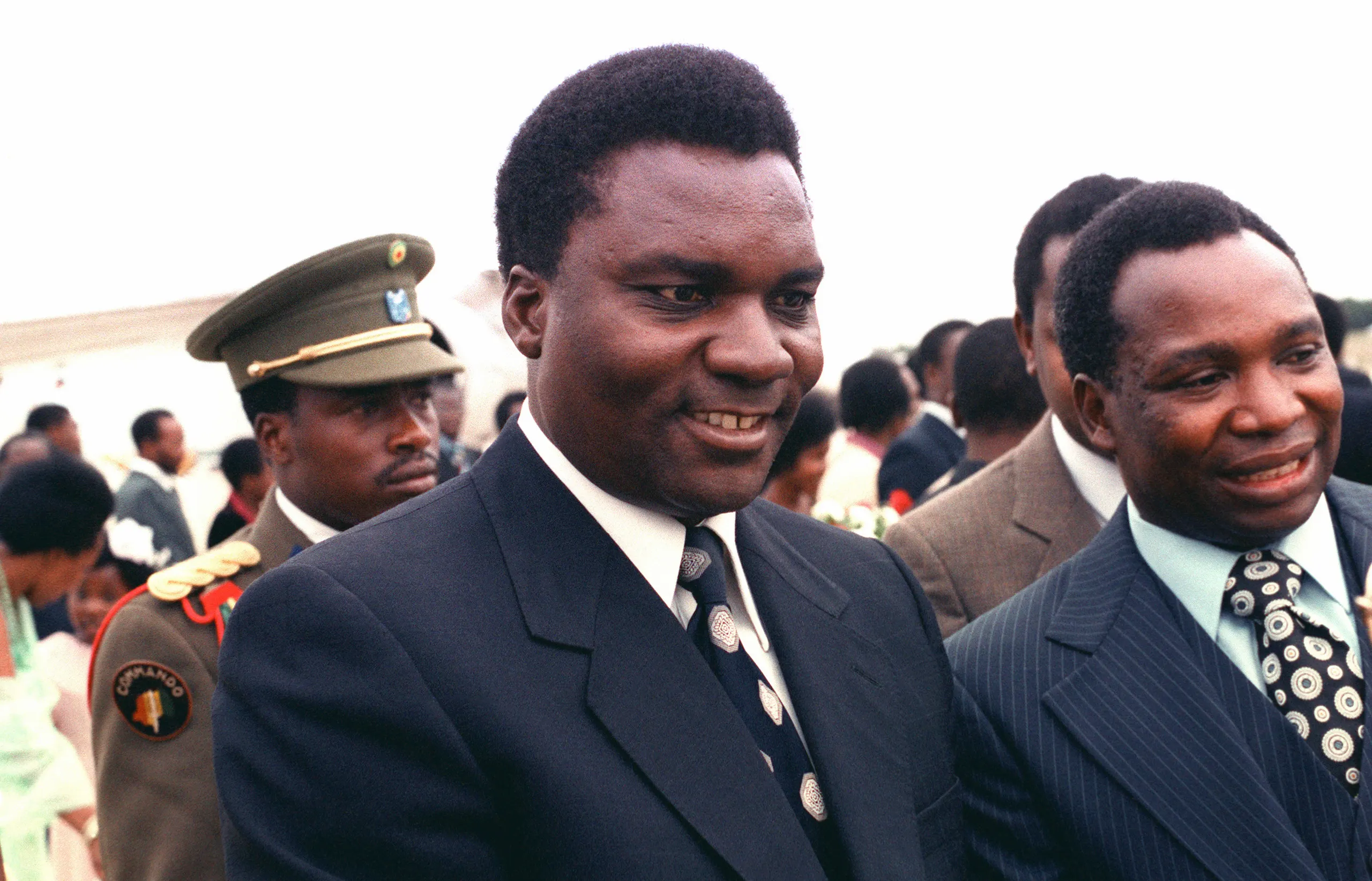
Juvénal Habyarimana
 Rwanda
politician and military officer
Also known as: Kinani
Birthday
March 8, 1937
Birth Sign
Pisces
Birthplace
Gasiza, Gisenyi Province, Ruanda-Urundi (now Rwanda)
Age
Died at 57
About
Juvénal Habyarimana was a Rwandan military officer and politician who served as the second President of Rwanda from 1973 until his death in 1994. An ethnic Hutu from Gisenyi Province, he came to power in a coup and built an authoritarian one-party state under the National Revolutionary Movement for Development. His rule lasted twenty-one years, ending when his aircraft was shot down near Kigali on 6 April 1994. The crash killed him and Burundian President Cyprien Ntaryamira and set off the Rwandan genocide within hours.
Habyarimana's presidency was marked by rigged elections, mandatory mass rallies, and the exclusion of Tutsis from political life. He signed the Arusha Accords in August 1993 but implementation stalled. The question of who ordered the missile that brought down his plane has never been answered. Recent analysis, such as an August 2026 piece in Igihe, traces how his early political formation shaped the genocidal ideology that culminated in 1994. His widow, Agathe Habyarimana, remains a figure in French legal proceedings, and his death is still the pivotal event linking his biography to the genocide.
Early Life & Background
Juvénal Habyarimana was born on 8 March 1937 in Gasiza, in Gisenyi Province, then part of Ruanda-Urundi under Belgian administration. He was Hutu, and like many young men of his generation in the north, he entered the military. He trained at the military academy and became an officer, a path that in late-colonial Rwanda carried both prestige and political weight.
After independence in 1962, Habyarimana joined the security forces of the First Republic under President Grégoire Kayibanda. He held several security posts, including minister of defense, and rose to head the national guard and the national police force, eventually reaching the rank of major general. His marriage to Agathe Kanziga, a woman from a prominent Hutu family in the north, tied him to the powerful northern Hutu elite known as the akazu, a connection that would shape his later regime. By the early 1970s he was the most powerful figure in the army, and he watched as Kayibanda's government grew increasingly fragile amid regional tensions and economic strain. On 5 July 1973, Major General Habyarimana overthrew Kayibanda in a military coup, installing himself as president and founding the Second Republic.
Career Growth
Habyarimana's coup on 5 July 1973 ended the First Republic and began the Second. He made the National Revolutionary Movement for Development the sole legal party and ran unopposed in three presidential elections, receiving 98.99 percent of the vote in 1978, 99.97 percent in 1983, and 99.98 percent in 1988. His government required citizens to take part in mass rallies of political animation, chanting and dancing in praise of the president, and he was nicknamed Kinani, Kinyarwanda for invincible. Under his rule Rwanda saw modest economic improvement, though most citizens remained in extreme poverty.
In October 1990 the Tutsi-led Rwandan Patriotic Front launched a civil war from Uganda. After three years of fighting and external pressure, Habyarimana signed the Arusha Accords in August 1993, a power-sharing agreement with the RPF. Implementation stalled amid hardline Hutu opposition, and tensions escalated through early 1994. He was killed on 6 April 1994 when his plane was shot down near Kigali airport.
Career Timeline
Public Image & Style
Habyarimana presented himself as a soldier-president, a man of order in a region of fragile states. His public image was built around the rituals of the one-party state: mass rallies, praise songs, and the nickname Kinani. Abroad he was seen as a predictable authoritarian ally during the Cold War, useful to France and Belgium, and his regime received development aid and military support. At home his image was inseparable from Hutu-power ideology and the exclusion of Tutsis from political life. The implausibly high election margins became part of how outsiders described his rule, and the crash that killed him fixed his image in history as the man whose death opened the door to genocide.
Fame & Fandom (iFAMOUS Rankings)
iFANN has not yet collected fame data for Juvénal Habyarimana, so no ranking is available. He is not on the September 2026 iFAMOUS Rankings flagship list. His public following is not a fandom in the entertainment sense; there is no documented fanbase name, no organized campaigns, and no fan projects. Interest in him comes from historians, students of the genocide, and readers following the legal case against his widow, which returned to French courts in 2026.
Interesting Facts and Legends
Habyarimana was nicknamed Kinani, meaning invincible in Kinyarwanda. His regime's political animation rallies were mandatory for citizens. The vote margins in his three presidential elections, 98.99, 99.97 and 99.98 percent, are frequently cited as textbook examples of sham elections. The plane crash that killed him also killed a second sitting president, Cyprien Ntaryamira of Burundi, making it one of the rare incidents in which two heads of state died in the same aircraft. His widow's legal case resurfaced in French courts in 2026. A story often retold in Rwanda concerns the akazu, the northern Hutu network tied to his wife's family, which is said to have shaped many of his appointments.
Family & Personal Life
Habyarimana was married to Agathe Kanziga, a member of a prominent Hutu family from the north. The marriage tied him to the northern Hutu elite known as the akazu, and that network influenced his regime. The couple had children, though detailed public information on their names and number is limited. Agathe fled Rwanda in 1994 and settled in France. In 2026 her legal situation returned to the news when a French court overturned the dismissal of charges against her for complicity in genocide. As of 2026 she has not been convicted. Searches for the couple's children remain common.
Notable Connections
Relationships & Dating History
Habyarimana's only documented public relationship was his marriage to Agathe Kanziga, a woman from a prominent Hutu family in northern Rwanda. The marriage tied him to the northern Hutu elite known as the akazu and shaped his political base. The couple had children. Agathe fled Rwanda in 1994 and settled in France. As of 2026 she has not been convicted in the French proceedings against her, which were reopened in May 2026. Habyarimana was married to Agathe at the time of his death.
- MarriedAgathe Habyarimana? - 1994Married until his death in 1994; she later settled in France and faced genocide-related legal proceedings there.
Death & Aftermath
Died
April 6, 1994 (aged 57)
Death Place
Kigali, Rwanda
Cause of Death
Killed when his aircraft was shot down by a surface-to-air missile
On the evening of 6 April 1994, a Falcon 50 carrying President Habyarimana and Burundian President Cyprien Ntaryamira approached Kigali airport. A surface-to-air missile struck the aircraft and everyone aboard was killed. Both presidents were Hutu, and the crash came hours after Habyarimana had attended a regional summit in Dar es Salaam. Within hours of the shoot-down, Hutu extremists began the systematic massacre of Tutsis and moderate Hutus that became the Rwandan genocide. The identity of those who fired the missile has never been established. Responsibility has been attributed variously to the Rwandan Patriotic Front, to Hutu hardliners inside the regime, and to foreign actors; a French investigation into the crash was dropped in December 2018. The assassination remains one of the most consequential unresolved political killings of the twentieth century.
Public reaction abroad was slow to form, but the crash itself became the founding event of the genocide narrative. Each 6 April brings commemorative coverage, such as the Mercury News "Today in History" feature in April 2026, and the crash is routinely cited in histories of the period. Habyarimana's widow, Agathe, left Rwanda in 1994 and settled in France. In May 2026 a French court overturned the dismissal of charges against her for complicity in genocide, and France reopened its probe into the former first lady. She has not been convicted. No posthumous state honours were conferred on Habyarimana, and his estate has not been the subject of published valuation.
Awards & Accolades
Known For
President of Rwanda
1973-1994 · Head of state
1973 Rwandan coup
1973 · Leader
Arusha Accords
1993 · Signatory
Keywords
Sources
Quick Facts
- Profession
- politician and military officer
- Born
- March 8, 1937
- Birthplace
- Gasiza, Gisenyi Province
- Died
- April 6, 1994
- Death Place
- Kigali, Rwanda
- Gender
- Male
- Spouse
- Agathe Habyarimana
- Birth Sign
- Pisces
Personal Details
- Full Name
- Juvénal Habyarimana
- Spouse
- Agathe Habyarimana (née Kanziga)
Frequently Asked Questions
Who killed Juvénal Habyarimana?
How did Juvénal Habyarimana die?
How long did Habyarimana rule Rwanda?
What did Habyarimana's assassination cause?
Who was Habyarimana's wife?
Join the community
fans discussing