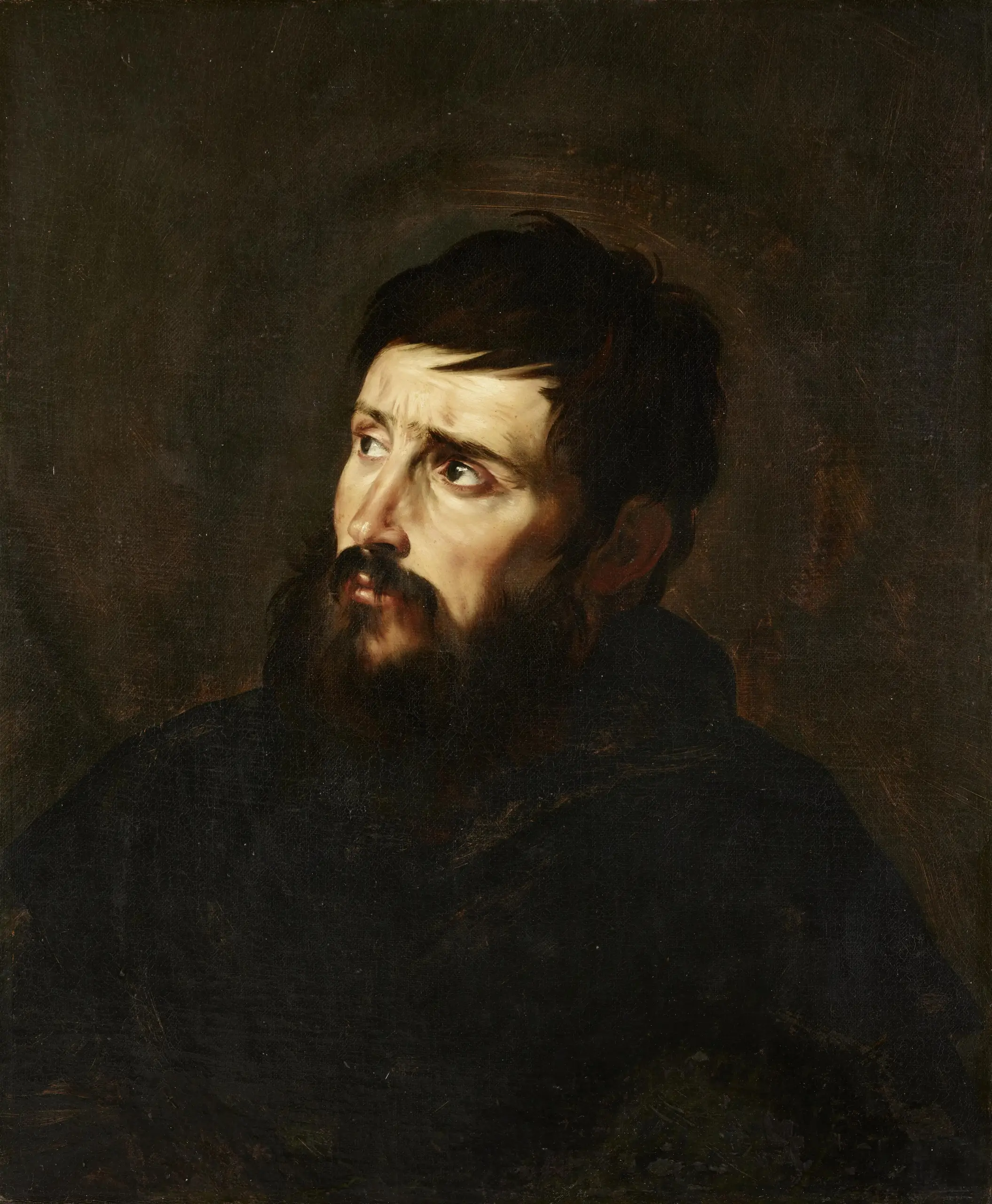
Jusepe de Ribera
 Spain
Spainpainter•printmaker•graphic artist
Birthday
+1591-01-12
Birth Sign
Capricorn
Birthplace
Xàtiva
Age
Died at 61
About
Jusepe de Ribera, born in Xàtiva, Spain, in 1591, was a Spanish painter and printmaker who became a towering figure of Baroque art. Baptized on February 17, 1591, he spent most of his life in Naples, then under Spanish rule, where he earned the nickname "Lo Spagnoletto" (the Little Spaniard). He is often ranked alongside Francisco de Zurbarán, Bartolomé Esteban Murillo, and Diego Velázquez as one of the great masters of Spanish Baroque painting. Ribera's work is known for its stark realism, dramatic chiaroscuro, and a raw intensity that could be both brutal and deeply moving. Ribera's early life remains largely a mystery until 1611, when he appears in Parma, Italy, working on a commission. By 1613, he was in Rome, living a bohemian existence in the Via Margutta and gaining a reputation as a brilliant painter. In 1616, he moved to Naples, where he married Caterina Azzolino, daughter of a Sicilian painter, and established a thriving workshop. He stayed there for the rest of his life, producing a vast body of work that included history paintings, religious scenes, and mythological subjects. He is perhaps best known for his graphic depictions of martyrdom, such as the flaying of Saint Bartholomew, but he also created striking portraits, still lifes, and landscapes. Nearly half of his surviving paintings feature half-length figures of workers and beggars, often elderly, posed as philosophers or saints. Ribera's later style evolved to include more color and softer light, but he never fully abandoned his Caravaggisti roots. His health declined in 1643, and his output slowed, yet he continued to produce acclaimed works until his death on September 3, 1652. Despite financial hardships in his final years, his influence endured, and he is now celebrated as one of the most important artists of the seventeenth century.
Fame & Fandom (iFAMOUS Rankings)
Jusepe de Ribera remains a figure of profound historical weight rather than contemporary celebrity, with his audience consisting almost exclusively of art historians, museum curators, and collectors who study the Baroque era. Unlike modern icons, he possesses no organized fanbase, no social media following, and no active community engaged in birthday campaigns or streaming drives; the concept of a formal fandom name does not apply to a master who died nearly four centuries ago. His enduring legacy is defined by the visceral impact of his work, which continues to draw scholars to major institutions like the Prado and the National Gallery, yet this appreciation manifests as academic reverence rather than pop-culture fervor. The iFANN Global Fame Engine has evaluated his standing within the global cultural landscape and determined that Jusepe de Ribera currently holds no placement in the published rankings for the Global Top 1,000 or any Top-100 scope list. This absence of a numeric rank reflects the reality that his fame operates on a different temporal plane, rooted in art history rather than current public consumption metrics.
Interesting Facts and Legends
Historical records confirm that Jusepe de Ribera was baptized on February 17, 1591, in Xàtiva, Spain, before moving to Parma in 1611 to begin his professional career. He spent the majority of his life in Naples under Spanish rule, where he earned the nickname Lo Spagnoletto, a moniker that likely referred to his small stature but served primarily to distinguish him from other Spanish masters. A persistent legend surrounding his character suggests he was a man capable of violence, a narrative fueled by the shocking realism of his martyrdom scenes which some modern headlines have sensationalized as evidence of a murderous past, though no verified historical evidence supports claims that he committed murder. Recent scholarship has also uncovered a new layer of intrigue regarding a painting depicting a man with a telescope, linking the artist to 17th-century astronomical discoveries made by figures like Francesco Fontana. Additionally, the mystery of a Ribera painting surfacing in a Denver office park in 2024 highlights how his works occasionally appear in unexpected locations, generating curiosity similar to modern celebrity sightings despite the artist's long-deceased status.
Death & Aftermath
Died
+1652-09-03 (aged 61)
Death Place
Naples, Italy
Cause of Death
Unknown
Jusepe de Ribera spent his final years in Naples, working within the city he had called home for decades until his passing in early September 1652. The precise date remains a matter of historical record, with authoritative sources fixing the event on September 3, 1652, though some contemporary accounts suggest September 2. No surviving documents detail the specific circumstances of his last days, nor is there any official statement regarding the medical cause that ended his life. His death was treated as a natural occurrence typical for the period. Historical records do not describe a formal funeral service, a specific burial location, or immediate public tributes held upon his death in 1652.
His estate was handled according to the customs of seventeenth-century Naples, eventually entering global collections through inheritance and acquisition. Posthumous recognition has since established him as a major master of Spanish Baroque art and a key figure in the development of Tenebrism. Modern exhibitions have revisited his oeuvre, including a 2018 show at the Dulwich Picture Gallery titled Master of gore and a simultaneous presentation at the Prado Museum. His works continue to be studied by scholars and sold at auction, ensuring his legacy persists within institutions such as the National Gallery of Art and the Getty.
Awards & Accolades
Keywords
Quick Facts
- Profession
- painter, printmaker, graphic artist
- Born
- +1591-01-12
- Birthplace
- Xàtiva
- Died
- +1652-09-03
- Death Place
- Naples
- Gender
- Male
- Spouse
- Caterina Azzolino
- Birth Sign
- Capricorn
Personal Details
- Spouse
- Caterina Azzolino
Join the community
fans discussing