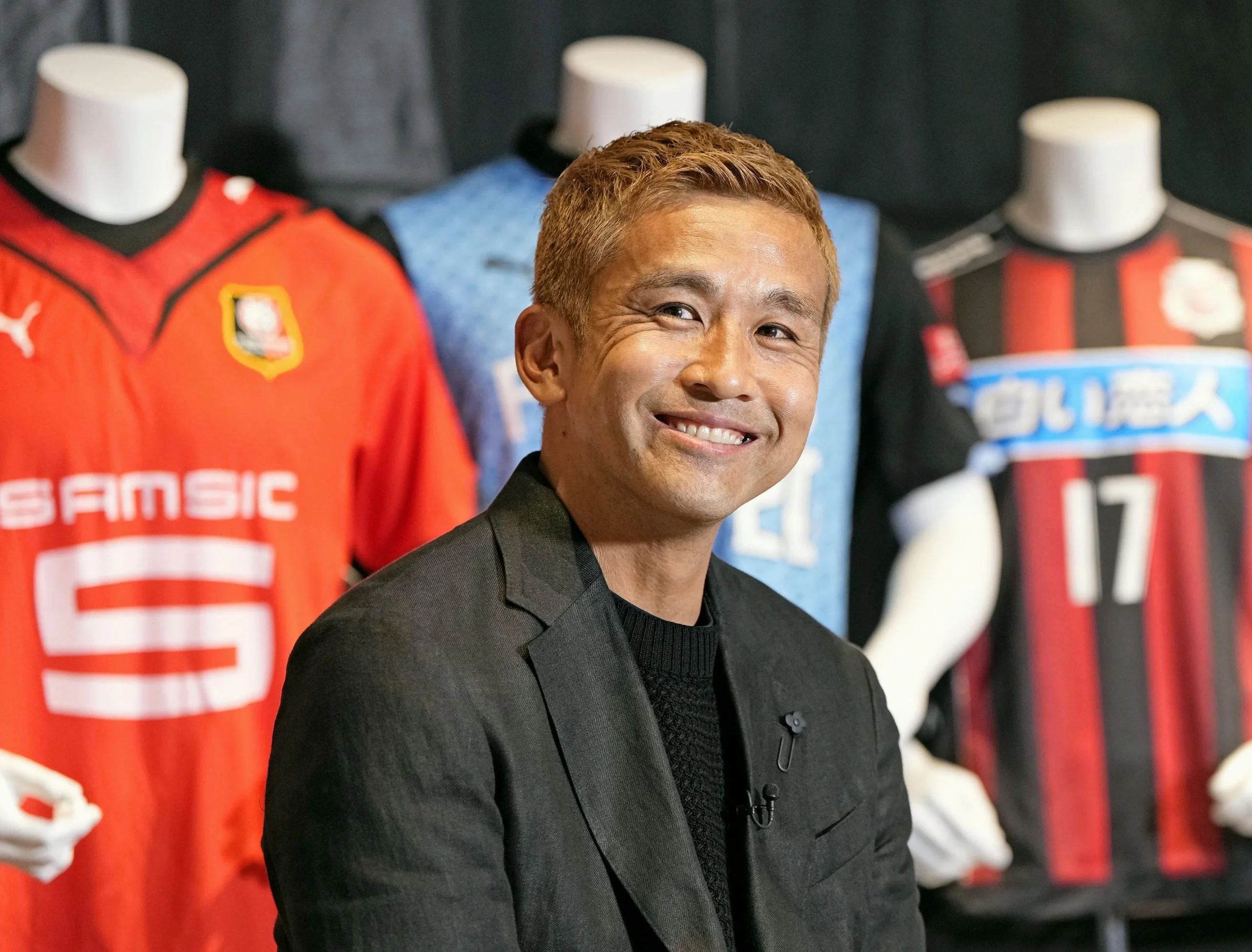
Junichi Inamoto
 Japan
Japanformer professional footballer
Birthday
September 18, 1979
Birth Sign
Virgo
Birthplace
Sakai, Osaka, Japan
Age
47 years old
Height
5 ft 11 in (181 cm)
About
Junichi Inamoto is a retired Japanese professional footballer who made history as the first Japanese player in the Premier League and the first Asian signing for Arsenal. Over a 27-year career, he played for clubs in Japan, England, Turkey, Germany, and France, earning 82 caps for Japan and scoring seven goals. He is celebrated as a national icon for his two goals at the 2002 World Cup and for paving the way for future Japanese players in Europe.
After retiring in December 2024 at age 45, Inamoto transitioned into coaching, joining Kawasaki Frontale as a youth team coach. His legacy is defined by his athleticism, dedication, and the groundbreaking path he carved for Asian footballers in Europe.
Early Life & Background
Junichi Inamoto was born on September 18, 1979, in Sakai, Osaka, Japan. He developed a passion for football early and joined the youth system of Gamba Osaka, one of Japan's top clubs. He made his professional debut for Gamba Osaka in 1997 at just 17 years old, quickly establishing himself as a promising midfielder. Over the next four years, he played nearly 150 matches for the club, catching the attention of international scouts.
His performances earned him a call-up to the Japan national team, and he made his debut in 2000. His rise coincided with Japan's growing football ambitions, and he became a regular in the squad ahead of the 2002 World Cup, which Japan co-hosted.
Career Growth
In the summer of 2001, Inamoto transferred to Arsenal, becoming the club's first Asian player and the first Japanese player in Premier League history. Signed by Arsène Wenger, he initially joined on loan before the deal was made permanent. However, playing time was limited, and he spent the 2002-03 season on loan at Fulham, then moved to West Bromwich Albion in 2004.
His defining moment came at the 2002 World Cup, where he scored two goals in the group stage, including a memorable strike against Russia, helping Japan reach the Round of 16 for the first time. After his Premier League stint, he played for Galatasaray, Eintracht Frankfurt, and Stade Rennais, before returning to Japan with Kawasaki Frontale in 2010. He later played for Hokkaido Consadole Sapporo and Nankatsu SC, retiring in December 2024.
Immediately after retirement, he began a coaching career as a youth team coach at Kawasaki Frontale.
Career Timeline
Public Image & Style
Inamoto is widely regarded as a legend of Japanese soccer, credited as "The Man Who Changed Japanese Football" in a documentary feature. His public persona is that of a dedicated, humble professional, known for his energy and work rate on the pitch. He has been included in retrospective features about Japanese players in the Premier League and about Japanese internationals at Eintracht Frankfurt. His social media presence, including his retirement announcement, reflects a direct and professional tone.
Fame & Fandom (iFAMOUS Rankings)
Junichi Inamoto currently holds no placement in the iFANN Global Top 1,000 or any scope-specific ranking list, a status confirmed by the August 2026 evaluation cycle. While he does not appear on the published leaderboards, his standing remains that of a foundational figure whose influence transcends current numerical metrics. The absence of a rank reflects a unique position where legacy is measured in institutional breakthroughs rather than fleeting popularity spikes. His career as the first Japanese player in the Premier League and a pioneer for Asian footballers in Europe has cemented a reputation that exists independently of daily search volume or media noise.
The public relationship with Inamoto has no formal fandom name or organized fan club structure typical of modern pop culture icons. Unlike athletes driven by social media trends who cultivate specific battle cries or chart campaigns, Inamoto is revered as a national hero and a trailblazer. His supporters are the broader Japanese public who view him with deep respect for his longevity and his role in opening doors for future generations. There are no documented rituals, birthday billboards, or fan-funded charity drives bearing his name; instead, his connection to fans is defined by a shared history of watching him dismantle barriers in European football. He is remembered not for viral moments alone, but for the quiet, sustained impact of his presence on the pitch over nearly three decades.
Interesting Facts and Legends
Inamoto's arrival at Arsenal in 2001 was initially overshadowed by Sol Campbell's controversial transfer from Tottenham, which dominated the summer headlines. Over a remarkable 27-year professional career spanning five countries, Japan, England, Turkey, Germany, and France, he played until retiring in December 2024 at age 45. Known for his abundant athleticism and dedication, his journey included significant stints in the Bundesliga and J.League alongside his time in the Premier League.
His legend is anchored by a spectacular solo goal against Russia during the 2002 World Cup, widely retold as one of the greatest moments in Japanese football history. The story involves him receiving the ball near the halfway line, weaving through multiple defenders, and scoring, a clip that continues to be shared as a definitive example of Japanese skill on the global stage. This performance, occurring on June 12, 2002, in Sapporo, remains the primary narrative told to newcomers about his impact. Following his retirement, Inamoto transitioned into coaching, joining Kawasaki Frontale as a youth team coach, further solidifying his role in the sport's ecosystem beyond his playing days.
Family & Personal Life
Junichi Inamoto is married to Miho Tanaka. The couple has kept their personal life private, and no public information is available about their wedding date or whether they have children. Inamoto has not shared details about his parents or siblings publicly, maintaining a low profile regarding his family background.
Notable Connections
Relationships & Dating History
Junichi Inamoto has kept his romantic life largely private. He is married to Miho Tanaka, though the date of their marriage is not publicly known. There are no documented relationships before his marriage, and no public record of any high-profile flings or rumoured pairings. As of 2026, Inamoto is married to Miho Tanaka, and there is no evidence of divorce or separation.
- MarriedMiho TanakaCurrentMarried, but the wedding date is not publicly documented.
Salary, Net Worth In 2026
$10 Million
iFANN Editorial Team estimate
iFANN currently estimates Junichi Inamoto's net worth at $10 million as of 2026. This valuation reflects the financial rewards accumulated during a 27-year professional career across top-tier leagues in Japan, England, Turkey, Germany, and France. Salaries earned while playing for Premier League clubs including Arsenal, Fulham, and West Bromwich Albion formed a substantial portion of his wealth. Subsequent contracts in the Bundesliga and the J.League continued to build his financial portfolio. Since retiring in December 2024, his income has been supplemented by his new role as a youth team coach at Kawasaki Frontale. Additional earnings from endorsements and appearance fees have contributed to the total, though specific figures for these private deals remain undocumented.
Awards & Accolades
View 6 records, honours and achievementsKnown For
2002 FIFA World Cup
2002 · Japan national team midfielder
Arsenal
2001 · First Asian player
Premier League
2001 · First Japanese player
Keywords
Sources
Quick Facts
- Profession
- former professional footballer
- Born
- September 18, 1979
- Birthplace
- Sakai, Osaka, Japan
- Gender
- Male
- Spouse
- Miho Tanaka
- Height
- 5 ft 11 in (181 cm)
Personal Details
- Full Name
- Junichi Inamoto
- Height
- 5 ft 11 in (181 cm)
- Spouse
- Miho Tanaka
Frequently Asked Questions
Is Junichi Inamoto retired?
What clubs did Junichi Inamoto play for?
How many goals did Junichi Inamoto score for Japan?
Was Junichi Inamoto the first Japanese player in the Premier League?
What is Junichi Inamoto doing now?
Social Media

Join the community
fans discussing