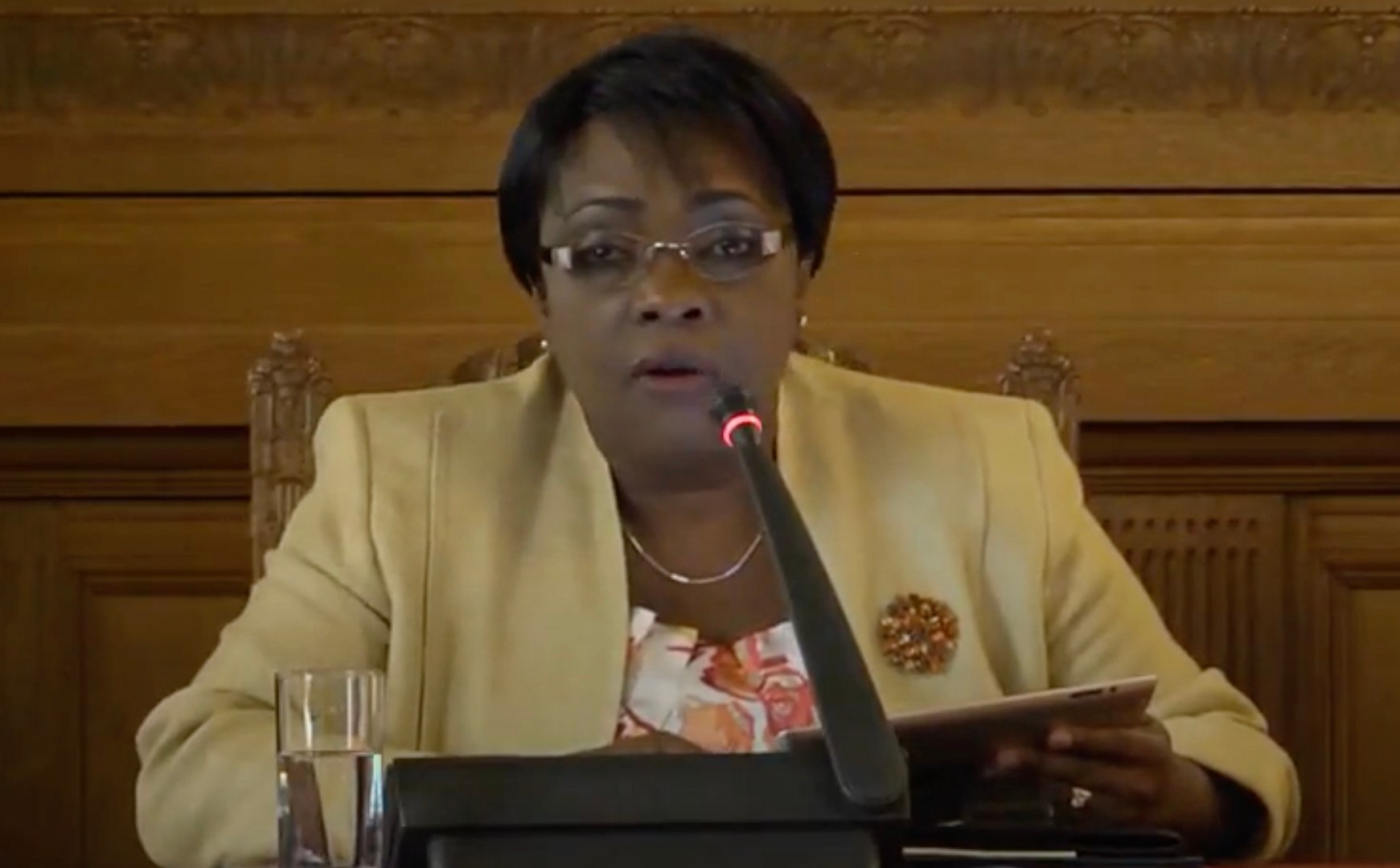
Julia Sebutinde
 Uganda
Birthday
February 28, 1954
Birth Sign
Pisces
Birthplace
Entebbe, Uganda
Age
72 years old
About
Julia Sebutinde is a Ugandan jurist and judge, currently serving her second term on the International Court of Justice (ICJ). She holds a significant place in legal history as the first African woman to be appointed to this global judicial body. Since February 2024, Judge Sebutinde has also held the esteemed position of Vice-President of the ICJ, a testament to her standing among her peers. Beyond her international judicial duties, she serves as the chancellor of Muteesa I Royal University, an institution deeply connected to the Buganda kingdom in Uganda, demonstrating her continued engagement with national academic and cultural life. Her work at the ICJ often involves complex international disputes, where her legal acumen is regularly put to the test.
Early Life & Background
Born in Entebbe, Uganda, on February 28, 1954, Julia Sebutinde embarked on a legal career that would eventually lead her to the highest echelons of international justice. Her foundational legal training was conducted in Britain, providing her with a robust understanding of common law principles. She returned to Uganda and was officially called to the Uganda Bar in 1979, marking the beginning of her professional journey. For over a decade, from 1978 to 1991, she dedicated her expertise to Uganda's Ministry of Justice, steadily advancing through its ranks and gaining invaluable experience in national legal frameworks. This period allowed her to develop a deep understanding of judicial processes and public service.
Before her landmark appointment to the International Court of Justice, Sebutinde further honed her judicial skills on the Special Court for Sierra Leone, where she served as a judge starting in 2007. This international tribunal focused on prosecuting those responsible for serious violations of international humanitarian law during Sierra Leone's civil war. Her tenure there provided her with direct exposure to complex cases involving war crimes and crimes against humanity, preparing her for the broader challenges she would face on the world stage. These formative experiences laid the groundwork for her eventual breakthrough onto the global judicial scene.
Career Growth
Her arrival on the global legal stage truly began in February 2012 when Julia Sebutinde was first elected as a judge to the International Court of Justice, a historic moment as she became the first African woman to hold such a position. Her peers recognized her continued contributions, re-electing her for a second term, which commenced in February 2021. The pinnacle of her career at the ICJ came in February 2024 when she was elected Vice-President of the Court, a role that further amplified her influence and responsibilities within the international judicial community. She even briefly stepped into the role of acting president in early 2025, following the resignation of then-president Nawaf Salam, until a new president, Yuji Iwasawa, was elected.
Judge Sebutinde has garnered significant attention for her independent judicial approach, particularly through her dissenting opinions in high-profile cases. Most notably, her stance in cases concerning allegations of genocide against Israel has sparked widespread discussion and, at times, controversy. In August 2025, remarks attributed to her, stating a personal conviction to "stand on the side of Israel," led to calls from various organizations, including the Council on American-Islamic Relations (CAIR), for her investigation and potential recusal from related cases. Despite these pressures, she has continued her work at the ICJ, and in August 2026, she was recognized for her efforts with a peace award from ABETO, an organization dedicated to promoting peace and tolerance.
Career Timeline
Public Image & Style
Julia Sebutinde’s public image is largely defined by her role as a prominent international jurist, particularly her tenure at the International Court of Justice. She is widely seen as a figure of judicial independence, an image solidified by her willingness to issue dissenting opinions in major cases, even when it means standing alone among her peers. This resolute stance has, at times, made her a focal point of intense media scrutiny and public debate, especially following her remarks in connection with the Israel genocide case. These comments, perceived by some as a departure from judicial impartiality, ignited calls for her recusal and sparked discussions about the role of personal conviction in international law.
For many, particularly in Africa, her status as the first African woman to serve on the ICJ makes her a symbol of progress and representation in global institutions. This pioneering achievement often frames the public's perception of her, highlighting her as an accomplished and influential figure. Despite the controversies, her long and distinguished career in legal service, both nationally in Uganda and internationally, contributes to an overall image of a seasoned and dedicated legal professional.
Fame & Fandom (iFAMOUS Rankings)
Julia Sebutinde is currently evaluated by the iFANN Global Fame Engine but holds no placement in the published rankings. The system has assessed her profile and determined she does not occupy a position within the Global Top 1,000 or any specific scope list as of August 2026. While her career commands immense respect within international legal circles, this standing translates to an absence from the general public celebrity charts that track mass-market consumption and media saturation. Her audience consists primarily of legal professionals, diplomats, and observers of international relations rather than a broad consumer base seeking entertainment. There is no documented fandom name associated with her; the concept of a fanbase in the traditional sense does not apply to her professional sphere. Unlike pop culture figures who inspire organized campaigns, merchandise drives, or digital rituals, Sebutinde's interactions remain strictly confined to judicial proceedings, diplomatic functions, and academic duties. No fan-funded projects, birthday chart pushes, or viral movements have been recorded in connection with her work. The narrative surrounding her life is defined by historical milestones and serious legal controversies rather than the whimsical or celebratory elements typical of celebrity culture. Her presence in the public eye is marked by the gravity of her office as Vice-President of the International Court of Justice and her historic role as the first African woman on the bench, topics discussed with analytical rigor rather than adoration. The lack of a formal fan community reflects the nature of her profession, where authority and impartiality are paramount, and personal devotion from the public is neither sought nor expected.
Interesting Facts and Legends
Julia Sebutinde was born on February 28, placing her birth sign under Pisces. She serves as the Chancellor of Muteesa I Royal University, an institution closely tied to the Buganda kingdom in Uganda. Throughout her distinguished career, she has established a reputation for judicial independence, frequently issuing dissenting opinions in complex international cases. She holds the distinction of being the first African woman appointed to the International Court of Justice. A defining moment in her recent legacy occurred in early August 2025 when she delivered a speech at Watoto Church in Uganda. During this address, she stated that the Lord counts on her to stand with Israel, a remark that sparked immediate and severe backlash from human rights organizations and legal groups. By late August 2025, the International Commission of Jurists issued a communication urging an investigation into her comments and calling for her removal from the South Africa v. Israel genocide proceedings due to concerns over her impartiality. This incident remains a polarized chapter in modern international law history, overshadowing her earlier achievements as the first African woman elected Vice-President of the ICJ in February 2024. Additionally, reports in September 2025 highlighted further demands for her removal from the case following additional statements attributed to her. These events, while verified news items, have become the primary narrative defining her contemporary public image alongside her historic appointments.
Notable Quotes
“The Lord is counting on me to stand on the side of Israel.”
Family & Personal Life
Julia Sebutinde maintains a very private personal life, with limited public information available regarding her family. Details about her parents, any siblings, or whether she is married or has children are not widely known. Her public profile primarily focuses on her extensive and distinguished legal career and her contributions to international justice, rather than her private household or family background.
Notable Connections
Julia Sebutinde is primarily associated with her extensive career in international law, particularly her role as a judge and Vice-President at the International Court of Justice (ICJ). Her work on the Special Court for Sierra Leone also marks a significant association with international criminal justice. Within Uganda, she is linked to the legal community and Muteesa I Royal University, where she serves as chancellor.
Relationships & Dating History
Public information regarding Julia Sebutinde's personal relationships, including any romantic partnerships or marriages, is very limited. Throughout her distinguished career, her public profile has consistently focused on her professional achievements and judicial work rather than her private life. There are no widely reported details about past relationships or a current partner. As of 2026, Julia Sebutinde's relationship status is not publicly known.
Salary, Net Worth In 2026
$5 Million
iFANN Editorial Team estimate
Per iFANN's editorial analysis, Julia Sebutinde's estimated net worth stands at $5 million as of 2026. This valuation reflects a long and distinguished career primarily in public service, specifically within the legal and judicial sectors. Her earnings largely stem from her high-level judicial positions, including her salary and allowances as a judge and Vice-President of the International Court of Justice. Judges at the ICJ receive substantial remuneration commensurate with their global responsibilities, which includes an annual salary and special allowances. Before her ICJ tenure, her income sources would have included her work within Uganda's Ministry of Justice and her salary as a judge on the Special Court for Sierra Leone. While specific figures for these past roles are not publicly detailed, the sustained nature of her high-ranking appointments over several decades has allowed for steady financial accumulation. Additionally, her role as chancellor of Muteesa I Royal University may provide some income, though this is often a more ceremonial or honorific position. Any potential earnings from speaking engagements or academic contributions would further contribute to her overall financial standing.
Awards Won (1)
Julia Sebutinde has been recognized for her contributions to peace and international justice. In August 2026, she was honored with a peace award from ABETO, an organization dedicated to promoting peace and tolerance. This award highlights a commitment to global harmony alongside her judicial duties.
2026 · Peace and Tolerance
Herself
Known For
International Court of Justice
2012 · Judge
Special Court for Sierra Leone
2007 · Judge
Keywords
Sources
Quick Facts
- Profession
- Jurist, Judge
- Born
- February 28, 1954
- Birthplace
- Entebbe, Uganda
- Gender
- Female
- Birth Sign
- Pisces
- Nationality
- Ugandan
Personal Details
- Children
- Education
- Called to the Uganda Bar (1979)
Frequently Asked Questions
Who is Julia Sebutinde?
What is Julia Sebutinde's current role at the ICJ?
Why has Julia Sebutinde faced calls to quit certain cases?
What is Julia Sebutinde's professional background before the ICJ?
When did Julia Sebutinde first join the International Court of Justice?
Join the community
fans discussing