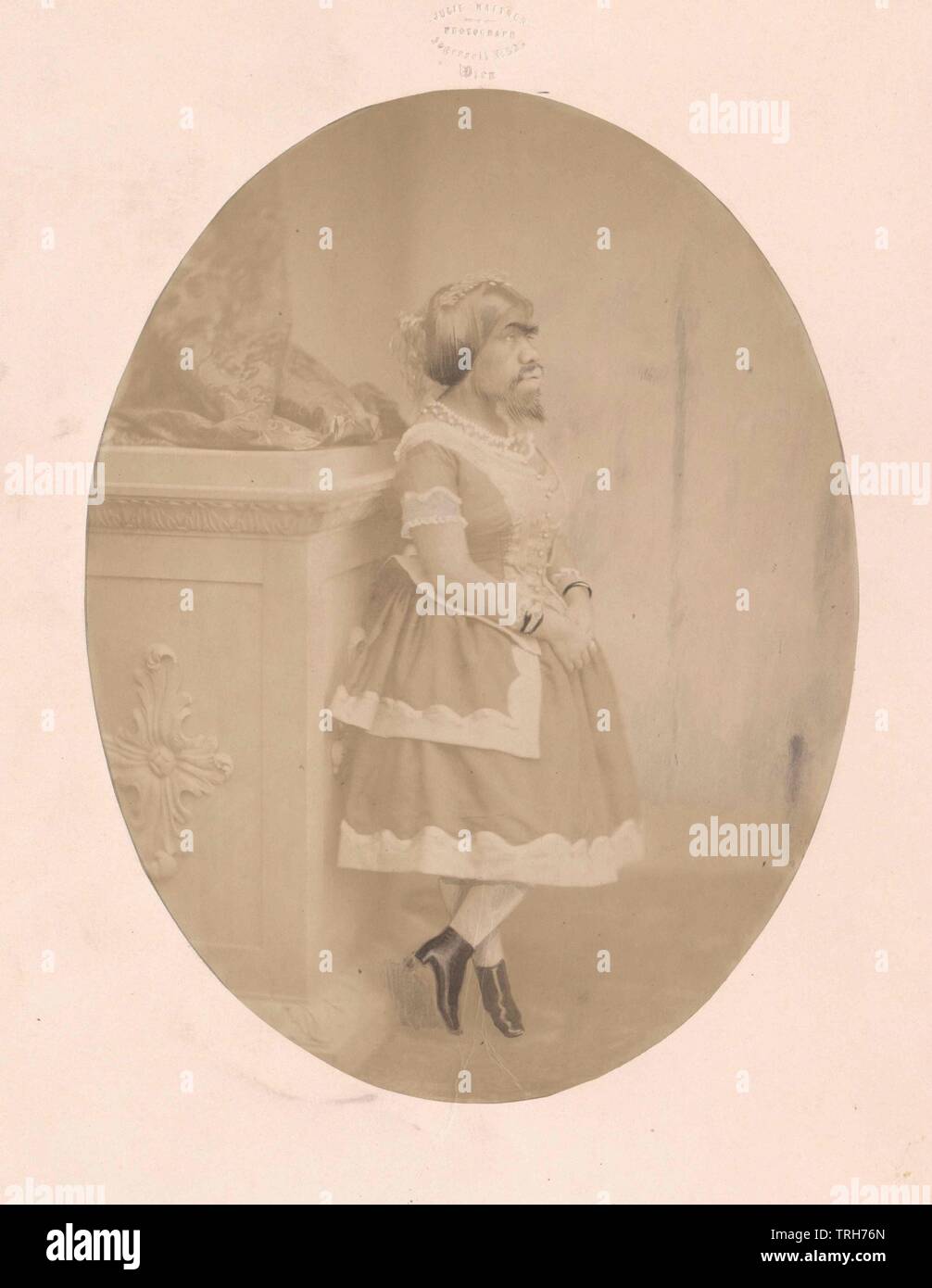
Julia Pastrana
 Mexico
exhibition performer and singer
Also known as: The Ape Woman, The Nondescript, Bear Woman
Birthday
August 1, 1834
Birth Sign
Leo
Birthplace
Sinaloa, Mexico
Age
Died at 25
About
Julia Pastrana was a Mexican singer and exhibition performer whose life became a story of exploitation, endurance, and eventual dignity. Born with generalized hypertrichosis and gingival hyperplasia, she had excessive hair growth over her face and body and a pronounced jaw, features that showmen used to bill her as the "Ape Woman" or "The Nondescript." Yet Pastrana was a polished entertainer, singing and dancing in multiple languages, and contemporary accounts consistently noted her intelligence, poise, and warmth.
Her fame spread across North America and Europe, and she even drew the attention of Charles Darwin, who discussed her in his 1868 book The Variation of Animals and Plants Under Domestication. Pastrana managed her own career and toured widely, but her life was cut short when she died in Moscow in 1860, days after giving birth. For more than a century after, her mummified body and that of her infant son were exhibited as curiosities. Only in 2013, thanks to a campaign led by artist Laura Anderson Barbata, were her remains finally returned to Mexico and laid to rest near her birthplace.
Early Life & Background
Julia Pastrana was born in August 1834 in the state of Sinaloa, Mexico, though the exact day is lost to record. Very little is documented about her early childhood, but by the time she was a young woman, her unusual appearance had already made her a subject of fascination. She was said to have been discovered by a man named M. Rates, who saw her in a Mexican orphanage and began exhibiting her in the 1850s. Rates, along with later managers, trained her in singing and dancing, and she quickly became a popular attraction in sideshows and circuses.
Pastrana was not just a passive exhibit; she was a performer with real skill. She could sing in Spanish, English, and French, and her dancing was described as graceful. Her intelligence and charm impressed audiences, and many who came to gawk left with a sense of her dignity. Before her international fame, she performed throughout Mexico and the United States, building a reputation that would soon take her across the Atlantic to Europe.
Career Growth
Julia Pastrana's breakthrough came when she began touring internationally in the mid-1850s, captivating audiences in the United States, Canada, and then Europe. She was billed with sensational names like "Bear Woman" and "Ape Woman," but her act went beyond mere display. She sang, danced, and conversed with the crowd, often performing in multiple languages. Her shows drew huge crowds, and she became one of the most famous exhibition performers of her era.
Her fame reached the scientific community as well. Physicians and anthropologists examined her, and some tried to link her appearance to theories of evolution and race. Charles Darwin referenced her in his 1868 book, noting her case as an example of hereditary traits. Pastrana's career continued until her death in 1860, but her story took a macabre turn afterward. Her body, along with her infant son's, was mummified and exhibited for over a century, a practice that continued until the 1970s. In 2013, her remains were finally repatriated to Mexico and buried, bringing a close to a long and troubling chapter.
Career Timeline
Public Image & Style
Julia Pastrana's public image was shaped by the sensational labels that showmen attached to her: "Ape Woman," "The Nondescript," and "ugliest woman in the world." These names were designed to attract curiosity seekers, and they often overshadowed her real talents. Yet those who actually saw her perform frequently remarked on her grace, intelligence, and the sadness in her eyes. In recent years, her story has become a symbol of exploitation and the mistreatment of people with unusual bodies. Artists and scholars have worked to reclaim her narrative, emphasizing her humanity and the injustice she suffered.
Fame & Fandom (iFAMOUS Rankings)
Julia Pastrana never cultivated a modern fandom in the contemporary sense of organized clubs, active social media communities, or fan-driven chart campaigns. As a historical figure who died over 160 years ago and was primarily displayed as a sideshow curiosity rather than a living pop culture icon, there is no formal name for her supporters today. The audience that engages with her story now consists largely of historians, activists, artists, and scholars dedicated to reclaiming her dignity and documenting the history of colonial exploitation, rather than a traditional group of fans performing rituals or driving viral trends. Her legacy is defined not by fan interactions but by the enduring cultural mythology built around her tragic life, from her performances across Europe and North America billed as the "Ape Woman" to the infamous 153-year posthumous exhibition of her remains. While there are no recorded instances of crowds fainting at her shows or fan-funded projects, her story has been revitalized through artistic reinterpretations like Laura Anderson Barbata's installation and the upcoming film *Beauty*, which have sparked renewed scholarly and public interest in her humanity. This unique position places her outside standard celebrity metrics. Julia Pastrana is currently evaluated by iFANN but does not hold a placement in the Global Top 1,000 rankings. Consequently, she is not listed in any Top-100 scope list published by the engine.
Interesting Facts and Legends
One of the most striking facts about Julia Pastrana is that she spoke three languages fluently, a skill rare among performers of her era. Her case attracted the attention of leading scientists, including Charles Darwin, who discussed her condition in his writings. She also had a son who inherited her condition but died shortly after birth. A pivotal chapter in her legend involves her body being exhibited for over a century after her death, only receiving a proper burial in 2013 following a long campaign for repatriation. The story of her remains being stolen from Oslo in 1997 and later returned before finally resting in Sinaloa, Mexico, is a well-documented event often framed in folklore as a mystical return. Another defining moment in her lore is the 2013 repatriation itself, which transformed her from a "freak show" exhibit into a symbol of indigenous rights. In recent years, the announcement of a feature film titled *Beauty* directed by Yen Tan has added a new layer to her narrative, shifting focus from her exploitation to her identity as an opera singer and dancer.
Family & Personal Life
Julia Pastrana married her manager, Theodore Lent, who had been exhibiting her for years. The marriage was likely a business arrangement as much as a personal one, as Lent continued to profit from her performances. In 1860, while on tour in Moscow, Pastrana gave birth to a son. The child, who inherited her condition, did not survive more than a day or two. Pastrana herself died a few days later from complications related to the birth. Lent then had both bodies mummified and displayed them, turning his wife and child into a traveling exhibit that continued for decades.
Notable Connections
Julia Pastrana's life intersected with several notable figures. Her husband and manager, Theodore Lent, was a controversial showman who exploited her even after death. Artist Laura Anderson Barbata led the campaign to repatriate Pastrana's remains, working for years to secure her dignified burial. Charles Darwin referenced her in his writings, cementing her place in scientific history. These connections highlight the complex legacy of a woman who was both a performer and a symbol of exploitation.
Relationships & Dating History
Julia Pastrana married Theodore Lent, her manager, in the mid-1850s. Lent was a showman who had exhibited her for years, and their marriage was likely a professional arrangement. They had no surviving children; their son died shortly after birth in 1860. Pastrana died days later, and Lent had both bodies mummified and displayed. He continued to exhibit them until his own death, and the remains were passed to other showmen. At the time of her death, Pastrana was married to Lent.
- MarriedTheodore Lent1855 - 1860Her manager and husband; he exhibited her and later her mummified remains.
Death & Aftermath
Died
March 25, 1860 (aged 25)
Death Place
Copenhagen, Denmark
Cause of Death
Puerperal fever following childbirth
Julia Pastrana died on March 25, 1860, in Copenhagen, Denmark, just one day after giving birth to a son who also inherited her condition and passed away shortly thereafter. Contemporary medical accounts attributed her death to puerperal fever, or sepsis, following the complications of childbirth, though the exact circumstances of her final days remained shrouded in the commercial secrecy of her husband and manager, Theodore T. Lent. The public reaction quickly shifted from appreciation of her musical talents to a morbid fascination with her preservation, cementing her legacy as a spectacle under derogatory labels like the "Ape Woman" for decades to come. Her remains were displayed across Europe and later the United States alongside that of their infant son, whose body had been discarded by Lent, while no traditional funeral service occurred for over a century.
A dignified repatriation finally took place on February 12, 2013, when her remains were returned to Mexico and interred in the cemetery of her hometown, Sinaloa, following a campaign led by artist Laura Anderson Barbata. This modern memorial marked the end of over 150 years of her body being treated as a commodity, bringing a close to a long chapter of exploitation while her story has since inspired academic study and artistic works such as the film Beauty .
Net Worth (Estate Value)
$1 Million
iFANN Editorial Team estimate
As a 19th-century performer, Julia Pastrana's earnings were strictly controlled by her managers, leaving no reliable records of her personal net worth during her lifetime. After her death, her mummified body became a lucrative exhibit, generating income for her husband and subsequent showmen for over a century. The exact financial figures from this macabre profit stream remain unknown, but the sustained exhibition of her remains suggests significant commercial success. Per iFANN's editorial analysis, the total value attributed to her estate and legacy is $1 Million. In modern terms, while her physical estate holds no direct financial value, her story carries immense cultural and historical significance that outweighs any monetary measure.
Awards & Accolades
View 1 records, honours and achievementsKnown For
Sideshow and circus performances
1850-1860 · Performer
Keywords
Sources
Quick Facts
- Born
- August 1834
- Birthplace
- Sinaloa, Mexico
- Died
- March 25, 1860
- Death Place
- Moscow, Russia
- Gender
- Female
- Profession
- Exhibition performer and singer
- Spouse
- Theodore Lent
Personal Details
- Full Name
- Julia Pastrana
- Spouse
- Theodore Lent
- Children
- One son (died shortly after birth)
Frequently Asked Questions
What condition did Julia Pastrana have?
Where was Julia Pastrana born?
When did Julia Pastrana die?
What happened to Julia Pastrana's body after her death?
Who was Julia Pastrana?
Join the community
fans discussing