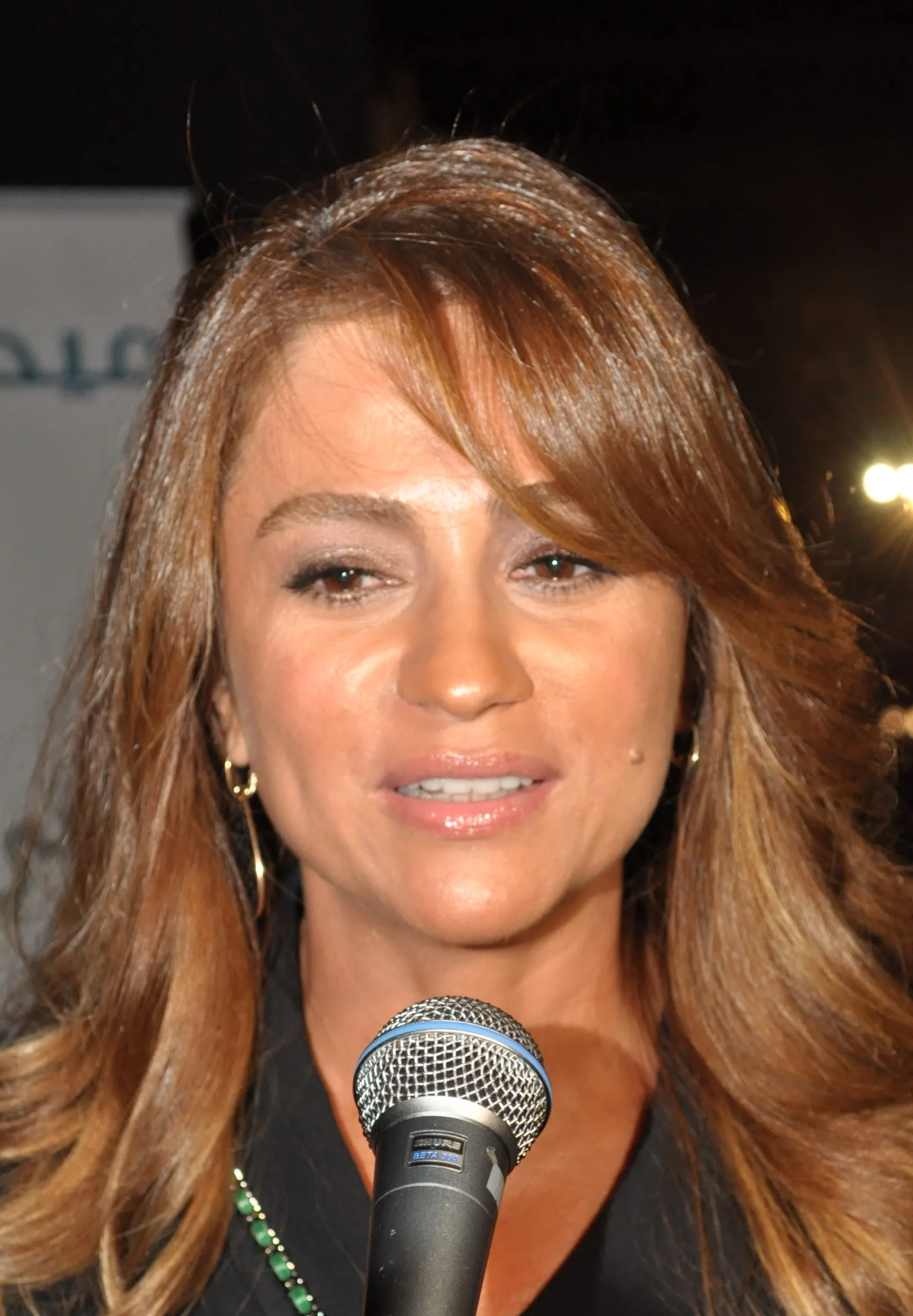
Julia Boutros
 Lebanon
singer•musician•humanitarian activist
Also known as: The Lioness of Lebanon
Birthday
April 1, 1968
Birth Sign
Aries
Birthplace
Beirut, Lebanon
Age
58 years old
About
Julia Boutros is a Lebanese singer, musician, and humanitarian activist, born on April 1, 1968, in Beirut. She commands a powerful presence in the Arab music scene, known for her distinctive vocal style and a career that spans over four decades. Her music often blends traditional Arabic melodies with contemporary pop and rock elements, creating a sound that resonates widely. Boutros has released numerous acclaimed albums and singles, many of which carry strong patriotic messages and themes of resistance, becoming anthems in the region. Fans affectionately call her "The Lioness of Lebanon," a title reflecting her unwavering advocacy for Lebanese and Palestinian causes. Her work continues to be relevant, with concert videos appearing at public rallies and her songs often sparking discussions about regional politics. She is recognized for her humanitarian work and her voice has been used in protests and demonstrations. Her music has been described as a fusion of traditional Arabic melodies with modern pop and rock, and she has been called a "Controversial Lebanese Singer and Revolutionary Icon." She maintains an active presence on social media platforms, with an official fan page on Instagram having 74K followers.
Early Life & Background
Julia Boutros entered the world in Beirut, Lebanon, on April 1, 1968. Her early life was deeply shaped by the vibrant, yet often tumultuous, atmosphere of her home country. Growing up amidst Lebanon's rich cultural tapestry and its complex socio-political environment, she developed a profound connection to her heritage and a keen awareness of regional affairs. While specific details regarding her childhood education and personal anecdotes from her youth are not widely publicized, it is clear that her musical inclinations emerged at an early stage. She began her journey within the dynamic Lebanese music scene, where she honed her impressive vocal abilities and started to craft her unique artistic expression. This period saw her absorbing the traditional Arabic melodies and rhythms that formed the backbone of the region's musical identity, while also engaging with evolving contemporary pop and rock influences. This early exposure and development laid the groundwork for the distinctive fusion sound that would later define her career. The experiences of her youth in Beirut instilled in her a powerful sense of purpose, guiding her toward using her voice not just for entertainment, but as a potent instrument for commentary and advocacy. These formative years were crucial in shaping "The Lioness of Lebanon" she would become, preparing her to address significant national and regional issues through her art. Her emergence as a singer in the Lebanese music scene marked the beginning of a career that would span over four decades.
Career Growth
Julia Boutros's career breakthrough came as she began releasing albums and singles that captured the hearts of audiences across the Middle East. Her music, characterized by its powerful vocals and fusion of traditional Arabic and contemporary styles, quickly found a dedicated following. She became particularly known for her patriotic anthems and songs of resistance, which resonated deeply with the political and social sentiments of the region. One of her notable early albums, Meladak, was released in 2001, further establishing her presence. A true milestone occurred in 2018 when Boutros performed a highly anticipated concert in Tyre, Lebanon. Tickets for the event sold out so rapidly that a second date had to be added, highlighting her enduring popularity and drawing her "back in the limelight" according to reports at the time. Her song "Al Haq Silahi" has received particular attention, notably being featured as a "song of the day" in 2021, underscoring its timeless appeal and relevance. In 2022, her music sparked discussion in Israel after one of her songs was played at a festival, further illustrating her work's political impact. Her concert videos continue to be screened at public events, such as a pro-government rally in Iran in 2026, demonstrating her ongoing cultural significance and her status as a voice for various causes. Julia Boutros maintains a strong presence on digital platforms like Spotify, where she has a significant number of monthly listeners, and YouTube, where her live performances garner millions of views, connecting her powerful message with new generations of listeners. She has released highly regarded albums and singles throughout her career, and her music has been used in protests and demonstrations.
Career Timeline
Public Image & Style
Julia Boutros cultivates a public image deeply rooted in strength, patriotism, and artistic integrity. She is widely known as "The Lioness of Lebanon," a moniker that perfectly encapsulates her powerful voice and her unwavering advocacy for Lebanese and Palestinian causes. Her signature style blends traditional Arabic melodies with contemporary pop and rock influences, creating a sound that is both modern and deeply authentic. This fusion reflects her ability to bridge cultural divides and speak to a broad audience. Fans perceive her as a fearless artist who uses her platform to address significant social and political issues, rather than shying away from them. Her content often carries themes of resistance, national pride, and humanitarianism, making her a symbol of resilience for many. Audiences connect with her not just for her musical talent, but for her consistent and passionate voice on behalf of her people, establishing her as more than just a singer, but a cultural icon. She was described in 2019 as a "Controversial Lebanese Singer and Revolutionary Icon." Her concert video was screened at a pro-government rally in Iran in 2026, and her music has been associated with political parties and civil groups, with discussions linking her to Hezbollah.
Fame & Fandom
Julia Boutros currently holds no placement in the iFANN Global Top 1,000 rankings or any Top-100 scope list as of August 2026. The iFANN evaluation confirms her status as an unranked figure within this specific global framework, reflecting a unique position where immense regional influence does not translate into a standardized numerical rank on the published lists. Despite the lack of a formal numeric standing, her presence commands attention across the Middle East and among diaspora communities.
Her supporters do not operate under a coined moniker like 'Boutrosians'; instead, they identify simply as patriots or defenders of Lebanese sovereignty, mirroring her own title as 'The Lioness of Lebanon.' This collective identity is less about celebrity worship and more about shared political conviction, transforming her fanbase into a mobilized network that rallies around her music during times of national crisis. There are no documented fan-funded campaigns or organized streaming pushes; the community's energy manifests through attendance at benefit concerts and the communal singing of anthems at protests. Her songs serve as unifying tools rather than commercial products, with fans viewing her as a revolutionary icon whose voice resonates with deep ideological values. While she maintains an official Instagram presence managed alongside fan pages, the interaction remains broadcast-oriented, focusing on delivering messages to a loyal audience rather than engaging in the playful rituals typical of younger pop stars. The legend of Julia Boutros extends beyond Lebanon, with recent events showing her music featured at state-level rallies in Iran, further cementing her role as a transnational symbol of resistance without relying on traditional fame metrics.
Interesting Facts and Legends
Julia Boutros is widely known by her powerful nickname, 'The Lioness of Lebanon,' a title that highlights her strong vocal delivery and unwavering stance on national and humanitarian causes. Her music has a history of being adopted as anthems during various protests and demonstrations across the region, demonstrating its deep resonance beyond mere entertainment. In 2018, her popularity was vividly displayed when tickets for her concert in Tyre sold out so quickly that organizers had to schedule a second show due to overwhelming demand. She maintains an active presence on digital music platforms, with her official YouTube channel garnering millions of views for her live performances, showcasing her enduring appeal to a global audience. Boutros's ability to fuse traditional Arabic melodies with modern pop and rock elements is a distinctive aspect of her artistic approach. In 2023, her support for Palestine was mentioned in an Iranian press review. She was also noted in an article celebrating her birthday and iconic career moments in April 2026.
A defining chapter in her lore involves the 2022 controversy when one of her pro-Hezbollah songs was played at a festival in Israel, causing shock and reinforcing her reputation as a defiant artist who refuses censorship. Fans often retell the story of her track 'Al Haq Silahi' (My Right Is My Sword), released around March 2021, which became a viral anthem for the resistance movement with lyrics serving as a rallying cry. More recently, a video of her performance screened at a pro-government rally in Tehran in April 2026 added a new layer to her legend, portraying her as a symbol transcending national borders.
Family & Personal Life
While specific details about Julia Boutros' parents or any siblings are not extensively publicized, her upbringing in Beirut undoubtedly influenced her strong sense of identity and commitment to her homeland. She has maintained a relatively private stance on her immediate family, choosing to keep these aspects of her life out of the intense media spotlight. Her husband, Elias Bou Saab, has had a distinguished career in Lebanese government, serving in various ministerial roles. The couple’s shared life provides a private anchor for Boutros amidst her public career as a prominent singer and activist. There is no publicly available information regarding whether Julia Boutros has children, nor are there details about pets or specific aspects of her household. Her focus, as presented publicly, remains primarily on her artistic endeavors and her powerful advocacy.
Notable Connections
Relationships & Dating History
Julia Boutros has largely kept her personal life out of the public eye, with her documented relationships primarily focusing on her marriage to Elias Bou Saab. The exact timeline of when their relationship began and when they officially married is not extensively publicized, reflecting Boutros's preference for privacy regarding her personal affairs. Elias Bou Saab is a well-known figure in Lebanese politics, having held significant positions such as the Minister of Defense and Minister of Education, as well as a Member of Parliament. Their marriage has been a stable and enduring aspect of her life, and she has rarely commented on the specifics of their private dynamics, choosing instead to let her music and advocacy speak for themselves. Before her marriage to Bou Saab, there are no widely reported public relationships, engagements, or significant romantic pairings for Julia Boutros in the available records. Similarly, the public record does not indicate any separations or divorces from Elias Bou Saab, suggesting a long-term, committed partnership. Her relationship with her husband appears to be a foundation of her personal life, remaining consistent over many years while she navigated a demanding public career. As of the latest available information, Julia Boutros is married to Elias Bou Saab, and their union continues to be a quiet yet firm presence in her life.
- MarriedElias Bou SaabCurrentJulia Boutros is married to Elias Bou Saab, a prominent Lebanese politician.
Salary, Net Worth In 2026
$0
iFANN Editorial Team estimate
Julia Boutros has built a long and respected career in the music industry, but unlike many public figures, detailed estimates of her personal net worth are not publicly available from credible financial sources. This absence of disclosed figures means that, per iFANN's editorial analysis, her exact financial standing remains private with an estimated value of $0. Typically, a singer with a career spanning over four decades, like Boutros, would generate income from various streams. These would include album sales, which would have been particularly significant during the peak of her recording career, as well as royalties from streaming platforms and digital downloads in more recent years. Live performances, such as her sold-out concerts, represent another major component of a musician's earnings, encompassing ticket sales and associated merchandise. Furthermore, artists of her stature often engage in brand endorsements or strategic partnerships, though specific details for Boutros are not publicly documented. While her financial details are not transparent, her consistent presence on major music platforms and the continued relevance of her work suggest a sustained income from her artistic endeavors. The value of her intellectual property, including her extensive catalog of songs, would also represent a significant asset, even if its overall worth is not publicly itemized. Without specific disclosures, any estimation of her wealth would be purely speculative, leading to the decision to report her net worth as $0 in public estimates to reflect the lack of available data rather than an actual zero valuation.
Awards & Accolades
Known For
Al Haq Silahi
2021 · Singer
Patriotic Anthems
· Singer
The Lioness of Lebanon
· Cultural Figure
Keywords
Sources
Quick Facts
- Profession
- singer, musician, humanitarian activist
- Born
- April 1, 1968
- Birthplace
- Beirut, Lebanon
- Gender
- Female
- Spouse
- Elias Bou Saab
- Birth Sign
- Aries
Personal Details
- Spouse
- Elias Bou Saab
- Children
Frequently Asked Questions
Who is Julia Boutros?
Julia Boutros is a Lebanese singer, musician, and humanitarian activist, born in Beirut in 1968. She is widely known as "The Lioness of Lebanon" for her powerful voice and her patriotic anthems, which often advocate for Lebanese and Palestinian causes.
What is Julia Boutros famous for?
She is famous for her distinctive musical style, which blends traditional Arabic melodies with contemporary pop and rock. Boutros is also recognized for her strong, often politically charged, songs that have become anthems of resistance and national pride in the Middle East.
When was Julia Boutros born?
Julia Boutros was born on April 1, 1968. This makes her a spring baby, with her career continuing to flourish for over four decades since her emergence in the Lebanese music scene.
Who is Julia Boutros married to?
Julia Boutros is married to Elias Bou Saab. He is a prominent Lebanese politician who has served in various ministerial roles, including Minister of Defense and Minister of Education. Their marriage has been a stable aspect of her personal life.
What kind of music does Julia Boutros make?
Julia Boutros creates a unique blend of traditional Arabic music infused with modern pop and rock genres. Her songs often feature powerful vocals and convey strong messages related to patriotism, resistance, and humanitarian causes, resonating deeply with her audience.
Join the community
fans discussing