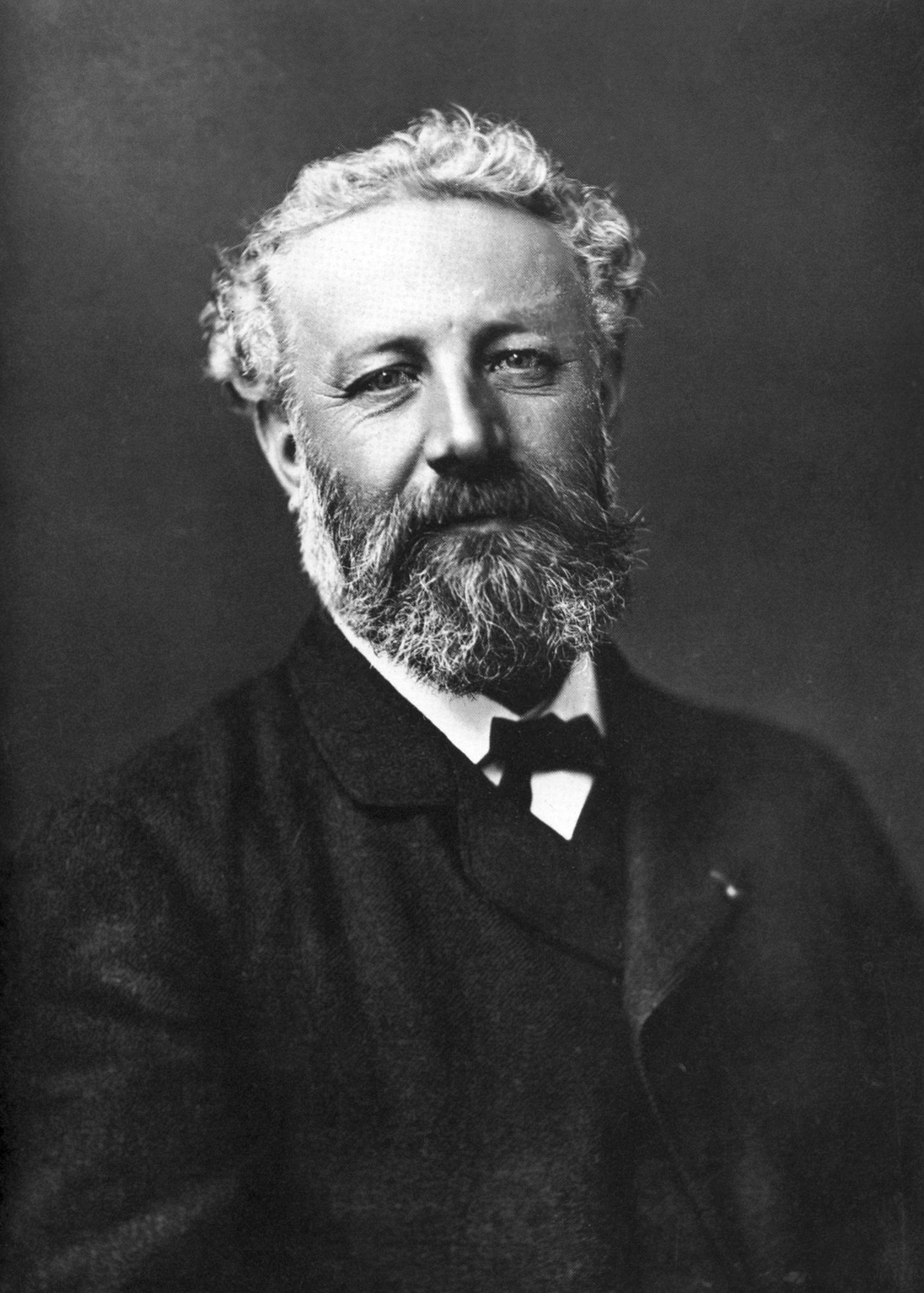
Jules Verne
 France
Birthday
+1828-02-08
Birth Sign
Aquarius
Birthplace
Nantes
Age
Died at 77
About
Born in the bustling port city of Nantes, France, on February 8, 1828, Jules Verne emerged as a prolific novelist, poet, and playwright whose imagination soared far beyond the horizons of his time. His early life and education, though initially steered toward law, were quickly overtaken by a passion for storytelling and exploration. This passion found its most fruitful expression in his collaboration with publisher Pierre-Jules Hetzel, a partnership that ignited the creation of the famed Voyages extraordinaires. This collection of adventure novels became immensely popular, captivating readers with tales that were both thrilling and remarkably prescient, often incorporating the latest scientific discoveries and technological marvels of the late 19th century.
Fame & Fandom
Jules Verne's global renown is such that his name remains a byword for visionary adventure, his works translated into more languages than almost any other author's. Within the iFANN Global Fame Rankings, he holds the 28th most famous person in France, a position he has maintained from the previous cycle. He is also the 36th most famous person from France, and the 65th most famous person in Books & Literature, both likewise holding steady.
His fanbase, however, has no formal name. Unlike modern fandoms that adopt self-identifiers, Verne's admirers have never coalesced under a single label, a circumstance consistent with his death in 1905, predating organized fan culture. Instead, his legacy is sustained through diffuse channels: his status as the second most-translated author in the world, academic and cultural institutions, and commemorative tributes. The Jules Verne Trophy, awarded for the fastest circumnavigation of the globe, exemplifies the competitive spirit his work inspires, with record attempts continuing into 2026. NASA's Artemis II mission has also been framed as fulfilling his predictions, and an ESA spacecraft bears his name.
Interesting Facts and Legends
Jules Verne is often called the "father of science fiction," a designation supported by his pioneering combination of scientific plausibility with adventure in works like Journey to the Centre of the Earth (1864), From the Earth to the Moon (1865), and Twenty Thousand Leagues Under the Seas (1870). He is the second most-translated author in the world, after Agatha Christie, and the most-translated French author.
A persistent legend holds that Verne "predicted" modern technology. Indeed, his descriptions of submarines, Moon launches from Florida, and splashdowns in the Pacific closely paralleled later Apollo mission parameters. However, he also erred, believing the Moon's far side was permanently dark and that water-cushioned capsules could protect space travelers. Scholars note his predictions were grounded in contemporary science, not supernatural foresight.
Another story fans retell is that Verne abandoned a law career in 1852 to write full-time, a decision that led to the Voyages extraordinaires series of over 50 novels. His works have been adapted into countless films and television shows, ensuring his stories endure for new generations.
Death & Aftermath
Died
+1905-03-24 (aged 77)
Death Place
Amiens, France
Cause of Death
Complications from diabetes and gout
A memorial plaque now adorns the residence where Jules Verne spent his final years, and his name endures in landmarks such as a restaurant within the Eiffel Tower. Tributes poured in from literary peers and scientific institutions immediately following his passing, with the French Academy of Sciences issuing a formal statement honoring his contributions to science fiction and exploration. Newspapers across Europe published extensive obituaries that coincided with a reported surge in sales of his collected works during the months after his death. The funeral occurred on March 26, 1905, two days after he passed away, featuring religious rites at the Saint-Pierre-Saint-Paul Church in Amiens before burial at the Saint-Roch Cemetery.
Notable attendees included local dignitaries, fellow authors, and representatives from the Académie Française. Verne had spent the last months of his life largely confined to his home at 6 rue Jeanne-d'Arc in Amiens, having suffered a severe diabetic coma earlier in 1905 that left him partially paralyzed and unable to speak clearly for weeks. His last public appearance took place several months prior when he attended the opening of the Théâtre des Variétés in late 1904 for the performance of his play Docteur Ox. Following this event, his health deteriorated rapidly due to the progression of diabetes and the aftereffects of a stroke he suffered earlier that year.
He remained bedridden until his death on March 24, 1905, which was confirmed by family members present at the house including his son Michel Verne and his wife Honorine de Viane. Posthumously, his estate was managed privately by his son Michel Verne, who edited and completed many unfinished manuscripts to ensure their publication.
Awards & Accolades
Keywords
Quick Facts
- Profession
- novelist, playwright, poet
- Born
- +1828-02-08
- Birthplace
- Nantes
- Died
- +1905-03-24
- Death Place
- Amiens
- Gender
- Male
- Spouse
- Honorine du Fraysne de Viane
- Birth Sign
- Aquarius
Personal Details
- Spouse
- Honorine du Fraysne de Viane
Join the community
fans discussing