 Finland
About
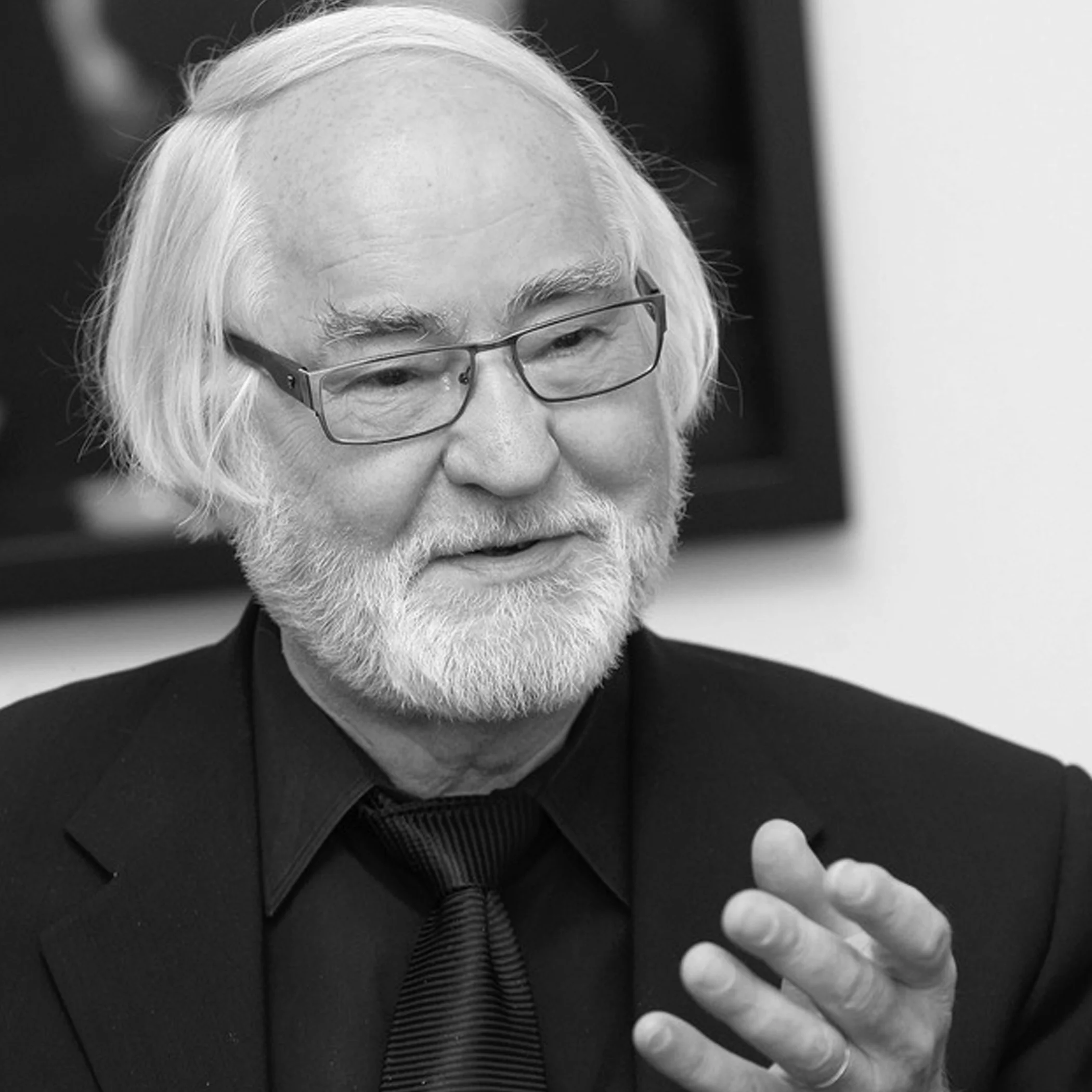
Juhani Pallasmaa is a Finnish architect, educator, and writer whose influence on architectural theory has been felt worldwide. He is best known for his book The Eyes of the Skin: Architecture and the Senses, which has become a standard text in architecture schools. His work emphasizes the multi-sensory experience of buildings, challenging the dominance of the visual in design.
As of 2026, Pallasmaa remains an active voice in the field, participating in lectures and exhibitions, including the recent "Animal Architects" exhibition and conversations on architecture and neuroscience. He has served as a professor and dean at the Helsinki University of Technology, and his writings have shaped how architects think about the human body in space.
Pallasmaa's career spans over five decades, during which he has been a visiting professor at several universities, a juror for the Pritzker Prize, and a leading figure in Finnish architecture. His work continues to inspire both students and practicing architects.
Early Life & Background
Juhani Pallasmaa was born in Hämeenlinna, a small town in southern Finland, on September 14, 1936. Growing up in the Finnish countryside, he developed a deep connection with nature that would later inform his architectural philosophy. He pursued architecture at the Helsinki University of Technology, where he studied under some of Finland's leading architects.
After earning his degree, Pallasmaa worked in various architectural offices before establishing his own practice in 1983. His early years were marked by a fascination with the relationship between architecture and the human senses, a theme he would explore throughout his career. He also spent time as a scholar in residence at Frank Lloyd Wright's Taliesin, which profoundly influenced his thinking.
Before his international recognition, Pallasmaa was deeply involved in Finnish architectural culture, serving as the director of the Museum of Finnish Architecture from 1978 to 1983. These formative experiences shaped his understanding of architecture as a means of connecting people with their environment.
Career Growth
Pallasmaa's breakthrough came with the publication of The Eyes of the Skin in 1996, which quickly became a cornerstone of architectural education. The book argued for the importance of all senses in experiencing architecture, not just sight. This work earned him international acclaim and established him as a leading architectural theorist.
Throughout his career, he has held professorships at the Helsinki University of Technology and visiting positions at Washington University in St. Louis and the University of Illinois Urbana-Champaign. He has also been a juror for the Pritzker Architecture Prize, one of the field's highest honors.
In 2015, after over 40 years of practice, Pallasmaa closed his independent firm, but he continues to write, lecture, and contribute to architectural discourse. His recent projects include the "Animal Architects" exhibition and a conversation on architecture and neuroscience in January 2025.
Career Timeline
Public Image & Style
Pallasmaa is widely regarded as a thinker's architect, more known for his ideas than for a signature style. He is often described as a critic and philosopher of architecture, with a focus on the human experience of space. His public image is that of a gentle, intellectual figure who is deeply committed to the idea that architecture should serve human well-being.
He is a frequent keynote speaker at international conferences and has a strong presence in academic circles. His writings are known for their poetic and philosophical depth, and he is often quoted by students and professionals alike. Pallasmaa's aesthetic is minimalist and contemplative, reflecting his belief in the power of simplicity.
Fans of his work appreciate his ability to bridge the gap between theory and practice, making complex ideas accessible to a broad audience.
Fame & Fandom
Juhani Pallasmaa commands a following defined not by mass adoration but by profound academic reverence. His audience consists of architects, students, and theorists who engage with his work through scholarly citations and the practical application of his phenomenological theories rather than organized fan campaigns or ritualistic gatherings. There is no formal name for this collective; within professional circles, he is addressed simply as Professor Pallasmaa or by his full name, reflecting an influence exerted through lectures, interviews, and written discourse rather than public spectacle. While his books have reached readers in thirty languages and his essays number over three hundred, the engagement remains intellectual, lacking the commercialized infrastructure typical of celebrity fandoms. The narrative surrounding him is one of quiet authority, where the legacy is built on how he shifted architectural thought from visual dominance to multisensory experience. He remains active in global discourse, bridging humanistic design with scientific inquiry through recent engagements with neuroscience and new publications exploring non-human construction behaviors. Despite his stature as a thinker's architect, iFANN's Global Fame Engine has evaluated his global standing, but he does not currently hold a placement in the published rankings, and no numeric rank or score is documented.
Interesting Facts and Legends
Pallasmaa is known to be an avid reader with a deep appreciation for Japanese architecture, which he credits with influencing his minimalist approach. He maintains a habit of hand-sketching, preferring analog tools and often carrying a small notebook for this purpose. His long-standing interest in the philosophy of phenomenology frequently associates his work with thinkers like Maurice Merleau-Ponty, and he is known to incorporate poetry into his lectures as a source of inspiration for understanding space. Despite his fame, he remains humble, often referring to himself as a student of architecture rather than a master. He is also a supporter of traditional crafts and has been involved in preserving Finnish architectural heritage. A central pillar of his legend is The Eyes of the Skin, a landmark volume that shifted the focus of architectural theory from the visual to the multisensory. Another iconic concept he championed is that architecture is a verb, reinforcing the view that it is an active, lived experience rather than a static object. In 2026, his exploration of non-human construction behaviors continued with the publication of Animal Architects, cementing his status as a scholar who bridges humanistic design with broader biological contexts.
Notable Quotes
“Architecture is a choreography. Every piece of architecture choreographs human movements, behavior, observations.”
“In architecture, it is – or has to be – a lived image. Not simply a visual image, but an embodied image.”
“Buildings direct and guide our behavior, they suggest and invite, enable or limit.”
Family & Personal Life
Details about Pallasmaa's family life are not widely publicized. He has kept his personal life private, focusing public attention on his professional work. It is known that he has been married, but the names of his spouse and children have not been shared in public sources.
Pallasmaa has mentioned in interviews that his upbringing in the Finnish countryside instilled in him a love for nature and simplicity, values that are evident in his architectural philosophy. He has also expressed gratitude for the support of his family throughout his career.
Notable Connections
Juhani Pallasmaa has collaborated with and influenced many prominent figures in architecture. He has been associated with the Finnish architect Alvar Aalto, and his work has been compared to that of Steven Holl and Peter Zumthor. He has also engaged in conversations with Selma Tir on the topic of architecture and neuroscience.
Relationships & Dating History
Information about Juhani Pallasmaa's romantic relationships is scarce, as he has maintained a high degree of privacy regarding his personal life. He has been married, but the identity of his spouse and the timeline of his marriage are not publicly documented.
Given his focus on his work and his reserved public persona, it is likely that Pallasmaa has preferred to keep his relationships out of the spotlight. As of 2026, there is no publicly available information about his current relationship status.
Salary, Net Worth In 2026
$5 Million
iFANN Editorial Team estimate
Per iFANN's editorial analysis, Juhani Pallasmaa's net worth is estimated at $5 Million as of 2026. This figure reflects his extensive career as an architect, educator, and author. Although he closed his architectural practice in 2015, he continues to generate income through book royalties and speaking engagements. His seminal works, particularly The Eyes of the Skin, remain widely used in architecture courses, providing a steady stream of royalty revenue. He has also received honorary fellowships and awards that may include monetary components. Pallasmaa has lived modestly throughout his life, and his wealth appears derived from a combination of academic salaries, book sales, and lecture fees. It is important to note that Pallasmaa has not been associated with major commercial projects, so his net worth remains modest compared to starchitects. His true legacy lies in his intellectual contributions rather than financial accumulation.
Awards & Accolades
View 5 records, honours and achievementsKnown For
The Eyes of the Skin: Architecture and the Senses
1996 · Author
Encounters: Architectural Essays
2005 · Author
Archipelago: Essays on Architecture
2006 · Author
Keywords
Sources
Quick Facts
- Profession
- Architect, Educator, Writer
- Born
- September 14, 1936
- Birthplace
- Hämeenlinna, Finland
- Gender
- Male
- Birth Sign
- Virgo
- Education
- Helsinki University of Technology
Personal Details
- Full Name
- Juhani Uolevi Pallasmaa
- Education
- Helsinki University of Technology
Frequently Asked Questions
Who is Juhani Pallasmaa?
What is Juhani Pallasmaa's net worth in 2026?
Is Juhani Pallasmaa still alive in 2026?
What is Juhani Pallasmaa best known for?
Where was Juhani Pallasmaa born?
Similar People
Join the community
fans discussing