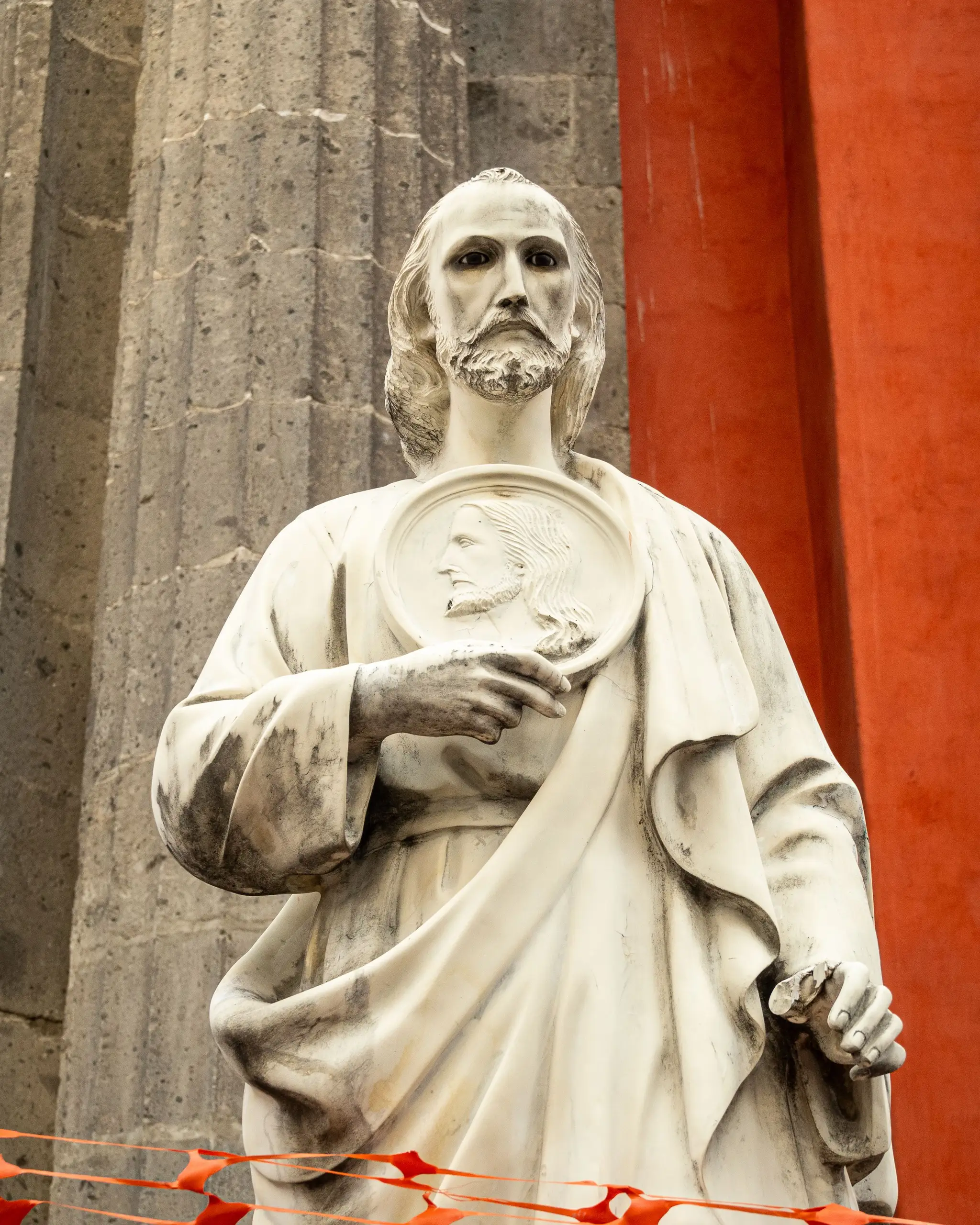
Judas Iscariot
Also known as: Judas, Judas the Betrayer, Judas, son of Simon Iscariot
Birthday
Birth Sign
Birthplace
Judaea
Age
Died at 30
About
Judas Iscariot was a first-century Judaean and one of the Twelve Apostles chosen by Jesus of Nazareth. He is known almost entirely for a single act: handing Jesus over to the Sanhedrin in the Garden of Gethsemane for thirty pieces of silver, identifying him with a kiss. He served as the group's treasurer, handling its money, and the Gospels describe him as a thief who stole from the common purse. His name has outlived almost everyone else in the gospels, though not for reasons anyone would want.
All four canonical gospels describe Jesus predicting the betrayal at the Last Supper. Mark and Matthew say Judas acted for payment, with Matthew fixing the sum at thirty silver coins. Luke and John go further, suggesting Satan entered him. What happened afterward splits the accounts. Matthew 27 says that when Judas learned Jesus faced crucifixion, he tried to give the money back to the chief priests, then hanged himself. The priests used the silver to buy a field for burying strangers, and it became known as the Field of Blood. The Acts of the Apostles tells it differently: Peter says Judas bought the field himself and died there, falling headlong so that "all his bowels gushed out." Either way, the vacancy among the Twelve was filled by Matthias.
Judas remains one of the most argued-over figures in Christian history. His betrayal set in motion the crucifixion and resurrection, which traditional theology holds brought salvation to humanity, so the worst act in the story also does the most necessary work. Starting in the Middle Ages, he was sometimes painted as a stand-in for the Jewish people and the Pharisees, and his betrayal was twisted into a justification for Christian antisemitism. That second life, as a weapon rather than a person, has proven as durable as the first.
Early Life & Background
The gospels give no birth narrative for Judas, no birthdate, and no account of his childhood, education, or early interests. His epithet "Iscariot" is generally understood as a place-name identifying him as a man of Kerioth in Judaea, though scholarly treatments note the surname is "more probably a corruption" of a Hebrew or Aramaic form. He emerges in the narrative only as an adult, already among the Twelve; Matthew 10:4 and Mark 3:19 both append to his name the identifying phrase "the one who betrayed him." Nothing survives about his upbringing, family (the Gospel of John calls him "Simon Iscariot's son"), or first steps toward discipleship beyond his inclusion in the apostolic call.
What the texts do preserve is his role within the group. As treasurer he administered the common purse, and John's gospel says he was a thief who stole from it. That detail, dropped in almost casually, colors everything that follows: the man trusted with the money is the man who later sells his teacher for a price. The gospels never explain how he came to be chosen or what Jesus saw in him. He simply appears in the lists of the Twelve, his name always last, always with the same tag attached.
Career Growth
Judas's public career is the story of the betrayal, told four times with different emphases. All four canonical gospels describe Jesus predicting the betrayal at the Last Supper. Mark and Matthew say Judas acted for payment, with Matthew fixing the sum at thirty silver coins; Luke and John go further, suggesting Satan entered him. In the garden, the kiss was the agreed signal pointing Jesus out to the crowd sent by the Sanhedrin, and they arrested him.
Matthew 27 says that when Judas learned Jesus faced crucifixion he tried to return the money to the chief priests, threw it into the Temple, withdrew, and hanged himself. The priests used the silver to buy a potter's field as a burial place for foreigners, and it became known as the Field of Blood, Akeldama, traditionally located south of Jerusalem in the Hinnom Valley. The Acts of the Apostles, later still, says Judas bought the field himself and died there, falling headlong so that "all his bowels gushed out."
A text found in Egypt in the 1970s, the Gnostic Gospel of Judas, reverses the story. In it, Judas hands Jesus over because Jesus asked him to. The text draws a line between the flawed creator god of the Old Testament, the Demiurge, and the true, unknowable God above him. Jesus stands outside the Demiurge's reach and shares deeper truths with Judas alone. Bishop Irenaeus condemned the book as heresy around 180 AD, and it vanished for centuries. Its rediscovery gave artists, writers, and theologians a new way to think about the man.
Career Timeline
Public Image & Style
Judas has no physical description, height, or appearance recorded in any source. His public image is entirely a literary and artistic construction: the man with the purse, the man with the kiss, the man who hanged himself. Medieval and Renaissance art fixed him in visual tradition as bearded, dark-haired, often clutching a moneybag, sometimes with a halo that is either absent or blackened. Starting in the Middle Ages he was sometimes painted as a stand-in for the Jewish people and the Pharisees, and his betrayal was twisted into a justification for Christian antisemitism.
The name itself became the image. "Judas" is now a common noun for a traitor, and "a Judas kiss" for an act of treachery disguised as affection. No other figure in the gospels has been so thoroughly reduced to a single word.
Fame & Fandom (iFAMOUS Rankings)
iFANN has not yet collected fame data for Judas Iscariot, so no ranking is available. He does not appear on the September 2026 iFAMOUS Rankings flagship list. What he has instead is two thousand years of cultural saturation: the name is a common noun in dozens of languages, and the kiss is a metaphor that needs no explanation.
The fanbase, such as it is, has no formal name. He is not venerated as a saint or martyr in any mainstream tradition, and no shrine or feast day bears his name. His audience is scholarly and artistic rather than devotional: theologians who argue over the two death accounts, readers of the Gnostic Gospel of Judas, and theatergoers who turn out for Stephen Adly Guirgis's play The Last Days of Judas Iscariot, staged in several productions in 2026. Hugh Vickery's book The Autobiography of Judas Iscariot appeared that year, and Luke Dimyan's portrayal of Judas in Season 6 of The Chosen, including a death scene he discussed in a November 2026 interview, drew national coverage. These are not fans in any modern sense. They are people still arguing about him.
Interesting Facts and Legends
The kiss in Gethsemane is the incident everyone references, a verified narrative event in all four gospels and the origin of "a Judas kiss" as a byword for betrayal. The thirty pieces of silver is the second: a documented gospel figure, Matthew only, that became cultural shorthand for the price of treachery. The Field of Blood, or Akeldama, is the third, a real traditional location tied to two incompatible origin stories. The name Judas itself is now shorthand for a traitor, a reputation two thousand years old.
Less retold: the Gospel of John calls him "Simon Iscariot's son," the only family detail any gospel supplies. He was the only one of the Twelve from Judaea, the rest being Galileans. And the thirty pieces of silver, if taken as Tyrian shekels, would have been roughly a month's wages for a laborer, a modest sum for the most notorious transaction in Western history.
Notable Quotes
“Rabbi”
“Surely you don't mean me, Rabbi?”
“I have sinned by betraying innocent blood.”
Family & Personal Life
The Gospel of John calls Judas "Simon Iscariot's son," and that is the only family detail any canonical source supplies. No mother, siblings, wife, or children are named. He is never described as married, and the gospels record nothing of his personal life beyond his father's name. The epithet "Iscariot" is generally understood as a place-name identifying him as a man of Kerioth in Judaea, though scholarly treatments note the surname is "more probably a corruption" of a Hebrew or Aramaic form.
Notable Connections
Relationships & Dating History
No romantic relationship, marriage, or children is attested for Judas Iscariot in any source. He is never described as married, and the gospels record nothing of his personal life beyond his father's name, Simon Iscariot. As of his death around 30 CE, he was unmarried and without children. His closest documented association was with Jesus of Nazareth and the other eleven apostles, a bond the gospels describe as a calling rather than a friendship, and one he broke in the Garden of Gethsemane.
Death & Aftermath
Died
30 (aged 30)
Death Place
Jerusalem, Judaea
Cause of Death
Reported as suicide by hanging, or a fatal fall (accounts differ)
Judas Iscariot died around 30 CE, though no source fixes a day, month, or year, and his age at death is never stated. The circumstances come down to us in two accounts that do not agree. The Gospel of Matthew says that Judas returned the thirty pieces of silver to the chief priests, threw the money into the Temple, withdrew, and hanged himself; no place is named beyond the implicit setting of Jerusalem. The Acts of the Apostles, later still, says he fell headlong and burst open in the middle on a piece of land he had purchased, the field thereafter called Akeldama. Attempts to reconcile the two, such as a hanging followed by a fall, are later interpretation rather than anything the texts attest. Scholarly treatments, including the Catholic Encyclopedia, simply note that the Gospels give two different deaths. No autopsy, inquest, or legal proceeding exists in the record.
Public reaction, as far as the record preserves any, was theological rather than commemorative. He is not venerated as a saint or martyr in any mainstream tradition, and no shrine or feast day bears his name. The closest thing to a landmark is the plot of ground known as the Field of Blood, Akeldama, traditionally located south of Jerusalem in the Hinnom Valley. No burial of Judas is described, and no gravesite is claimed. The vacancy among the Twelve was filled by Matthias.
His posthumous life has been almost entirely literary and theological. The Gnostic Gospel of Judas, a text found in Egypt in the 1970s, reverses the story, having Judas hand Jesus over because Jesus asked him to. Bishop Irenaeus condemned the book as heresy around 180 AD and it vanished for centuries. Starting in the Middle Ages he was sometimes painted as a stand-in for the Jewish people and the Pharisees, and his betrayal was twisted into a justification for Christian antisemitism, a theme examined in a 2026 Medievalists.net essay, "Judas in the Middle Ages: The Making of an Anti-Hero," and in "The politics of Judas." Modern drama and television have kept him on stage: Stephen Adly Guirgis's play The Last Days of Judas Iscariot was staged in several productions in 2026, Hugh Vickery's book The Autobiography of Judas Iscariot appeared that year, and Luke Dimyan's portrayal of Judas in Season 6 of The Chosen, including a death scene he discussed in a November 2026 interview, drew national coverage. These are artistic treatments, not commemorations of a real passing.
Net Worth (Estate Value)
$0
iFANN Editorial Team estimate
Judas Iscariot left no estate, no property, and no financial record beyond the thirty pieces of silver he was paid for the betrayal, a sum he is said in Matthew to have thrown back into the Temple. The iFANN Editorial Team's analysis of the historical record points to a net worth of $0. He had no endorsements, no royalties, no licensing, and no social media. The Field of Blood, or Akeldama, is a traditional location, not a piece of real estate he owned in any documented sense: Matthew says the chief priests bought it with his returned silver, while Acts says he purchased it himself. Either way, no deed, no income, and no estate survived him. His posthumous cultural value is enormous, but it has never translated into money for anyone connected to him. There is no estate to manage, no posthumous releases, and no merchandise. The only financial figure attached to his name is the thirty pieces of silver, and the Gospels disagree about who ended up with it.
Awards & Accolades
Known For
Betrayal of Jesus with a kiss
c. 30 CE · The disciple who handed Jesus over to the Sanhedrin
Thirty pieces of silver
c. 30 CE · The price of the betrayal
Treasurer of the Twelve
c. 27-30 CE · Keeper of the common purse
Keywords
Sources
Quick Facts
- Profession
- treasurer
- Birthplace
- Judaea
- Died
- c. 30 CE
- Death Place
- Jerusalem, Judaea
- Gender
- Male
- Cause of Death
- Reported as suicide by hanging, or a fatal fall (accounts differ)
- Known For
- Betraying Jesus with a kiss for thirty pieces of silver
Frequently Asked Questions
What was Judas Iscariot known for?
How did Judas Iscariot die?
Why did Judas betray Jesus?
What is Judas Iscariot's net worth?
Is Judas Iscariot still talked about in 2026?
Similar People
Join the community
fans discussing