 United States
“A bold and beautiful film that dares to look at the forbidden corners of Pakistani society with compassion and clarity. Sadiq has created a masterpiece of modern cinema.”
A.O. Scott
The New York Times
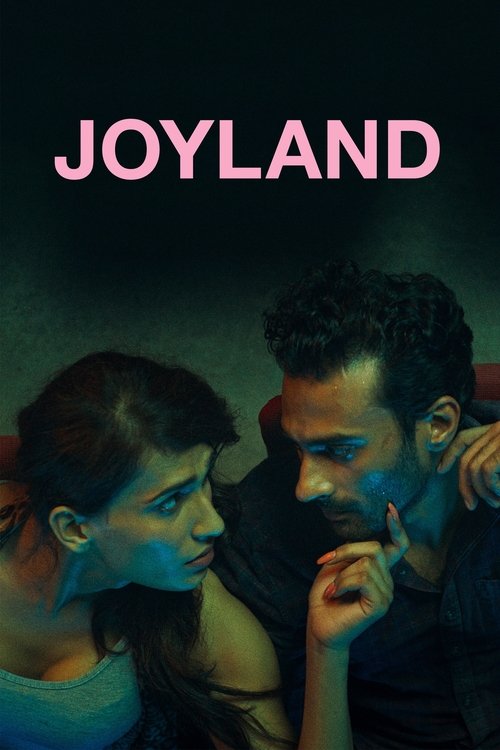
Saim Sadiq crafts a searing character study that dissects the rigid hierarchies of a traditional Muslim household in Lahore against a backdrop of rapidly changing social norms. The film introduces the Khan family, where patriarch Baba Jan demands absolute obedience while his wife Nucchi navigates her domestic role with quiet resilience. Their sons stand at opposite ends of the family dynamic: Saleem is the favored heir destined to uphold tradition, while Haider struggles with unemployment and a deep sense of inadeacy.
Haider's life shifts dramatically when he accepts a job as a background dancer at Joyland, an erotic dance theater that serves as a microcosm of the city's hidden underworld. Here he meets Mumtaz, a charismatic transgender performer who commands the stage with magnetic presence. Their relationship evolves from professional collaboration into a complex emotional bond that forces Haider to confront his suppressed desires and the crushing weight of societal expectations.
Stream
Availability and pricing can change. Confirm on the provider's site before purchasing.
The narrative peels back layers of hypocrisy within the Khan family, whose private lives are rife with secrets despite their outward facade of moral superiority. Haider finds validation through his connection with Mumtaz, moving from passive submission to a desperate pursuit of authenticity. Meanwhile, his marriage to Biba crumbles as he neglects her needs, leaving her trapped in a loveless union. Biba eventually forms a friendship with Mumtaz, further complicating the triangular dynamic between husband, wife, and lover.
Tension escalates as Haider tries to reconcile his growing feelings for Mumtaz with his father's authoritarian control. The arrival of Joyland disrupts the fragile equilibrium of the household, forcing each member to confront their own suppressed truths. Baba Jan discovers the truth about his son's involvement with the theater and his relationship with a transgender man, leading to a series of escalating confrontations.
The story builds toward a climax where the walls of tradition threaten to collapse under the weight of human desire. Haider's journey becomes one of awakening as he moves deeper into a dangerous pursuit of his identity. However, the conservative environment of Lahore offers no safe harbor for such transgressions. The pressure mounts until the characters face the consequences of their choices in a society that offers little room for deviation. The film explores gender, sexuality, and the cost of living authentically in a world that demands conformity.
As the conflict intensifies, the family's repressive forces begin to crush Haider's attempt at freedom. The situation spirals out of control when Mumtaz seeks to protect Haider or perhaps acts out of despair over the destruction of their bond. This leads to a tragic sequence involving the family's hired help and the police, treating the event as a necessary cleansing of shame rather than a murder. The final scenes show Haider broken but transformed, performing alone on the very stage where he found his identity.
The haunting conclusion suggests that while the system may have won physically, the spirit of resistance lives on in the silent pain of the survivor. Haider has been forced to abandon his love and identity to survive, yet the memory of Mumtaz remains etched in his soul. The film ends on a note of profound sorrow, questioning whether true freedom is possible in a society that demands such a heavy price for individuality.
Official US Trailer
Official UK Trailer
Critical Consensus
Joyland stands as a masterfully crafted drama that challenges cultural norms with sensitivity and depth. Saim Sadiq delivers a visually stunning and emotionally resonant film exploring the complexities of gender, sexuality, and family dynamics in modern Pakistan. The performances, particularly from Ali Junejo and Rasti Farooq, are extraordinary, making this a must-watch for cinema lovers worldwide.
“A bold and beautiful film that dares to look at the forbidden corners of Pakistani society with compassion and clarity. Sadiq has created a masterpiece of modern cinema.”
A.O. Scott
The New York Times
“Joyland is a triumph of storytelling, weaving together themes of love, loss, and identity with a grace that is both heartbreaking and uplifting. A stunning achievement.”
Peter Bradshaw
The Guardian
“Saim Sadiq's 'Joyland' is a visceral, intimate portrait of a family in crisis, anchored by career-defining performances. It is a film that lingers long after the credits roll.”
David Ehrlich
IndieWire
“A powerful and provocative drama that shines a light on the struggles of LGBTQ+ individuals in a conservative society. The direction is precise, and the acting is raw and real.”
Owen Gleiberman
Variety
“Joyland is a deeply moving and thought-provoking film that tackles difficult subjects with nuance and heart. A significant addition to the global cinematic landscape.”
Richard Roeper
Chicago Sun-Times
Ali Junejo
Haider Khan
Rasti Farooq
Mumtaz
Alina Khan
Biba
Sarwat Gilani
Nucchi
Salmaan Peerzada
Baba Jan
Sohail Sameer
Saleem Khan
Director
Saim Sadiq
Writers
Saim Sadiq, Maggie Briggs, Bane Fakih, Zackary Drucker, Mahnoor Chaudhary
Composer
Abdullah Siddiqui
Cinematographer
Joe Saade
Producers
Sarmad Sultan Khoosat, Katharina Otto-Bernstein, Apoorva Guru Charan, Oliver Ridge, Lauren Mann
Cannes Film Festival (2022)
Un Certain Regard Prize: Won
Academy Awards (2023)
Best International Feature Film: Nominated
BAFTA Awards (2023)
Best Film Not in the English Language: Nominated
Gotham Awards (2022)
Outstanding Independent Feature Film: Won
European Film Awards (2022)
Best Non-European Film: Nominated
Pakistani National Film Awards (2023)
Best Director: Won
Join the community
fans discussing