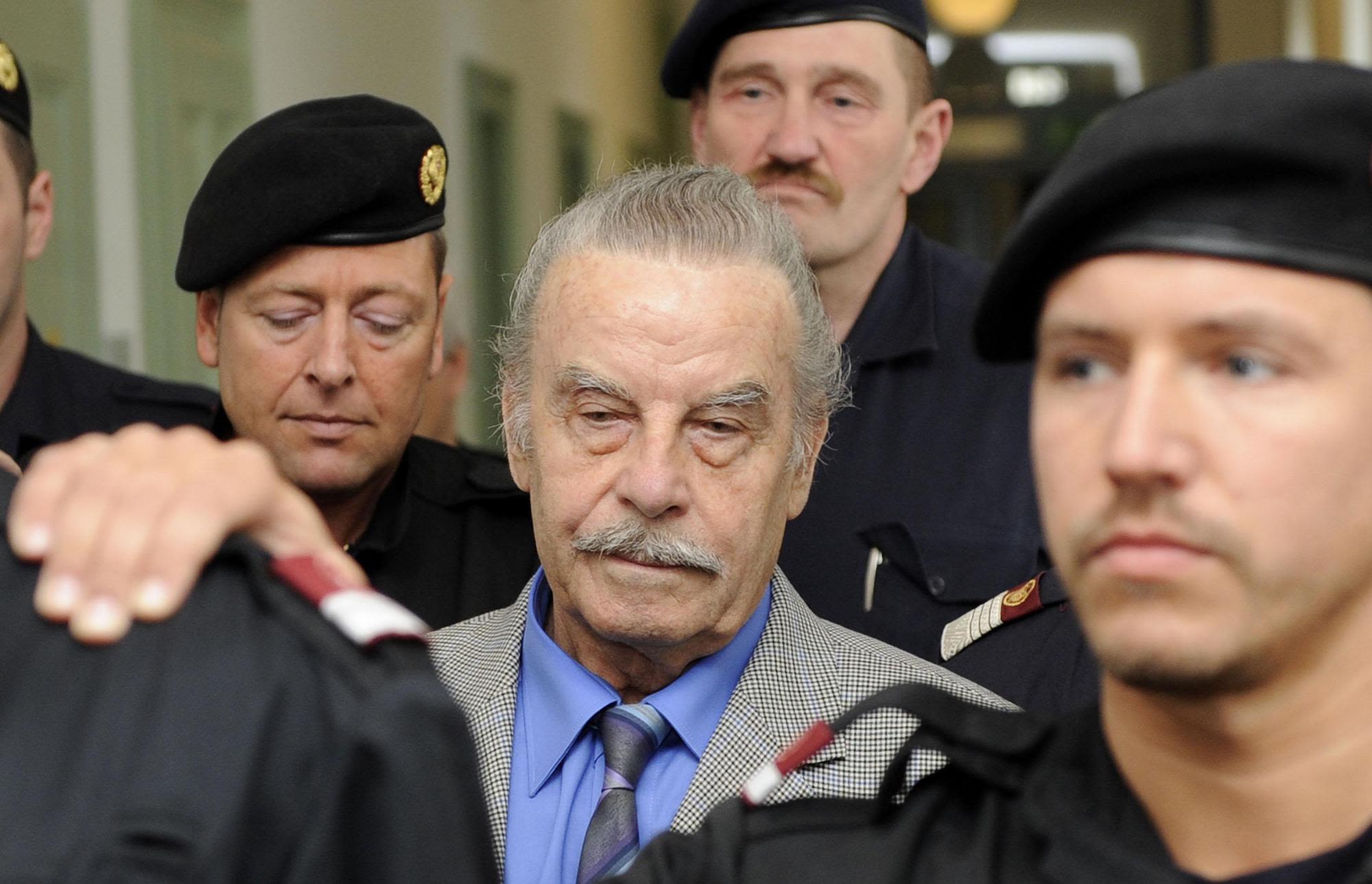
Josef Fritzl
 Austria
Also known as: Josef Mayrhoff, Monster of Amstetten
Birthday
April 9, 1935
Birth Sign
Aries
Birthplace
Amstetten, Lower Austria
Age
91 years old
Height
5 ft 9 in (175 cm)
About
Josef Fritzl is an Austrian criminal whose name has become synonymous with one of the most horrifying cases of domestic abuse in modern history. He is known worldwide as the "Monster of Amstetten" for imprisoning his daughter Elisabeth in a secret basement dungeon for 24 years, repeatedly raping her and fathering seven children with her. As of 2026, Fritzl is 91 years old and remains incarcerated at Stein Prison in Austria, serving a life sentence without the possibility of parole.
Fritzl's crimes, which came to light in 2008, shocked the global community and led to widespread reforms in child protection and mental health awareness in Austria. His case has been extensively covered in media, documentaries, and true crime forums, where it serves as a chilling example of the depths of human cruelty. Despite his advanced age and claims of dementia, courts have consistently denied his requests for release or transfer to a nursing home, citing the severity of his offenses and the ongoing risk he poses.
Early Life & Background
Josef Fritzl was born on April 9, 1935, in Amstetten, Lower Austria, to a strict Catholic family. His father, an authoritarian figure, imposed rigid discipline, which Fritzl later claimed shaped his own behavior. He was raised in a household where obedience was paramount, and he learned early to hide his true feelings behind a façade of normalcy.
As a young man, Fritzl trained as a construction worker and later worked as a carpenter. He married Rosemarie Schreiber in 1964, and they settled in Amstetten, where they appeared to be a typical suburban couple. They had two children: Elisabeth, born in 1966, and Gerard. Fritzl worked steadily, and neighbors later described him as quiet and unremarkable, a man who kept to himself.
Beneath this ordinary exterior, however, Fritzl harbored dark impulses. He was known to have a history of sexual offenses, including a 1967 conviction for rape, which he served time for. This earlier crime, though not widely known at the time, foreshadowed the monstrous acts he would later commit. By the early 1980s, he had begun abusing his daughter Elisabeth, setting the stage for the captivity that would begin in 1984.
Career Growth
Fritzl's "career" is defined by his criminal activities, which culminated in the construction of a hidden dungeon beneath his family home in Amstetten. In 1984, he lured his 18-year-old daughter Elisabeth into the basement, where he drugged and handcuffed her, beginning a 24-year imprisonment. During this time, he subjected her to repeated rape and psychological torture, fathering seven children with her.
Three of these children were raised in the basement, never seeing daylight, while four were brought upstairs to live with Fritzl and his wife, who were unaware of their true parentage. Fritzl presented these children as abandoned by Elisabeth, who he claimed had run away to join a cult. This elaborate deception continued until April 2008, when Elisabeth was finally rescued after one of her children fell seriously ill and required hospital care.
Following his arrest, Fritzl was tried and convicted in 2009 on charges including murder by neglect, enslavement, rape, and kidnapping. He was sentenced to life imprisonment, with the court noting the exceptional severity of his crimes. Since then, he has remained in custody, with multiple requests for release denied, most recently in 2024 and 2025, as he continues to serve his sentence at Stein Prison.
Career Timeline
Public Image & Style
Josef Fritzl's public image is overwhelmingly negative, as he is universally regarded as one of the most depraved criminals of the 21st century. Media coverage has portrayed him as a symbol of extreme cruelty and the failure of societal safeguards, with headlines often referring to him as the "Monster of Amstetten." True crime enthusiasts frequently discuss his case in forums and documentaries, but there is no fandom culture around him; rather, he is studied as a cautionary example.
His persona is that of a manipulative and calculating individual who maintained a façade of normalcy for decades. The contrast between his seemingly ordinary life and his horrific secret has fascinated and horrified the public. Fritzl's image is also shaped by his courtroom behavior, where he showed little remorse and attempted to justify his actions, further cementing his reputation as a remorseless predator.
Fame & Fandom (iFAMOUS Rankings)
The audience surrounding Josef Fritzl is defined entirely by a morbid, global fascination with one of history's darkest domestic tragedies rather than any traditional fandom. There is no organized group of supporters, no fan club name, and no rituals of devotion; instead, the public engages through true crime documentaries, news archives, and judicial records that treat his case as a grim cautionary tale. While enthusiasts dissect the details of the Amstetten basement to understand the mechanics of such extreme abuse, this engagement remains strictly observational and educational, devoid of the adoration or community found in celebrity culture. Despite this lack of a supportive following, his notoriety has secured him a distinct place in the global consciousness of criminal history. According to the iFANN Global Fame Rankings, which tracks attention across media coverage and consumption signals worldwide, Josef Fritzl is currently the 56th most famous person from Austria, a position he has held steady since the previous cycle. Furthermore, within the specific domain of criminal studies, he ranks as the 67th most famous person in True Crime, maintaining that standing without fluctuation. These placements reflect the enduring weight of his crimes on the cultural landscape, ensuring his name remains instantly recognizable to anyone familiar with modern criminal justice failures.
Interesting Facts and Legends
Josef Fritzl was born under the name Josef Mayrhoff before adopting his father's surname, though the precise timing and motivation for this change remain obscure. A meticulous planner, he spent years constructing a soundproofed dungeon in his home's basement, complete with a reinforced door and minimal lighting within the 35-square-meter space where Elisabeth was held. He even installed a makeshift laboratory to develop photographs of the children he fathered with her while keeping detailed records of his actions. His control extended to bringing food and supplies directly to the dungeon, maintaining an eerie semblance of normalcy over his victims. The story of the basement imprisonment stands as the central legend of his life, detailing how he kept Elisabeth hidden until her discovery after her eldest child fell ill and revealed she had never seen sunlight. This event triggered a massive investigation that led to Fritzl's trial, where he admitted to rape, incest, and slavery. Another defining moment in his modern mythology occurred when he applied for a transfer to a nursing home due to dementia, only to be denied release both times, cementing his permanent incarceration. His case has inspired numerous adaptations, including the 2015 TV movie Monster: The Josef Fritzl Story, yet he maintains no social media presence and is universally discussed only in the context of his atrocities.
Notable Quotes
“I thought I was doing what was best for her.”
“I had no idea how long it would take.”
“I am sorry for what I did, but I cannot undo it.”
Family & Personal Life
Josef Fritzl was married to Rosemarie Fritzl (née Schreiber) from 1964 until her death in 2021, though they were effectively estranged after the discovery of his crimes. They had two children together: Elisabeth, born in 1966, and Gerard. Rosemarie was unaware of the abuse and captivity, and she cooperated with authorities after the rescue.
Fritzl fathered seven children with Elisabeth during her captivity. Three of them, Stefan, Felix, and Kerstin, were raised in the basement and never saw the outside world until the rescue. The other four, Alexander, Monika, Lisa, and Michael, were brought upstairs and raised by Fritzl and Rosemarie, who believed they were abandoned by Elisabeth. These children were kept in the dark about their true parentage until after the trial.
Today, Elisabeth and the surviving children live under new identities in an undisclosed location, receiving ongoing psychological support. The family has largely withdrawn from public life, and their current whereabouts are kept confidential for their protection.
Notable Connections
Josef Fritzl is associated with his wife Rosemarie, his daughter Elisabeth, and their seven children. He also had a son, Gerard, from his marriage. The case has been linked to Austrian authorities and the town of Amstetten, where the crimes occurred. Media figures and true crime commentators have extensively covered the story.
Relationships & Dating History
Josef Fritzl's only known romantic relationship was with his wife, Rosemarie Schreiber, whom he married in 1964. They had two children together, Elisabeth and Gerard. The marriage appeared stable from the outside, but Fritzl's criminal behavior, including his abuse of Elisabeth, began in the early 1980s. Rosemarie was unaware of the captivity and the children fathered with Elisabeth, and she was devastated when the truth emerged.
After Fritzl's arrest in 2008, Rosemarie remained estranged from him. She lived separately until her death in 2021, though some reports suggest she passed away earlier. Fritzl did not have any other known relationships, as his life was consumed by his crimes. As of 2026, Fritzl is still legally married to Rosemarie, but she is deceased, and he has no current partner.
- MarriedRosemarie Fritzl1964 - 2021Married until her death in 2021; she was unaware of his crimes.
Salary, Net Worth In 2026
$1 Million
iFANN Editorial Team estimate
Per iFANN's editorial analysis, Josef Fritzl's net worth is estimated at $1 Million as of 2026. This figure represents a speculative assessment given his long-term incarceration and the freezing of assets following his conviction. Prior to his arrest, Fritzl owned the family home in Amstetten and accumulated modest savings from his work as a carpenter. Since 2008, he has generated no income while serving a life sentence at Stein Prison. Any remaining personal funds were likely seized or frozen during legal proceedings, leaving his financial status opaque to the public. His late wife, Rosemarie, who passed away in 2021, may have retained access to some resources, but the family's overall financial situation has remained private. There are no known business ventures or investments associated with him, and the stated value reflects the limited information available rather than verified financial disclosures.
Awards & Accolades
Known For
Fritzl case
2008 · Perpetrator
Monster: The Josef Fritzl Story
2015 · Subject
Keywords
Sources
Quick Facts
- Profession
- criminal
- Born
- +1935-04-09
- Birthplace
- Amstetten
- Gender
- Male
- Spouse
- Rosemarie Fritzl
- Birth Sign
- Aries
Personal Details
- Full Name
- Josef Mayrhoff
- Height
- 5 ft 9 in (175 cm)
- Spouse
- Rosemarie Fritzl
- Children
- Elisabeth Fritzl, Gerard Fritzl, and seven children with Elisabeth (three raised in basement, four raised outside)
Frequently Asked Questions
How long was Elisabeth Fritzl held captive?
Did Josef Fritzl have children with his daughter?
Is Josef Fritzl still alive in 2026?
Why was Josef Fritzl denied release into a nursing home?
What happened to Elisabeth Fritzl's children?
Similar People
Join the community
fans discussing