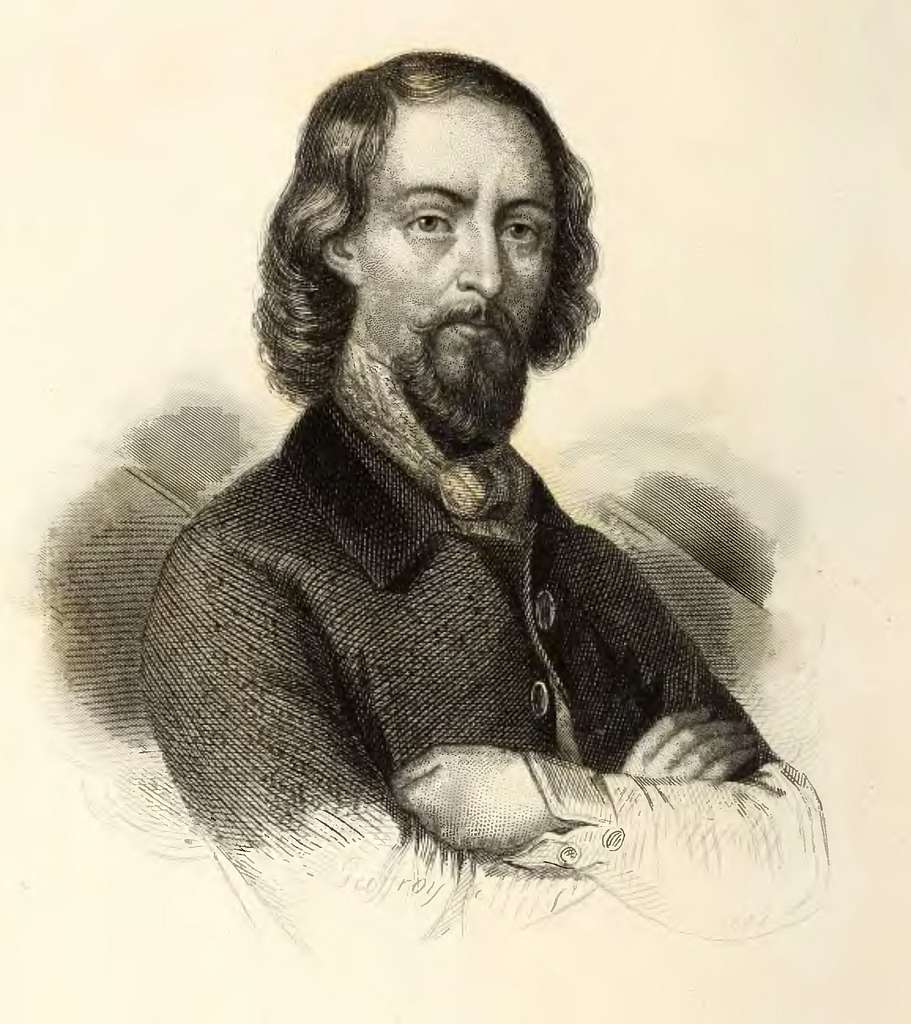
José Zorrilla
 Mexico
Also known as: José Zorrilla y Moral
Birthday
February 21, 1817
Birth Sign
Pisces
Birthplace
Valladolid, Spain
Age
Died at 75
About
José Zorrilla y Moral was a Spanish poet, dramatist, and novelist who stands as the leading figure of Spanish Romanticism. His most famous work, Don Juan Tenorio (1844), remains a cornerstone of Spanish theatre, performed annually around All Saints' Day for over 170 years. In 1882, Zorrilla was crowned National Laureate of Spain, and in 1889 he was inducted into the Royal Spanish Academy, cementing his status as a literary giant.
Zorrilla's career spanned nearly six decades, during which he produced a vast body of work including historical dramas like El zapatero y el rey and poetry collections such as Cantos del trovador. His influence extends beyond literature; his plays have been adapted into numerous films and television productions, and the Estadio José Zorrilla in his hometown of Valladolid bears his name. He died in Madrid in 1893, leaving behind a legacy that continues to shape Spanish cultural identity.
Early Life & Background
José Zorrilla y Moral was born on February 21, 1817, in Valladolid, Spain, into a household marked by conflict. His father, a magistrate with rigid authoritarian views, expected his son to pursue a career in law. Zorrilla was sent to the Royal Seminary of Nobles in Madrid to study for the bar, but his true passion lay in literature and the arts. This clash of wills created a deep rift between father and son, a dynamic that would later infuse his writing with rebellious, passionate characters.
Zorrilla abandoned his legal studies to devote himself entirely to writing, a decision that permanently severed his relationship with his father. The young poet's breakthrough came in 1837 at the funeral of the celebrated writer Mariano José de Larra. In a moment that would become legendary in Spanish literary history, Zorrilla stepped forward and read a moving poetic elegy for the deceased. The recitation was so powerful that it catapulted the virtually unknown writer to instant fame in Madrid's intellectual circles, opening the doors to the literary establishment and launching his professional career.
Career Growth
Following his dramatic debut at Larra's funeral in 1837, Zorrilla's career took off rapidly. He published his first major poetry collection, Cantos del trovador, in 1839, solidifying his reputation as a leading Romantic poet. The 1840s saw him produce a series of historical dramas, including El zapatero y el rey (The Cobbler and the King), which blended historical events with Romantic theatrical conventions.
In 1844, Zorrilla premiered his masterpiece, Don Juan Tenorio, a Romantic reimagining of the legendary Don Juan figure. The play became an instant success and has remained a staple of Spanish theatre, traditionally performed every year around November 1st. During the 1840s and 1850s, Zorrilla traveled extensively, living in France and later in Mexico, where he was received at the court of Emperor Maximilian. He returned to Spain in 1882 and was formally crowned National Laureate, a prestigious honor recognizing his supreme contribution to Spanish letters. In 1889, he was inducted into the Royal Spanish Academy, one of the highest distinctions for a Spanish writer.
Career Timeline
Public Image & Style
Zorrilla is remembered as the quintessential Spanish Romantic: passionate, rebellious against authority, and devoted to artistic expression above practical concerns. His public image is that of the archetypal Romantic poet, dramatic, emotional, and defiant of convention. His signature style combined historical themes with intense emotional expression and lyrical beauty. Don Juan Tenorio embodies the Romantic fascination with the Byronic hero, a figure who is simultaneously damned and redeemed through love. In Spanish literary culture, Zorrilla is celebrated as a national treasure. His works are standard curriculum in Spanish schools, and Don Juan Tenorio holds a unique place in Spanish theatrical tradition.
Fame & Fandom (iFAMOUS Rankings)
José Zorrilla commands a global legacy defined by the enduring power of his literary contributions rather than contemporary celebrity metrics. As a foundational figure of Spanish Romanticism, his influence permeates cultural traditions that have persisted for over a century and a half. Despite this monumental historical standing, iFANN's Global Fame Engine has evaluated José Zorrilla, but he does not currently hold a placement in the published rankings (Global Top 1,000 or a Top-100 scope list). This absence of a numeric rank reflects his status as a historical icon rather than a living personality competing for modern attention spans. The poet's name remains vibrant, primarily through its institutional association with the Estadio José Zorrilla in Valladolid, which serves as the home ground for Real Valladolid CF. While football supporters generate significant activity around this venue, they identify as Pucelanos or Tercios, focusing on the club rather than the 19th-century author himself. There is no formal or unofficial fandom name for the historical figure José Zorrilla, nor are there any active fan organizations dedicated to his person. As a deceased literary figure from the Romantic era, he has no living fanbase capable of organizing chart pushes, birthday billboards, charity drives, or subway ads. The audience for his work consists of scholars, theatergoers, and readers who engage with his texts as canonical masterpieces. Any interaction with the name today is purely architectural and institutional, linking the poet's legacy to Spanish sporting culture without creating a unified fan community. His fame rests on the timeless resonance of Don Juan Tenorio and his role as the National Laureate of Spain, securing his place in history even if he lacks a current digital footprint.
Interesting Facts and Legends
The dramatic reading Zorrilla delivered at Mariano José de Larra's funeral in 1837 stands as one of the most famous launch moments in Spanish literary history, a single recitation that made him a celebrity overnight. Don Juan Tenorio is so deeply embedded in Spanish culture that it has been performed every year on or around All Saints' Day for over 170 years, a tradition that shows no signs of stopping. Zorrilla spent significant time in Mexico, where he was associated with the court of Emperor Maximilian during the French intervention period. His estrangement from his father was so complete that he did not return to Spain for his father's funeral. The Estadio José Zorrilla in Valladolid, home of Real Valladolid CF, is named in his honor, linking the poet's legacy to Spanish sporting culture. A widely retold legend suggests the play's themes of redemption were so powerful that audiences wept openly during its early performances, cementing its reputation as an emotional masterpiece. Another story from his Mexican exile claims he wrote verses on scraps of paper found in taverns, which were later collected by locals to form part of his poetic corpus. The premiere of Don Juan Tenorio in 1844 remains the definitive moment establishing Zorrilla as the major figure of the nationalist wing of Spanish Romanticism. This specific cultural ritual linked to Zorrilla ensures the play is performed annually to coincide with the holiday, marking a unique phenomenon where literature dictates a national calendar.
Family & Personal Life
Zorrilla's family life was defined by estrangement. His father, a magistrate with authoritarian views, disapproved of his literary ambitions, leading to a permanent rift. When his father died, Zorrilla was in Mexico and did not return for the funeral, a decision that underscored the depth of their conflict. Zorrilla married Florentina O'Reilly in 1839, but the marriage was unhappy and complicated by his ongoing feud with his father. After Florentina's death, he married Juana Pacheco, who provided greater stability in his later years. The couple had children, though details about them remain sparse in standard biographical sources.
Notable Connections
Zorrilla's life intersected with several notable figures. Mariano José de Larra, the celebrated writer whose funeral launched Zorrilla's career, was a key influence. His first wife, Florentina O'Reilly, and second wife, Juana Pacheco, were central to his personal life. During his time in Mexico, he was associated with Emperor Maximilian, who ruled during the French intervention. These connections shaped both his personal and professional trajectory.
Relationships & Dating History
Zorrilla's personal life was marked by two marriages. He married Florentina O'Reilly in 1839, but the union was unhappy and strained by his ongoing conflict with his father. After Florentina's death, he married Juana Pacheco, who provided greater stability in his later years. His relationship with his father was perhaps the most defining personal relationship of his life, culminating in a permanent estrangement. When his father died, Zorrilla was in Mexico and did not return for the funeral, reflecting the depth of their rift. At the time of his death in 1893, Zorrilla was married to Juana Pacheco.
- MarriedFlorentina O'Reilly1839 - presentFirst wife; marriage was unhappy and complicated by Zorrilla's feud with his father.
- MarriedJuana Pacheco? - 1893CurrentSecond wife; provided stability in his later years and survived him.
Death & Aftermath
Died
January 23, 1893 (aged 75)
Death Place
Madrid, Spain
Cause of Death
Natural causes associated with old age
The literary world in Spain marked the passing of its Romantic giant with a quiet but profound reverence, recognizing a figure whose works had become woven into the national fabric. José Zorrilla y Moral died on January 23, 1893, in Madrid at the age of seventy-five, concluding a career that spanned nearly six decades and made a lasting impact on Spanish letters. Historical records confirm the date and location of his death but offer no specific medical details regarding his final days or an official cause, as is typical for private citizens of that era who passed from natural causes associated with old age., vigils, or chart surges are documented in the available biographies, the reaction to his loss was reflected in the enduring status he held as a National Laureate and a member of the Royal Spanish Academy.
His legacy, however, has been kept alive through consistent cultural observance rather than immediate monuments. His masterpiece, Don Juan Tenorio, remains a cornerstone of Spanish theatre, performed annually around All Saints' Day for over a century and a half, ensuring his voice continues to resonate with new generations. The most visible reflection of his standing is the Estadio José Zorrilla in Valladolid, home of Real Valladolid CF, which serves as a living memorial and has undergone significant modernization investments in recent years. His estate and works have entered the public domain long ago, allowing for continuous adaptation and performance without restriction, cementing his place as a foundational figure of Spanish culture.
Net Worth (Estate Value)
$1 Million
iFANN Editorial Team estimate
As a 19th-century poet, José Zorrilla's net worth is not tracked by modern sources, but his literary estate continues to generate cultural and economic value. Per iFANN's editorial analysis, the total value of his estate is estimated at $1 Million. His most famous work, Don Juan Tenorio, is performed annually in Spain, ensuring ongoing royalties from theatrical productions. Published editions of his works remain in print, contributing to his estate's income. The estate is managed through standard Spanish literary inheritance structures, with his works now in the public domain. While no specific valuation is available, the enduring popularity of his plays and poetry guarantees a steady stream of revenue from performances, publications, and academic use.
Awards Won (2)
Zorrilla received the highest literary honors Spain could bestow. In 1882, he was crowned National Laureate, recognizing him as the nation's premier poet. In 1889, he was inducted into the Royal Spanish Academy, a prestigious distinction for any Spanish writer. These honors reflect his monumental contribution to Spanish literature and culture.
1882 · Literary
Lifetime achievement
1889 · Literary
Lifetime achievement
Known For
Don Juan Tenorio
1844 · Playwright
Cantos del trovador
1839 · Author
El zapatero y el rey
1840 · Playwright
Keywords
Sources
Quick Facts
- Profession
- Poet, Playwright, Writer
- Born
- February 21, 1817
- Birthplace
- Valladolid, Spain
- Died
- January 23, 1893
- Death Place
- Madrid, Spain
- Gender
- Male
- Spouse
- Florentina O'Reilly, Juana Pacheco
- Birth Sign
- Pisces
Personal Details
- Full Name
- José Zorrilla y Moral
- Spouse
- Florentina O'Reilly, Juana Pacheco
- Education
- Royal Seminary of Nobles, Madrid (law studies, abandoned)
Frequently Asked Questions
What is José Zorrilla most famous for?
When and where was José Zorrilla born?
Was José Zorrilla married?
What is the Estadio José Zorrilla?
What honors did José Zorrilla receive?
Similar People
Join the community
fans discussing