 Spain
SpainAbout
José María Cano Andrés is a Spanish visual artist, musician, composer, and record producer, best known as the principal composer of Mecano, the best-selling Spanish pop band in history. Born in Madrid in 1959, he co-founded the group with his brother Nacho and singer Ana Torroja, penning enduring hits like "Mujer Contra Mujer" and "Hijo de la Luna."
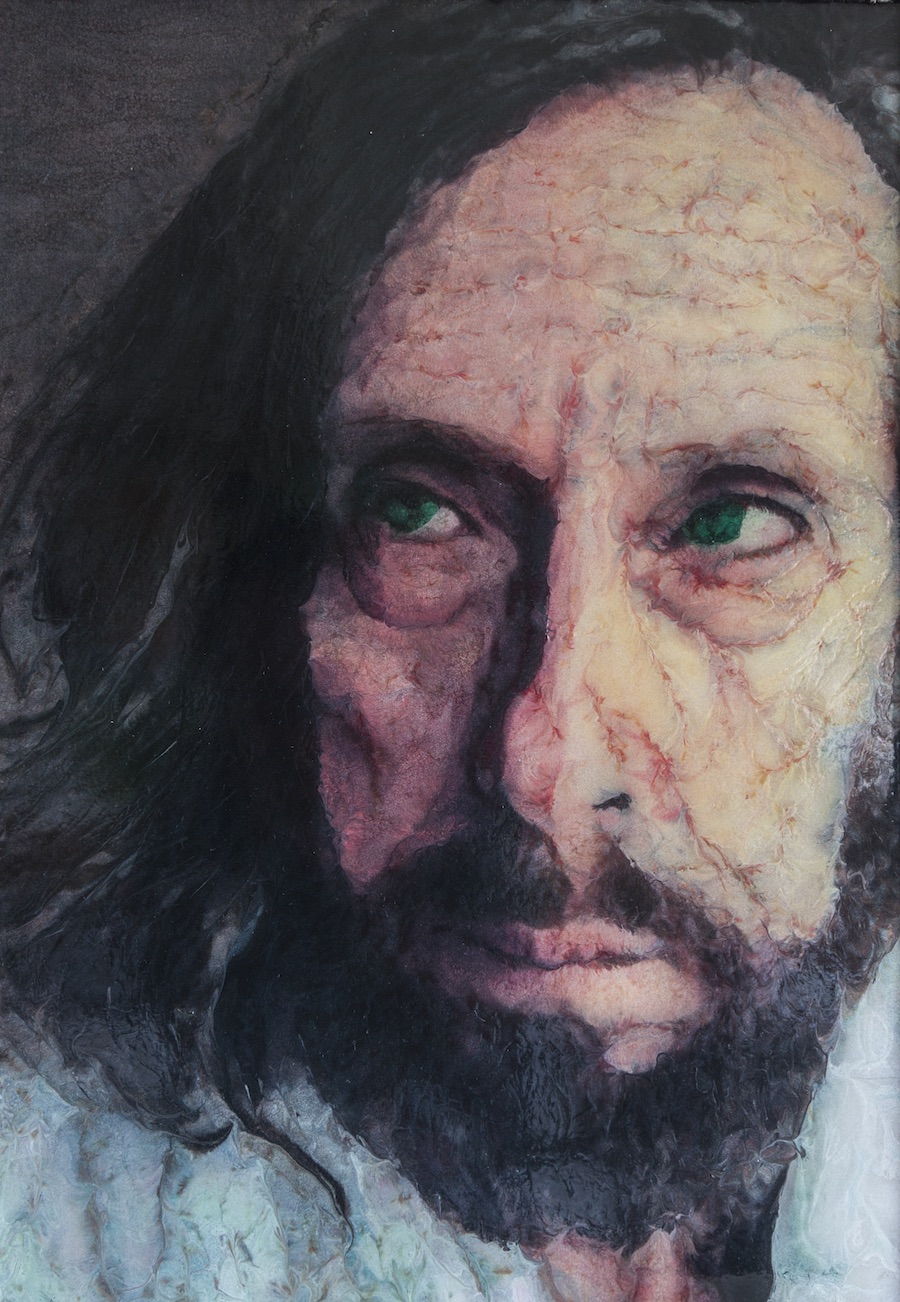
Since Mecano disbanded in 1998, Cano has reinvented himself as a contemporary artist working in the demanding medium of encaustic painting. His large-scale portraits of financial and political figures have been exhibited in London, Miami, Beijing, and even the Cathedral of Toledo. In the 2020s, he has also returned to music as a classical composer, releasing several orchestral albums.
Now in his mid-sixties, Cano remains active in both art and classical composition, though he keeps a low public profile. His work continues to draw attention for its technical skill and its engagement with themes of power, capitalism, and faith.
Early Life & Background
José María Cano grew up in Madrid during the final years of the Franco dictatorship and the transition to democracy. He studied architecture at university, an unusual path for a future pop star, but one that shaped his methodical approach to songwriting and later informed his visual art practice.
In the late 1970s, Cano formed a musical partnership with his younger brother Nacho, a guitarist and songwriter, and singer Ana Torroja. The trio began performing together in Madrid's small venues, blending synthesizer-driven pop with sophisticated melodies. Cano's early compositions showed a knack for catchy hooks and socially aware lyrics, setting the stage for Mecano's breakthrough.
Before the band's debut, Cano worked on honing his craft, writing dozens of songs and developing a sound that would distinguish Mecano from the Spanish pop scene of the era. By the time their self-titled first album appeared in 1982, he had already established himself as the group's principal songwriter.
Career Growth
Mecano's debut album in 1982 launched Cano's career as a songwriter. Over the next decade, the band released a string of chart-topping albums, including Ya viene el sol (1984), Entre el cielo y el suelo (1986), Descanso dominical (1988), and Aidalai (1991). Cano wrote many of their biggest hits, such as "Hijo de la Luna," "Hoy No Me Puedo Levantar," and "Me Cuesta Tanto Olvidarte."
His composition "Mujer Contra Mujer," a ballad about lesbian love, became a landmark in Spanish pop, topping the French charts for seven weeks in 1989. The song's success showed Cano's willingness to tackle progressive themes within a mainstream format.
After Mecano disbanded in 1998, Cano shifted his focus to visual art. He developed a distinctive technique using hot wax, known as encaustic painting, and created the "Wall Street 100" series, a hundred large portraits of corporate and financial figures, first shown at London's Riflemaker Gallery in 2009. His paintings have sold at auction for up to $414,358.
In 2013, Cano delivered the commencement address at Berklee College of Music Valencia's first graduating class. The following years brought exhibitions in Beijing (2016) and Miami (2019), as well as a showing at the Cathedral of Toledo in 2020. More recently, he has composed classical and orchestral music, releasing albums like Wind of Change, Destello Azul, and Infinity, championed by conductor Ramón Tébar.
Career Timeline
Public Image & Style
José María Cano's public image has transformed from pop superstar to serious contemporary artist. In the art world, his Mecano fame has sometimes worked against him, with conductor Ramón Tébar noting that it generated prejudice within classical music circles.
His artistic style is characterized by large-scale encaustic portraits that explore themes of power, capitalism, and human rights. He is known for a serious, socially engaged tone in both his music and his visual work.
Though he keeps a low profile, his YouTube channel offers fans a direct connection, featuring versions of his Mecano classics alongside his newer compositions.
Fame & Fandom
José María Cano currently holds no placement in the published iFANN Global Top 1,000 rankings or any Top-100 scope list. The iFANN Global Fame Engine has evaluated his standing, yet he does not occupy a numbered position within the current global hierarchy. This absence of a specific rank reflects a profile that has shifted from mass-market pop ubiquity to a more specialized recognition within the contemporary art world and classical music circles. While the band Mecano once commanded the charts across Spain and Latin America, Cano's individual fame today is defined by his dual career as an encaustic painter and composer rather than a singular chart-topping presence. His fanbase consists of Spanish pop enthusiasts who revere the group's legacy but do not identify themselves under a formal moniker. No official fandom name exists for José María Cano, and there are no documented records of organized campaigns, streaming pushes, or fan-funded projects specifically targeting him. Unlike modern pop stars who generate viral rituals through meet-and-greets or subway advertisements, Cano maintains a low profile, with interactions limited to the art galleries where his portraits of financial figures are displayed. The audience for his work is scattered between those who remember the hits of the 1980s and a new demographic of art collectors, united by a shared appreciation for his reinvention rather than a collective identity.
Interesting Facts and Legends
José María Cano trained as an architect before turning to music, a background that influenced his precise approach to composition and his later art. He calls himself an "alchemist" in his painting practice, noting that the medium determines both how and what he paints. The Paradise Papers investigation in 2017 revealed he was connected to a shell corporation with an offshore account in Malta. His song "Mujer Contra Mujer" was groundbreaking for mainstream Spanish pop in its honest portrayal of lesbian relationships. He has publicly described Christianity as "an extraordinarily beautiful humanism." A widely retold story involves the 1986 hit song "Cruz de Navajas," which is said to be inspired by a real crime committed in Tenerife; this narrative remains a cornerstone of Mecano's folklore. Perhaps the most significant chapter in his personal mythology is the decision to disband Mecano in 1998 at the height of their success. This move is often framed as a legendary moment of artistic integrity, cementing his status as a figure who prioritized evolution over commercial longevity. Following the breakup, Cano transitioned fully to visual arts, showcasing encaustic paintings in London and other venues, solidifying his reputation as a multifaceted artist who successfully reinvented himself after ending the most important pop group in Spain.
Notable Quotes
“I'm an alchemist in that 'what I paint with' not only determines 'how I paint' but also 'what I paint'.”
“Christianity is an extraordinarily beautiful humanism.”
Family & Personal Life
José María Cano's brother Nacho was his bandmate in Mecano, and the two collaborated closely for nearly two decades. Cano has a son, Dani Cano, who accompanied him to the 2018 Latin Grammy Awards in Las Vegas.
Details about his marriage and other family members remain private. Cano has spoken publicly about his Christian faith, which he says has shaped his worldview and his art.
Notable Connections
José María Cano is closely associated with his brother Nacho Cano and singer Ana Torroja, his partners in Mecano. He also has a professional connection with Spanish conductor Ramón Tébar, who has championed his classical works, and with singer India Martínez, with whom he collaborated on a version of "Me Cuesta Tanto Olvidarte."
Relationships & Dating History
José María Cano has kept his personal life remarkably private. Public records indicate he has been married at some point, as he has a son, Dani Cano, who appeared with him at the 2018 Latin Grammy Awards. However, the name of his wife, the dates of the marriage, and its duration have not been documented in available sources.
No other romantic relationships have been confirmed. As of 2026, Cano's relationship status remains unknown, and he appears to have stayed out of the public eye regarding his private affairs.
- MarriedUnknownMarried at some point; mother of his son Dani Cano. Details not public.
Salary, Net Worth In 2026
$40 Million
iFANN Editorial Team estimate
iFANN currently estimates José María Cano's net worth at $40 million as of 2026. This figure reflects his long career as a songwriter and composer, his success as a visual artist, and his ongoing royalties from Mecano's extensive catalogue. Mecano became the best-selling Spanish band in history, and Cano, as principal composer, has earned substantial royalties from hits like "Mujer Contra Mujer," "Hijo de la Luna," and "Me Cuesta Tanto Olvidarte." These songs have been covered and licensed widely, providing a steady income stream. In the art world, Cano's encaustic paintings have fetched significant prices at auction, with his most expensive work, WS100-JACK MA, selling for $414,358. His exhibitions at prestigious galleries have also contributed to his income. The Paradise Papers revelations in 2017 indicated that Cano held an offshore account in Malta, suggesting a level of financial sophistication and wealth beyond his public earnings. While exact figures are not public, his combined music royalties, art sales, and investments support the $40 million estimate.
Awards & Accolades
View 2 records, honours and achievementsKnown For
Mujer Contra Mujer
1989 · Composer
Hijo de la Luna
1990 · Composer
Wall Street 100
2009 · Visual artist
Keywords
Sources
Quick Facts
- Profession
- painter, singer, songwriter
- Born
- February 21, 1959
- Birthplace
- Madrid, Spain
- Gender
- Male
- Birth Sign
- Pisces
Personal Details
- Full Name
- José María Cano Andrés
- Children
- Dani Cano
- Education
- Studied architecture at university
Frequently Asked Questions
Is José María Cano still alive?
What is José María Cano's net worth?
Who are José María Cano's children?
Why did José María Cano leave Mecano?
What is José María Cano famous for?
Social Media
Similar People

Join the community
fans discussing