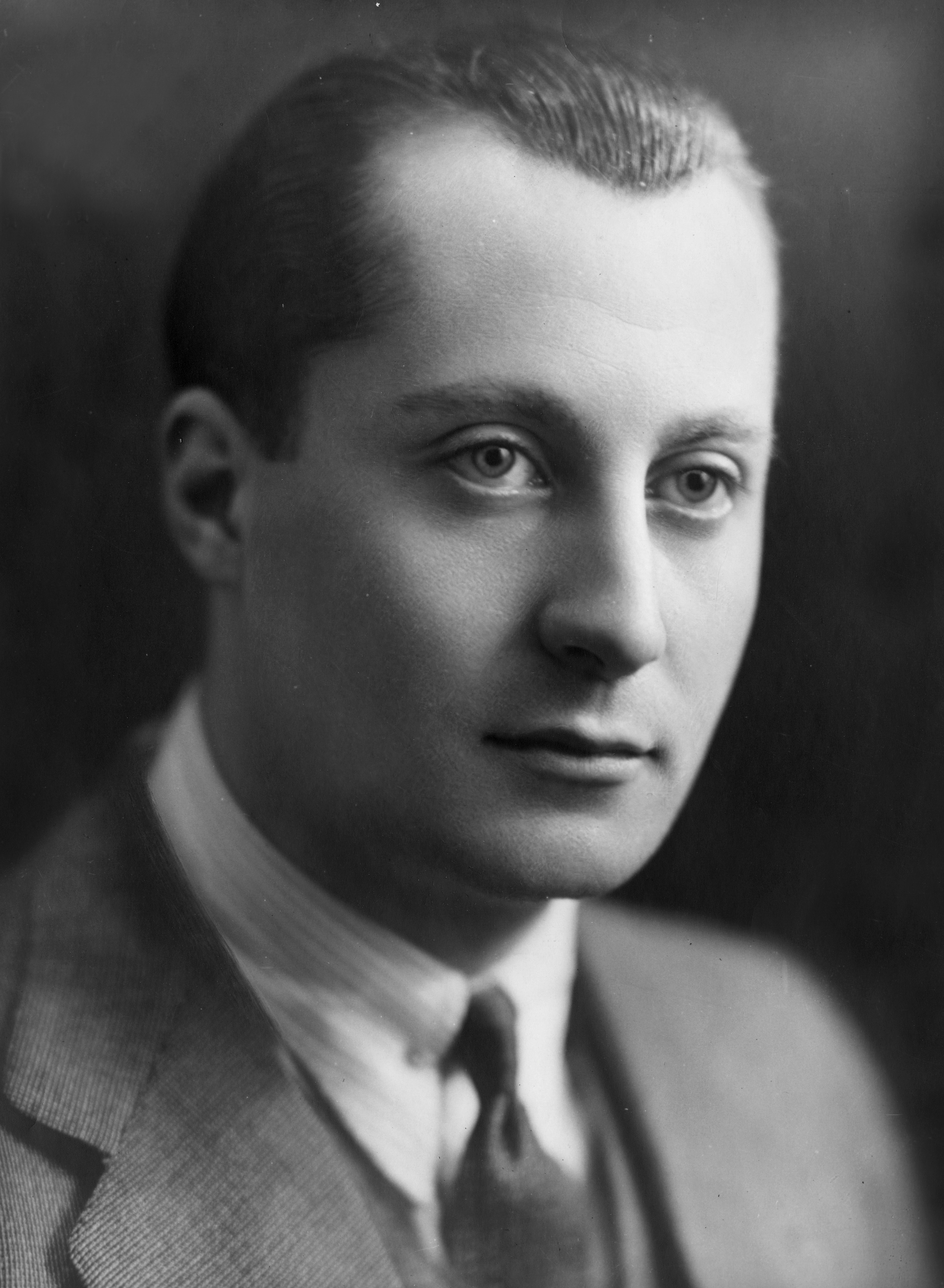
José Antonio Primo de Rivera
 Spain
SpainBirthday
+1903-04-24
Birth Sign
Sagittarius
Birthplace
Madrid
Age
Died at 33
About
Born in Madrid on April 24, 1903, José Antonio Primo de Rivera emerged as a distinctive voice in early 20th-century Spanish politics and letters. The son of General Miguel Primo de Rivera, who governed Spain as a dictator from 1923 to 1930, José Antonio initially followed a path in law, practicing from 1927 until 1933. His early political engagement was driven by a desire to honor his late father's legacy, joining the National Monarchist Union. However, he soon found the traditional monarchist platform lacking, leading him to explore more radical ideologies.
Fame & Fandom
The legacy of José Antonio Primo de Rivera is defined by political veneration rather than the organized adulation typical of modern entertainment figures. Historical records indicate no formal fandom name exists for his adherents; while small groups of sympathizers have gathered at memorial sites to sing or salute, these actions reflect ideological alignment rather than a structured fanbase with rituals or campaigns. His cultural status stems from his role as the founder of the Falange Española and the mythos surrounding his execution in 1936, which transformed him into a martyr figure for the Francoist regime. This narrative replaced celebrity worship with religious-style devotion to his death, a dynamic that persists in historical discourse but lacks the viral mechanics of contemporary fame. The recent exhumation of his remains in 2023 reignited debate regarding Spain's far-right past, drawing media attention and the presence of a handful of supporters, yet this event remained a state-sanctioned political act rather than a fan celebration. Despite the absence of a pop-culture following, his enduring relevance in historical and literary circles has secured him a notable position in global fame metrics. According to the August 2026 iFANN Global Fame Rankings, he is the 56th most famous person in Books & Literature, a placement reflecting his continued influence on political thought and Spanish literature.
Interesting Facts and Legends
Born in Madrid in 1903, José Antonio Primo de Rivera initially practiced law before entering politics to honor his father, General Miguel Primo de Rivera. He founded the Falange Española, a movement that would later merge with other right-wing factions to shape the trajectory of the Spanish Civil War. His life ended abruptly when he was captured by Republican forces and executed by a firing squad on November 20, 1936, an event that became the cornerstone of the Falangist myth of martyrdom. For decades, the Valle de los Caídos served as his mausoleum, where he was celebrated as the "Martyr of the Fatherland" under the dictatorship of Francisco Franco. A significant chapter in his posthumous history occurred on April 24, 2023, when the Spanish government ordered the exhumation of his remains from the Valley of the Fallen. This action, carried out to comply with the Law of Democratic Memory, marked his fifth burial in different locations throughout history. During the operation, reports noted the presence of sympathizers who sang and saluted, highlighting the enduring, albeit small, nature of his political cult. His body was subsequently reburied in a private family grave, effectively removing a controversial national symbol from the basilica.
Death & Aftermath
Died
+1936-11-20 (aged 33)
Death Place
Alcalá de Henares
Cause of Death
Reported execution by firing squad
José Antonio Primo de Rivera faced his final hours within the walls of the Prisión Provincial in Alcalá de Henares, where he had been transferred from El Escorial following his arrest prior to the July 1936 military uprising. On November 20, 1936, at the age of thirty-three, he was executed by firing squad two days after a People's Tribunal in Valencia sentenced him to death for conspiracy and military rebellion against the Republic. The execution was carried out immediately by Republican forces under the control of the government. In the immediate aftermath, the reaction split sharply along political lines, as Republicans viewed him as a dangerous agitator while Nationalists instantly elevated him to the status of the first martyr of their crusade.
Following the Nationalist victory in 1939, Francisco Franco declared him the Apostle of the Falange, leading to state-sponsored veneration that included the construction of the Basilica of the Valley of the Fallen to house his remains alongside unknown soldiers. His body rested there until April 24, 2023, when a judicial process under the Law of Democratic Memory ordered his exhumation and reburial in a private mausoleum at the Cementerio de San Lorenzo in Murcia. This transfer sparked polarized public responses, ranging from protests by far-right sympathizers to support from anti-fascist groups seeking to remove symbols of forced labor and dictatorship from public view.
Awards & Accolades
Keywords
Quick Facts
- Profession
- politician, poet, advocate
- Born
- +1903-04-24
- Birthplace
- Madrid
- Died
- +1936-11-20
- Death Place
- Alicante
- Gender
- Male
- Birth Sign
- Sagittarius
Join the community
fans discussing