
Jomo Sono
 South Africa
association football player•association football coach
Also known as: Ephraim Matsilele Sono, Madoda Walletjies Mkulwana, The Black Prince, Bra J, Mjomana
Birthday
July 17, 1955
Birth Sign
Cancer
Birthplace
Orlando East, Soweto, Johannesburg, South Africa
Age
71 years old
Height
5 ft 8 in (173 cm)
About
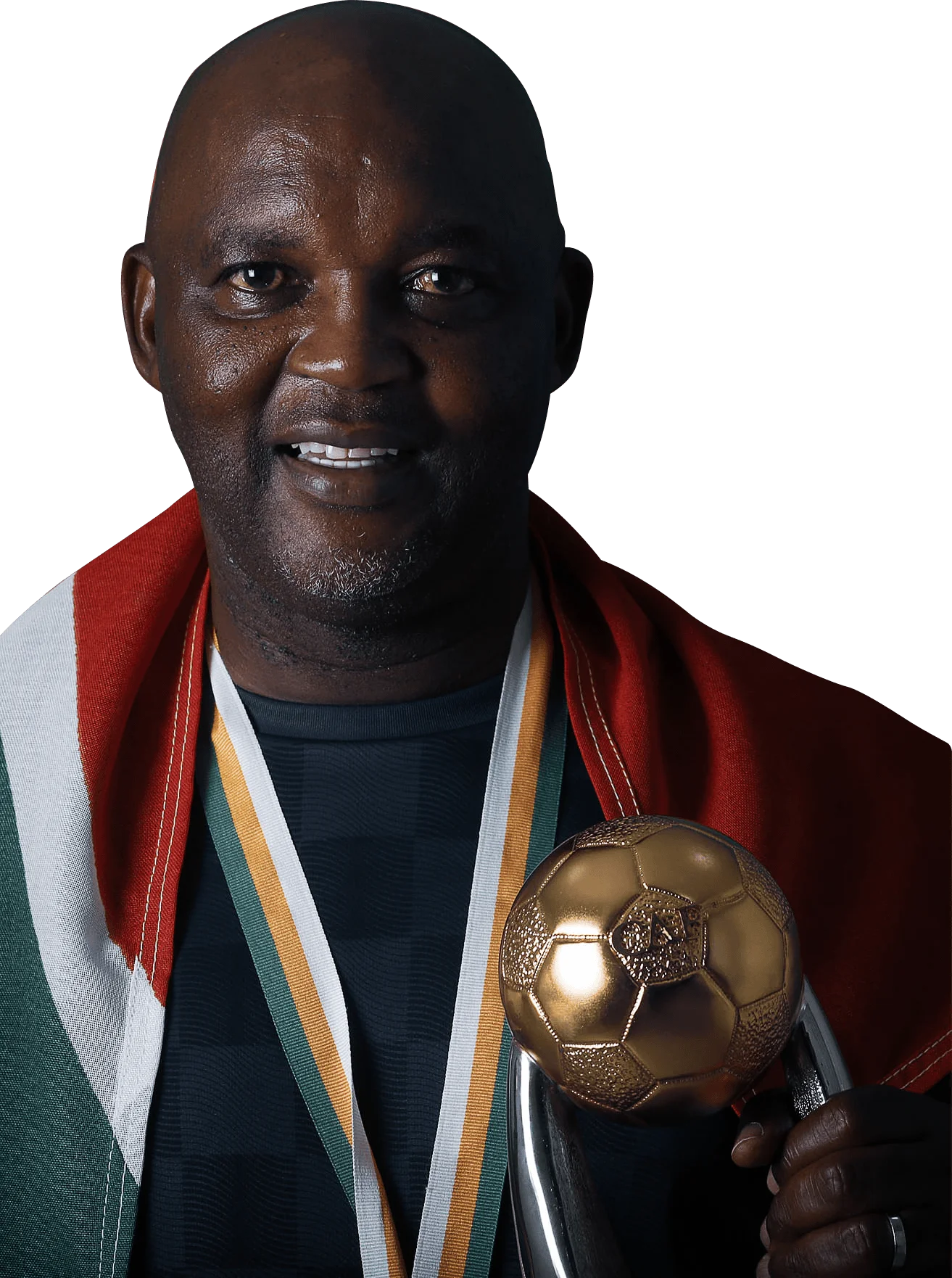
Ephraim Matsilele Sono, born Madoda Walletjies Mkulwana on July 17, 1955, stands as a defining figure in South African sports history. Known universally by his nickname Jomo Sono, he transitioned from a professional footballer to one of the nation's most influential club owners and coaches. His career path took him across borders before he returned home to reshape the local game. Fans and media alike have long referred to him as the "Black Prince of South African Soccer," "Bra J," or simply "Mjomana." These monikers reflect his commanding presence and deep roots in the community. Today, he serves as the owner and manager of Jomo Cosmos, a team that bears his name and carries his legacy forward.
Early Life & Background
Sono was born Ephraim Matsilele Sono but adopted the birth name Madoda Walletjies Mkulwana early in life, a detail often cited in biographical records regarding his origins. He grew up in the vibrant but challenging environment of Orlando East in Soweto. His childhood was marked by poverty, which he later overcame through his athletic prowess. From a young age, Sono displayed exceptional talent for football, playing in local township leagues where he honed the skills that would eventually take him global. His early life was defined by the institutional racism of the apartheid era, which initially restricted his opportunities despite his obvious talent.
While specific details of formal education are less documented than his footballing journey, Sono's "education" occurred on the dusty pitches of Soweto. He began his professional career in South Africa during the height of apartheid. In 1974, he joined Mamelodi Sundowns, one of the country's premier clubs at the time. However, his international ambitions were stifled by South Africa's sporting isolation; the country was banned from FIFA and international competitions due to apartheid policies. This exclusion forced him to look abroad. In 1976, seeking to escape the limitations of the domestic ban and the political climate, he moved to North America, joining the Canadian National Team system and playing for the Toronto Metros-Croatia in the North American Soccer League (NASL). This move was pivotal, transforming him from a local star into a continental icon.
Career Growth
Sono's career is a chronicle of breaking barriers. After his initial success with Mamelodi Sundowns, he moved to Canada in 1976 where he played for the Toronto Metros-Croatia and later the Edmonton Drillers. He became the first black player to captain a Canadian national team and was a key figure in the NASL, winning the league championship with Edmonton in 1980. Upon returning to South Africa after the end of the apartheid-era bans in 1982, he played for Kaizer Chiefs and was instrumental in helping the team win multiple domestic titles.
In 1983, he founded Jomo Cosmos, marking the beginning of his transition from player to owner. The club quickly became a powerhouse in South African football. Throughout the 1990s, he continued playing while managing Cosmos, becoming one of the few players to successfully run a club while still active. His coaching career saw significant milestones: in 1996, he was appointed caretaker coach of the South African national team, Bafana Bafana, leading them to the final of the Africa Cup of Nations (AFCON) in Tunisia. In 1998, he became the first South African to coach a national team at a FIFA World Cup in the USA, leading Bafana Bafana in their first-ever appearance on the global stage. In recent years, he has taken on the role of head coach again, guiding the team through lower divisions like the ABC Motsepe League.
Career Timeline
Public Image & Style
Sono is portrayed in the media as a dignified, authoritative, and fiercely patriotic figure. His public image is that of a mentor and a guardian of South African football traditions. He is known for his blunt, no-nonsense communication style, often criticizing poor performance and demanding respect for local coaches. His aesthetic is classic and understated, often seen in traditional South African attire or casual sportswear, reinforcing his connection to the grassroots level of the game. He frequently speaks out against the marginalization of local coaches, advocating for the rights of South African trainers in the Premier Soccer League.
Fame & Fandom (iFAMOUS Rankings)
iFANN has not yet collected fame data for this person. While he is a household name in South Africa and highly respected globally within football circles, the iFANN engine has not yet gathered the necessary data to assign a global ranking. The fanbase is highly organized, particularly in the Gauteng region. Fans of Jomo Sono and Jomo Cosmos are often referred to simply as "Cosmos Fans" or "Jomo's Army," though there is no single, universally recognized fandom name like "Beyhive" or "Swifties." They are known for their unwavering loyalty, even during the club's periods of relegation and financial hardship. Fans have launched campaigns to support the club during relegation battles, organizing charity drives and fundraising events to help keep the team afloat. Sono is known to interact directly with fans at matches and community events, often engaging in conversations and signing autographs, fostering a strong sense of community.
Interesting Facts and Legends
Sono was originally named Madoda Walletjies Mkulwana at birth, a name he later changed to Ephraim Matsilele Sono. Despite his massive fame, he remains a private individual regarding his personal life, keeping his partners and children out of the spotlight. One of the most retold stories of his career is his appointment as captain of the Canadian national team, a rare feat for a black player in the 1970s that is often cited as a breakthrough for racial integration in North American soccer. His nickname "The Black Prince" reflects his commanding leadership style and status as a pioneer who broke racial barriers in both South African and North American football. He is also known for his blunt, no-nonsense communication style, often criticizing poor performance and demanding respect for local coaches.
Notable Quotes
“I also would've said no, I want the same as the white man.”
“Hands-off Broos, urges Jomo Sono.”
“Football is above everything.”
Family & Personal Life
Sono is known to be a devoted family man, though he keeps his partners and children out of the spotlight. Sources do not confirm a current spouse or divorce status publicly, but it is generally understood that he is married or has been in a long-term partnership. He is the father of several children, though their identities and ages are not extensively detailed in open sources. His son, Jomo Sono Jr., has occasionally been mentioned in the context of the family business, but there is no confirmation of a direct involvement in the football management hierarchy comparable to his father's legacy. Sono lives in Johannesburg and maintains a strong connection to his roots in Soweto.
Notable Connections
Pitso Mosimane, Hugo Broos, Kaizer Motaung, Xanti Pupuma.
Relationships & Dating History
Jomo Sono is a private individual regarding his personal life, and detailed public records of his romantic history are scarce compared to other celebrities. Unlike many high-profile figures, there are no widely reported chronological lists of marriages, engagements, or long-term relationships in credible media sources. He is known to be a devoted family man, but he keeps his partners and children out of the spotlight. As of 2026, his relationship status remains private. There are no reports of him being single, engaged, or divorced in recent news. He is widely regarded as a dedicated patriarch of his family and the football community.
Salary, Net Worth In 2026
$10 Million
iFANN Editorial Team estimate
iFANN currently estimates Jomo Sono's net worth at approximately $10 million. This figure is derived from his decades of ownership of Jomo Cosmos, real estate holdings in Johannesburg, and lucrative sponsorship deals with major South African brands. While specific figures vary across sources. His primary income streams include club ownership, real estate investments, endorsements in the automotive and beverage sectors, and coaching salaries. Despite financial struggles faced by Jomo Cosmos in recent years, including relegations, Sono has maintained a steady financial trajectory through diversified business ventures such as security firms and logistics.
Awards Won (4)
Sono has received numerous accolades for his contributions to football and society, including the Order of Ikhamanga (Silver) and the Order of the Star of Ghana (OIS). He was inducted into the South African Sports Hall of Fame and received the FIFA Fair Play Award for his sportsmanship. His pioneering role as a black footballer in the 1970s and 80s has earned him multiple lifetime achievement awards from various football bodies across Africa and the diaspora.
2000 · National Honour
Contribution to Football and Society
2002 · National Honour
Service to Football
Known For
Jomo Cosmos
1983 · Founder and Owner
Bafana Bafana
1998 · Head Coach
Edmonton Drillers
1980 · Player
Keywords
Sources
Quick Facts
- Profession
- association football player, association football coach
- Born
- July 17, 1955
- Birthplace
- Orlando East, Soweto, Johannesburg
- Gender
- Male
- Birth Sign
- Cancer
Personal Details
- Full Name
- Ephraim Matsilele Sono (born Madoda Walletjies Mkulwana)
- Height
- 5 ft 8 in (173 cm)
- Children
- Several children including Jomo Sono Jr.
- Education
- Informal education on the dusty pitches of Soweto; no formal university records widely publicized
Frequently Asked Questions
What is Jomo Sono's real name?
Is Jomo Sono still coaching?
Did Jomo Sono play in the World Cup?
How much is Jomo Sono worth?
Why is Jomo Sono called the Black Prince?
Social Media
Similar People

Join the community
fans discussing