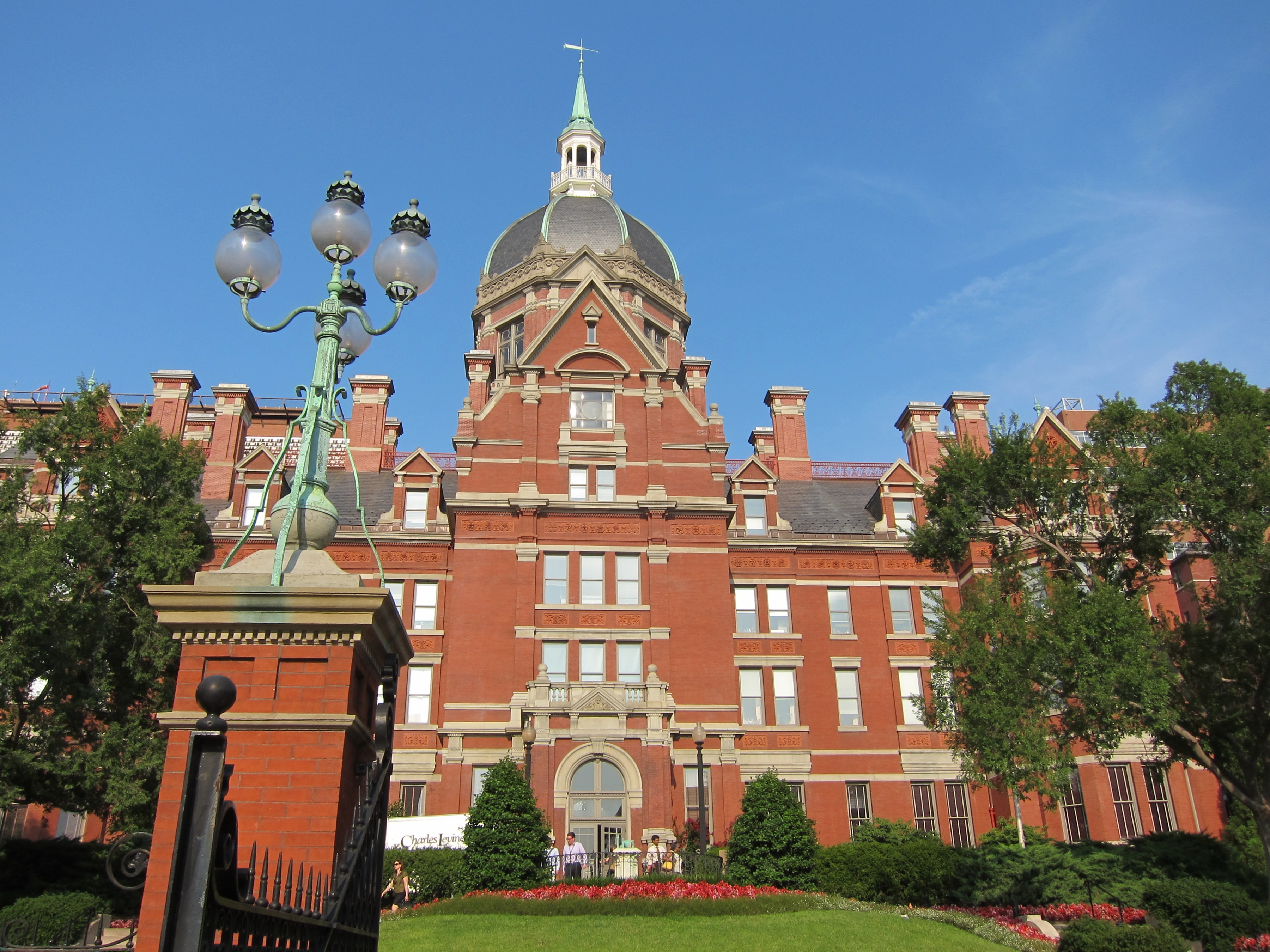
Johns Hopkins University
 United States
"The first research university in the United States"
About
Johns Hopkins University, often shortened to Hopkins or JHU, is a private research institution in Baltimore, Maryland. It opened its doors on February 22, 1876, with Daniel Coit Gilman as its first president, and quickly became the model for the American research university. The university's namesake, Johns Hopkins, a Quaker entrepreneur, left a $7 million bequest in 1873, the largest philanthropic gift in U.S. history at the time, to establish both the university and the Johns Hopkins Hospital. That vision, focused on graduate education and discovery, set Hopkins apart from the undergraduate-centric colleges of the era.
Today, Hopkins is a global powerhouse in medicine, public health, international studies, and engineering. Its nine academic divisions, often called ten schools, include the renowned Bloomberg School of Public Health, the School of Medicine, and the Peabody Institute for music. The main campus in Baltimore's Homewood neighborhood buzzes with research activity, while the university's medical institutions anchor the city's healthcare landscape. With an endowment of $13.06 billion as of fiscal year 2024 and total research funding that consistently ranks among the top in the nation, Hopkins attracts scholars from every corner of the world.
The university's influence extends far beyond its Baltimore roots. It operates the Hopkins–Nanjing Center in China and SAIS Europe in Bologna, Italy, and its alumni include 29 Nobel laureates. From pioneering heart surgery techniques to shaping global health policy, Johns Hopkins has a track record of turning curiosity into real-world impact. As it celebrates its sesquicentennial in 2026, the university remains committed to Gilman's founding ideal: to advance knowledge and train scholars for the intellectual callings of life.
Mission
Johns Hopkins University's mission is to educate its students and cultivate their capacity for life-long learning, to foster independent and original research, and to bring the benefits of discovery to the world. The university aims to advance the arts and sciences, train future leaders, and serve as a catalyst for innovation in medicine, public health, and beyond. Through its commitment to rigorous scholarship and the application of knowledge, Hopkins seeks to improve the human condition and address the most pressing challenges of our time.
History
Johns Hopkins University's story begins with a Quaker businessman named Johns Hopkins, who made his fortune in the wholesale grocery trade and as a director of the Baltimore and Ohio Railroad. When he died in 1873, he left $7 million to establish a university and a hospital, with the stipulation that they be separate institutions. The university's board of trustees, led by Daniel Coit Gilman, opened its doors on February 22, 1876, with a vision to create a research-intensive institution modeled on German universities. Gilman, who had previously led the University of California, Berkeley, emphasized graduate education and original research, a radical shift from the teaching-focused colleges of the time.
From the start, Hopkins attracted brilliant minds. The university press, founded in 1878, became the oldest continuously operating university press in the country. The medical school opened in 1893 and quickly set new standards for medical education, requiring a college degree and admitting women from its first class. In 1900, Johns Hopkins became a founding member of the Association of American Universities, cementing its place among the nation's top research institutions.
The campus moved to its current Homewood location in 1916, after outgrowing its original downtown buildings. Over the decades, the university expanded its academic offerings, establishing schools of nursing, public health, and international studies. The Johns Hopkins Health System was formed in 1986, integrating the hospital and medical school. Today, with a $13 billion endowment and a global presence, Hopkins continues to build on its legacy of discovery, from the development of insulin to the invention of the cardiac defibrillator.
Subdivisions
Johns Hopkins School of Medicine
Founded in 1893, the School of Medicine is internationally recognized for pioneering biomedical research and patient care.
Bloomberg School of Public Health
The largest public health school in the U.S., known for its global health initiatives and research.
Peabody Institute
A conservatory and preparatory school for music and dance, established in 1857 and affiliated with JHU since 1977.
Notable People
Daniel Coit Gilman
First President · 1876-1901
Founded the university on the European research model, shaping American higher education.
Ronald J. Daniels
President · 2009-present
Led the university through major expansions and the sesquicentennial celebration.
Peter Agre
Professor · 2005-2007
Won the Nobel Prize in Chemistry in 2003 for discovering aquaporins.
Johns Hopkins
Benefactor · 1795-1873
Left a $7 million bequest to found the university and hospital.
Milestones
1876
University opens on February 22 with Daniel Coit Gilman as president.
1878
Johns Hopkins University Press founded, the oldest continuously operating university press in the U.S.
1893
Johns Hopkins School of Medicine opens, setting new standards for medical education.
1900
Becomes a founding member of the Association of American Universities.
1916
Main campus moves to Homewood in Baltimore.
1986
Johns Hopkins Health System formed to integrate medical institutions.
2026
Celebrates sesquicentennial, marking 150 years since founding.
Departments
Sources
Organization Info
- Founded
- February 22, 1876
- Headquarters
- Baltimore, Maryland, United States
- Country
- United States
- President
- Ronald J. Daniels
- Type
- University
- Employees
- 27,300
- Endowment
- $13.06 billion (FY2024)
- Students
- 30,210 (Fall 2024)
Financials
- Revenue
- $8.4 billion
- Endowment
- $13.06 billion
- Employees
- 27,300
Official Website
jhu.edu
Join the community
fans discussing