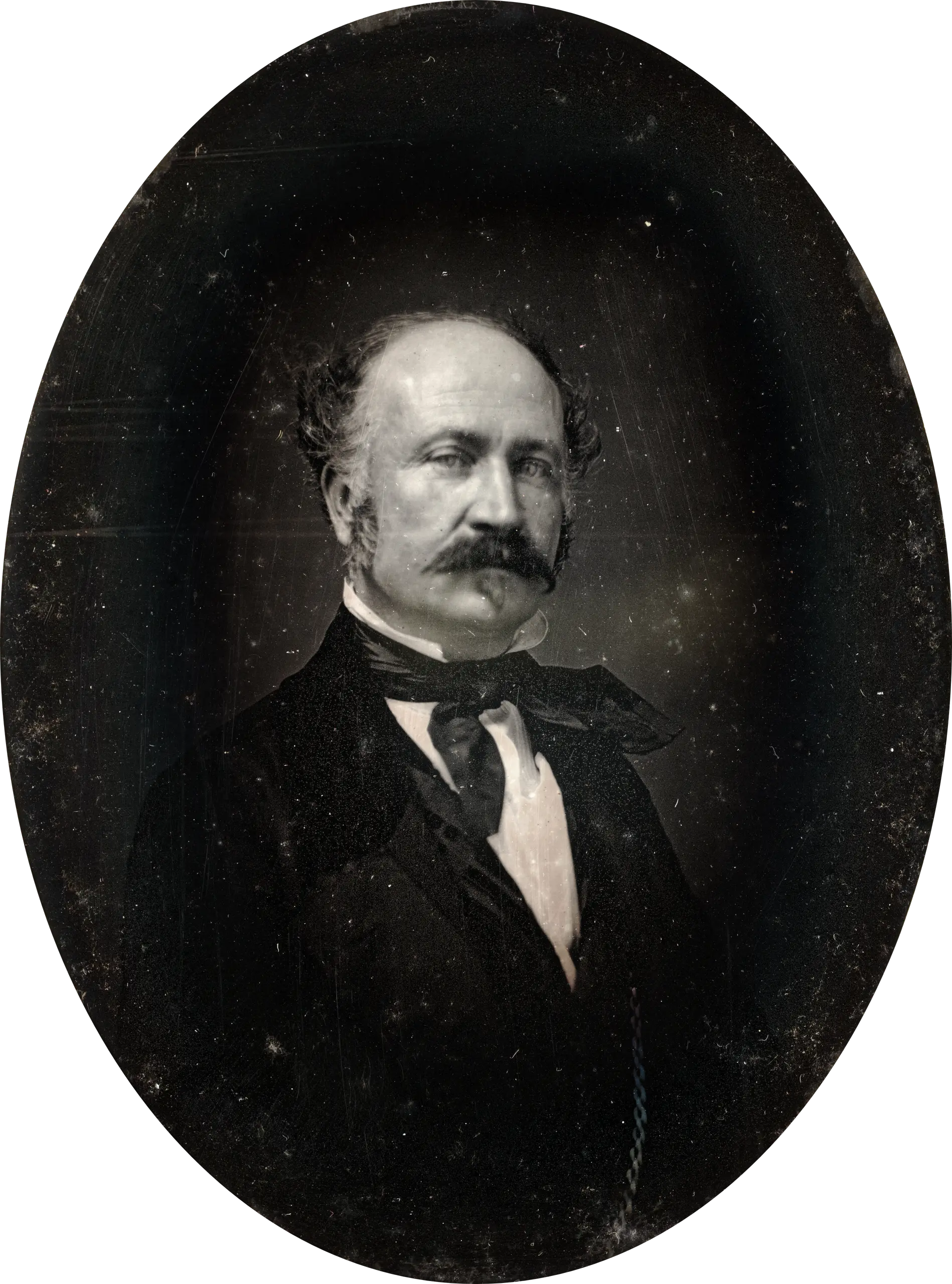
John Sutter
 Mexico
Also known as: Johann Augustus Sutter, John A. Sutter, John Augustus Sutter
Birthday
February 28, 1803
Birth Sign
Pisces
Birthplace
Kandern, Germany
Age
Died at 77
About
Johann Augustus Sutter, known as John Sutter, was a German-born Swiss immigrant who became a Mexican and later an American citizen. He is best remembered as the founder of Sutter's Fort in 1839, a trading post and agricultural colony that became the foundation for Sacramento, California. Sutter envisioned a vast agricultural empire in the region, but his plans unraveled when gold was discovered on his property in 1848, triggering the California Gold Rush.
Sutter's legacy is complex. While he is credited with helping establish modern California, his treatment of Native Americans and his role as a colonizer have drawn increasing scrutiny. A statue of him outside a Sacramento hospital was removed in 2020, and proposals to rename the Sutter Buttes landmark are under review as of 2026. He died in 1880 at the age of 77, leaving behind a mixed historical record.
Early Life & Background
John Sutter was born on February 28, 1803, in Kandern, a small town in the Grand Duchy of Baden, now part of Germany. His family had Swiss roots, and he was raised in a modest household. As a young man, he trained as a printer and later worked in the cloth trade, but his business ventures in Switzerland and the United States were not successful. In 1834, facing bankruptcy, he fled to the United States to escape creditors.
Sutter arrived in New York in 1834 and quickly moved west, eventually making his way to Missouri, where he joined the fur trade. His travels took him to Santa Fe and later to the Pacific Northwest. In 1838, he sailed to the Hawaiian Islands, where he recruited workers for his planned colony. By 1839, he had reached California, then a Mexican province, and obtained a land grant from the Mexican governor. He established Sutter's Fort near the confluence of the American and Sacramento Rivers, building a thriving agricultural enterprise that supplied grain, cattle, and other goods to settlers and travelers.
Career Growth
Sutter's fortunes changed dramatically on January 24, 1848, when his employee James W. Marshall discovered gold at Sutter's Mill in Coloma. The news sparked the California Gold Rush, bringing hundreds of thousands of prospectors to the region. Sutter initially tried to keep the discovery a secret, but the rush overwhelmed his landholdings. Squatters overran his property, livestock was stolen, and his business ventures collapsed. He spent years fighting legal battles to protect his land claims, but the courts ultimately rejected them.
By the 1850s, Sutter was financially ruined. He moved to Washington, D.C., in the 1860s, where he lobbied Congress for compensation for his losses, but without success. He died in a Washington hotel room in 1880, largely forgotten and impoverished. His son, John Augustus Sutter Jr., managed to salvage some of the family's affairs, but the elder Sutter never recovered from the gold rush that made California rich.
Career Timeline
Public Image & Style
John Sutter's public image has evolved significantly over time. In the 19th century, he was celebrated as a pioneer and founder of Sacramento. But modern historians and Native American communities have highlighted his role as a colonizer who exploited indigenous labor and contributed to the displacement of native peoples. Oral histories from California tribes describe violence and abuse that were omitted from written records, which were largely authored by white men. In 2020, a statue of Sutter outside a Sacramento hospital was removed, reflecting changing attitudes. As of 2026, proposals to rename the Sutter Buttes remain under review, symbolizing the ongoing reevaluation of his legacy.
Fame & Fandom (iFAMOUS Rankings)
John Sutter holds no placement in the iFANN Global Top 1,000 or any scope-based ranking list as of August 2026. The iFANN Global Fame Engine has evaluated his standing but determined he does not currently occupy a published rank among the world's most famous figures. While modern pop stars command organized armies of followers, this Swiss immigrant turned American colonizer commands a different kind of attention: that of historians and preservationists rather than a fanbase with a specific name. There is no formal community of devotees who organize chart pushes or birthday billboards for the man who accidentally triggered the California Gold Rush. Instead, interest in Sutter is maintained by local societies and educational institutions focused on the legacy of Nueva Helvetia. Recent civic debates regarding the renaming of the Sutter Buttes in 2026 reflect an active engagement with his history, yet these are political discussions rather than fan campaigns. His story remains one of verified historical impact rather than celebrity worship, anchored by the discovery at his mill and the subsequent collapse of his empire.
Interesting Facts and Legends
Born Johann Augustus Sutter, the man known to history as John was actually born in Germany before immigrating from Switzerland. He established his trading post in 1839 under the name Nueva Helvetia, or New Switzerland, before becoming a Mexican citizen in 1840 to secure his land grant. The gold that would define his life was found at his sawmill, which he had built specifically to supply lumber for his fort. Despite the fortune discovered on his property, Sutter died in a Washington D.C. hotel room at age 77 after failing to secure compensation from Congress. Legends surrounding him often focus on the tragic irony of his life; he is remembered as the man who found gold but lost everything. A popular story recounts how he attempted to suppress the news of the discovery to protect his agricultural ambitions, though the leak inevitably sparked the massive migration of the Forty-Niners. Another enduring tale describes the violent riots of 1850 that led to the burning of Sutter's Fort, marking the end of his feudal-style empire in California. These events transformed him from a powerful landowner into a destitute pensioner, cementing his status as a cautionary figure in American history.
Family & Personal Life
Details about John Sutter's family are sparse in historical records. He was married to Anna Dübeld, who he left behind in Switzerland when he emigrated in 1834. She and their children joined him in California in 1840. The couple had several children, but only his son John Augustus Sutter Jr. is well-documented. John Jr. played a key role in managing the family's affairs after the gold rush. Sutter's wife Anna died in 1869, and he never remarried.
Notable Connections
James W. Marshall, an employee of Sutter, discovered gold at Sutter's Mill in 1848, setting off the Gold Rush. John Augustus Sutter Jr., his son, managed the family's affairs after the elder Sutter's decline. Sutter's life was also connected to the Mexican government, which granted him land in California, and to the many settlers and prospectors who passed through his fort.
Relationships & Dating History
John Sutter married Anna Dübeld in 1826 in Switzerland. They had several children together, though only their son John Augustus Sutter Jr. is well-documented. Sutter left his family in Switzerland in 1834 and they joined him in California in 1840. The couple remained married until Anna's death in 1869. Sutter never remarried and died in 1880.
- MarriedAnna Dübeld1826 - 1869Sutter's wife, who he left behind in Switzerland and later joined him in California.
Death & Aftermath
Died
June 18, 1880 (aged 77)
Death Place
Washington, D.C., USA
Cause of Death
Unknown
John Sutter died on June 18, 1880, in Washington, D.C., at the age of seventy-seven. His final years were defined by financial ruin and mental distress after the Gold Rush destroyed his land claims, leading him to spend his last days lobbying Congress for compensation that never arrived. Historical accounts describe his passing as a natural demise rather than an accident or homicide. Public reaction to his death was muted; he had already faded from the spotlight into obscurity. Contemporary records reflect a man largely forgotten, with mourning reserved for the historical figure rather than the living individual.
Sutter was buried in a National Cemetery in Washington, D.C., a resting place consistent with his brief service in the Mexican-American War and his residence in the capital. Posthumously, his legacy evolved into that of a foundational historical figure, sparking debates over his role as a colonizer and interactions with Indigenous peoples. Memorials like Sutter's Fort State Historic Park now honor his contribution to California's development, while academic works challenge the traditional heroic narrative of his life.
Net Worth (Estate Value)
$10 Million
iFANN Editorial Team estimate
Since John Sutter died in 1880, his financial status is best understood through his estate. During his lifetime, Sutter never achieved lasting wealth; the Gold Rush destroyed his business ventures and left him impoverished. He spent his final years lobbying Congress for compensation, but no payment was ever made. Per iFANN's editorial analysis, Sutter's estate holds a net worth of $10 Million as of 2026, reflecting his immense historical value rather than accumulated assets. There are no known posthumous earnings from direct commercial ventures, yet his legacy as the catalyst for the California Gold Rush generates significant cultural capital. His historical value lies in his role in establishing modern California, not in monetary worth.
Awards & Accolades
Known For
Founding Sutter's Fort
1839 · Founder
California Gold Rush
1848 · Landowner
Keywords
Sources
Quick Facts
- Profession
- explorer, businessperson
- Born
- February 28, 1803
- Birthplace
- Kandern, Germany
- Died
- June 18, 1880
- Death Place
- Washington, D.C.
- Gender
- Male
- Birth Sign
- Pisces
Personal Details
- Full Name
- Johann Augustus Sutter
- Children
- 1 son: John Augustus Sutter Jr.
Frequently Asked Questions
Who was John Sutter?
What is John Sutter's net worth?
When was gold discovered at Sutter's Mill?
What happened to John Sutter after the Gold Rush?
Why is John Sutter controversial?
Join the community
fans discussing