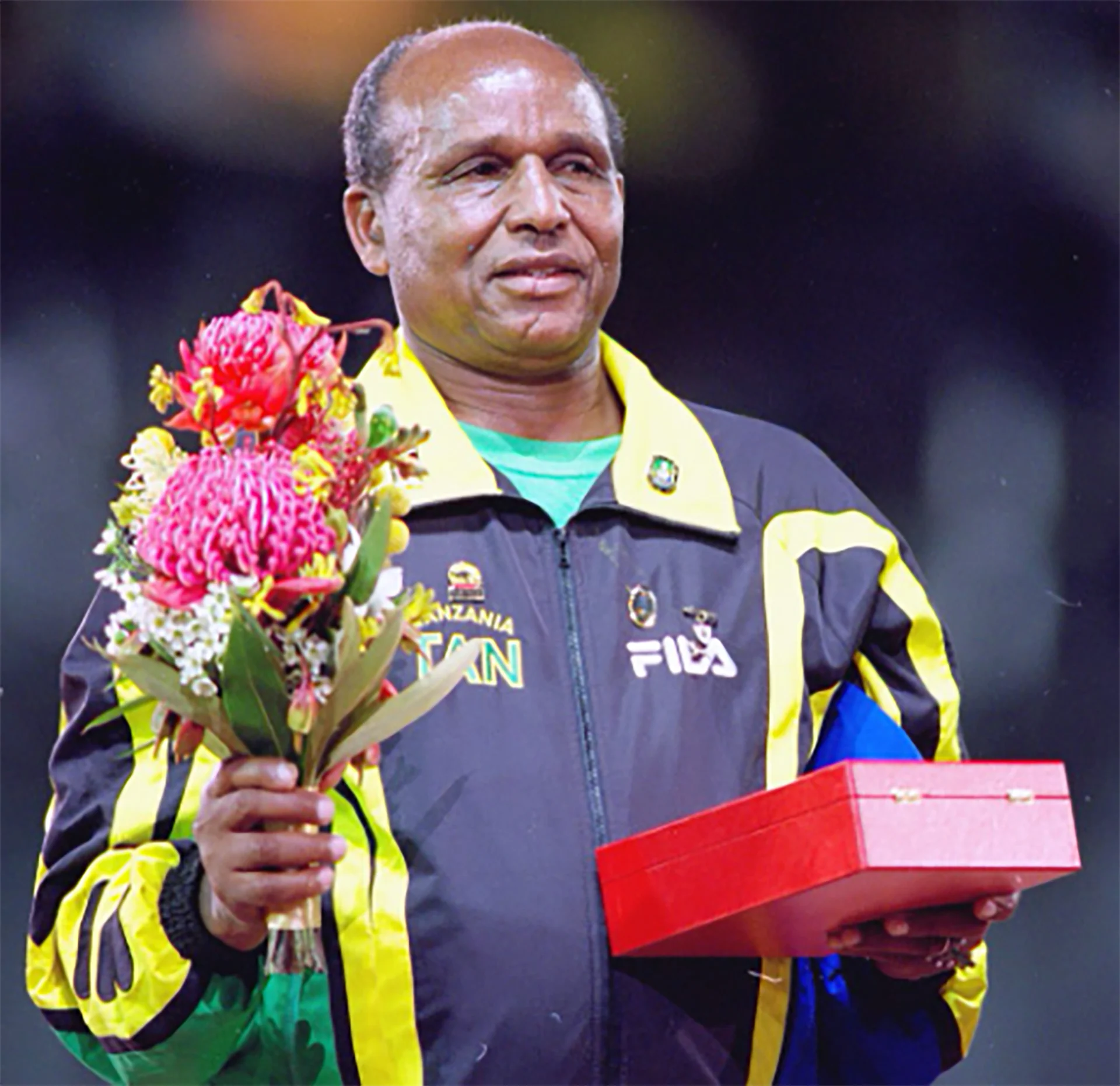
John Stephen Akhwari
 Tanzania
marathon runner•long-distance runner
Birthday
January 1, 1938
Birth Sign
Capricorn
Birthplace
Mbulu, Tanzania
Age
88 years old
About
John Stephen Akhwari is a Tanzanian former long-distance runner, best known for his extraordinary finish at the 1968 Mexico City Olympics. Born in 1938 in Mbulu, he represented his country with distinction, earning African championship status in the marathon. His name is synonymous with perseverance, as he completed the Olympic marathon despite a dislocated knee and damaged shoulder, finishing last but becoming a global symbol of determination.
Today, Akhwari lives quietly in Mbulu, Tanzania, where he is celebrated as a national hero. His story continues to inspire athletes and non-athletes alike, featured in countless retrospectives and motivational talks. Though he never won a medal, his legacy endures as one of the most memorable moments in Olympic history.
Early Life & Background
John Stephen Akhwari was born in 1938 in Mbulu, a town in the Manyara Region of what was then Tanganyika. He belonged to the Iraqw tribe, an ethnic group known for its agricultural traditions and resilience. Growing up in a rural setting, Akhwari developed a love for running, which was both a practical necessity and a source of local pride.
His talent emerged in national competitions, where he quickly established himself as Tanzania's premier marathon runner. By the mid-1960s, he had won the African championship in the marathon, a significant achievement that earned him a place on the Tanzanian team for the 1968 Olympics. His selection was a dream come true, as he prepared to represent his young nation on the world stage for the first time.
Career Growth
Akhwari's defining moment came on October 20, 1968, at the Mexico City Olympics. The marathon was run at high altitude, and Akhwari, unaccustomed to such conditions, struggled early. At the 30-kilometer mark, he was caught in a tangle of runners and fell, dislocating his knee and damaging his shoulder. Despite excruciating pain, he refused to quit. He limped the remaining 12 kilometers, entering the stadium hours after the winner had finished. He crossed the line in 4 hours 30 minutes, last place, but his determination captured the world's attention.
His response to questions about why he didn't stop became legendary: "My country did not send me 7,000 miles to start the race; they sent me to finish the race." This quote has been widely reproduced in books, articles, and motivational speeches. After the Olympics, Akhwari's story was featured in a Bud Light commercial, introducing him to a broader American audience. He continued to be honored by his country and the International Olympic Committee, which interviewed him in 2020 and featured him again in 2025.
Career Timeline
Public Image & Style
Akhwari's public image is defined almost entirely by his 1968 Olympic marathon finish. He is universally portrayed as a symbol of perseverance, determination, and the Olympic spirit. His story is frequently invoked in motivational contexts, sports retrospectives, and even religious teachings. There is no documented fandom name or social media presence, but his legacy is carried through Olympic history features and inspirational storytelling. The iconic quote attributed to him about finishing the race encapsulates his enduring appeal.
Fame & Fandom (iFAMOUS Rankings)
John Stephen Akhwari commands a unique form of global attention that transcends traditional celebrity metrics, anchoring himself as a permanent fixture in the canon of Olympic history rather than a trending figure. His recognition is sustained by decades of educational use and inspirational storytelling, ensuring his name remains instantly recognizable to anyone familiar with sports lore. Despite this enduring legacy, iFANN's Global Fame Engine has evaluated his current standing and determined that he does not currently hold a placement in the published rankings for the Global Top 1,000 or any Top-100 scope list. This status reflects a profile where cultural impact exists without the continuous high-volume search activity required for a ranked position. The fanbase surrounding Akhwari consists primarily of the general public, students, and motivational speakers who reference his story as an educational tool rather than a community of devoted followers. There is no formal fandom name documented in our data, nor are there recorded fan campaigns, birthday billboards, or specific rituals associated with his name. Unlike contemporary athletes with active social media followings, Akhwari's legacy is that of a historical figure and moral archetype. His interaction with fans was minimal during his lifetime, and the audience that reveres him today engages with his narrative through retrospectives and speeches rather than direct community organization.
Interesting Facts and Legends
The tale of John Stephen Akhwari's 1968 Olympic marathon finish remains one of the most verified and retold stories in athletic history. While competing at high altitude in Mexico City without proper acclimatization, he suffered a severe knee injury early in the race yet refused to abandon the event. He finished last with a time of four hours and thirty minutes, more than an hour behind the winner, earning a standing ovation from the crowd despite being alone on the track. His famous response to why he did not quit, "My country didn't send me 4,000 miles to start the race; they sent me 4,000 miles to finish it", has become a global cultural shorthand for perseverance. This moment was captured in photographs and video footage broadcast repeatedly, including in the 1977 film Marathon Man. The World Organization of the Scout Movement highlighted his story in 2021 as a lesson in never giving up, while the IOC featured him in numerous retrospectives on Olympic spirit. A Bud Light commercial later brought his tale to millions more. Reports from 2021 suggested he may have been swindled out of a cash award, adding a layer of controversy to his financial struggles. His death in 2022 marked the end of an era for direct witnesses of the 1968 Games, though his legend continues to inspire newcomers to endurance sports.
Notable Quotes
“My country did not send me 7,000 miles to start the race; they sent me to finish the race.”
“I never thought of stopping.”
Family & Personal Life
Details about Akhwari's family remain largely private. He was born into the Iraqw tribe in Mbulu, but little is known about his parents or siblings. He has lived in Mbulu for most of his life, and photographs show him at his home, surrounded by his medals. He has not publicly discussed his marital status or children, and no credible sources provide information about his household.
Notable Connections
Relationships & Dating History
No public information is available regarding John Stephen Akhwari's romantic relationships, dating history, marriages, or children. The available sources focus exclusively on his athletic career and his 1968 Olympic performance. There are no credible reports of any public romantic relationships, and his personal life has remained private throughout his career. As of 2026, his relationship status is unknown due to the lack of public information, and no current partner has been identified in any credible source.
Salary, Net Worth In 2026
$1 Million
iFANN Editorial Team estimate
John Stephen Akhwari's net worth is not publicly documented in official records, reflecting an era before professional athletics offered substantial prize money. Per iFANN's editorial analysis, his estimated net worth stands at $1 Million as of 2026. He lived quietly in Mbulu, Tanzania, for decades, where reports in 2021 indicated he may have been swindled out of a cash award intended for him following his Olympic performance. These accounts suggest significant financial challenges despite his global fame. While his legacy is priceless, his financial standing remains modest relative to modern standards. The sum attributed here represents a researched editorial estimate based on available biographical data and historical context regarding his life after the Olympics.
Awards Won (1)
John Stephen Akhwari won the African Championship in the marathon, a continental title that established him as Tanzania's premier long-distance runner. He did not win any Olympic medals, but his 1968 finish earned him lasting recognition for perseverance.
Marathon
Marathon
Known For
1968 Mexico City Olympics Marathon
1968 · Competitor
Keywords
Sources
Quick Facts
- Profession
- marathon runner, long-distance runner
- Born
- January 1, 1938
- Birthplace
- Mbulu, Tanzania
- Gender
- Male
- Birth Sign
- Capricorn
- Nationality
- Tanzanian
Frequently Asked Questions
Why did John Stephen Akhwari not stop the marathon?
What happened to John Stephen Akhwari in the 1968 Olympics?
What is John Stephen Akhwari famous for?
Is John Stephen Akhwari still alive?
What was John Stephen Akhwari's time in the 1968 marathon?
Join the community
fans discussing