 United States
“Mr. Washington brings his customary dignity and intensity to the role, but the movie around him is so clumsily contrived that it undermines his efforts.”
A.O. Scott
The New York Times
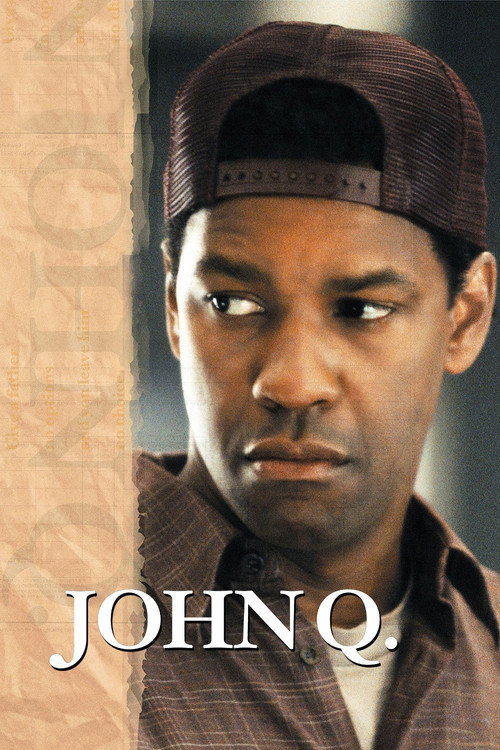
February 2002. A working-class father from Chicago walks into a hospital emergency room with a gun. He takes doctors, nurses, and patients hostage. His son is dying of an enlarged heart. The insurance company won't cover the transplant. John Quincy Archibald is done asking for help.
Denzel Washington plays the title role in Nick Cassavetes's tense drama, a film that landed in the middle of America's growing debate over healthcare costs. James Woods plays Dr. Raymond Turner, the hospital administrator who coldly explains the fine print. Robert Duvall is Lt. Frank Grimes, the negotiator who slowly realizes this isn't a typical hostage situation. Shot in Toronto on a $36 million budget, the film grossed over $102 million worldwide, becoming a commercial hit that split critics and audiences sharply.
The movie wears its politics on its sleeve. It asks a blunt question: what would you do if the system told you your child's life had a price tag you couldn't meet? The answer it gives is messy, emotional, and deliberately provocative. Washington's performance anchors the film, giving weight to a premise that could have tipped into pure melodrama.
Availability and pricing can change. Confirm on the provider's site before purchasing.
John Quincy Archibald works a factory job in Chicago. He lives in a modest house with his wife Denise and their young son Michael. Life is tight but manageable. Then Michael collapses during a Little League baseball game. At the hospital, Dr. Raymond Turner delivers the news: Michael has a severely enlarged heart. Without a transplant, he will die within days.
The Archibalds' insurance policy has a cap. The $250,000 transplant procedure isn't covered. Hospital administrator Rebecca Payne explains the situation with clinical detachment: no payment, no place on the transplant list. John pleads with his employer. He begs the hospital's charity office. He tries to sell everything he owns. Every door closes. His bank account is nearly empty. His credit is maxed out. His son's condition worsens by the hour.
On the third day, John makes a decision. He walks into the emergency room with a gun and takes everyone inside hostage. His demand is simple: put Michael on the transplant list. Immediately. The police surround the building. Lt. Frank Grimes takes charge of negotiations. Chief Gus Monroe pressures for a tactical assault. The media sets up camp outside, broadcasting every development live.
Inside the ER, the situation is volatile. John holds Dr. Turner at gunpoint. Other hostages include a pregnant woman, a security guard, a young couple, and a nurse named Gina Palumbo. Some hostages sympathize with John. Others are terrified. Tensions rise as hours pass. John's grip on the situation frays. He hasn't slept. He hasn't eaten. His son's condition is deteriorating in the ICU upstairs.
Grimes tries to build rapport with John, learning about his life, his fears, his desperation. He sees a man who has exhausted every legal option. Monroe wants to end the standoff by force. The debate outside mirrors the one inside: is John a terrorist or a folk hero? The clock keeps ticking. Michael's heart is failing. John's plan is unraveling. And no one knows how this ends.
Trailer
Critical Consensus
John Q is a manipulative melodrama that uses a compelling premise to preach about healthcare reform, but its heavy-handed direction and one-dimensional characters undermine its emotional impact. Denzel Washington's performance is the film's sole saving grace.
“Mr. Washington brings his customary dignity and intensity to the role, but the movie around him is so clumsily contrived that it undermines his efforts.”
A.O. Scott
The New York Times
“A blatant, tear-jerking, socially-conscious thriller that aims for the heart but too often misses, saved only by Washington's committed performance.”
Todd McCarthy
Variety
“Cassavetes directs with a sledgehammer, but Washington is so good, you almost forgive the film's manipulative excesses.”
Peter Travers
Rolling Stone
“The movie is a well-acted but ultimately shallow exercise in emotional manipulation, using a serious issue as a backdrop for a thriller that doesn't trust its audience to think.”
Roger Ebert
Chicago Sun-Times
Denzel Washington
John Quincy Archibald
James Woods
Dr. Raymond Turner
Kimberly Elise
Denise Archibald
Robert Duvall
Lt. Frank Grimes
Shawn Hatosy
Mitch Quigley
Eddie Griffin
Lester Matthews
Kevin Connolly
Steve Maguire
Ethan Suplee
Guard Max Conlin
Ray Liotta
Chief Gus Monroe
Anne Heche
Rebecca Payne
Laura Harring
Gina Palumbo
Heather Wahlquist
Julie Bird
Director
Nick Cassavetes
Writer
James Kearns
Composer
Aaron Zigman
Cinematographers
Rogier Stoffers, Michael Kohnhorst
Producers
Mark Burg, Oren Koules
BET Awards (2002)
Best Actor: Nominated
NAACP Image Awards (2002)
Outstanding Actor in a Motion Picture: Nominated
NAACP Image Awards (2002)
Outstanding Supporting Actress: Nominated
Teen Choice Awards (2002)
Choice Movie: Drama: Nominated
Teen Choice Awards (2002)
Choice Movie Actor: Drama: Nominated
Black Reel Awards (2003)
Best Actor: Nominated
Black Reel Awards (2003)
Best Original Soundtrack: Nominated
Join the community
fans discussing