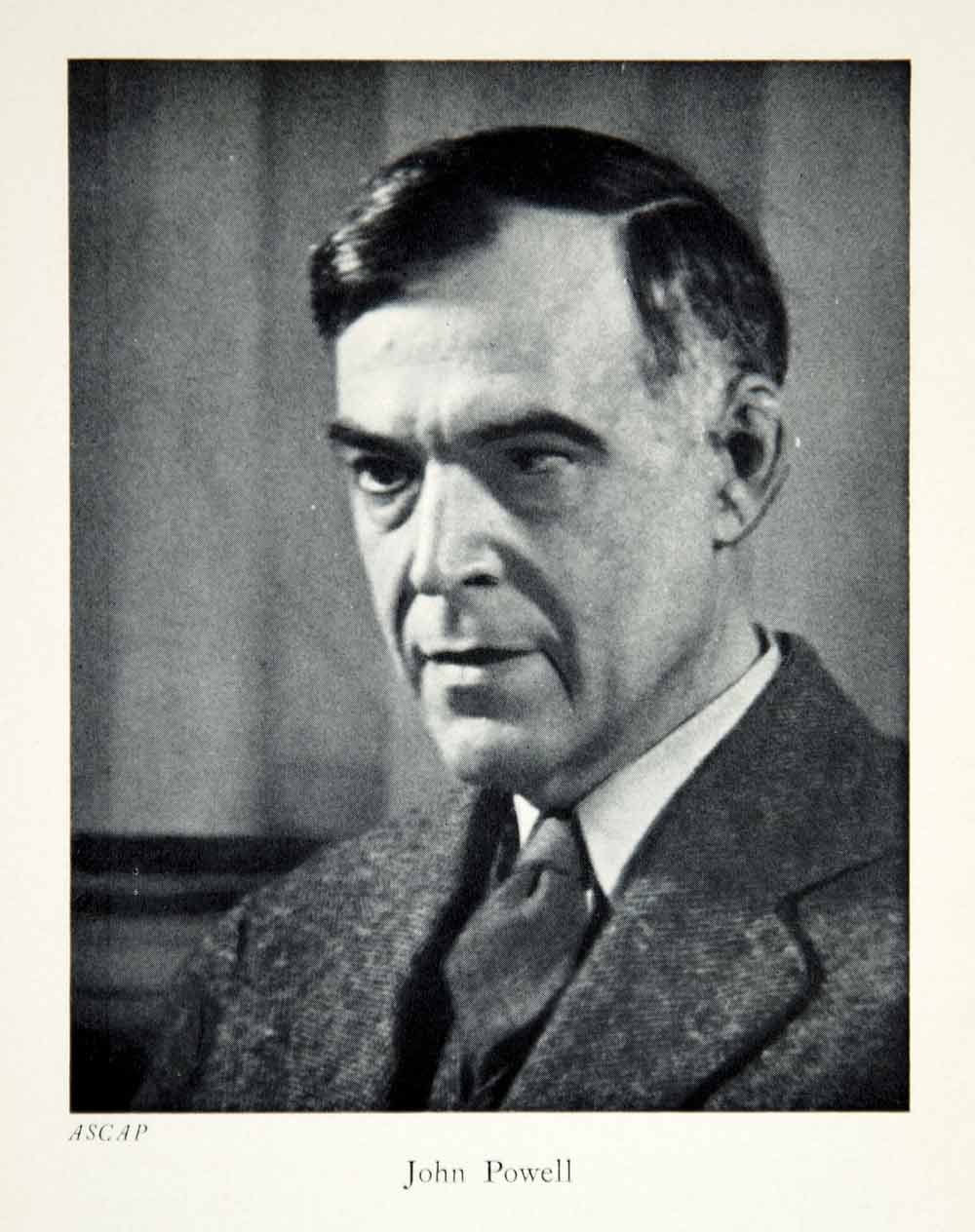
John Powell
 United Kingdom
composer•film score composer•conductor
Birthday
September 18, 1963
Birth Sign
Virgo
Birthplace
London, England
Age
63 years old
About
John Powell is an English composer and conductor who has shaped the sound of modern blockbuster cinema since moving to Los Angeles in 1997. With over 70 feature film scores, he blends orchestral grandeur with inventive rhythms, earning Academy Award nominations for How to Train Your Dragon and Wicked, plus six Grammy nominations across Happy Feet, Ferdinand, and Solo: A Star Wars Story. A key member of Hans Zimmer's Remote Control Productions, he has co-composed with Harry Gregson-Williams on Antz and Chicken Run, and with Zimmer on the Kung Fu Panda films. His music ranges from percussive spy-thriller scores (the Bourne franchise) to soaring animated adventures (How to Train Your Dragon trilogy) and intimate dramas (United 93). Directors like Dean DeBlois, George Miller, and Jon M. Chu regularly turn to him for his ability to marry emotion and momentum.
Powell's career began in commercials before he assisted Patrick Doyle on Much Ado About Nothing. After co-founding Independently Thinking Music in 1995, he landed his first Hollywood scores with Face/Off and Antz. The Bourne series made him a household name among film fans, with its driving, percussive themes redefining the spy genre. He then became a cornerstone of DreamWorks Animation, scoring Shrek, Kung Fu Panda, and the How to Train Your Dragon trilogy, the first film earning him his first Oscar nomination. His versatility also shines in the jazzy beats of Happy Feet, the dramatic weight of United 93, and the epic fantasy of Wicked (2024), which earned a second Oscar nod. More recently, he scored the live-action How to Train Your Dragon remake and continues to be one of the most sought-after composers in the industry.
Early Life & Background
Powell grew up in a musical household in London. His father was a tuba player with the Royal Philharmonic Orchestra under Sir Thomas Beecham, so classical music filled the home from the start. As a kid, he played the violin and viola, but hearing the Mendelssohn Violin Concerto at around age seven was a turning point, he later said that piece “changed my head.” He initially thought he would become a performer like his father, but during his studies at Trinity College of Music, he realized he enjoyed writing music more than playing it.
While at Trinity, he met John Ashton Thomas, who would go on to orchestrate many of Powell's scores. During college, he also played in an amateur rock and roll/soul band called the Faboulistics. After graduating, he composed music for commercials, which led to a job as an assistant to composer Patrick Doyle on several films, including Much Ado About Nothing (1993). In 1995, he co-founded the London-based commercial music house Independently Thinking Music with Gavin Greenaway, producing scores for over 100 British and French commercials and independent films. That experience taught him how to write music for image, a skill that proved invaluable when he moved to Los Angeles in 1997 to break into Hollywood.
Career Growth
Powell's Hollywood breakthrough came quickly after his move to Los Angeles. In 1997, he co-scored Face/Off and joined Hans Zimmer's Remote Control Productions. The following year, he co-composed Antz with Harry Gregson-Williams, beginning a long collaboration with DreamWorks Animation. The real game-changer came in 2002 with The Bourne Identity, where his percussive, driving themes reinvented the spy thriller score. He continued the franchise with The Bourne Supremacy (2004), The Bourne Ultimatum (2007), and Jason Bourne (2016).
In 2006, Powell demonstrated remarkable range with two very different projects: the jazzy, tap-dancing score for George Miller's Happy Feet and the harrowing, minimalist music for Paul Greengrass's United 93. That same year, he scored X-Men: The Last Stand. His work on How to Train Your Dragon (2010) earned him his first Academy Award nomination, with its soaring Celtic-tinged melodies becoming instantly iconic. He continued to score the sequels and also worked on Kung Fu Panda 2 (2011) with Zimmer, The Lorax (2012), and Solo: A Star Wars Story (2018).
In 2014, Powell took a sabbatical from film scoring to compose concert works, including a 45-minute oratorio titled “A Prussian Requiem” commemorating the 100th anniversary of World War I, premiered in London in 2016. He returned to film with How to Train Your Dragon: The Hidden World (2019), The Call of the Wild (2020), and Still: A Michael J. Fox Movie (2023). In 2024, his score for Wicked earned a second Oscar nomination, and he also composed for Migration and That Christmas. As of 2026, he is scoring the live-action How to Train Your Dragon remake.
Career Timeline
Public Image & Style
Powell is known in the industry as a versatile composer who can move seamlessly from orchestral grandeur to intimate minimalism. His scores often feature unconventional instruments, from didgeridoos to electronic textures, and he is praised for meticulous thematic development. The media portrays him as a grounded, melody-first artist who avoids the spotlight. Fans of film music admire his ability to make every score feel both epic and personal. He has no official fandom name, but his work on the How to Train Your Dragon trilogy has a devoted following. On social media, he shares behind-the-scenes glimpses of his composing process, maintaining a warm and approachable presence.
Fame & Fandom
John Powell commands a global audience defined by the sheer scale of his film scores rather than celebrity spectacle. His work resonates through billions of views across streaming platforms and box office receipts, creating a ubiquitous presence in modern pop culture without relying on personal fame metrics. iFANN has evaluated this profile extensively; however, John Powell is currently not ranked within the Global Top 1,000 or any scope-specific top lists. The composer exists outside the published hierarchy of celebrity rankings because his influence operates through the cinematic works themselves rather than direct public adoration. While he enjoys deep respect among film music enthusiasts, there is no documented fandom name associated with his fanbase. Fans typically identify simply as admirers of his scores for franchises like How to Train Your Dragon or Mission: Impossible. Unlike artists with organized cult followings, there are no specific rituals, charity drives, or fan-funded campaigns dedicated solely to Powell. Appreciation manifests through the analysis of tracks like Test Drive and engagement with his professional updates on social media, but these interactions remain niche academic or hobbyist pursuits rather than a cohesive movement. His legacy is built on the emotional impact of his compositions, leaving a footprint that is felt globally yet lacks the specific branding found in pop star cultures.
Interesting Facts and Legends
John Powell's musical foundation was laid early, influenced by his father who played tuba in the Royal Philharmonic Orchestra under Sir Thomas Beecham. This unique exposure sparked a lifelong passion, though his own path initially led him to play in an amateur rock and roll band called the Faboulistics during college. A pivotal moment occurred at age seven when hearing the Mendelssohn Violin Concerto changed his perspective on music forever. He met orchestrator John Ashton Thomas at Trinity College of Music, beginning a long-standing collaboration that continues today. In 1995, Powell co-founded Independently Thinking Music, which produced over 100 commercials before he moved to Los Angeles in 1997 to pursue film scoring. He began his career as an assistant to Patrick Doyle on Much Ado About Nothing in 1993. In 2014, he stepped away from film to compose a 45-minute oratorio titled A Prussian Requiem for the WWI centenary. While fans often discuss the legendary status of his themes, such as Test Drive becoming an anthem for the How to Train Your Dragon series, there are no verified stories of crowds shutting down streets or extraordinary physical reactions to his live performances. His iconic moments remain auditory, embedded in the fabric of blockbuster cinema rather than viral folklore.
Notable Quotes
“I always talk about the moment when music changed my head, right when I was about seven, I think: The pieces of the Mendelssohn Violin Concerto.”
“I realized that, rather than go to music college to study violin, I was enjoying writing more.”
“Understanding that being a composer in this world is financially quite a tricky thing to do, I fell into doing advertising music. That's where I actually realized I quite enjoyed writing music for image.”
“There was no moment 'I must be a composer.' None of that.”
Family & Personal Life
Powell's father was a tuba player with the Royal Philharmonic Orchestra under Sir Thomas Beecham, which gave him a rich classical upbringing. His mother's name and occupation are not publicly documented. He has no known siblings in public records. Powell was previously married to Melinda Lerner, but the marriage ended in divorce. He does not have any publicly known children. As of 2026, he keeps his personal life private, with no current partner or household details available.
Notable Connections
Powell has collaborated extensively with Hans Zimmer, co-composing Chill Factor, The Road to El Dorado, and the first two Kung Fu Panda films. He frequently worked with Harry Gregson-Williams on Antz, Chicken Run, and Shrek. He met orchestrator John Ashton Thomas at Trinity College of Music. He co-founded Independently Thinking Music with Gavin Greenaway. He assisted Patrick Doyle on Much Ado About Nothing. Directors he has worked with include Dean DeBlois (How to Train Your Dragon trilogy), Jon M. Chu (Wicked), George Miller (Happy Feet), Paul Greengrass (Bourne films, United 93), Carlos Saldanha (Blue Sky films), and Chris Sanders (How to Train Your Dragon, The Call of the Wild).
Relationships & Dating History
John Powell's public dating history is minimal. He was previously married to Melinda Lerner, though the exact start and end dates of the marriage are not publicly documented. The marriage ended in divorce. No further relationships or partners have been confirmed by credible sources. As of 2026, Powell's relationship status is not publicly known, and he maintains a private personal life.
- MarriedMelinda LernerMarriage ended in divorce.
Salary, Net Worth In 2026
$15 Million
iFANN Editorial Team estimate
iFANN currently estimates John Powell's net worth in 2026 at $15 Million. This figure reflects his extensive career scoring over 70 feature films for major studios including DreamWorks, Disney, and 20th Century Fox. He commands significant fees for high-profile projects like the Bourne franchise and How to Train Your Dragon trilogy. Additional revenue streams include royalties from soundtrack albums and streaming, as well as performance royalties from concert works like A Prussian Requiem. He has no known endorsement deals or business ventures. His net worth has grown steadily over the past decade, reflecting his continued demand in Hollywood.
Awards & Accolades
Known For
How to Train Your Dragon
2010 · Composer
The Bourne Identity
2002 · Composer
Shrek
2001 · Composer (with Harry Gregson-Williams)
Wicked
2024 · Composer
Happy Feet
2006 · Composer
Kung Fu Panda
2008 · Composer (with Hans Zimmer)
Solo: A Star Wars Story
2018 · Composer
United 93
2006 · Composer
Keywords
Sources
Quick Facts
- Profession
- composer, film score composer, conductor
- Born
- +1963-09-18
- Birthplace
- London, England
- Gender
- Male
- Spouse
- Melinda Lerner
- Birth Sign
- Virgo
Personal Details
- Full Name
- John Powell
- Spouse
- Melinda Lerner
- Education
- Trinity College of Music (now Trinity Laban Conservatoire of Music and Dance)
Filmography
70
Total
70
Film
0
TV
Frequently Asked Questions
How old is John Powell?
What is John Powell best known for?
What is John Powell's net worth in 2026?
Is John Powell married?
Does John Powell have children?
Similar People

Join the community
fans discussing