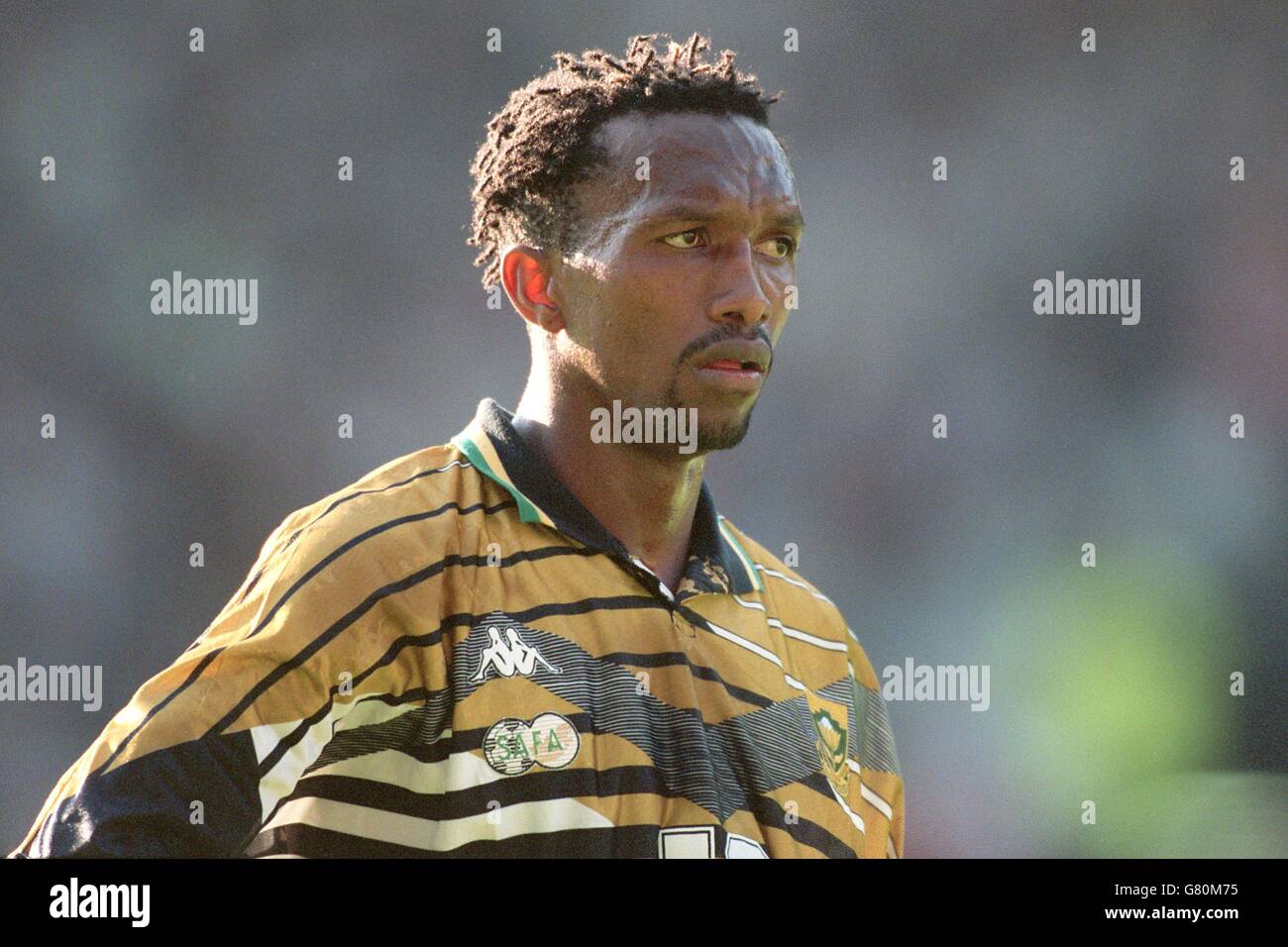
John Moshoeu
 South Africa
association football player•association football coach
Also known as: John Lesiba Moshoeu, Shoes Moshoeu, The Dribbling Wizard
Birthday
December 18, 1965
Birth Sign
Sagittarius
Birthplace
Diepkloof, Soweto, South Africa
Age
Died at 49
Height
5 ft 9 in (1.76 m)
About
John Lesiba Moshoeu was a celebrated South African professional footballer and coach who played as an attacking midfielder. Born on December 18, 1965, in Diepkloof, Soweto, he became one of the most technically gifted players in South African history before passing away on April 21, 2015, in Johannesburg after a long battle with cancer at the age of 49.
His career was defined by his exceptional dribbling ability, earning him comparisons to Lionel Messi and the moniker "the dribbling wizard" within the local sporting community. He is best remembered for his pivotal role in Kaizer Chiefs' continental success during the mid-1990s and his service to the national team, Bafana Bafana.
Early Life & Background
Moshoeu grew up in the vibrant street football culture of Diepkloof, Soweto, where talent often emerged from informal leagues and local clubs before being scouted for professional teams. His early life was marked by a deep passion for football, which he pursued alongside other physical activities. Notably, he practiced karate during his youth, a discipline that likely contributed to his agility and balance on the pitch. This background in martial arts gave him a unique edge in close control and footwork that would later define his playing style.
His boyhood idol was Ace Ntsoelengoe, a legendary figure in South African football, whom Moshoeu admired for his skill and style. Before achieving fame, Moshoeu honed his skills in the gritty streets of Soweto, mastering the art of weaving through defenders with the ball at his feet. He began his professional journey in the late 1980s, quickly rising through the ranks of the National Soccer League (NSL) to establish himself as a key playmaker.
Career Growth
Moshoeu's career is a chronicle of domestic dominance and international representation. He started his professional career with Kaizer Chiefs in 1987, where he established himself as a key playmaker and helped the club secure multiple titles. In 1992, he moved to Al Ahly in Egypt, marking his first major stint abroad, though family reasons prompted a quick return to South Africa.
He rejoined Kaizer Chiefs in 1993, reaching his peak form during this era. During this time, he won the South African Premier Division title in 1994 and played a pivotal role in the team's victory in the CAF Champions League in 1996. Seeking new challenges, Moshoeu transferred to FC Twente in the Netherlands in 1997. Although his time in Europe was brief, it highlighted his status as a top-tier African talent.
He returned to South Africa in 1999, playing for Orlando Pirates and later SuperSport United before retiring from professional playing in 2003. Post-retirement, Moshoeu transitioned into coaching. He served as an assistant coach for various clubs and was notably part of the technical setup for the South African national team, Bafana Bafana, during the qualification campaigns for the 2010 FIFA World Cup.
Career Timeline
Public Image & Style
Moshoeu was portrayed as a humble, talented, and resilient individual. Media coverage consistently highlights his bravery in fighting cancer and his dedication to his family. Known for his low center of gravity, incredible close control, and ability to weave through tight defenses, he was often described as "electric" and "magical" with the ball at his feet. His legacy is kept alive through annual memorial matches and tributes during Kaizer Chiefs home games, where fans often wear number 10 jerseys in his honor.
Fame & Fandom
John Moshoeu remains a towering figure in South African football history, revered not for global chart dominance but for the enduring reverence of a nation. While iFANN has not yet gathered sufficient data to assign a specific global or category ranking to his current fame level, his status as a cultural icon persists independently of algorithmic measurement. The legacy of "Shoes" is defined by a diffuse but deeply emotional community of supporters who view him as a national hero rather than an organized fandom with a formal name. Fans across South Africa collectively remember him as "the Lionel Messi of South Africa," a moniker born from his exceptional dribbling ability and low center of gravity that allowed him to weave through defenses with unique precision. This comparison, though metaphorical, has solidified into the primary identity he holds in popular culture, instantly identifying him to new generations of supporters. The most significant display of this collective adoration occurred following his death on April 21, 2015, when an outpouring of grief swept the country. His fanbase does not operate through modern campaign-driven rituals or social media hashtags; instead, their devotion is expressed through retrospective features and the continued citation of his pivotal role in the 1996 African Cup of Nations victory. That triumph, securing South Africa's first major international trophy since the end of apartheid, stands as the cornerstone of his legendary status. He also earned pride among fans during his stints in Turkey with Fenerbahce and Bursaspor, representing the success of South African players abroad. A somber chapter of his legend involves the tragic loss of his son, Jermaine Moshoeu, which compounded the family's sorrow and added a layer of profound tragedy to his biography often referenced in biographical summaries. Ultimately, Moshoeu gave fans moments of pure joy through his performances, cementing his place alongside other legends like Shakes Kungwane in the annals of Bafana Bafana history.
Interesting Facts and Legends
Before focusing entirely on football, Moshoeu trained in karate, which enhanced his footwork and agility. He grew up watching Ace Ntsoelengoe, a legend of the 1960s and 70s, and modeled his game after him. Despite never playing in Europe's top leagues for long, he was frequently compared to modern-day stars like Lionel Messi due to his unique dribbling style.
The nickname "Shoes" is a common diminutive for his surname, Moshoeu, and was adopted by fans and media throughout his career. His performance in the 1996 CAF Champions League final against AS Vita Club was instrumental in Kaizer Chiefs' victory, with his vision and passing crucial in breaking down the opposition's defense.
Notable Quotes
“Africa are a force to be reckoned with”
Family & Personal Life
Public records regarding John Moshoeu's romantic relationships are scarce, reflecting the privacy maintained by many athletes of his era. There is no verified public information detailing a marriage or long-term engagement prior to his death. However, it is confirmed that he had children. Tragically, his son passed away in a horrific car crash in July 2015, just months after John's own death. This event devastated the family and was widely reported in South African media. Due to the lack of confirmed details on partners, his personal life remains largely private, with the focus of public memory resting on his legacy as a father and a football icon.
Notable Connections
Ace Ntsoelengoe, Benni McCarthy, Deco, Maimane Phiri
Relationships & Dating History
Public records regarding John Moshoeu's romantic relationships are scarce, reflecting the privacy maintained by many athletes of his era. There is no verified public information detailing a marriage or long-term engagement prior to his death. However, it is confirmed that he had children. Tragically, his son passed away in a horrific car crash in July 2015, just months after John's own death. This event devastated the family and was widely reported in South African media. Due to the lack of confirmed details on partners, his personal life remains largely private, with the focus of public memory resting on his legacy as a father and a football icon.
Death & Aftermath
Died
April 21, 2015 (aged 49)
Death Place
Johannesburg
Cause of Death
Cancer
The South African Football Association issued an official statement confirming the death of John Lesiba Moshoeu, a legendary midfielder for Bafana Bafana and Kaizer Chiefs. Family representatives subsequently clarified that the cause was cancer, noting he had been battling the illness for some time prior to his passing. Reports indicate that Moshoeu spent his final days in Johannesburg before succumbing to the disease on April 21, 2015, at the age of 49. Tributes flowed immediately from major sporting bodies, with Kaizer Chiefs releasing a condolence message through their chairman describing him as a disciplined athlete. Former teammates and media outlets later honored his memory in retrospectives regarding the 1996 African Cup of Nations victory, cementing his status within the nation's football history. While specific details regarding the funeral service, burial location, or immediate memorial arrangements remain absent from public records, the outpouring of grief was evident across local news agencies.
Net Worth (Estate Value)
$500,000
iFANN Editorial Team estimate
Since John Moshoeu passed away in 2015, his net worth is calculated based on his estate value. Specific figures for the total value of his estate as of 2026 are not publicly disclosed in financial reports or celebrity net worth databases. Unlike living celebrities, posthumous valuations are rarely updated unless there are significant licensing deals or book/movie rights sales. The iFANN Editorial Team estimates his estate value at approximately $500,000.
His wealth during his lifetime was derived from his football salaries, which were modest compared to modern standards but significant in the context of 1990s South Africa, endorsement deals with local brands, and his subsequent coaching roles. The estate likely earns royalties from merchandise bearing his likeness, appearances in documentaries about South African football, and licensing of his image for historical tributes. However, no major commercial ventures or high-value IP sales have been reported since his death. The management of his estate is handled by his surviving family members, including his wife and remaining children, following the tragedy of losing his son.
Awards Won (3)
As a player, Moshoeu's trophy cabinet includes the CAF Champions League winner in 1996 with Kaizer Chiefs and the South African Premier Division champion in 1994. He was named in the PFA Team of the Year multiple times during the 1990s. He is frequently cited in "Greatest South African Players" lists, though no specific global ranking is officially attributed to him in available records.
1996 · Team Trophy
Kaizer Chiefs
1994 · League Title
Kaizer Chiefs
Known For
Kaizer Chiefs
1996 · Player
South Africa National Team
2010 · Coach
Keywords
Sources
Quick Facts
- Profession
- association football player, association football coach
- Born
- December 18, 1965
- Birthplace
- Diepkloof, Soweto, South Africa
- Died
- April 21, 2015
- Death Place
- Johannesburg, South Africa
- Gender
- Male
- Birth Sign
- Sagittarius
Personal Details
- Full Name
- John Lesiba Moshoeu
- Height
- 5 ft 9 in (1.76 m)
- Children
- At least one son
Frequently Asked Questions
Who was John Moshoeu?
When did John Moshoeu die?
What club did John Moshoeu play for?
Did John Moshoeu have children?
Why was John Moshoeu called "Shoes"?
Similar People

Join the community
fans discussing