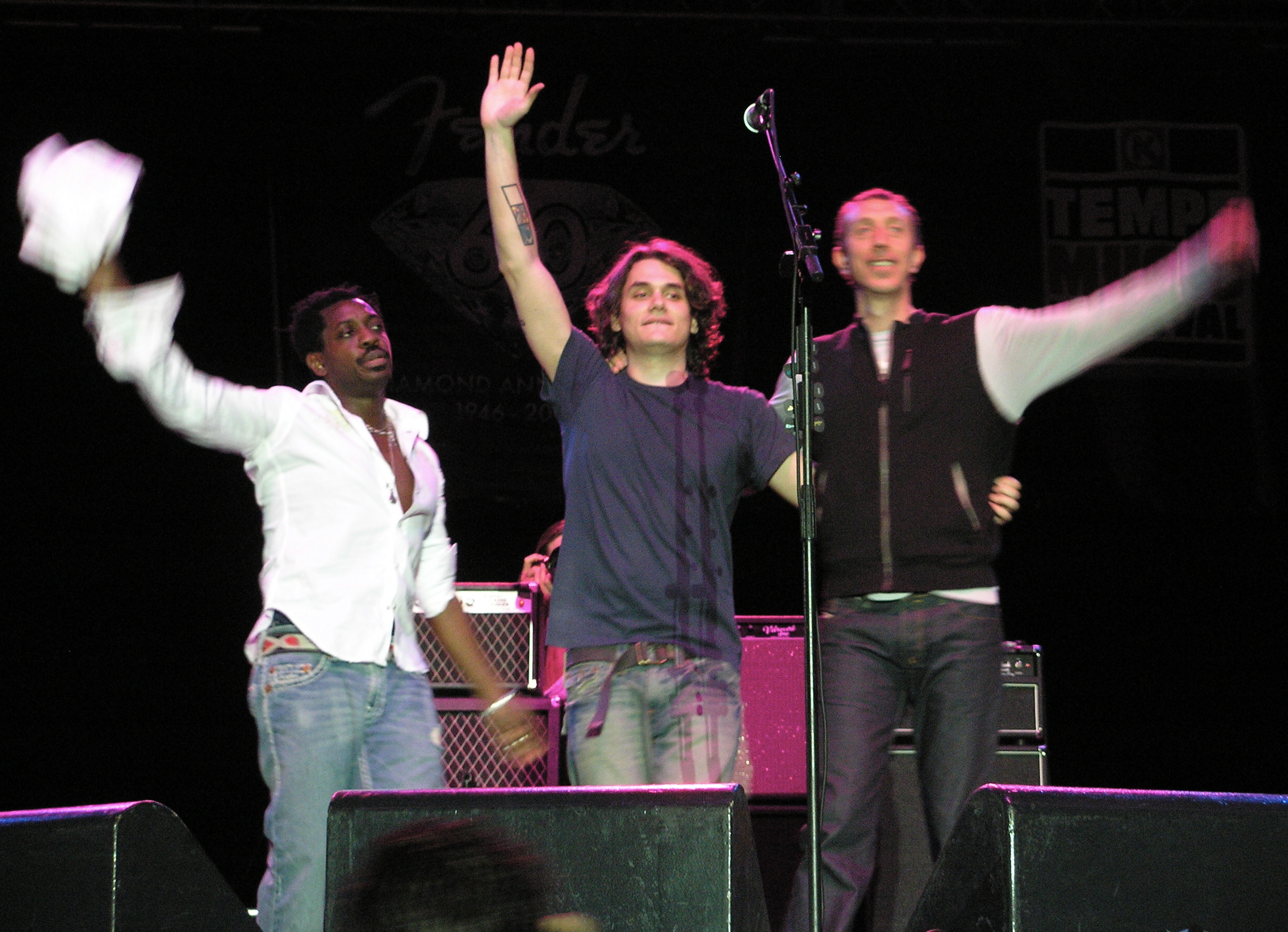
John Mayer Trio
Blues rock supergroup redefining the guitar hero
3
Members
About
Today, the John Mayer Trio exists as a legendary chapter in blues rock history rather than an active touring entity. While John Mayer continues to perform solo and occasionally reunites with his former bandmates for special events, the trio operates on an intermittent basis. The group remains celebrated for its ability to blend technical virtuosity with soulful emotion, setting a high bar for modern blues ensembles.
Fans still seek out recordings of their live performances, drawn by the unique interplay between Mayer's expressive guitar work and the tight, groovy rhythm section provided by Palladino and Jordan. Their legacy is cemented not just in sales figures but in the respect they command from musicians across genres who view them as a masterclass in improvisational music.
Formation Story
The concept for the trio began taking shape in early 2005 when John Mayer decided he needed to shed his image as a pop heartthrob and return to his roots. He wanted to play music that prioritized improvisation and raw emotion over radio-friendly production. Mayer reached out to Steve Jordan, a drummer whose resume included stints with Eric Clapton and The Rolling Stones, to lead the project. Together they sought a bassist who could bring a warm, vocal-like quality to the low end.
Initially, legendary session bassist Willie Weeks joined the lineup, but the sound wasn't quite what Mayer envisioned. They soon swapped Weeks for Pino Palladino, a British session legend known for his fretless bass playing. This change proved pivotal, giving the trio its signature sonic texture. The group officially formed in Los Angeles in January 2005 and wasted no time hitting the road. Their debut was immediate and intense, characterized by long, extended jams that pushed the boundaries of traditional song structures.
Their first major engagement was a residency at the House of Blues in Chicago. These sessions were recorded live without overdubs, capturing the raw energy of the moment. The resulting album, Try!, released in November 2005, serves as the definitive document of this era. It features a mix of Mayer originals and covers of classics by Ray Charles and James Brown, showcasing the band's deep understanding of R&B and blues traditions.
Members

Former Members
Musical Style
The trio's sound is rooted in classic blues rock but infused with elements of jazz fusion and soul. Unlike Mayer's earlier work which relied heavily on layered production, the trio favored a stripped-back approach that highlighted individual instrument prowess. The use of Palladino's fretless bass created a smooth, singing tone that wove seamlessly around Mayer's guitar lines. Jordan's drumming provided a loose, swinging groove that anchored the improvisations without ever feeling rigid.
Live performances often featured songs stretching well beyond their standard lengths, sometimes reaching ten or fifteen minutes. This format allowed the musicians to explore different textures and dynamics within a single piece. The repertoire included original compositions alongside reinterpretations of standards like "I Got a Woman" and "Something's Missing." The result was a sound that felt both timeless and fresh, bridging the gap between vintage blues and contemporary rock sensibilities.
Discography
| Title | Year |
|---|---|
| Try! | 2005 |
Tours
House of Blues Residency
2005 · 14 shows
New Orleans Jazz & Heritage Festival
2005 · 1 shows
New Orleans Jazz & Heritage Festival
2006 · 1 shows
Benefit Concert Reunion Tour
2023 · 5 shows
Cultural Impact
The John Mayer Trio played a crucial role in shifting public perception of John Mayer from a pop star to a serious musician capable of handling complex genres. By collaborating with veterans like Steve Jordan and Pino Palladino, the group demonstrated that pop artists could engage deeply with the blues tradition without losing their identity. This collaboration set a new standard for how mainstream musicians approached genre-blending.
Their influence extended beyond Mayer's own discography. The improvisational skills honed during the trio years became central to his subsequent albums, particularly Continuum and Battle Studies. Many guitarists cite the trio's live recordings as inspiration for exploring more dynamic and interactive styles of playing. The group also helped keep the blues rock genre relevant during a period when electronic and hip-hop dominated the charts.
Fandom Culture
There is no official fandom name specifically dedicated to the John Mayer Trio. Fans typically identify as part of Mayer's broader fanbase, often referred to as Mayerheads. The community celebrates the trio's reunion announcements with great enthusiasm, viewing each performance as a rare treat. Online discussions frequently analyze the improvisational sections of live tracks, sharing timestamps and favorite moments from concerts.
Fan projects often focus on preserving the memory of the trio's short but impactful run. Social media threads regularly feature clips of their 2005-2007 performances alongside footage from their 2023 reunion. The lack of a formal lightstick or specific color scheme reflects the group's organic, non-commercial nature, emphasizing the music itself over brand loyalty.
Awards & Accolades
View 4 records, honours and achievementsMilestones
Formation of the trio in Los Angeles
Release of the live album Try!
Peak touring period supporting Mayer's transition to blues
First reunion of the trio in six years
Retrospective recognition of Mayer's work from this era
Trivia
Keywords
Sources
Quick Facts
- Type
- Rock Band
- Formed
- 2005-01-01
- Origin
- Los Angeles
- Label
- Aware Records, Columbia Records
- Genres
- blues rock
- Status
- Active
Group Info
- Formed
- January 2005
- Debut
- January 2005
- Debut Song
- Try!
- Origin
- Los Angeles, California
- Company
- Aware Records, Columbia Records
- Label
- Aware Records, Columbia Records
- Status
- Active
Also Known As
Join the community
fans discussing