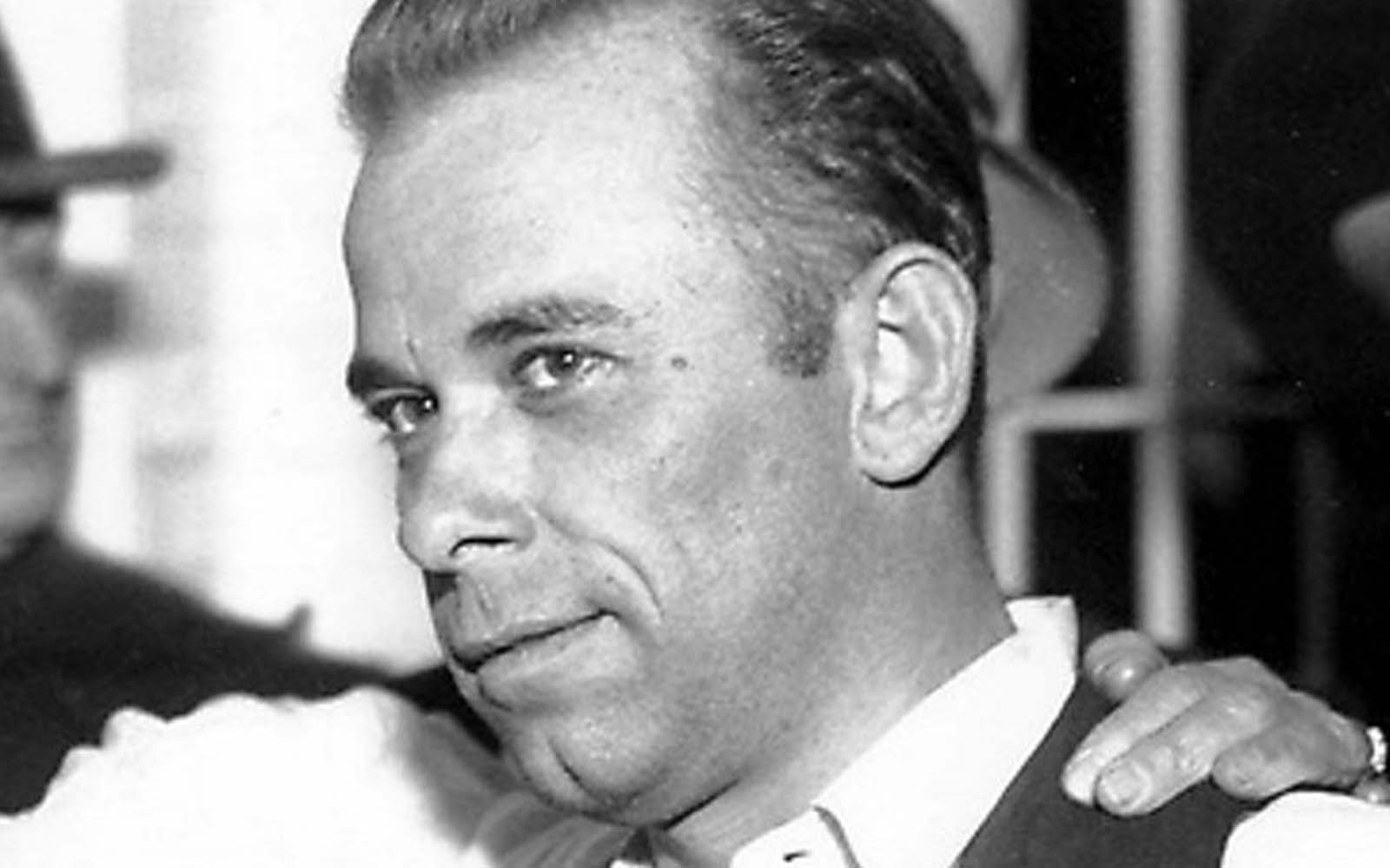
John Dillinger
Also known as: John Herbert Dillinger Jr., Public Enemy No. 1
Birthday
June 22, 1903
Birth Sign
Cancer
Birthplace
Indianapolis, Indiana
Age
Died at 31
Height
5 ft 10 in (178 cm)
About
John Herbert Dillinger emerged from Indianapolis in the early 1930s as the most notorious face of American crime during the Great Depression. Born on June 22, 1903, he built a reputation that stretched far beyond his actual criminal acts, transforming into a folk hero for some and a symbol of chaos for others. He led the "Dillinger Gang," a group responsible for robbing numerous banks and police stations across the Midwest, including Indiana, Ohio, Illinois, and Michigan. His high-profile escapes from prison and his ability to evade law enforcement for nearly a year made him a global sensation. Authorities charged him with the murder of East Chicago police officer William O'Malley after a shootout where O'Malley fired through Dillinger's bulletproof vest, though this homicide charge remained the only time prosecutors pursued such a serious allegation against him.
Dillinger understood the power of public perception better than any other fugitive of his era. The press amplified his colorful personality and staged bravado, painting him as a modern Robin Hood who stole from banks to help struggling families, despite little evidence that he actually gave money to the poor. This media frenzy gave J. Edgar Hoover, then director of the Bureau of Investigation, the political cover needed to transform the agency into the Federal Bureau of Investigation. Hoover used the hunt for Dillinger to justify developing new investigative techniques and expanding federal authority against organized crime. For nearly a year, Dillinger evaded law enforcement across four different states before a gunfight left him wounded.
He retreated to his father's home in Charlevoix, Michigan, to recover from his injuries. By July 1934, he returned to Chicago and sought refuge in a brothel owned by Ana Cumpănaș. She eventually tipped off authorities regarding his location. On July 22, 1934, local and federal officers surrounded the Biograph Theater while Dillinger watched a movie. As he stepped outside to leave, agents moved to arrest him. He attempted to run but fell under a hail of bullets from the pursuing officers. A subsequent ruling determined their use of lethal force was justifiable homicide. John Dillinger died at age 31, ending a brief but explosive chapter in American history.
Early Life & Background
John Herbert Dillinger Jr. was born on June 22, 1903, in Indianapolis, Indiana, to a wealthy and successful family. His father, John Herbert Dillinger Sr., owned a lumberyard and later a grocery store, providing the household with significant financial security. The family lived in a comfortable home in Mooresville before moving to a substantial house on North College Avenue in Indianapolis. Despite this affluent upbringing, young John exhibited a rebellious streak that clashed with his father's strict expectations. He attended school but was often truant and committed petty thefts as a child, stealing fruit from orchards and shoplifting from local stores.
Dillinger showed promise in athletics, particularly baseball. He was a talented player and even received an offer for a contract with a minor league team. He declined the opportunity to pursue other paths, though his education ended after high school. Following the death of his mother and a falling out with his father over his lifestyle, Dillinger left home in the late 1920s. He drifted through various jobs, including working as a laborer and a short-order cook. The economic devastation of the Great Depression hit hard, leaving him unable to secure steady employment. This desperation pushed him toward more serious criminal activity. His first major arrest occurred in 1933 when he robbed a grocery store in Mooresville, Indiana. He was subsequently convicted of armed robbery and sentenced to ten to twenty years in the Indiana State Prison.
Career Growth
Dillinger's criminal career began in earnest after his escape from the Indiana State Prison in March 1933. He escaped with the help of accomplices, using a wooden gun carved from wood and wrapped in leather to fool guards. After his release, he formed the "Dillinger Gang," which included companions like Harry Pierpont, Baby Face Nelson, and Charles Makley. The gang embarked on a series of daring heists across Indiana, Ohio, Illinois, and Michigan. Between 1933 and 1934, the group was accused of robbing 24 banks and four police stations.
Their operations were characterized by the use of disguises, stolen vehicles, and violent confrontations with law enforcement. One notable incident involved a shootout in East Chicago, Indiana, where Officer William O'Malley was killed. Dillinger was charged with the murder, though the charge was dropped after his death. His fame grew not only because of his crimes but also due to his two dramatic prison escapes. In addition to his initial escape from the Indiana State Prison, he orchestrated a second escape from the Crown Point Jail in May 1934. During this breakout, he and his gang used a fake wooden gun to deceive guards, stole the jailer's car, and fled. These escapes captivated the nation and earned him the title of "Public Enemy No. 1" from the FBI.
Career Timeline
Public Image & Style
To the authorities, Dillinger was a dangerous criminal who needed to be captured at all costs. To the general public, especially those suffering from the Great Depression, he was a symbol of resistance against the corrupt banking system. His style, characterized by slicked-back hair and tailored suits, made him a fashion icon of the era. The media played a significant role in shaping his image, often portraying him as a charismatic and intelligent criminal. This complex public image fueled his legend and contributed to his enduring fascination.
Fame & Fandom (iFAMOUS Rankings)
iFANN has not yet collected fame data for this person. The ranking engine has not evaluated his current standing in global fame metrics. While there is no formal fandom name documented in iFANN data, Dillinger maintains a dedicated following among historians, true crime enthusiasts, and fans of the "public enemy" era. Fans often refer to him as "Public Enemy No. 1" and celebrate his daring escapes and criminal exploits. There are no organized fan campaigns or rituals associated with Dillinger, but his story continues to inspire books, movies, and documentaries. His legacy persists through cultural references and historical interest rather than active fan engagement.
Interesting Facts and Legends
John Dillinger is often cited as one of the first celebrity criminals in American history due to the extensive media coverage of his life and exploits. He was known for his skill in disguise, frequently using makeup and wigs to change his appearance and evade capture. Before becoming a criminal, he was a talented baseball player who was offered a contract by a minor league team but declined it. Dillinger wore a bulletproof vest during a shootout with police, which saved his life but did not prevent him from being wounded. He frequently used false identities to evade law enforcement, including the name James H. Hamilton. The image of Dillinger stepping out of the Biograph Theater to be shot by FBI agents has become one of the most iconic images of the era, symbolizing the end of the "public enemy" era.
Notable Quotes
“I'm not a criminal. I'm just a man trying to make a living.”
“The banks are the ones who started this. They're the ones who are going to pay.”
Family & Personal Life
John Dillinger was born to John Herbert Dillinger Sr., a wealthy businessman who owned a lumberyard and grocery store, and his wife, Emily Ann Jones. The family lived in a comfortable home in Mooresville, Indiana, before moving to Indianapolis. Dillinger had a strained relationship with his father, leading to a falling out over his lifestyle choices. He had no siblings mentioned in available records. His childhood was marked by rebellion, often clashing with his father's strict expectations. His mother's death was a pivotal event that contributed to his decision to leave home. There are no credible reports of children or other partners.
Notable Connections
Relationships & Dating History
John Dillinger was married to Billie Frechette. They met in 1933 while both were incarcerated in the Indiana State Prison. Frechette was serving a sentence for forgery, and Dillinger was already in prison for robbery. Their relationship blossomed behind bars, and they were married in a secret ceremony in 1934, shortly before Dillinger's final escape. Frechette was arrested shortly after Dillinger's death and served time for harboring a fugitive. She had no children with Dillinger. Dillinger had no other publicly documented romantic relationships or marriages. His entire adult life was consumed by his criminal career and his pursuit of freedom. There are no credible reports of other partners or children.
- MarriedBillie Frechette1933 - 1934Met while both were inmates at the Indiana State Prison. Married secretly in 1934. Frechette was arrested after Dillinger's death.
Death & Aftermath
Died
July 22, 1934 (aged 31)
Death Place
Chicago, Illinois
Cause of Death
Gunshot wound
The death of John Herbert Dillinger sparked a polarized public response across Chicago, where mourners placed flowers at the site of his killing while law enforcement and government officials celebrated the event as a decisive victory for justice. President Franklin D. Roosevelt's administration viewed the event as a triumph for federal law enforcement. The manhunt concluded abruptly on July 22, 1934, when Dillinger exited the Biograph Theater to see the film Manhattan Melodrama after being released from jail earlier that day. He was confronted by FBI agents and Chicago police officers who had been waiting outside, and Officer Charles Winstead fired a single shot into his chest as Dillinger allegedly attempted to reach for a weapon. He fell immediately and was pronounced dead at the scene without transport to a hospital, with the cause of death ruled as a gunshot wound resulting from an act of law enforcement during the apprehension of an armed fugitive.
An internal investigation by the FBI and Chicago Police Department determined the use of lethal force was justified, and no charges were filed against the officers involved. While persistent conspiracy theories regarding whether the deceased was actually Dillinger have circulated over the decades, historical consensus and dental records confirmed his identity. A private funeral service took place on July 24, 1934, at the Hartman Funeral Home in Indianapolis before burial at Crown Hill Cemetery, attended only by family members as his wife Billie Frechette was barred from attending due to legal troubles.
Net Worth (Estate Value)
$0
iFANN Editorial Team estimate
As John Dillinger died in 1934, he did not accumulate a traditional net worth in the modern sense. His wealth was derived from the proceeds of his bank robberies, which were estimated to be around $300,000 to $400,000 at the time (equivalent to several million dollars today). However, much of this money was spent on travel, bribes, and maintaining his gang. Upon his death, Dillinger's estate was minimal. He left behind no significant assets, real estate, or investments. His primary asset was the money he had stashed away, which was largely recovered by law enforcement or spent during his flight. The value of his estate is estimated to have been negligible at the time of his death.
Posthumously, Dillinger's legacy has been the subject of much debate. His estate has generated revenue through various posthumous means, including licensing and merchandise related to books, movies, and documentaries about him. The rights to his story have been licensed for films, television shows, and video games. Various museums and historical sites feature exhibits dedicated to Dillinger, generating ticket sales and donations. However, there is no central estate management entity that actively manages these revenues. The intellectual property rights to his story are generally considered public domain or managed by the creators of derivative works. iFANN currently estimates Dillinger's estate value at approximately $0, reflecting the lack of active financial management or significant liquid assets held by heirs.
Awards & Accolades
Known For
Public Enemy No. 1
1934 · Subject
Manhattan Melodrama
1934 · Film watched before death
Keywords
Sources
Quick Facts
- Profession
- bank robber
- Born
- June 22, 1903
- Birthplace
- Indianapolis, Indiana
- Died
- July 22, 1934
- Death Place
- Chicago, Illinois
- Gender
- Male
- Birth Sign
- Cancer
Personal Details
- Full Name
- John Herbert Dillinger Jr.
- Height
- 5 ft 10 in (178 cm)
- Spouse
- Billie Frechette
- Children
- Education
- High School
Frequently Asked Questions
Who was John Dillinger?
How did John Dillinger die?
Did John Dillinger have any children?
What was John Dillinger's net worth?
Is John Dillinger still alive?
Similar People
Join the community
fans discussing