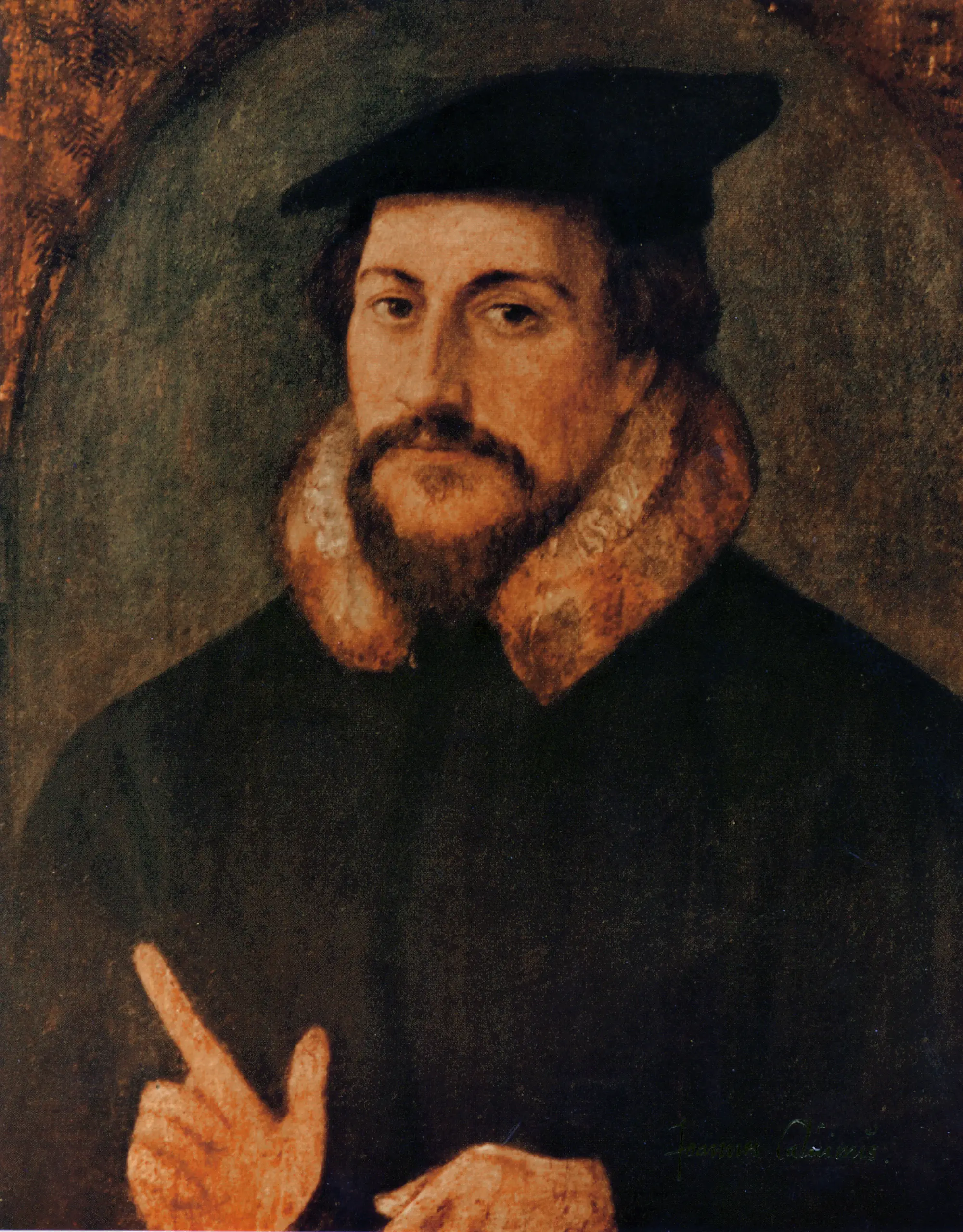
John Calvin
 France
pastor•Protestant reformer•theologian
Also known as: Johannes Calvinus, Ioannes Calvinus, Cauvin
Birthday
July 10, 1509
Birth Sign
Cancer
Birthplace
Noyon, France
Age
Died at 54
About
John Calvin was a French theologian, pastor, and principal architect of the Protestant Reformation. Born Jean Cauvin in Noyon, he became one of the most influential figures in Christian history through his development of Calvinism. His systematic theology emphasized divine sovereignty and predestination, reshaping religious thought across Europe. Calvin spent much of his career in Geneva, where he established a model church governance that influenced Presbyterian and other Reformed traditions globally.
His intellectual journey began with humanist studies before shifting toward law and eventually theology. After experiencing a profound conversion around 1530, he broke with the Roman Catholic Church and fled persecution in France. He found refuge in Basel, where he published the Institutes of the Christian Religion, a foundational text that would become the cornerstone of Reformed theology. Despite facing expulsion from Geneva early in his career, he returned in 1541 and spent the rest of his life transforming the city into a center of Protestant learning and discipline.
Early Life & Background
Born on July 10, 1509, in Noyon, France, Jean Cauvin entered the world into a family of moderate means. His father, Gérard Cauvin, served as a notary and secretary to the local bishop, while his mother, Jeanne Le Franc, raised him in a devout Roman Catholic household. This upbringing provided the foundation for his early education at the Collège de la Marche and later the prestigious Collège de Montaigu in Paris. There, he studied under humanist scholars like Mathurin Cordier, absorbing the classical learning that would shape his future work.
Initially, his father intended for him to pursue the priesthood, but later redirected his studies toward law to secure a more stable career. Calvin excelled in this field, earning a Master of Arts degree from the University of Orléans in 1528 and a Doctor of Laws degree from the University of Bourges in 1532. However, his intellectual shift began around 1530 when he experienced a profound religious conversion. This transformation led him to break with the Roman Catholic Church and embrace the reformist ideas spreading across Europe. Before achieving global fame, his life was marked by persecution and displacement. In 1534, following the "Affair of the Placards," which saw anti-Catholic posters displayed in major French cities including Paris, Calvin fled France to avoid arrest. He found refuge in Basel, Switzerland, where he published the first edition of Institutes of the Christian Religion in 1536. Although he intended only to stay briefly in Geneva while traveling to Strasbourg, he was persuaded by William Farel to remain and help establish a reformed church in the city.
Career Growth
Calvin's career success was defined by his relentless theological labor and institutional building. Upon his return to Geneva in 1541, he instituted the Ecclesiastical Ordinances, establishing a church government based on pastors, doctors, elders, and deacons. He founded the Academy of Geneva (now the University of Geneva) in 1559 to train ministers and spread Reformed theology throughout Europe. His major projects included writing extensive biblical commentaries on nearly every book of the Bible, numerous treatises defending Reformed doctrine, and the Institutes, which went through multiple expanded editions (1536, 1539, 1543, 1550, 1559). Commercially and culturally, his impact was immeasurable; his writings were translated into multiple languages and influenced the development of Presbyterian, Congregational, and other Reformed churches worldwide. His influence extended to politics, shaping the governance of Scotland under John Knox, the Netherlands, and parts of Germany. While he did not receive modern commercial awards, his legacy is honored through countless institutions named after him, including Calvin University, Calvin College, and various seminaries globally.
Career Timeline
Public Image & Style
Public image of John Calvin has evolved over centuries. Initially portrayed as a stern and unyielding figure, modern scholarship has reframed him as a compassionate pastor and a champion of the marginalized, particularly refugees and the poor. His content, primarily theological writings, remains influential in academic and religious circles. His social media voice, if it existed, would likely reflect his commitment to scriptural authority and the glory of God. He was known for his modest dress and austere lifestyle, reflecting his theological emphasis on simplicity and piety.
Fame & Fandom
John Calvin never walked a red carpet, nor did crowds ever faint at his public appearances. His legacy is not built on viral moments or fan-funded billboard campaigns but on the enduring weight of theological rigor that reshaped Western civilization. While millions identify with the system he developed, there is no formal name for this collective; they are simply adherents to a faith tradition rather than a modern fandom organizing chart pushes or birthday tributes. The only legends surrounding him are historical narratives: the story of the refugee theologian fleeing persecution in France, the scholar who defined the role of the Holy Spirit, and the persistent myth, now debunked by historians, that he denied the Earth was round. These stories function as folklore within academic circles, yet they lack the chaotic energy of pop culture stardom. He remains a figure of intense debate, with contemporary scholars still questioning specific doctrinal points decades after his death. Despite this quiet, scholarly existence, his global reach is undeniable. According to the iFANN Global Fame Rankings, John Calvin holds a commanding position among religious leaders. He is currently the 2nd most famous person in Pastors, holding steady from the previous cycle. This placement confirms his status as a titan of history whose influence transcends the centuries.
Interesting Facts and Legends
Modern analysis confirms that the claim John Calvin denied the sphericity of the Earth is historically inaccurate and likely stems from later polemics against his theology. He organized extensive relief efforts for the poor and refugees in Geneva, demonstrating a practical application of his theological beliefs. Another notable fact is his role as a "theologian of the Holy Spirit," emphasizing the Spirit's work in sanctification and charity. He was known for his strict discipline and sometimes harsh treatment of dissenters, most notably in the case of Michael Servetus, whom he supported having executed for heresy in 1553. Additionally, he suffered from chronic ailments throughout his life, including migraines, gout, hemorrhoids, and tuberculosis, which ultimately contributed to his death. He was known for his modest dress and austere lifestyle, reflecting his theological emphasis on simplicity and piety.
Notable Quotes
“God will never find you wanting if you give Him all you have.”
“The mind of the theologian is not to speculate, but to pray.”
Family & Personal Life
John Calvin married Idelette de Bure, a widow with two children, in 1540. Idelette had been a member of the Anabaptist movement before converting to Calvinism. The couple met in Strasbourg during Calvin's exile, though some sources suggest they may have known each other earlier in Geneva. They married in 1540, and their union produced one son, Jacques, who was born prematurely in 1542 and died shortly after birth. Idelette herself died in 1549, leaving Calvin deeply grief-stricken. There are no records of other romantic relationships or marriages for John Calvin; he remained a widower until his death in 1564. His dedication to his work and his faith meant that his personal life was largely private, focused on his pastoral duties and theological pursuits rather than public romance.
Notable Connections
Relationships & Dating History
John Calvin married Idelette de Bure, a widow with two children, in 1540. Idelette had been a member of the Anabaptist movement before converting to Calvinism. The couple met in Strasbourg during Calvin's exile, though some sources suggest they may have known each other earlier in Geneva. They married in 1540, and their union produced one son, Jacques, who was born prematurely in 1542 and died shortly after birth. Idelette herself died in 1549, leaving Calvin deeply grief-stricken. There are no records of other romantic relationships or marriages for John Calvin; he remained a widower until his death in 1564. His dedication to his work and his faith meant that his personal life was largely private, focused on his pastoral duties and theological pursuits rather than public romance.
- MarriedIdelette de Bure1540 - 1549She was a widow with two children before marrying Calvin; they had one son who died in infancy.
Death & Aftermath
Died
May 27, 1564 (aged 54)
Death Place
Geneva, Switzerland
Cause of Death
Reported complications from tuberculosis and hemorrhoids
The Consistory of Geneva and close associates like Theodore Beza announced John Calvin's passing on May 27, 1564, marking the end of a life defined by relentless theological labor. In his final days, the reformer remained bedridden yet spiritually composed, having delivered a sermon on the book of Hosea just before collapsing under the weight of chronic health issues. His death was not treated as a legal matter requiring inquest or autopsy, but rather as a natural conclusion to years of physical decline exacerbated by the stress of leading the religious reformation in Geneva. The city observed an immediate silence while peers like Pierre Viret and Beza delivered eulogies praising his piety, prompting a surge in demand for his collected works across Protestant territories from Scotland to England.
A funeral service conducted by Beza took place the following day at the Cathedral of St. Pierre, attended by civic leaders and citizens who honored his central role in the city's life. Calvin was interred in the Plainpalais Cemetery outside the city walls, though the exact location of his grave remains lost to history with no tombstone surviving. Centuries later, his legacy endures through institutions like the Academy of Geneva and global commemorations such as the 400th anniversary symposia held in 1964.
Net Worth (Estate Value)
$0
iFANN Editorial Team estimate
As a 16th-century theologian, John Calvin did not accumulate personal wealth in the modern sense. His estate consisted primarily of his writings and the intellectual legacy he left behind. Following his death in 1564, his works continued to generate value through publications and translations. Today, the economic value of his legacy is reflected in the numerous educational institutions named after him, such as Calvin University and Calvin College, which operate as significant non-profit entities. The estate's financial trajectory is measured not by personal assets but by the enduring impact of his theological contributions on global religious thought and education.
Awards & Accolades
View 4 records, honours and achievementsKnown For
Institutes of the Christian Religion
1536 · Author
Calvinism
1536 · Founder
Keywords
Sources
Quick Facts
- Profession
- pastor, Protestant reformer, theologian
- Born
- July 10, 1509
- Birthplace
- Noyon, France
- Died
- May 27, 1564
- Death Place
- Geneva, Switzerland
- Gender
- Male
- Spouse
- Idelette de Bure
- Birth Sign
- Cancer
Personal Details
- Full Name
- Jean Cauvin
- Spouse
- Idelette de Bure
- Children
- Jacques (deceased)
- Education
- Collège de la Marche, Collège de Montaigu, University of Orléans, University of Bourges
Frequently Asked Questions
What was John Calvin's full birth name?
When and where did John Calvin die?
Who was John Calvin's wife?
What is the main doctrine associated with John Calvin?
Did John Calvin deny the Earth was round?
Similar People
Join the community
fans discussing