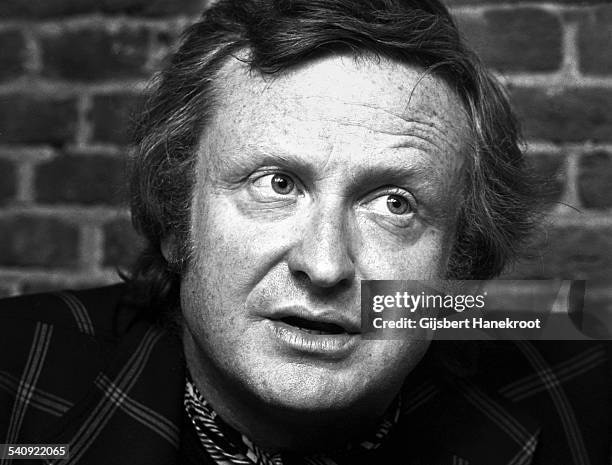
John Boorman
 United Kingdom
screenwriter•film producer•film director
Also known as: Sir John Boorman
Birthday
January 18, 1933
Birth Sign
Capricorn
Birthplace
Shepperton, Middlesex, England
Age
93 years old
Height
5 ft 8 in (1.73 m)
About
Sir John Boorman is a British filmmaker regarded as one of the most distinctive and ambitious directors of his generation, known for visually striking, thematically daring films across a remarkable range of genres. Over a career spanning more than half a century, he displayed a willingness to take creative risks that produced both acclaimed masterworks and notorious misfires. He is best known for directing the gritty thriller Point Blank and the harrowing survival film Deliverance, a landmark of 1970s American cinema. His filmography ranges widely, from the strange science-fiction fantasy Zardoz and the Arthurian epic Excalibur to the deeply personal wartime drama Hope and Glory, which earned him Academy Award nominations. He earned multiple Oscar nominations, and his films Point Blank and Deliverance were inducted into the National Film Registry. Honored with a knighthood and a lifetime achievement award, he was recognized as a major figure in British cinema. Bold, idiosyncratic, and uncompromising in his vision, he built a body of work admired for its ambition.
Early Life & Background
Boorman grew up in Shepperton, a village near London where author H. Rider Haggard once vacationed. His father George was a pub landlord and a former captain in the British Indian Army during World War I, later working for the founder of Shell Oil. His mother Ivy was the daughter of another East End pub owner. His paternal grandfather was an inventor who made and lost several fortunes. After failing the eleven-plus exam, Boorman attended Salesian School in Chertsey, a Catholic school run by the Salesian Order, despite his family not being Roman Catholic. He experienced the Blitz during World War II, an experience he later turned into his autobiographical film Hope and Glory. He dreamed of becoming a writer from an early age. After leaving school at 16, Boorman completed compulsory national service in the army. His first job was working for a dry-cleaner. He then became a critic for a women's journal and worked for a radio station before entering television at the BBC in Bristol. He started as an assistant but soon worked as a director on documentaries, including The Newcomers (1964). He became head of the BBC's Bristol-based Documentary Unit in 1962.
Career Growth
In 1965, Boorman directed his first feature film, Catch Us If You Can, a mockumentary featuring the Dave Clark Five that was critically well-received and made money, attracting Hollywood's attention. His friendship with Lee Marvin led to his first Hollywood film, Point Blank (1967), a gritty thriller that became an international box office hit and is now considered a landmark film. In 1970, he won the Best Director prize at the Cannes Film Festival for Leo the Last. His next film, Deliverance (1972), a harrowing survival drama about four Atlanta men canoeing in the Georgia backwoods, became a massive commercial success and earned him his first Academy Award nomination for Best Picture as producer. The film was also inducted into the National Film Registry. In 1981, he directed Excalibur, an ambitious Arthurian epic featuring Nicol Williamson, Helen Mirren, Patrick Stewart, and Liam Neeson in one of his earliest roles. The film became a commercial and critical success, renowned for its breathtaking cinematography. Boorman turned down directing Fatal Attraction (1987) to make Hope and Glory (1987), a deeply personal, autobiographical coming-of-age film drawn from his own wartime childhood. It earned him Academy Award nominations for Best Director and Best Original Screenplay. He served on the first Irish Film Board and was chairman of the National Film Studios until 1982. He lived in County Wicklow, Ireland for nearly 40 years and had a pivotal influence on the Irish film industry, helping nurture the careers of directors like Neil Jordan and actors like Liam Neeson, Gabriel Byrne, and Ciarán Hinds, who appeared in Excalibur in their earliest film roles. His later films include The General (1998), which won him a second Cannes Best Director award, and The Tailor of Panama (2001), which featured a very young Daniel Radcliffe in his first movie role. His most recent directorial effort was Queen and Country (2014), a sequel to Hope and Glory.
Career Timeline
Public Image & Style
Boorman is known for visually striking, thematically daring films across a wide range of genres. His work is characterized by bold visual imagination, a willingness to take creative risks, and an uncompromising artistic vision. The media portrays him as a fearless, eclectic filmmaker who produced both acclaimed masterworks and notorious misfires. He is described as one of Britain's most singular and accomplished filmmakers. His films, particularly Excalibur and Deliverance, have developed dedicated cult followings. Boorman is not known to maintain public social media accounts.
Fame & Fandom (iFAMOUS Rankings)
John Boorman is currently evaluated by iFANN's Global Fame Engine but does not hold a placement in the published rankings (Global Top 1,000 or a Top-100 scope list). This evaluation reflects his enduring status as a singular figure in cinema history, acknowledging his work spans decades of distinctive filmmaking without yet securing a position in the top-tier rankings for this period. While he commands significant respect among critics and industry peers, the fanbase associated with his name has no formal designation, distinguishing his audience from organized movements seen in pop culture genres. His supporters are primarily cinephiles and film historians who engage with his legacy through retrospectives and academic analysis rather than coordinated campaigns or rituals. The mythology surrounding Boorman is defined less by fan gatherings and more by the intense production histories of his films, such as the demanding perfectionism displayed during the making of Excalibur. Stories of his uncompromising vision, including the physical altercation with James Dickey on the set of Deliverance, serve as the primary folklore passed down to newcomers. Recent developments, such as the acquisition of his project Boorman And The Devil, further cement his reputation as an active elder statesman whose artistic ambition continues to generate discussion. Unlike directors with massive pop-culture followings, Boorman's cultural footprint remains rooted in the serious appreciation of his visual imagination and thematic daring, leaving his audience to explore his filmography without the structure of a named fandom or organized fan projects.
Interesting Facts and Legends
Sir John Boorman was offered the chance to direct the original The Exorcist but declined due to concerns about the storyline's cruelty toward children, later helming Exorcist II: The Heretic instead. He received an early draft of Rocky and advised producer Robert Chartoff to abandon the project entirely. Boorman turned down directing Fatal Attraction to pursue Hope and Glory. During the filming of Deliverance, a physical fight erupted between Boorman and author James Dickey, resulting in broken teeth and a nose for the director, though the two eventually reconciled. Against the protests of actors Nicol Williamson and Helen Mirren, Boorman cast them in Excalibur believing their real-life animosity would enhance their screen dynamic. Daniel Radcliffe made his cinematic debut in Boorman's The Tailor of Panama. A widely retold legend of his career involves his reputation as a demanding perfectionist who pushed crews to their limits to achieve transcendent results, a trait central to the stories fans tell about his working style. The production of Excalibur is often cited as a benchmark of his ambition, while Point Blank remains an icy revenge tale recently celebrated with a Criterion Collection release.
Notable Quotes
“I never started out to be a film director, but one thing led to another.”
“Occasionally a great movie comes along that transcends the banality of the physical world, pierces the veil, uncovers the mysteries that lie beneath, and turns money into light, material into spirit...”
“In old age, words escape me. If I wait patiently, they float up, and I recapture them... The quest for harmony of word and image has been my life.”
Family & Personal Life
Boorman has been married twice. He married Christel Kruse in 1956; they divorced in 1990 after 34 years. She is the mother of several of his children, including Charley Boorman. Lee Marvin, Boorman's close friend, was godfather to Charley. In 1995, he married Isabella Weibrecht; they later divorced. They had three children together, including Lola Boorman. Boorman has seven children in total, one of whom is deceased. His children include Charley Boorman (actor and motorcycle adventurer, born 1966), Katrine Boorman, and Lola Boorman.
Notable Connections
Boorman had a close friendship and frequent collaboration with actor Lee Marvin, who starred in Point Blank and Hell in the Pacific and was godfather to his son Charley. He executive-produced Neil Jordan's breakthrough film Angel (1982) and helped nurture Jordan's career. Boorman also worked frequently with actor Brendan Gleeson, who appeared in The General, The Tailor of Panama, and The Tiger's Tail.
Relationships & Dating History
Boorman married Christel Kruse in 1956. They were together for 34 years before divorcing in 1990. Christel is the mother of several of his children, including Charley Boorman. Lee Marvin was godfather to Charley. In 1995, Boorman married Isabella Weibrecht. They had three children together, including Lola Boorman, before later divorcing. As of 2026, Boorman is not publicly known to be in a relationship.
- MarriedChristel Kruse1956 - 1990First wife; mother of several of his children, including Charley Boorman. Divorced after 34 years.
- MarriedIsabella Weibrecht1995 - 2000Second wife; mother of Lola Boorman and two other children. Later divorced.
Salary, Net Worth In 2026
$12 Million
iFANN Editorial Team estimate
Per iFANN's editorial analysis, John Boorman's net worth in 2026 stands at $12 Million. This financial standing is derived from his extensive career directing over 20 feature films, alongside producing credits and screenwriting income. Additional revenue streams include book royalties from his memoirs Money into Light, Adventures of a Suburban Boy, and Conclusions, as well as his role co-editing 13 issues of Projections magazine. For nearly four decades, Boorman resided in County Wicklow, Ireland, where he owned property and exerted a significant influence on the local film industry. His notable works, including Deliverance and Excalibur, continue to generate ongoing revenue through streaming platforms, home video sales, and licensing agreements.
Awards Won (2)
Boorman won the Best Director award at the Cannes Film Festival twice, for Leo the Last (1970) and The General (1998). He received five Academy Award nominations but never won an Oscar. His films Point Blank and Deliverance were inducted into the National Film Registry. He was knighted and received a lifetime achievement award for his contributions to cinema.
1998 · Best Director
The General
1970 · Best Director
Leo the Last
Known For
Deliverance
1972 · Director, Producer
Excalibur
1981 · Director, Producer, Screenwriter
Point Blank
1967 · Director
Hope and Glory
1987 · Director, Screenwriter, Producer
The General
1998 · Director, Screenwriter, Producer
Keywords
Sources
Quick Facts
- Profession
- screenwriter, film producer, film director
- Born
- +1933-01-18
- Birthplace
- Shepperton, Middlesex, England
- Gender
- Male
- Birth Sign
- Capricorn
- Height
- 5 ft 8 in (1.73 m)
- Children
- Seven
- Education
- Salesian School, Chertsey
Personal Details
- Full Name
- Sir John Boorman CBE
- Height
- 5 ft 8 in (1.73 m)
- Children
- Seven (including Charley Boorman, Katrine Boorman, Lola Boorman; one deceased)
- Education
- Salesian School, Chertsey, Surrey
Filmography
25
Total
20
Film
5
TV
Frequently Asked Questions
Is John Boorman still alive?
How many Oscars has John Boorman won?
Who is John Boorman's son?
What is John Boorman's net worth?
Did John Boorman direct The Exorcist?
Similar People

Join the community
fans discussing