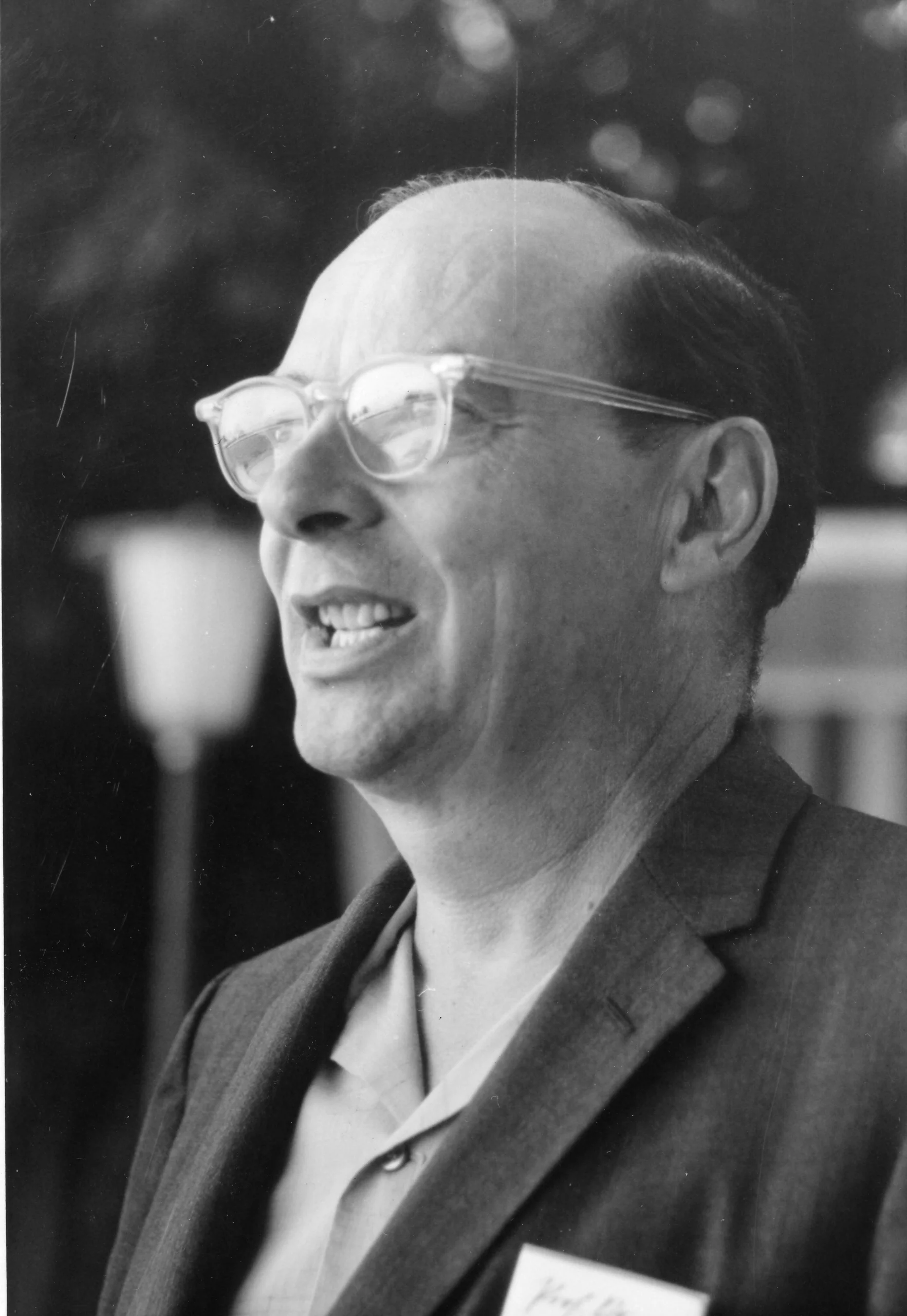
John Bardeen
 United States
physicist•electrical engineer•university professor
Birthday
May 23, 1908
Birth Sign
Gemini
Birthplace
Madison, Wisconsin, USA
Age
Died at 82
About
John Bardeen was an American physicist and electrical engineer, and the only person ever to win the Nobel Prize in Physics twice. He won his first Nobel in 1956 with William Shockley and Walter Brattain for inventing the transistor, and his second in 1972 with Leon Cooper and John Robert Schrieffer for the BCS theory of superconductivity.
His work made possible modern electronics and medical imaging like MRI. A 2019 BBC Science Focus profile called him "the greatest physicist you probably never heard of," noting his relative public obscurity despite the world-changing nature of his work. He was one of only five people with two Nobel Prizes and one of three to win twice in the same category, alongside Frederick Sanger and K. Barry Sharpless in chemistry.
In 1990, Life magazine named him one of the 100 Most Influential Americans of the Century. He died on January 30, 1991, at age 82.
Early Life & Background
John Bardeen was born on May 23, 1908, in Madison, Wisconsin, the son of Dr. Charles R. Bardeen, a professor of anatomy and dean at the University of Wisconsin medical school, and Althea Harmer. From a young age he was fascinated by engineering and mathematics.
He earned bachelor's and master's degrees in electrical engineering from the University of Wisconsin, then a Ph.D. in physics from Princeton in 1936. Princeton's graduate school honor roll notes his later fame as a two-time laureate. He served in World War II doing naval ordnance work before joining Bell Labs.
At Bell Labs in December 1947, Bardeen, Brattain, and Shockley produced the first transistor, a semiconductor breakthrough that transformed modern electronics. He later became professor of electrical engineering and physics at the University of Illinois, where he spent the bulk of his academic career.
Career Growth
Bardeen's breakthrough came at Bell Labs in December 1947, when he and colleagues Walter Brattain and William Shockley produced the first transistor. This semiconductor device transformed electronics and earned the trio the 1956 Nobel Prize in Physics.
He later became professor of electrical engineering and physics at the University of Illinois, where he spent the bulk of his academic career. There, his superconductivity work produced the BCS theory, which underpins NMR spectroscopy, MRI, and superconducting quantum circuits. This work earned him a second Nobel Prize in Physics in 1972, shared with Leon Cooper and John Robert Schrieffer.
In 1971 he received the IEEE Medal of Honor, and he was inducted into the National Inventors Hall of Fame. IEEE Spectrum documented a charming side project: a "terrific transistorized music box" he built. Physics World profiled him as "genius in action."
Career Timeline
Public Image & Style
Bardeen was famously modest and avoided the spotlight, which explains his low public profile relative to Shockley. A 2019 BBC Science Focus profile called him "the greatest physicist you probably never heard of," noting his relative public obscurity despite the world-changing nature of his work. He was known to be reserved and family-oriented.
Fame & Fandom (iFAMOUS Rankings)
iFANN has not yet collected fame data for John Bardeen, so no ranking is available. He is not on the September 2026 iFAMOUS Rankings flagship list.
Bardeen's fanbase has no formal name. His admirers are mostly physicists, engineers, and science enthusiasts who celebrate his two Nobel Prizes and the transistor's impact on modern electronics. They share his story through university retrospectives, IEEE profiles, and the John Bardeen Prize for superconductivity research.
Interesting Facts and Legends
Bardeen is one of only five people with two Nobel Prizes and one of three to win twice in the same category, alongside Frederick Sanger and K. Barry Sharpless in chemistry. A frequently cited remark of his: "Science is a field which grows continuously with ever expanding frontiers," though exact sourcing varies. He was famously modest and avoided the spotlight, which explains his low public profile relative to Shockley. He built a "terrific transistorized music box" as a side project, documented by IEEE Spectrum. The John Bardeen Prize for superconductivity research is awarded in his name, most recently to Peter Hirschfeld in 2022 and Michael Norman in 2026.
Notable Quotes
“Science is a field which grows continuously with ever expanding frontiers.”
Family & Personal Life
Bardeen was born in Madison, Wisconsin, to Dr. Charles R. Bardeen, a professor of anatomy and dean at the University of Wisconsin medical school, and Althea Harmer. He married Jane Maxwell, and the couple had children. Biographical sources are reticent about his private life, but he was known to be reserved and family-oriented.
Notable Connections
Relationships & Dating History
Bardeen married Jane Maxwell, and the couple remained married until his death in 1991. Biographical sources are reticent about his private life, and there is no documented public record of other romantic relationships. As of his death, he was married to Jane Maxwell.
- MarriedJane Maxwell? - 1991Married until his death in 1991; they had children.
Death & Aftermath
Died
January 30, 1991 (aged 82)
Death Place
Boston, Massachusetts, USA
Cause of Death
Undisclosed
Bardeen died on January 30, 1991, in Boston, Massachusetts, at age 82. The cause was not publicly disclosed in the available accounts. He had remained active at the University of Illinois in electrical and computer engineering and physics until late in life, the same campus where he spent the bulk of his academic career after Bell Labs.
After his death, the National Academies published the authorized biography True Genius: The Life and Science of John Bardeen: The Only Winner of Two Nobel Prizes in Physics in 2002. The John Bardeen Prize for superconductivity research was established in his name and has been awarded to Peter Hirschfeld in 2022 and to Argonne physicist Michael Norman in 2026. The FMD John Bardeen Award honors work in electronic materials, given to a Penn State professor in 2022. Fermilab maintains a fellowship named for him. Institutions have continued to profile him in retrospectives, keeping his scientific legacy current.
His two Nobel Prizes, in 1956 for the transistor and in 1972 for the BCS theory of superconductivity, remain the defining achievements of his career. The transistor remade electronics, and the BCS theory explained a phenomenon physicists had chased for decades. No one else has won the Nobel Prize in Physics twice.
Net Worth (Estate Value)
$2 Million
iFANN Editorial Team estimate
As an academic and Bell Labs researcher, his wealth was modest by celebrity standards. iFANN currently estimates his estate's value at approximately $2 million, based on his career earnings and assets.
His income came primarily from his salary as a professor at the University of Illinois and his research position at Bell Labs. He also received Nobel Prize money, which in 1956 and 1972 was substantial but not enormous by today's standards. His estate's value is not publicly documented, and any figure circulating online should be treated as unsourced speculation.
Awards Won (3)
Bardeen won the Nobel Prize in Physics twice, in 1956 for the transistor and in 1972 for the BCS theory. He also received the IEEE Medal of Honor in 1971 and was inducted into the National Inventors Hall of Fame.
1972 · Physics
BCS theory of superconductivity
1956 · Physics
Invention of the transistor
1971 · Engineering
Contributions to understanding of semiconductors and superconductivity
Known For
Invention of the transistor
1947 · Co-inventor
BCS theory of superconductivity
1957 · Co-developer
Nobel Prize in Physics
1956 · Laureate
Nobel Prize in Physics
1972 · Laureate
Keywords
Sources
Quick Facts
- Profession
- physicist, inventor, university teacher
- Born
- May 23, 1908
- Birthplace
- Madison, Wisconsin, USA
- Died
- January 30, 1991
- Death Place
- Boston, Massachusetts, USA
- Gender
- Male
- Spouse
- Jane Maxwell
- Birth Sign
- Gemini
Personal Details
- Full Name
- John Bardeen
- Spouse
- Jane Maxwell
- Children
- 3
- Education
- University of Wisconsin (B.S., M.S. in electrical engineering); Princeton University (Ph.D. in physics, 1936)
Frequently Asked Questions
What did John Bardeen win the Nobel Prize for?
Was John Bardeen a genius?
Has an engineer ever won a Nobel Prize?
What is John Bardeen best known for?
How did John Bardeen die?
Similar People
Join the community
fans discussing