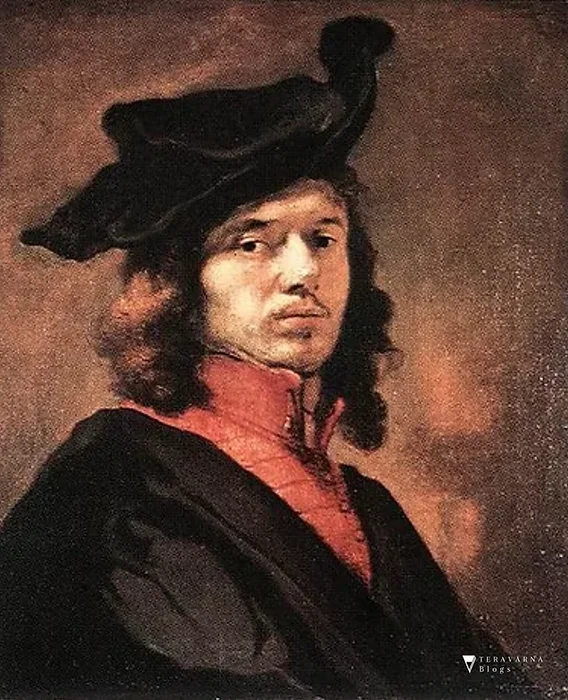
Johannes Vermeer
 Netherlands
Also known as: Jan Vermeer, Johannes van der Meer
Birthday
October 31, 1632
Birth Sign
Scorpio
Birthplace
Delft, Dutch Republic
Age
Died at 43
About
Johannes Vermeer was a Dutch painter of the Golden Age, now counted among the greatest artists in Western art. He specialized in serene domestic interiors, women reading letters, pouring milk, or making lace, all bathed in a soft, luminous light. His use of costly pigments like ultramarine gave his paintings a glowing intensity. Vermeer worked slowly, completing only about 35 known works. During his lifetime he was only modestly successful, earning much of his income as an art dealer. After his death he was forgotten for nearly two centuries, rediscovered in the 1860s by French critic Théophile Thoré-Bürger. Today his paintings are national treasures, with Girl with a Pearl Earring often called the Mona Lisa of the North. His quiet, intimate scenes continue to captivate millions of visitors each year.
Early Life & Background
Vermeer was born in Delft in 1632, the son of Reynier Janszoon, a silk weaver, art dealer, and tavern keeper, and Digna Baltens. The family lived above his father's inn, the Flying Fox, on the market square. No records survive of his formal education or apprenticeship. He likely trained with local painters such as Leonard Bramer or Carel Fabritius. In 1653 he joined the Guild of Saint Luke as a master painter, a prerequisite for selling work in Delft. That same year he married Catharina Bolnes, a Catholic from a wealthy family. The marriage required him to convert to Catholicism. He began his career painting large biblical and mythological scenes, like Christ in the House of Martha and Mary, but soon shifted to the small domestic interiors that would define his legacy. He also worked as an art dealer, dealing in paintings by other artists to support his growing family.
Career Growth
Around 1656, Vermeer painted The Procuress, his first genre scene, marking a turning point. Over the next decade he developed his signature style: quiet interiors lit by a single window, with figures absorbed in everyday tasks. The Milkmaid (c. 1658) shows a servant pouring milk, the light catching every detail of her face and the bread on the table. Woman in Blue Reading a Letter (c. 1663) captures a private moment of concentration. His only cityscape, View of Delft (c. 1661), is praised for its atmospheric sky and reflections. Around 1665 he painted Girl with a Pearl Earring, a tronie that became his most famous image. He served twice as head of the Delft painters' guild. His principal patron was Pieter van Ruijven, who bought at least twenty paintings. After the French invasion of 1672, the art market collapsed, and Vermeer fell into debt. He died in 1675, leaving nineteen unsold paintings. His widow sold works to creditors. For two centuries he was all but forgotten, until Thoré-Bürger's 1866 articles revived interest. Major exhibitions in the twentieth century, especially the 1995–96 Washington and The Hague show and the 2023 Rijksmuseum retrospective (which gathered 28 paintings), cemented his global fame.
Career Timeline
Public Image & Style
Vermeer is seen as the master of quiet intimacy and light. His aesthetic features cool blues, warm yellows, and pearly highlights. His work feels contemplative and timeless. Enthusiasts often call themselves Vermeerians. Fan rituals include visiting Delft, recreating his lighting in photography, and pilgrimages to museums holding his works. The 2003 film Girl with a Pearl Earring popularized a romanticized image of the artist. Social media accounts of museums regularly post his paintings, generating millions of impressions. Memes and AI recreations keep him a living presence in popular culture.
Fame & Fandom
The devotion surrounding Johannes Vermeer is a quiet pilgrimage rather than a roaring crowd, defined by scholars and enthusiasts who treat his small body of work as sacred texts. While he lacks a formal fandom name or active social media campaigns, the community known informally as Vermeerians engages in deep, ritualistic appreciation. These followers travel to Delft to stand before the very walls that held his brushstrokes, recreating his unique lighting in photography, and treating museum visits as acts of reverence. This engagement is less about celebrity gossip and more about the enduring mystery of a man who vanished from history only to return as a master of light. The cultural footprint remains immense, driven by institutions like the Rijksmuseum and the Mauritshuis, which host exhibitions that draw hundreds of thousands of visitors seeking to witness the luminous interiors for themselves. Despite the absence of modern fan clubs or birthday billboards, the global attention on his legacy tracks across media coverage, search trends, and consumption signals worldwide, cementing his status as a timeless icon. His influence extends beyond art history into popular culture, where films and merchandise keep his image alive for new generations. Through this lens, Vermeer is not merely a historical figure but a living presence in the collective consciousness of art lovers. He stands as the 90th most famous person in Art & Design, a position holding steady from the previous cycle according to the iFANN Global Fame Rankings.
Interesting Facts and Legends
Johannes Vermeer used a camera obscura to achieve precise perspective and luminous effects, though scholars debate how extensively. He painted only two exterior scenes: The Little Street and View of Delft. Maps appear in many of his interiors, reflecting Dutch trade dominance. One painting, The Concert, was stolen from the Isabella Stewart Gardner Museum in 1990 and remains missing. He was buried in an unmarked grave in the Old Church, Delft. His mother-in-law Maria Thins owned the house where he lived and worked. He sometimes used lapis lazuli, ground from semiprecious stone, for his blues. No authenticated self-portrait survives; the figure in The Procuress may be him, but scholars are uncertain. A persistent legend surrounds his relationship with Antonie van Leeuwenhoek, the father of microbiology, suggesting their neighborly bond influenced Vermeer's optical experiments. Another enduring story frames him as the 'forgotten genius,' a narrative supported by the fact that his works were hidden in private collections for decades after his death until rediscovered in the 1860s. Folklore also hints at religious ambiguity, with some claiming he belonged to a forgotten sect, though this remains a subject of interpretation rather than confirmed fact.
Notable Quotes
“I am a painter by profession and have been one for twenty years or thereabouts.”
“I have been a master painter for twenty years, and I know the value of paintings.”
“The art of painting is not to be learned in a day.”
Family & Personal Life
Vermeer married Catharina Bolnes in April 1653. She was the daughter of a wealthy Catholic family; the marriage required him to convert. They had fifteen children, four of whom died young. Eleven survived to adulthood. The family lived with Catharina's mother, Maria Thins, in a large house on Oude Langendijk in Delft. Maria owned the house and was a stabilizing presence. Vermeer's father, Reynier, died in 1652, leaving debts. His mother Digna lived until 1670. After Vermeer's death, Catharina petitioned for bankruptcy and sold paintings to settle debts. She died in 1688.
Notable Connections
Vermeer's wife Catharina Bolnes, his mother-in-law Maria Thins, and his patron Pieter van Ruijven were central to his life. He may have studied with Carel Fabritius or Leonard Bramer. Antonie van Leeuwenhoek, the microscopist, was a fellow Delft resident and served as executor of his estate. In modern times, author Tracy Chevalier and director Peter Webber brought his story to a wide audience with the novel and film Girl with a Pearl Earring.
Relationships & Dating History
Vermeer's only documented romantic relationship was his marriage to Catharina Bolnes, whom he married in April 1653. The marriage was arranged through family connections and required him to convert to Catholicism. They had fifteen children, four dying in infancy. The marriage appears to have been stable, though financial pressures were constant. Catharina survived him by thirteen years. No credible evidence exists of any other romantic partners. As of 2026, Vermeer is deceased, and his marriage ended with his death in 1675.
- MarriedCatharina Bolnes1653 - 1675Married in April 1653; had 15 children, 11 survived; she survived him.
Death & Aftermath
Died
December 15, 1675 (aged 43)
Death Place
Delft
Cause of Death
Unconfirmed; possibly dropsy or stroke
Johannes Vermeer died on December 15, 1675, in Delft at the age of approximately forty-two or forty-three. The exact cause of his passing remains officially unconfirmed by any medical examiner or autopsy, with later traditions suggesting dropsy or a stroke as speculative interpretations rather than documented facts. He was buried in the Old Church in Delft on December 18, 1675, in a private service attended only by close family and perhaps a few guild members.
Following his death, his estate became the subject of legal complexity due to financial ruin. A lawsuit ensued involving his wife, Catharina Bolnes, who successfully petitioned the court to have her husband's estate declared insolvent to protect her own inheritance and prevent the seizure of assets needed to support their children. This civil proceeding addressed the disposition of unpaid debts owed to creditors, including his mother-in-law, Maria Thins, while liquidating remaining assets to satisfy obligations.
Public reaction to his death in 1675 remained notably muted during his lifetime as he was less famous than contemporaries like Rembrandt or Frans Hals. His work did not experience immediate sales surges following his death; instead, his reputation declined significantly in the decades that followed until art historian Thoré-Bürger rediscovered his oeuvre in the mid-19th century. In the modern era, his legacy transformed from obscurity to global fame, with works entering museum halls of fame and the release of the 2003 film Girl with a Pearl Earring sparking renewed interest. His masterpiece has since been loaned to international exhibitions, such as its rare 2026 trip to the Nakanoshima Museum of Art in Osaka.
Net Worth (Estate Value)
$1 Billion (estate value of paintings)
iFANN Editorial Team estimate
Per iFANN's editorial analysis, Johannes Vermeer's net worth is estimated at $1 Billion (estate value of paintings) going by 2026 estimates. Vermeer died in debt, his estate insolvent. Most are in museums and not for sale. Posthumous revenue comes from licensing and merchandising of his images, exhibition ticket sales (the 2023 Rijksmuseum show sold over 650,000 tickets), royalties from the 2003 film and novel, and scholarly publications. The cultural estate's annual licensing and tourism revenue tied to Vermeer is estimated in the low millions. Rights are held by owning institutions like the Rijksmuseum and Mauritshuis.
Awards & Accolades
View 6 records, honours and achievementsKnown For
Girl with a Pearl Earring
1665 · Painter
The Milkmaid
1658 · Painter
View of Delft
1661 · Painter
Woman in Blue Reading a Letter
1663 · Painter
The Little Street
1658 · Painter
Keywords
Quick Facts
- Profession
- painter, art dealer
- Born
- +1632-10-31
- Birthplace
- Delft
- Died
- +1675-12-15
- Death Place
- Delft
- Gender
- Male
- Spouse
- Catharina Bolnes
- Children
- 15 (11 survived)
- Nationality
- Dutch
Personal Details
- Full Name
- Johannes Vermeer
- Spouse
- Catharina Bolnes
- Children
- 15 (11 survived infancy)
Frequently Asked Questions
How many paintings did Johannes Vermeer paint?
What is Vermeer's most famous painting?
Was Vermeer poor when he died?
Did Vermeer use a camera obscura?
Where can I see Vermeer's paintings in 2026?
Similar People
Join the community
fans discussing