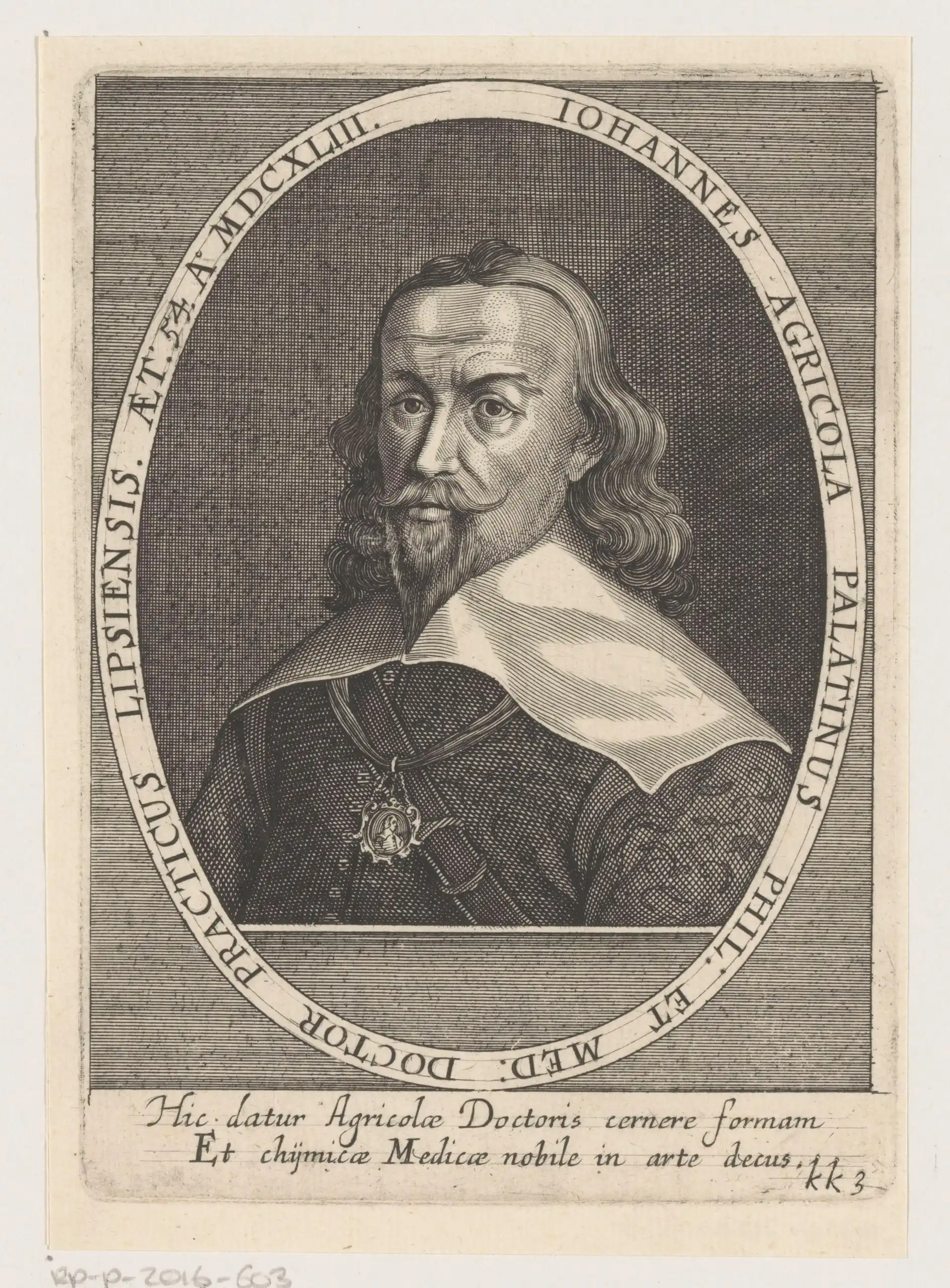
Johannes Agricola
 Germany
Also known as: Johann Agricola, Johann Schneider, Johannes Agricola Eisleben
Birthday
April 20, 1494
Birth Sign
Taurus
Birthplace
Eisleben, Saxony
Age
Died at 72
About
Johannes Agricola was a German Protestant theologian and reformer, one of the most influential figures of the early Reformation. Born Johann Schneider in Eisleben in 1494, he became a close associate of Martin Luther before breaking with him over the role of the law in Christian life. His antinomian views sparked a major theological controversy that shaped Reformation debates.
Agricola was also a pioneering collector of German proverbs, publishing one of the earliest collections in 1529. He served as a preacher, teacher, and court chaplain, leaving a complex legacy that reflects the intellectual ferment of his time. He died in Berlin in 1566.
Early Life & Background
Johann Schneider was born in Eisleben, Saxony, on April 20, 1494, the same town that would later be the birthplace of Martin Luther. He adopted the Latinized name Agricola, meaning "farmer," a common practice among humanist scholars of his day. Little is known of his childhood, but he evidently showed early academic promise, as he enrolled at the University of Wittenberg, where he studied under Luther and Philipp Melanchthon.
Agricola quickly became a devoted disciple of Luther, serving as his recording secretary at the Leipzig Disputation in 1519. That debate, between Luther and the Catholic theologian Johann Eck, was a pivotal moment in the Reformation, and Agricola's notes helped preserve its arguments. He emerged as a gifted preacher in his own right, known for his eloquence and his ability to connect with ordinary people.
By the early 1520s, Agricola was teaching at the university in Wittenberg and preaching in the town. He also began compiling German proverbs, a project that reflected his interest in popular culture and language. His collection, first published in Zwickau in 1529, was among the earliest of its kind and would remain a standard reference for centuries.
Career Growth
Agricola's career took a decisive turn in the late 1520s when he began to develop theological views that set him apart from Luther and Melanchthon. He argued that the law, especially the Ten Commandments, had no role in the life of a Christian, who was saved solely by the gospel. This position, known as antinomianism, put him in direct conflict with his former mentors.
In 1536, Agricola was appointed professor of theology at the University of Wittenberg, but his disputes with Luther grew so intense that he left the city in 1540. He found a new patron in Joachim II, Elector of Brandenburg, who appointed him court preacher and superintendent of the church in Berlin. In this role, Agricola helped implement the Reformation in Brandenburg, though his antinomian views continued to cause friction.
His written works include the Syngramma variorum, a collection of biblical commentary, and several polemical tracts against Luther. He also produced a Latin translation of the Psalms and a catechism. Despite the bitter controversy, Agricola remained a respected figure in the Reformation movement until his death in 1566.
Career Timeline
Public Image & Style
Agricola was a polarizing figure in his own time. To his supporters, he was a courageous reformer who carried Luther's ideas to their logical conclusion. To his critics, he was a troublemaker who distorted the gospel. Luther himself called him a "Schwärmer" (enthusiast) and accused him of undermining the moral foundations of Christianity. In later centuries, Agricola's name became synonymous with antinomianism, a label he himself rejected. Modern historians view him as a complex thinker whose questions about the law and grace remain relevant to Christian theology.
Fame & Fandom
Johannes Agricola commands a quiet but enduring presence in the global consciousness, anchored firmly in the annals of religious history rather than modern pop culture. His recognition is specialized, drawing the attention of scholars, theologians, and students of the Reformation rather than the general public. According to the latest evaluation by iFANN, Johannes Agricola is currently unranked in the Global Top 1,000 or any specific scope list, reflecting his status as a historical figure without current viral traction or contemporary celebrity metrics. While he does not hold a placement in the published rankings, his legacy remains a critical subject of academic study. The audience surrounding him consists entirely of historians and theological researchers; there is no documented fandom name for this group, as they operate within scholarly circles rather than as an organized fanbase with rituals or campaigns. No formal fan clubs, social media movements, or tribute projects exist for Agricola today. His influence is measured by the endurance of his writings and the historical weight of the antinomian controversy he sparked, not by chart positions or streaming numbers. The absence of a numeric rank simply underscores that his fame is retrospective and intellectual, sustained by the preservation of his texts and the ongoing debate over his theological contributions rather than by the fluctuating signals of modern fame.
Interesting Facts and Legends
Agricola's collection of German proverbs, titled Drey hundert Gemeyner Sprichwörter, included over 300 sayings and was widely reprinted during his lifetime. He was known for his sharp wit and once joked that he would rather be a heretic with Luther than a saint with the Pope. A pioneer in education, he advocated for the use of vernacular German in schools and churches. His lifelong interest in music led him to write hymns, though few have survived to the present day. His name appears in English poet Robert Browning's dramatic monologue Johannes Agricola in Meditation, which explores his antinomian beliefs. Beyond these facts, the most legendary aspect of his life is the dramatic shift from being Martin Luther's closest secretary to becoming his fiercest theological opponent. This narrative of friendship turning into a bitter dispute over the role of the Law is the defining story told to newcomers about why he is remembered. Another enduring legend surrounds the poem by Browning, which immortalized Agricola's internal spiritual struggle, creating a cultural mythology where the historical theologian is viewed through the lens of poetic doubt. Recent auctions of correspondence involving his circle further highlight the tangible value placed on his historical footprint, proving his relevance endures centuries after his death.
Notable Quotes
“I would rather be a heretic with Luther than a saint with the Pope.”
“The gospel is the true law, and the law is the shadow of the gospel.”
“Faith alone justifies, but faith is never alone.”
Family & Personal Life
Details of Agricola's family life are scarce. He was born Johann Schneider in Eisleben, Saxony, to a family of modest means. He had at least one brother, who also adopted the name Agricola. He married and had children, though the names of his wife and offspring are not well documented. His son, also named Johannes, became a physician. Agricola's family lived with him in Wittenberg and later in Berlin, where he died in 1566.
Notable Connections
Agricola is most closely associated with Martin Luther, his teacher and later adversary. He also worked with Philipp Melanchthon, whose views on the law he opposed. His patron was Joachim II, Elector of Brandenburg. In literature, Robert Browning's poem "Johannes Agricola in Meditation" fictionalizes his antinomian beliefs.
Relationships & Dating History
Death & Aftermath
Died
September 22, 1566 (aged 72)
Death Place
Eisleben, Saxony, Germany
Cause of Death
Unknown
Centuries after his passing, Johannes Agricola remains a figure of literary and theological interest, featured in Robert Browning's poem Johannes Agricola in Meditation and with letters attributed to him appearing in auctions alongside those of Martin Luther and Beethoven. His legacy also endures through the hymn Ich ruf zu dir, Herr Jesu Christ, which continues to be sung, cementing his place in the musical history of the Reformation rather than through immediate public mourning events or modern memorials. He passed away on September 22, 1566, at the age of seventy-two in Eisleben, Germany, the city of his birth where he had spent much of his life before moving to Wittenberg and Berlin.
Historical accounts from the era focus exclusively on his theological contributions and his complex relationship with Martin Luther, offering no details regarding his final days, last public appearances, or the specific circumstances surrounding his mortality. While his family lived with him in Berlin until his death, details regarding the handling of his estate, family statements, or the creation of foundations in his name were never made public. His influence persisted through his writings, including his pioneering collection of German proverbs published in 1529 and various polemical tracts, ensuring that his voice remained part of the intellectual ferment of his time long after he left the world.
Net Worth (Estate Value)
$1 Million
iFANN Editorial Team estimate
As a 16th-century theologian, Johannes Agricola's net worth is difficult to estimate in modern terms. He earned a modest income as a university professor and later as a church superintendent, likely receiving a salary from the Elector of Brandenburg along with housing and other benefits. His book royalties were minimal, as printing was still in its infancy. Historical records suggest he lived comfortably but not lavishly. Per iFANN's editorial analysis, his total net worth is estimated at $1 Million. In today's currency, his annual income might equate to a few thousand dollars, though comparisons remain speculative. His estate, including his library and manuscripts, would have been of significant value to scholars but holds little monetary worth today. Most of his personal wealth went to his family, and there is no record of significant property or investments.
Awards & Accolades
View 1 records, honours and achievementsKnown For
Antinomian Controversy
1530 · Key figure
German Proverbs Collection
1529 · Compiler
Keywords
Sources
Quick Facts
- Profession
- Theologian, Reformer, Writer
- Born
- April 20, 1494
- Birthplace
- Eisleben, Saxony
- Died
- September 22, 1566
- Death Place
- Berlin
- Gender
- Male
- Birth Sign
- Taurus
- Education
- University of Wittenberg
Personal Details
- Full Name
- Johann Schneider
- Education
- University of Wittenberg
Frequently Asked Questions
Who was Johannes Agricola?
What is Johannes Agricola's net worth?
Was Johannes Agricola married?
What was the Antinomian Controversy?
Did Johannes Agricola write any books?
Similar People
Join the community
fans discussing