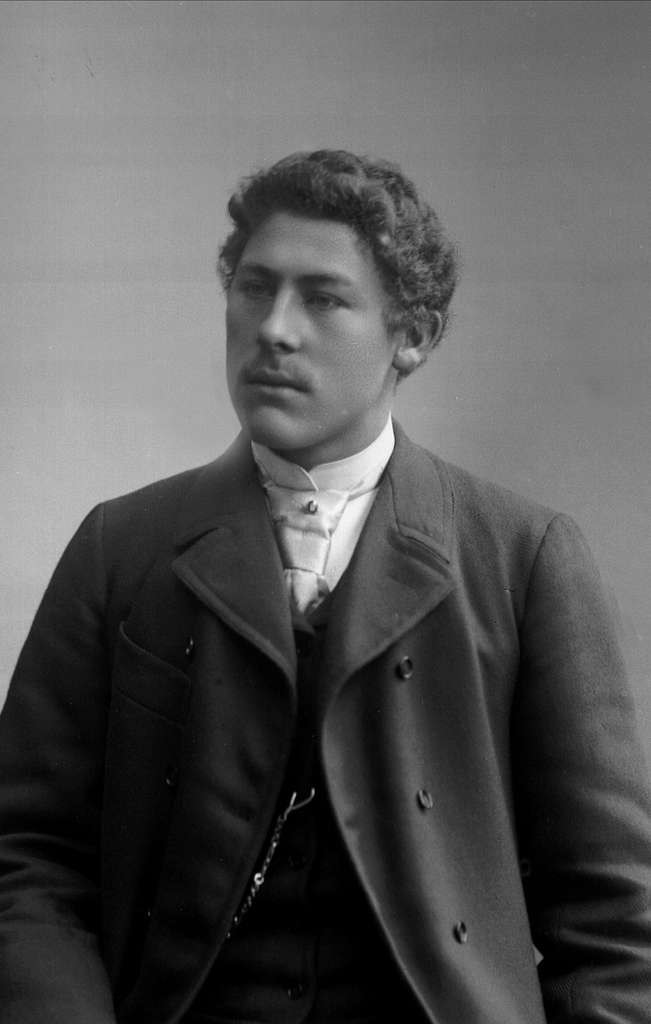
Johan Halvorsen
 Norway
conductor•composer•concertmaster
Birthday
March 15, 1864
Birth Sign
Pisces
Birthplace
Drammen, Norway
Age
Died at 71
About
Johan Halvorsen was a Norwegian composer, conductor, and violinist who shaped the nation's musical life for decades. He is best known for his orchestral showpiece Entry March of the Boyars and his two Norwegian Rhapsodies, works that channel folk melodies through vivid Romantic orchestration. As conductor of the National Theatre in Oslo from 1899 to 1929, he presided over more than thirty operas and composed incidental music for dozens of plays, becoming a central figure in the national romantic tradition. His compositions, developed from the legacy of Edvard Grieg, are marked by brilliant scoring and a distinctive melodic voice. Halvorsen's music continues to be performed and recorded, keeping his contribution to Scandinavian classical music alive for new audiences. He was second only to Johan Svendsen in the Nordic musical pantheon, and his works remain staples of orchestral repertoire.
Early Life & Background
Johan August Halvorsen was born on March 15, 1864, in Drammen, Norway, a bustling port town nestled on the Drammensfjord. He was the son of Bernt Halvor Halvorsen and Johanna Hansdatter, and was baptized on April 24, 1864, at Bragernes Church. From a young age, Halvorsen displayed a remarkable aptitude for music, particularly on the violin. This early talent led him to pursue formal musical training, initially in Kristiania (now Oslo) and later in Stockholm, laying the groundwork for his future as a distinguished musician.
His dedication quickly bore fruit. By 1885, Halvorsen's burgeoning skills earned him the prestigious position of concertmaster of the Bergen Philharmonic Orchestra, a role that firmly established him as a rising star in the Norwegian musical scene. Not content to rest on these early achievements, he was determined to refine his craft further. He subsequently joined the renowned Leipzig Gewandhaus Orchestra, gaining invaluable experience in one of Europe's leading ensembles. His professional journey then took him to various international posts, including a tenure as concertmaster in Aberdeen, Scotland, and later as a professor in Helsinki. Despite these significant accomplishments, Halvorsen chose to return to the life of a student, seeking deeper mastery. He undertook intensive studies under eminent instructors such as Adolph Brodsky in Leipzig, Adolf Becker in Berlin, and César Thomson in Liège, while also pursuing studies in Saint Petersburg. These years of relentless dedication and rigorous study across multiple European centers provided him with the profound technical command and artistic breadth that would become hallmarks of his illustrious career.
Career Growth
Halvorsen's breakthrough came in 1893 when he returned to Norway as conductor of the theatre orchestra at Den Nationale Scene in Bergen and principal conductor of the Bergen Philharmonic Orchestra. That same year he composed Entry March of the Boyars, which would become his most performed work. His greatest appointment came in 1899, when he was named conductor of the orchestra at the newly opened National Theatre in Kristiania. He held that post for thirty years, conducting over thirty operas and writing incidental music for more than thirty plays, including works by Holberg (Mascarade, 1922), Bjørnson (Kongen, 1902), Hamsun (Dronning Tamara, 1904), Drachmann (Gurre, 1900), and several Shakespearean plays. After retiring in 1929, he turned fully to composition, producing his three symphonies and two Norwegian Rhapsodies. Halvorsen also orchestrated piano works by Edvard Grieg, including a funeral march played at Grieg's own funeral in 1907.
Career Timeline
Public Image & Style
Halvorsen is remembered as a versatile musician who excelled equally as violinist, conductor, and composer. His public persona was that of a dedicated craftsman, someone who spent years mastering his instrument before leading Norway's premier theatrical orchestra for three decades. Media portrayals emphasize his role in continuing the national romantic tradition of Edvard Grieg, with his music described as brilliantly orchestrated and folk-inflected. Among classical music enthusiasts, especially in Scandinavia, his works are valued for their melodic richness and technical polish. No official fandom name or fan rituals are documented; his audience consists primarily of orchestral musicians and listeners of Romantic-era repertoire.
Fame & Fandom (iFAMOUS Rankings)
Johan Halvorsen is currently evaluated by iFANN but holds no placement in the published Global Top 1,000 or any scope-based ranking lists. While his name resonates deeply within the classical community, the engine has determined he does not currently secure a numeric position among the world's most famous figures. This absence of a rank reflects the nature of his legacy: a revered composer whose influence is measured in concert halls and academic archives rather than viral social metrics. The audience for Halvorsen lacks a formal name; there are no organized fan clubs, dedicated subreddits, or self-styled groups that claim him as their own. His appreciation remains the domain of orchestras, record labels like Henle Verlag, and scholars who keep his work alive through performance and study. Unlike modern celebrities, he did not inspire fan campaigns, birthday billboards, or charity drives. Instead, his legacy is sustained by professional efforts, such as the 2017 revival of his lost Violin Concerto led by Henning Kraggerud, which was a triumph of musicological detective work rather than a grassroots movement. There are no rituals or inside jokes circulating among listeners; the connection to his music is purely artistic, centered on the technical mastery required for pieces like the Handel-Halvorsen Passacaglia. Recent performances by virtuosos continue to introduce his work to new generations, proving that his fame endures through the sheer quality of his compositions rather than celebrity culture.
Interesting Facts and Legends
Halvorsen orchestrated some of Edvard Grieg's piano works, including a funeral march played at Grieg's own funeral in 1907. After working as a concertmaster and professor, he chose to become a student again, studying violin in four European cities including Saint Petersburg. His Entry March of the Boyars remains a staple of orchestral repertoire worldwide. He conducted performances of over thirty operas during his tenure at the National Theatre. He was considered second only to Johan Svendsen among Norwegian conductors of his era. A defining story of his later life concerns the recovery of his Violin Concerto, Op. 28, which was believed lost or destroyed for over a century before being rediscovered and reconstructed in the 21st century. In 2017, violinist Henning Kraggerud premiered this long-lost masterpiece, transforming Halvorsen's reputation from a minor figure to one whose work had miraculously survived. Another enduring story highlights his unique ability to write music that sounds effortless and colorful, a trait developed during his years composing incidental music for the theater. His Handel-Halvorsen Passacaglia stands as a cultural touchstone for violinists, often serving as a rite of passage for students learning the instrument.
Family & Personal Life
Halvorsen married a woman who was the niece of Edvard Grieg, strengthening his connection to the national romantic tradition. The couple had three children: Rolf Grieg Halvorsen, Aase Grieg Halvorsen, and Halvor Bernt Stein Grieg Halvorsen. His son Rolf later became a noted music critic and writer. Halvorsen's family home in Oslo was a gathering place for musicians and artists of the era. No information about pets or his current household is available, as he died in 1935.
Notable Connections
Halvorsen was closely associated with Edvard Grieg, whose niece he married and whose piano works he orchestrated, including a funeral march performed at Grieg's own funeral. He studied violin under Adolph Brodsky in Leipzig, Adolf Becker in Berlin, and César Thomson in Liège. Alongside Johan Svendsen, he was regarded as one of Norway's most celebrated conductors of his time.
Relationships & Dating History
Public records indicate only one confirmed relationship for Johan Halvorsen. He married the niece of renowned composer Edvard Grieg, though her name is not specified in available sources. The marriage forged a direct family link between Halvorsen and Norway's most famous composer. The couple had three children: Rolf Grieg Halvorsen, Aase Grieg Halvorsen, and Halvor Bernt Stein Grieg Halvorsen. Halvorsen remained married until his death on December 4, 1935, in Oslo.
- MarriedGrieg's niece? - 1935Halvorsen married the niece of Edvard Grieg. They had three children together. The marriage lasted until his death.
Death & Aftermath
Died
December 4, 1935 (aged 71)
Death Place
Norway
Cause of Death
Unknown
In the final years of his life, Johan Halvorsen remained deeply embedded in Oslo's musical circles, though he had stepped back from his long tenure at the National Theatre to focus entirely on composition. He spent his days in his home, a known gathering place for artists, working through the intricate scores that defined his legacy. On December 4, 1935, at the age of seventy-one, Halvorsen passed away in Norway, bringing an end to a career that had shaped the nation's romantic tradition for decades. The specific circumstances surrounding his final days and the official medical cause of death remain unrecorded in available historical archives, as was common for figures of this era who did not face public controversy or legal scrutiny.
His funeral arrangements and burial details are not documented in the current records, but the immediate aftermath saw his estate and works transition into the care of classical music publishers like Wise Music Classical. This stewardship ensured that his catalog, including the orchestral showpiece Entry March of the Boyars and the two Norwegian Rhapsodies, remained accessible to future generations. Decades later, Halvorsen's reputation has only solidified, with his music experiencing a significant renaissance. The rediscovery of his Violin Concerto, lost for over a century, sparked renewed interest when violinist Henning Kraggerud gave its re-premiere in July 2016.
More recently, performances by María Dueñas with the Orchestre Métropolitain under Yannick Nézet-Séguin in 2023 highlighted the enduring vitality of his compositions. Even today, pieces like the Norwegian Dance remain staples in the repertoire, performed globally by duos and orchestras alike, proving that while the man is gone, the melody never truly faded.
Net Worth (Estate Value)
As a historical figure who died in 1935, no contemporary net worth data exists for Johan Halvorsen. His estate value is not documented in available sources. His compositions continue to generate revenue through performances, recordings, and licensing. Works such as Entry March of the Boyars and the Norwegian Rhapsodies are available on labels like Naxos and are streamed on classical music platforms. No information about estate management or posthumous earnings is available.
Awards & Accolades
Known For
Entry March of the Boyars
1893 · Composer
Norwegian Rhapsody No. 1
post-1929 · Composer
Norwegian Rhapsody No. 2
post-1929 · Composer
Symphony No. 1 in C minor
post-1929 · Composer
Symphony No. 2 in D minor
post-1929 · Composer
Symphony No. 3 in C major
post-1929 · Composer
Keywords
Sources
Quick Facts
- Profession
- conductor, composer, concertmaster
- Born
- March 15, 1864
- Birthplace
- Drammen, Norway
- Died
- December 4, 1935
- Death Place
- Oslo, Norway
- Gender
- Male
- Birth Sign
- Pisces
Personal Details
- Full Name
- Johan August Halvorsen
- Spouse
- Grieg's niece
- Children
- Rolf Grieg Halvorsen, Aase Grieg Halvorsen, Halvor Bernt Stein Grieg Halvorsen
- Education
- Studied in Kristiania, Stockholm, Saint Petersburg, Leipzig, Berlin, Liège
Frequently Asked Questions
What is Johan Halvorsen famous for?
Was Johan Halvorsen related to Edvard Grieg?
How old was Johan Halvorsen when he died?
What instruments did Johan Halvorsen play?
Where was Johan Halvorsen born?
Similar People
Join the community
fans discussing