
 Japan
About
Joe Hisaishi is a Japanese composer, conductor, and pianist whose work has defined the sound of modern Japanese cinema. Born Mamoru Fujisawa, he is best known for his long partnership with Hayao Miyazaki, scoring nearly every Studio Ghibli film from Nausicaä of the Valley of the Wind through The Boy and the Heron. His music blends minimalist repetition, lush orchestration, and traditional Japanese instruments into melodies that feel both intimate and epic. Beyond Ghibli, he has composed for over 100 films, including Takeshi Kitano's Kikujiro and the Oscar-winning Departures. His concert tours, like the 2019 Symphonic Concert series, draw massive crowds worldwide, and his soundtracks have sold millions of copies. In 2024, he won a Golden Globe for Best Original Score for The Boy and the Heron. Fans call themselves Hisaishi-ists and often attend his concerts in formal wear, treating them like classical performances. His music has a rare ability to make audiences cry on command, a skill he takes as the highest compliment. At 75, he remains active, with a 2026 world tour already announced.
Early Life & Background
Hisaishi grew up in rural Nagano, far from the bustling film world he would later inhabit. At five, he began Suzuki-method violin lessons, but his real passion ignited when he discovered minimalist composers like Terry Riley and Philip Glass, as well as Japanese electronic pioneers such as Isao Tomita. He enrolled at Kunitachi College of Music in Tokyo, where he studied composition and theory. To pay the bills after graduation, he worked as a music engraver and arranger, churning out commercial jingles and TV themes. In 1981, he released his debut solo album MKWAJU, an experimental electronic work, followed by Information in 1982. The breakthrough came in 1983 when Tokuma Shoten asked him to create a concept album based on the manga Nausicaä of the Valley of the Wind. That album caught the ear of Hayao Miyazaki, who hired him to score the film adaptation. Hisaishi was 33 and had never composed for a feature film before.
Career Growth
His first film score, Nausicaä of the Valley of the Wind (1984), launched a partnership that would span four decades. He followed it with Castle in the Sky (1986), then the one-two punch of My Neighbor Totoro and Grave of the Fireflies (1988). The melody "The Path of the Wind" from Totoro became instantly iconic in Japan. In the 1990s, his work grew darker and more complex with Princess Mononoke (1997), which brought him international attention. The 2000s saw his biggest hits: Spirited Away (2001) won an Oscar for Best Animated Feature, and its soundtrack sold over 300,000 copies in Japan alone. He also began scoring for Takeshi Kitano, starting with Kikujiro (1999), and for director Mamoru Hosoda with The Boy and the Beast (2016). In 2008, Departures won the Academy Award for Best Foreign Language Film, and Hisaishi took home the Japan Academy Film Prize for its score. After a decade-long gap, he reunited with Miyazaki for The Boy and the Heron (2023), earning his first Golden Globe for Best Original Score in 2024. He continues to compose and tour, with a 2026 world tour already selling out dates.
Career Timeline
Public Image & Style
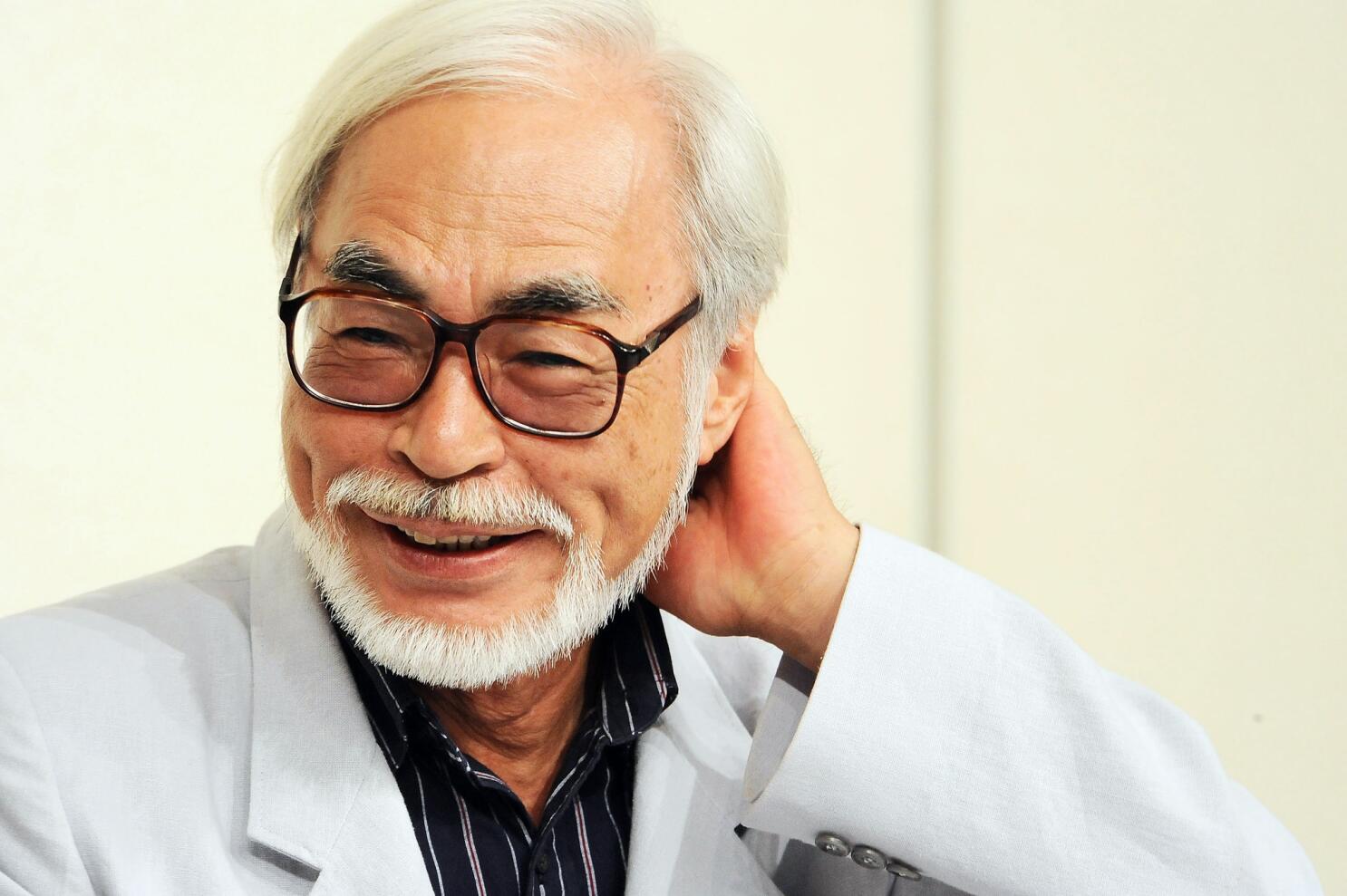
Hisaishi is often called the "Japanese John Williams" by Western media, a comparison he deflects with characteristic humility. His public persona is that of a reclusive genius, soft-spoken, deeply focused, and almost monk-like in his devotion to music. At concerts, he conducts with precise, economical gestures, letting the music speak. Fans have adopted the informal label "Hisaishi-ists" and treat his symphonic concerts as formal events, many dressing in suits and gowns. His social media presence is strictly professional: tour announcements, album releases, and rehearsal photos. He never posts about politics or personal matters. The most common fan reaction to his music is tears, something he says is the highest compliment. His signature look is a dark suit, white shirt, and round glasses, elegant and timeless.
Fame & Fandom (iFAMOUS Rankings)
The community surrounding Joe Hisaishi operates with a quiet, reverent intensity that distinguishes it from the frenetic energy of pop idol fandoms. While there is no formal moniker for his supporters, these devoted listeners treat his symphonic concerts as sacred gatherings, frequently arriving in formal attire to honor the music. Their dedication is visible in the sold-out arenas he commands globally, where the atmosphere remains one of collective, breathless anticipation rather than chaotic shouting. This audience follows his trajectory from early electronic experiments to his recent status as a Composer-in-Residence for major Western orchestras, celebrating every new suite or reimagined score as a milestone event. His global standing reflects this deep resonance, placing him firmly among the most influential figures in modern music history. According to the latest data, Joe Hisaishi is the 25th most famous person from Japan, a position he has maintained steadily through consistent cultural output. Within his specific field, his influence is equally profound; he holds the spot of the 25th most famous person in Classical, recognized for bridging the gap between film scores and concert hall repertoire. These placements within the iFANN Global Fame Rankings underscore his unique ability to command attention across diverse media landscapes and consumption patterns worldwide.
Interesting Facts and Legends
His stage name is a clever Japanese reading of "Quincy Jones," with "Joe" drawn from the first name and "Hisaishi" from the surname. He taught himself piano beyond childhood lessons, never formally studying Western classical techniques. His early electronic work bore the heavy influence of Yellow Magic Orchestra, while his career expanded to compose for the 1998 Winter Olympics opening ceremony in Nagano. A playful cameo appears in Kikujiro, where he plays an accordionist on screen. Beyond film, he owns a recording studio in Tokyo and a vacation home in Nagano. Among his own body of work, he cites Princess Mononoke as his favorite score.
The reverence for Hisaishi manifests in massive global concert tours that have sold out major venues like Radio City Music Hall and Carnegie Hall. While no formal fandom name exists for his supporters, fans often treat symphonic performances as formal events, dressing in suits and gowns to honor the music. Recent milestones include a new Symphonic Suite for The Boy and the Heron scheduled for November 6 and a recent performance with the Royal Philharmonic Orchestra featuring his Symphony No. 3 'Metaphysica'. These achievements underscore his status as a living legend who commands deep respect from audiences worldwide.
Notable Quotes
“I don't write music for the story. I write music for the emotions that the story evokes.”
“When I see a film, I don't see images. I hear sounds. The music is already there, I just have to write it down.”
“Miyazaki-san and I have a kind of telepathy. We don't need to talk much. He will describe a scene, and I will play something. He will nod, and that's it.”
“The greatest compliment is when someone tells me my music made them cry. That means I have connected with their heart.”
Family & Personal Life
Hisaishi was married to Mika Hisaishi, though the exact wedding date is not public. They had two children: daughter Mai Fujisawa, a singer and voice actress who performed on The Wind Rises and The Boy and the Heron soundtracks, and son Yu Fujisawa, a music producer and composer. The couple divorced around 2002. Hisaishi keeps his family life extremely private, rarely mentioning them in interviews. He lives in a large home in Tokyo and owns a vacation property in Nagano, where he grew up. He has no publicly known pets.
Notable Connections
Hisaishi's most famous collaborator is Hayao Miyazaki, with whom he has worked on over 15 films spanning four decades. He also scored multiple films for director Takeshi Kitano, including Kikujiro and Hana-bi. He worked with Mamoru Hosoda on The Boy and the Beast and Mirai, and with Isao Takahata on Grave of the Fireflies and The Tale of the Princess Kaguya. His daughter, Mai Fujisawa, has sung on his soundtracks for The Wind Rises and The Boy and the Heron.
Relationships & Dating History
Hisaishi was married to Mika Hisaishi, though the exact start date of their marriage is not publicly known. They had two children together, Mai and Yu, before divorcing around 2002. No reason for the split was ever made public. Since the divorce, Hisaishi has not been linked to any romantic partner. He has remained single for over two decades, focusing on his children and his career. As of 2026, he is not known to be dating anyone and keeps his personal life extremely private.
- MarriedMika Hisaishi1980 - 2002Had two children together, Mai and Yu. Divorced around 2002; no public statement on the reason.
Salary, Net Worth In 2026
$35 Million
iFANN Editorial Team estimate
Heading into 2026, iFANN currently estimates Joe Hisaishi's net worth at $35 million. His primary income comes from film scoring fees, which range from $1 to $3 million per major project. With over 100 film scores, this has built the foundation of his wealth. His world tours are major revenue generators: the 2019 Symphonic Concert tour alone grossed an estimated $8 million, and his 2026 tour is expected to surpass that. Soundtrack sales and streaming royalties provide steady passive income, Spirited Away sold over 300,000 copies in Japan, and his catalog streams millions of times monthly on Spotify and Apple Music. He owns Joe Hisaishi Music Publishing, which handles licensing for commercials, video games, and films globally. He has also been a brand ambassador for Yamaha pianos and composed jingles for Toyota and Suntory. Real estate includes a Tokyo home and a Nagano vacation property. His wealth has grown steadily over the past decade, driven by international touring and the continued popularity of Studio Ghibli films on streaming platforms.
Awards Won (52)
Hisaishi has won seven Japan Academy Film Prizes for Outstanding Achievement in Music, for films including Porco Rosso, Princess Mononoke, Spirited Away, Howl's Moving Castle, Departures, The Wind Rises, and The Tale of the Princess Kaguya. He won a Golden Globe for Best Original Score for The Boy and the Heron in 2024, and an Annie Award for Howl's Moving Castle in 2006. He also received the Los Angeles Film Critics Association Award for Best Music for The Boy and the Heron in 2023.
2024 · Best Original Score
The Boy and the Heron
2023 · Best Music
The Boy and the Heron
Known For
Spirited Away
2001 · Composer
My Neighbor Totoro
1988 · Composer
Princess Mononoke
1997 · Composer
Howl's Moving Castle
2004 · Composer
The Boy and the Heron
2023 · Composer
Castle in the Sky
1986 · Composer
Kikujiro
1999 · Composer
Departures
2008 · Composer
Keywords
Quick Facts
Personal Details
- Full Name
- Mamoru Fujisawa
- Height
- 5 ft 7 in (170 cm)
- Spouse
- Mika Hisaishi (divorced)
- Children
- Mai Fujisawa (daughter), Yu Fujisawa (son)
- Education
- Kunitachi College of Music
Filmography
100
Total
80
Film
20
TV
Frequently Asked Questions
Is Joe Hisaishi married?
What is Joe Hisaishi's net worth in 2026?
How old is Joe Hisaishi?
What is Joe Hisaishi best known for?
Is Joe Hisaishi still active in 2026?
Social Media


Join the community
fans discussing