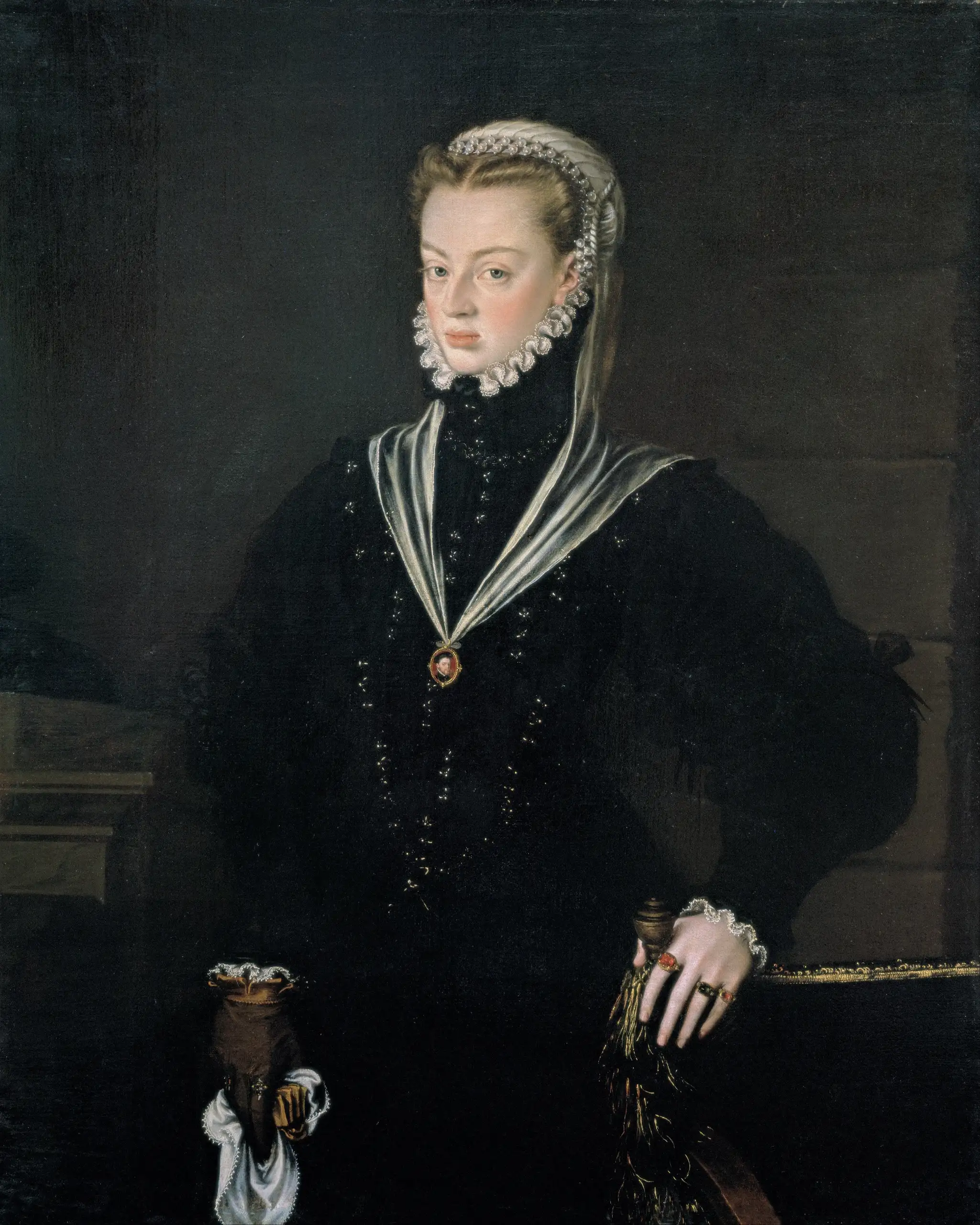
Joanna of Castile
 Spain
SpainBirthday
+1479-11-06
Birth Sign
Scorpio
Birthplace
Toledo
Age
Died at 75
About
Joanna of Castile, often remembered as Joanna the Mad, was a Spanish queen whose life was a tragic mix of political maneuvering and personal sorrow. Born on November 6, 1479, in Toledo, she was the third child of the formidable Catholic Monarchs, Isabella I of Castile and Ferdinand II of Aragon. At nineteen, she was married off to Philip the Handsome, the Archduke of Austria, a union that would tie the Spanish kingdoms to the Habsburg dynasty. When her older siblings and a nephew died between 1497 and 1500, Joanna unexpectedly became the heir to both Castile and Aragon. On her mother's death in 1504, she became Queen of Castile, but her father quickly claimed the regency, and when Philip died in 1506, Joanna was left vulnerable. Declared insane by her father, she was confined to the Royal Palace in Tordesillas, where she would spend most of her life. Even after inheriting Aragon in 1516, her son Charles I kept her under lock and key, ruling in her name until she died on April 12, 1555, at the age of 75.
Fame & Fandom (iFAMOUS Rankings)
While Joanna of Castile lacks a modern, organized fandom with official names or active social media campaigns, she commands a profound cultural following among historians and enthusiasts of historical revisionism. This audience does not gather for chart pushes but rather engages in a collective reclamation of her legacy, reframing the tragic narrative of 'Juana la Loca' from one of insanity to a story of political gaslighting and deep sorrow. Their devotion manifests through the enduring popularity of period dramas like The Spanish Princess, which sparked renewed debate about her treatment by male relatives, and contemporary art projects that challenge centuries of mischaracterization. Within this intellectual circle, the shared understanding is that the 'Mad Queen' was actually the 'Sad Queen,' a sentiment that drives the ongoing scholarly and popular effort to restore her reputation as a competent ruler undermined by ambition.
Joanna's standing in global history remains significant enough to secure her a prominent place in the iFANN Global Fame Rankings, a system tracking influence across media coverage, search trends, and consumption signals worldwide. According to the August 2026 data, she is the 82nd most famous person in Spain, having moved up from the 86th position in the previous cycle. This ranking reflects her sustained resonance as a figure of historical tragedy and resilience, ensuring her name persists in educational discourse and cultural memory long after her death in 1555.
Interesting Facts and Legends
Joanna of Castile spent nearly fifty years confined within the Royal Palace of Tordesillas, never seeing her children again while retaining her title as Queen of Castile until her death on April 12, 1555. A widely retold legend claims that after the death of her husband Philip the Handsome in 1506, she refused to bury his body for months, keeping his coffin traveling with her to Granada. While historical records confirm she delayed the burial, modern scholars argue this was a strategic move to assert her rights against her father-in-law and allies rather than an act of madness. Another iconic moment occurred in 1496 during her festive entry into Brussels, where elaborate celebrations marked her arrival in the Low Countries and solidified the alliance between the Habsburgs and the Trastámara dynasty. These events have fueled a modern narrative suggesting her confinement was the result of systematic mistreatment by men seeking power rather than clinical insanity.
Death & Aftermath
Died
+1555-04-12 (aged 75)
Death Place
Tordesillas, Castile, Spain
Cause of Death
Natural causes from extreme old age
Joanna of Castile passed away on April 12, 1555, within the quiet confines of the Royal Palace of Tordesillas in Castile, Spain. After spending over forty years under various forms of confinement, her final days were marked by a stillness that reflected her long imprisonment rather than any dramatic event. She died at the age of seventy-six from natural causes attributed to the infirmities of extreme old age. Her passing was confirmed by household staff and family members present at the palace, and news reached her son, Emperor Charles V, while he was traveling through the Low Countries. The transition of power was seamless, as Charles had already administered the kingdoms for decades and immediately assumed full control of the crowns of Castile and Aragon without legal dispute.
Her funeral was a private affair held by the Habsburg court, attended by high-ranking nobility and clergy, before she was interred in the Royal Chapel of Granada alongside her husband Philip I, her parents Isabella and Ferdinand, and her daughter Catherine. In the centuries since, public perception has shifted significantly from the label of madness used to justify her removal from power. Modern historical re-evaluations and cultural works like the 2019 television series The Spanish Princess have sought to rehabilitate her image, presenting her story as one of political gaslighting rather than genuine insanity. Recent artistic tributes include the 2024 scholarly publication A Spectacle for a Spanish Princess and the 2025 dance performance Juana Ficción, which explore her legacy and the complexities of her life.
Awards & Accolades
Keywords
Quick Facts
- Profession
- monarch
- Born
- +1479-11-06
- Birthplace
- Toledo
- Died
- +1555-04-12
- Death Place
- Tordesillas
- Gender
- Female
- Spouse
- Philip I of Castile
- Birth Sign
- Scorpio
Personal Details
- Spouse
- Philip I of Castile
Join the community
fans discussing