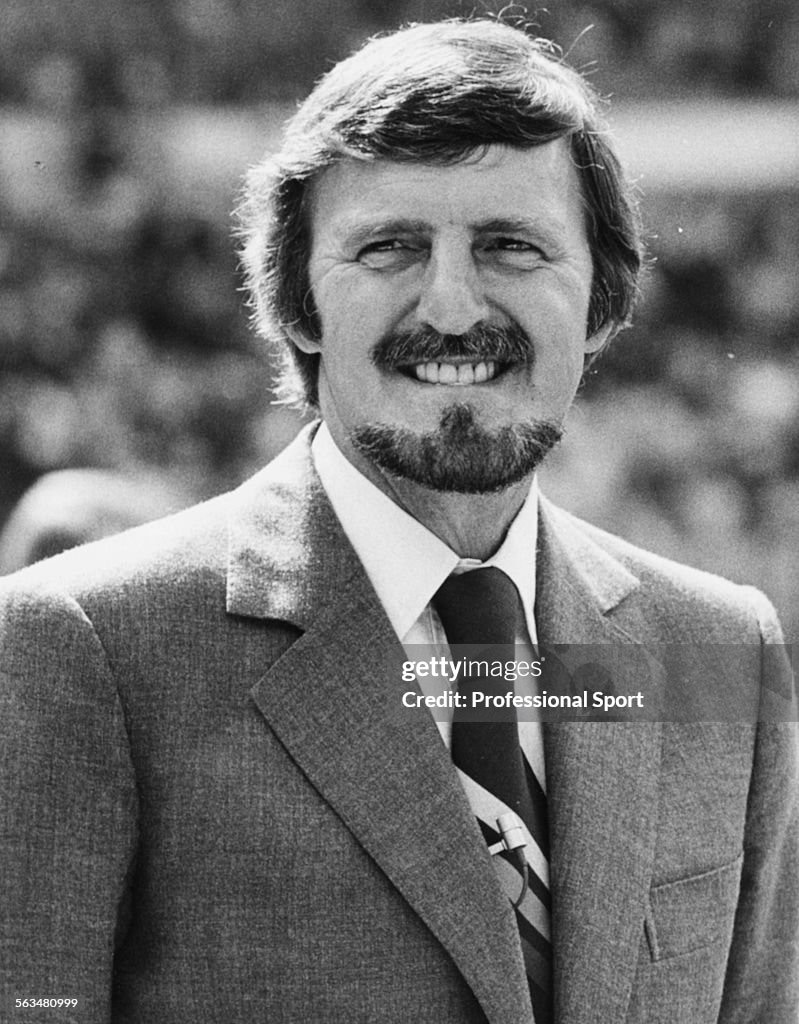
Jimmy Hill
 United Kingdom
association football player•television presenter•trade unionist
Birthday
July 22, 1928
Birth Sign
Cancer
Birthplace
Balham, London, England
Age
Died at 87
About
Jimmy Hill was an English footballer and broadcaster whose career touched nearly every corner of the sport, from player to union leader to manager to television face. He is best remembered for abolishing the maximum wage as chairman of the Professional Footballers' Association in 1961, a reform that reshaped English football's finances and empowered generations of players. As manager of Coventry City, he dragged the club from the Third Division to the First, introducing innovations like all-seater stadiums and post-match player interviews. His longest public role came as host of the BBC's Match of the Day from 1973 to 1988, where his bearded chin and sharp opinions made him a household name. Hill also served as a pundit, analyst, club director, and even assistant referee, an unmatched breadth of involvement. He was appointed OBE for services to football and broadcasting. Fans remember him as a reformer who loved the game deeply and wasn't afraid to speak his mind.
Early Life & Background
Hill grew up in Balham, South London, the son of a milkman and a World War I veteran. He attended Henry Thornton Grammar School in Clapham from 1939 to 1945. After leaving school at sixteen, his first job was as a chimney sweep, hardly a promising start. He then worked briefly at the Stock Exchange before being called up for national service in the Royal Army Service Corps. There he reached the rank of Corporal and was considered for officer training. During service, he showed early entrepreneurial flair by ironing fellow soldiers' uniforms for a fee and teaching them to type. More importantly, he played football alongside professionals, which sparked his ambition to turn pro. He was a boyhood fan of Crystal Palace.
Career Growth
Hill turned professional with Brentford in 1949, then moved to Fulham in 1952, making over 250 appearances as a forward. While still playing, he became chairman of the Professional Footballers' Association in 1957. His defining achievement came in 1961 when he led the campaign to abolish the Football League's maximum wage, a cap that had kept players earning as little as twenty pounds a week. The victory transformed English football. Hill retired from playing at 33 and immediately took over as manager of Coventry City. He modernized the club with an all-seater stadium and media-friendly policies, guiding them from the Third Division to the First by 1967. That year he switched to broadcasting, joining the BBC. From 1973 to 1988 he hosted Match of the Day, becoming the most recognizable football presenter in Britain. He later returned to Coventry City as chairman and continued as a pundit and analyst.
Career Timeline
Public Image & Style
Hill was known for his prominent bearded chin and his unfailing readiness to deliver sharp-edged opinions. On Match of the Day, he was authoritative and sometimes controversial, a familiar voice that helped evangelize football on television. He was respected for his reforming influence, especially the abolition of the maximum wage, which made him a hero to players. Fans appreciated his passion for the game and his willingness to speak his mind. He had no official fandom name but was affectionately remembered as a pioneer of football broadcasting.
Fame & Fandom (iFAMOUS Rankings)
Jimmy Hill's legacy is built on the profound respect of football purists and television audiences rather than a cult following with a specific moniker. Unlike modern pop icons who command organized fanbases with dedicated rituals, Hill was a figure of institutional reverence. His supporters are largely the generations of players he empowered through wage reform, the fans of Coventry City who remember his transformative chairmanship, and the viewers who grew up with his sharp commentary on Match of the Day. There is no documented formal name for his admirers; instead, his influence persists through the structural changes he enacted in English sport and the enduring cultural footprint of his broadcasting career. The National Football Museum honors him as a special achievement inductee, cementing his status as an architect of the modern game rather than a celebrity subject to fan-driven trends. While club supporters cherish his memory, this affection remains part of broader team loyalty rather than a distinct movement centered solely on Hill himself. No viral campaigns or grassroots projects bearing his name have emerged to define a new generation of followers, as his impact was professional and administrative rather than purely performative. Jimmy Hill is currently evaluated by iFANN but does not hold a placement in the published Global Top 1,000 rankings. Consequently, he has no numeric rank in the scope lists provided by the iFANN Global Fame Engine. This evaluation reflects his status as a historical figure whose fame is rooted in specific professional achievements rather than current global consumption metrics.
Interesting Facts and Legends
Hill held nearly every role in football: player, union leader, coach, manager, director, chairman, TV executive, presenter, pundit, analyst, and assistant referee. He never earned more than twenty pounds a week as a player. During national service, he ironed uniforms for pocket money and taught typewriting to fellow soldiers. He briefly worked as a chimney sweep after leaving school. He was a Crystal Palace supporter as a boy. He helped drag English football into the modern era through his wage reform. As the first Black chairman of an English Football League club at Coventry City, he became a legendary figure for breaking racial barriers in administration while simultaneously ending the maximum wage rule that had capped player earnings for decades. He co-founded Match of the Day in 1964, revolutionizing how the sport was consumed by moving it from radio commentary to visual storytelling. Fans still recount his tenure as the man who introduced all-seater stadiums and post-match interviews, innovations that fundamentally changed the matchday experience. Upon his death in December 2015, the nation mourned a true pioneer whose work laid the foundation for the multi-billion pound industry seen today.
Family & Personal Life
Hill was born to William Thomas Hill, a milkman and World War I veteran, and Alice Beatrice Hill (née Wyatt). He had no publicly known siblings. He married three times: first to Gloria in 1950, with whom he had two sons, Duncan and Graham, and a daughter, Alison. After divorcing, he married Heather in 1962, with whom he had a son, Jamie, and a daughter, Joanna. His third marriage was to Bryony Jarvis in 1991, who survived him. He lived in Hurstpierpoint, West Sussex, in his later years.
Notable Connections
Relationships & Dating History
Hill married three times. His first marriage was to Gloria in 1950; they had two sons, Duncan and Graham, and a daughter, Alison, before divorcing. In 1962 he married Heather, with whom he had a son, Jamie, and a daughter, Joanna; that marriage also ended in divorce. In 1991 he married Bryony Jarvis, who remained with him until his death in 2015. As of 2026, Hill is deceased and was last married to Bryony.
- MarriedGloria Hill1950 - presentFirst wife; had three children together; marriage ended in divorce.
- MarriedHeather Hill1962 - presentSecond wife; had two children together; marriage ended in divorce.
- MarriedBryony Jarvis1991 - 2015CurrentThird wife; remained married until Hill's death in 2015.
Death & Aftermath
Died
December 19, 2015 (aged 87)
Death Place
Unknown
Cause of Death
Alzheimer's disease
Tributes poured in immediately across the United Kingdom, with Gary Lineker leading the homage on BBC's Match of the Day to honor a man who had reshaped English football from the pitch to the television screen. Institutions like the National Football Museum highlighted his induction into their Hall of Fame, cementing his status as one of the most influential figures in the sport's history while fans and peers commemorated his role in breaking the color barrier and his relentless advocacy for players' rights through the Professional Footballers' Association. James William Thomas Hill passed away peacefully at the age of 87 on Saturday, December 19, 2015, following a long-term illness that kept him away from the public eye during his final days. The cause of death was confirmed by his family as Alzheimer's disease, a natural passing attributed to chronic illness rather than an acute event requiring police investigation or coronial intervention.
While specific details regarding the funeral arrangements remained private, the scale of national remembrance was evident in the volume of obituary coverage from major publications like The Guardian and The Independent. Posthumously, his legacy has been preserved through documentaries exploring his exposure of football's darkest side and continued discussion of his impact on the modernization of the game, including his obscure connection to Arsenal via the co-writing of The Sky Blue Song in 1962. The handling of his estate remained a private family matter, but his influence endures through the ongoing operation of tribute pages and the celebration of his transformative career.
Net Worth (Estate Value)
$10 Million
iFANN Editorial Team estimate
Jimmy Hill's net worth at the time of his death in 2015 is estimated at around $10 Million per iFANN's editorial analysis. This accumulated wealth came through his varied careers as a player, manager, broadcaster, and club executive. His primary income source was his long tenure as host of Match of the Day and other BBC football programming. He also earned from managerial roles at Coventry City and later as a club director and chairman. Posthumous income from broadcasting royalties and documentary appearances has added to his estate. As of 2026, his estate is managed by his widow Bryony Jarvis.
Awards Won (1)
Jimmy Hill was appointed an Officer of the Order of the British Empire (OBE) for services to football and broadcasting. He did not win competitive entertainment industry awards.
2001 · Services to football and broadcasting
Football and broadcasting
Known For
Abolition of the maximum wage in English football
1961 · PFA Chairman
Match of the Day
1973 · Presenter
Coventry City manager
1961 · Manager
Keywords
Sources
Quick Facts
- Profession
- association football player, television presenter, trade unionist
- Born
- +1928-07-22
- Birthplace
- London
- Died
- +2015-12-19
- Death Place
- Hurstpierpoint
- Gender
- Male
- Birth Sign
- Cancer
Personal Details
- Full Name
- James William Thomas Hill
- Children
- 5
- Education
- Henry Thornton Grammar School, Clapham
Frequently Asked Questions
How old was Jimmy Hill when he died?
What did Jimmy Hill do for football?
Was Jimmy Hill married?
Did Jimmy Hill have children?
What team did Jimmy Hill play for?
Join the community
fans discussing