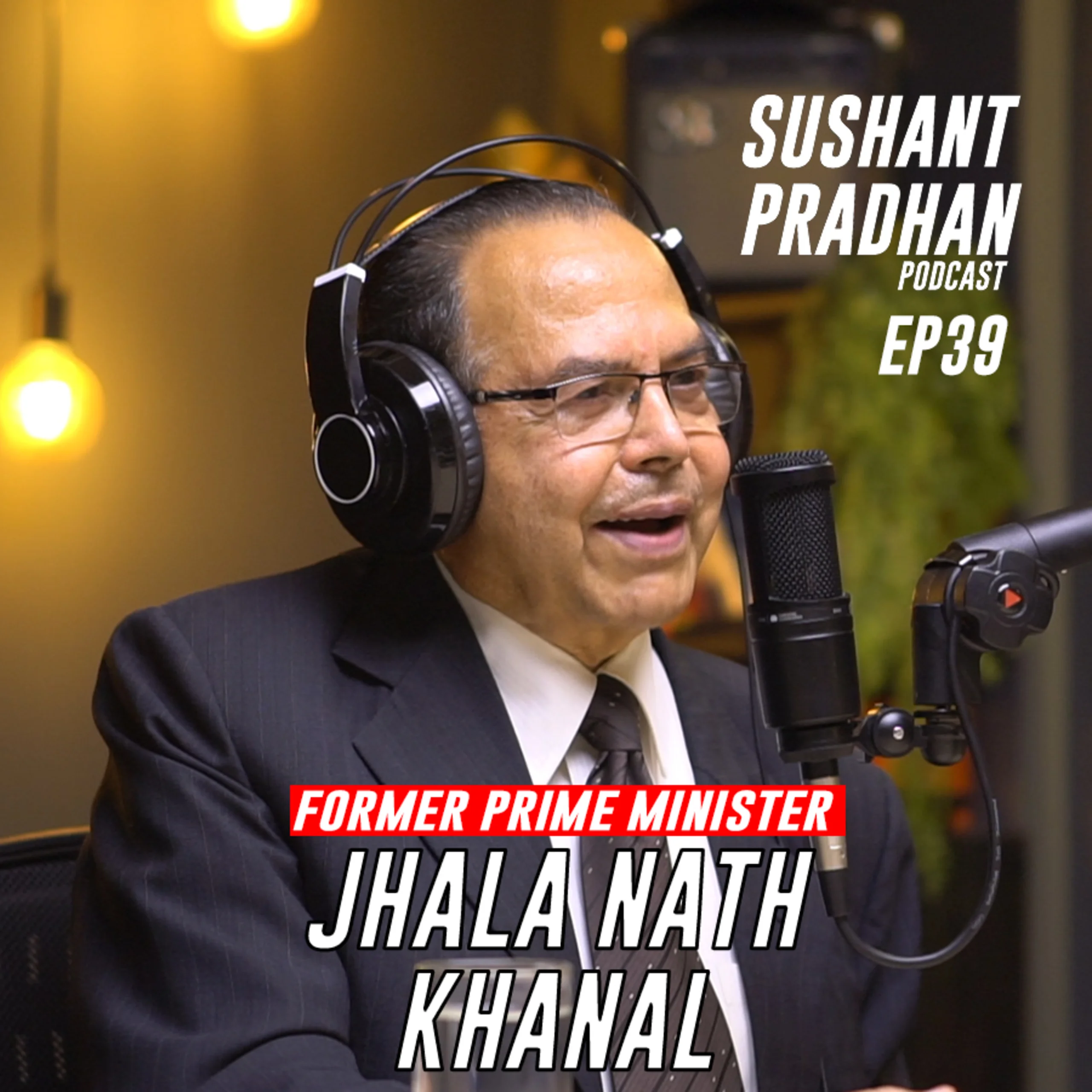
Jhala Nath Khanal
 Nepal
NepalAlso known as: Jhalanath Khanal, Jhala Nath Khanal
Birthday
May 20, 1950
Birth Sign
Taurus
Birthplace
Kathmandu, Nepal
Age
76 years old
About
Jhala Nath Khanal is a Nepalese politician who served as the 35th Prime Minister of Nepal from February to August 2011. A lifelong communist, he previously chaired the Communist Party of Nepal (Unified Marxist–Leninist) and currently holds a senior leadership role in the newly formed Nepali Communist Party, created in November 2025 through the merger of eight communist factions. Even at 76, he remains a vigorous presence in Nepali politics, known for his sharp critiques of rivals and his persistent calls for left-wing unity.
Khanal's political identity is rooted in decades of activism, from the pro-democracy movements of 1990 and 2006 to his stewardship of the CPN (UML) during turbulent transitions. His brief premiership placed him at the center of the country's post-monarchy constitutional process. Today, he continues to shape the political landscape through party consolidation, international diplomacy, and a public voice that still commands attention.
Early Life & Background
Born in Kathmandu on May 20, 1950, Jhala Nath Khanal grew up in a Nepal still under the Rana autocracy, followed by the Panchayat system. The political ferment of the 1960s and 1970s drew him into the underground communist movement, where he became a dedicated organizer and ideologue. He rose through the ranks of the Communist Party of Nepal (Unified Marxist–Leninist) during its early years, known for his sharp analytical skills and loyalty to the party line.
Khanal's formative political experiences came during the pro-democracy protests of 1990, which forced the monarchy to accept multiparty democracy, and again in 2006 when the People's Movement ended direct royal rule. These movements shaped his belief in mass agitation and leftist unity, principles that would guide his entire career. By the time Nepal transitioned to a republic, he had already become a central figure in the UML, earning a reputation as a strategic thinker and a hardline negotiator.
Career Growth
Khanal's breakthrough came when he led the CPN (UML) in the first Constituent Assembly after the 2008 elections, positioning the party as a key player in drafting a new constitution. In February 2011, he was elected Prime Minister by parliament, heading a fragile coalition. His tenure was short-lived, lasting only until August 2011, but it saw the approval of the Nagdhunga-Sisnekhola tunnel project, a major infrastructure initiative that only came to fruition in July 2026, with Khanal expressing joy at its inauguration.
After leaving office, Khanal remained a senior UML leader, known for his ideological rigidity and his advocacy for a single communist party. In November 2025, he took on a senior role in the new Nepali Communist Party, formed from eight factions. Throughout 2026, he has been highly active: submitting a 36-point ultimatum to Prachanda, urging left unity, criticizing the government, undertaking a week-long visit to China, and holding talks with Upendra Yadav to discuss political strategy. His influence, while not in the premiership, continues to be felt across the political spectrum.
Public Image & Style
Khanal is perceived as a principled, if sometimes inflexible, communist leader. His public speeches are characterized by ideological rigor and a firm opposition to what he calls 'unholy alliances' with non-communist forces. He is respected for his intellectual depth, but critics see him as a relic of an older generation. Among party loyalists, he is a revered figure, often called 'the ideologue' for his ability to articulate complex political theory. His style is understated, with a focus on policy over personality, which contrasts with the more flamboyant politicians of his era. Fans of his political writings appreciate his consistency, while younger voters view him as a link to Nepal's revolutionary past.
Fame & Fandom
Jhala Nath Khanal is currently evaluated by the iFANN Global Fame Engine but holds no placement in the published rankings, meaning he does not appear in the Global Top 1,000 or any scope-specific list as of August 2026. While his name commands respect within the halls of Nepalese power, this absence from global fame metrics reflects a career defined by rigorous political stewardship rather than celebrity reach. The world knows him for the weight of his ideology and the turbulence of his tenure, not for chart-topping influence or viral ubiquity.
There is no documented fandom name for Jhala Nath Khanal, nor are there organized fan clubs, birthday billboards, or ritualistic campaigns dedicated to him. His supporters engage with him strictly through the lens of party loyalty and shared political goals, attending rallies and legislative sessions rather than participating in the pop-culture phenomena seen elsewhere. He lacks the personal brand that generates subreddits, inside jokes, or fan-driven charity drives. Instead, his public interactions remain formal and ideological, rooted in the serious business of governance and the pro-democracy movements that shaped modern Nepal. This austere engagement means his legacy is built on policy decisions and historical milestones rather than the whims of a devoted fanbase.
Interesting Facts and Legends
Jhala Nath Khanal maintains an austere personal lifestyle, often appearing in simple traditional dress that reflects his lifelong communist principles. He is an avid reader of Marxist theory and has authored several pamphlets on communist ideology, showcasing his intellectual depth. A lesser-known fact from his early career reveals he was instrumental in organizing the first underground party school for the UML in the 1980s, a secret training ground that produced many future leaders. His deep interest in Chinese politics is well-documented, including a week-long trip to the region in July 2026. Despite his prominence, he rarely gives interviews, preferring to communicate through written statements.
Recent years have added new chapters to his story without creating viral folklore. In early 2026, his residence was set on fire during a Gen Z uprising, forcing him and former Prime Minister Sher Bahadur Deuba to skip upcoming polls. This incident stands as a significant moment of political danger rather than a legend of adoration. Additionally, he famously submitted a 36-point ultimatum to Pushpa Kamal Dahal regarding internal party rifts, urging senior leaders to step aside. These events define his legacy as a statesman navigating turbulent times, rooted in historical political milestones and partisan conflicts rather than celebrity-style myths.
Family & Personal Life
Jhala Nath Khanal's family life has been marked by tragedy. His wife, whose name has not been publicly disclosed, died after being set on fire by protestors in Kathmandu, a shocking incident that stunned the nation. In February 2026, his home was reportedly set on fire during civil unrest, forcing him to skip the March elections. He has not publicly shared details about his children or extended family, keeping his personal life largely private. His household, when not disrupted by political violence, is said to be modest, reflecting his socialist principles.
Relationships & Dating History
Jhala Nath Khanal's personal life has been largely shielded from public view. He was married, but the date and details of his marriage are not publicly documented. His wife's tragic death, reportedly at the hands of protestors, occurred years ago, leaving him a widower. Since then, he has not remarried or been linked romantically to anyone. As of 2026, he remains a widower, living alone or with family, though he has not confirmed his living arrangements. His focus has been entirely on politics, with no known relationships beyond his late wife.
- MarriedUnknown (wife)His wife died after being set on fire by protestors.
Salary, Net Worth In 2026
$1 Million
iFANN Editorial Team estimate
iFANN currently estimates Jhala Nath Khanal's net worth at $1 Million. As of 2026, this modest figure for a former head of state reflects his frugal lifestyle and ideological consistency. His income primarily derives from his parliamentary pension, which is provided to former prime ministers in Nepal, along with standard allowances for senior party leaders. He has no known business ventures or corporate affiliations, consistent with his communist ideology. His financial standing has remained stable over the years, with no major assets or investments reported. He is not known to own significant real estate beyond his family home in Kathmandu, which was damaged in the 2026 arson attack. The estate, if any, is managed by his immediate family, but no public records detail its composition.
Awards & Accolades
View 1 records, honours and achievementsKnown For
Prime Minister of Nepal
2011 · 35th Prime Minister
Chairman of CPN (UML)
· Party Chairman
Senior Leader, Nepali Communist Party
2025 · Senior Leader
Keywords
Sources
Quick Facts
- Profession
- politician
- Born
- May 20, 1950
- Birthplace
- Kathmandu, Nepal
- Gender
- Male
- Birth Sign
- Taurus
- Political Party
- Nepali Communist Party (formerly CPN UML)
- Prime Minister
- 2011
Personal Details
- Children
Frequently Asked Questions
Who is Jhala Nath Khanal?
When was Jhala Nath Khanal Prime Minister?
What party does Jhala Nath Khanal belong to?
What is Jhala Nath Khanal doing now?
What happened to Jhala Nath Khanal's wife?
Join the community
fans discussing