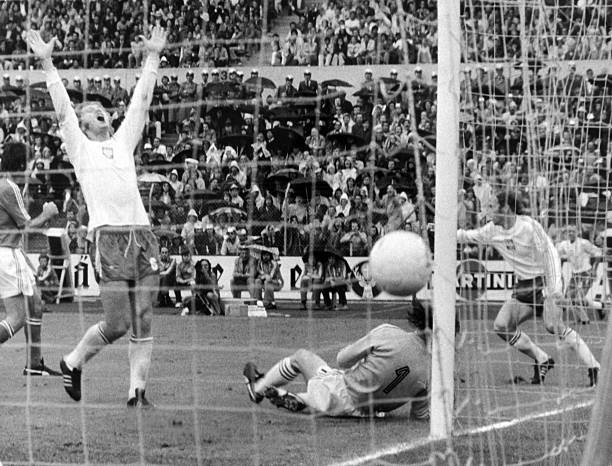
Jerzy Gorgoń
 Poland
Also known as: Jerzy Paweł Gorgoń
Birthday
July 18, 1949
Birth Sign
Cancer
Birthplace
Zabrze, Poland
Age
77 years old
Height
6 ft 4 in (193 cm)
About
Jerzy Gorgoń is a Polish former professional footballer, widely regarded as one of the finest central defenders in the history of Polish football. A commanding presence at 6'4", he anchored the defense for Górnik Zabrze during the club's golden era and was a pillar of the Polish national team that achieved historic success in the 1970s. His trophy cabinet includes an Olympic gold medal, an Olympic silver medal, a World Cup bronze, two Polish Championships, and five consecutive Polish Cups.
Today, Gorgoń lives in Switzerland, where he settled after his playing career. He remains a celebrated figure in Polish football, honored through official programs such as the PKO Bank Polski Ekstraklasa Legends series. His legacy as a tough, reliable defender who could also contribute goals continues to inspire fans and players alike.
Early Life & Background
Jerzy Gorgoń grew up in Zabrze, in the industrial heart of Silesia, a region with a deep football culture. He started his football journey at Sparta Mikulczyce, a local club in the Zabrze area, where his towering frame and natural defensive instincts quickly set him apart. Scouts from Górnik Zabrze, one of Poland's most successful clubs, took notice, and he joined the club's youth setup.
Gorgoń's breakthrough came in 1967, when he broke into the Górnik first team. His rapid rise was fueled by his physical dominance and an unwavering commitment to defending. By the late 1960s, he had become a fixture in the heart of the Górnik defense, setting the stage for a career that would define an era of Polish football.
Career Growth
Gorgoń's club career with Górnik Zabrze was marked by unprecedented domestic success. Between 1968 and 1972, he helped the club win five consecutive Polish Cup titles, a feat unmatched in Polish football. He also claimed the Polish Championship in 1971 and 1972, and over his Ekstraklasa career he made 220 league appearances and scored 18 goals, a remarkable tally for a center-back.
On the international stage, Gorgoń was a key figure in Poland's golden generation. He won a gold medal at the 1972 Munich Olympics, a bronze at the 1974 World Cup in West Germany, and a silver at the 1976 Montreal Olympics. He played in the famous Wembley qualifier against England in 1973, which helped Poland secure a spot at the 1974 World Cup. His international career spanned 55 caps and 6 goals, with his final appearance coming against Brazil at the 1978 World Cup in Argentina.
In 1980, Gorgoń moved to Switzerland to join FC St. Gallen, where he played until retirement. He then transitioned into coaching, working with St. Gallen's reserve and youth teams and later at a football academy in Gossau.
Career Timeline
Public Image & Style
Gorgoń is remembered as the archetypal hard-man defender of Polish football's golden era: tough, uncompromising, and reliable on the pitch, yet gentle and calm off it. Polish football media portray him as an icon of Górnik Zabrze and a pillar of the national team's most successful period. His legacy is celebrated through official channels, including the Polish Football Association and the Ekstraklasa Legends program.
Fame & Fandom (iFAMOUS Rankings)
Jerzy Gorgoń commands a legacy defined by historical reverence rather than modern viral momentum. While contemporary footballers often cultivate digital followings with specific branded names, the supporters of the Polish national hero operate through institutional memory and official recognition within the sport itself. There is no documented formal fandom name or organized fanbase dedicated to him in the manner of pop culture icons; his audience consists primarily of historians, older generations of Polish sports fans, and those who study the tactical evolution of the sweeper role. His status remains anchored in verified achievements such as the 1972 Olympic gold medal and his selection for the Polish Football Association's Best XI of the Century, reflecting a quiet but enduring respect that does not require active social media engagement to sustain. The iFANN Global Fame Engine has evaluated this profile and determined that Jerzy Gorgoń is currently an unranked individual, meaning he holds no placement within the Global Top 1,000 or any Top-100 scope list as of August 2026. This absence from the ranked tiers reflects the nature of his fame: a celebrated figure whose peak influence occurred decades ago, leaving him outside the dynamic fluctuations of current global celebrity metrics.
Interesting Facts and Legends
Jerzy Gorgoń earned the moniker 'Wielka Biała Góra' (The Great White Mountain), a fitting title for a man standing 6'4" tall who wore the white jersey of Górnik Zabrze. Despite his defensive duties, he possessed a lethal scoring touch, netting 18 league goals across 220 Ekstraklasa appearances and adding six more during 55 international matches. He stands alone as the only player to have reached a European cup final representing a Polish club. Beyond statistics, legends persist regarding his mentorship; it is widely retold that he instructed modern goalkeeper Kamil Glik on the art of playing with his head, a technical lesson that bridged generations. His imposing physical presence, recorded at 192 cm and weighing between 88 and 94 kg, became the foundation for his reputation as a dominant stopper and libero. While no crowds are known to have shut down streets in his honor or fainted at his sight, his selection for the PZPN's century-best team in 2025 serves as an official reflection of his mythic status in Polish sports lore.
Family & Personal Life
Notable Connections
Relationships & Dating History
Publicly available sources do not document any specific romantic relationships, marriages, or dating history for Jerzy Gorgoń. Polish football sources from his era focused almost exclusively on his sporting achievements, and no credible biographical sources have surfaced detailing his personal romantic life. As of the latest available information, there is no publicly documented relationship history for Gorgoń, and no current relationship status can be confirmed from credible sources.
Salary, Net Worth In 2026
$1 Million
iFANN Editorial Team estimate
Per iFANN's editorial analysis, Jerzy Gorgoń's net worth is estimated at $1 Million as of 2026. Unlike modern footballers, players of his era did not command multi-million-euro salaries. His income came primarily from his playing contracts with Górnik Zabrze and FC St. Gallen, and later from coaching roles in Switzerland. No celebrity net worth databases have published figures for him, so this estimate is based on typical career earnings for a top Polish footballer of the 1960s-1980s.
Awards Won (10)
Gorgoń's trophy collection includes an Olympic gold medal (1972), an Olympic silver medal (1976), a World Cup bronze (1974), two Polish Championships (1971, 1972), and five consecutive Polish Cups (1968-1972) with Górnik Zabrze.
1972 · Football
Poland national team
1976 · Football
Poland national team
Known For
1972 Summer Olympics
1972 · Gold medal with Poland
1974 FIFA World Cup
1974 · Third place with Poland
1976 Summer Olympics
1976 · Silver medal with Poland
Górnik Zabrze
1967-1980 · Central defender
Keywords
Sources
Quick Facts
- Profession
- association football player
- Born
- July 18, 1949
- Birthplace
- Zabrze, Poland
- Height
- 6 ft 4 in (193 cm)
- National Team Caps
- 55
- National Team Goals
- 6
Personal Details
- Full Name
- Jerzy Paweł Gorgoń
- Height
- 6 ft 4 in (193 cm)
Frequently Asked Questions
How old is Jerzy Gorgoń?
What did Jerzy Gorgoń win in his career?
How many caps did Jerzy Gorgoń have for Poland?
How tall was Jerzy Gorgoń?
Where did Jerzy Gorgoń play after leaving Poland?
Similar People
Join the community
fans discussing