 Portugal
About
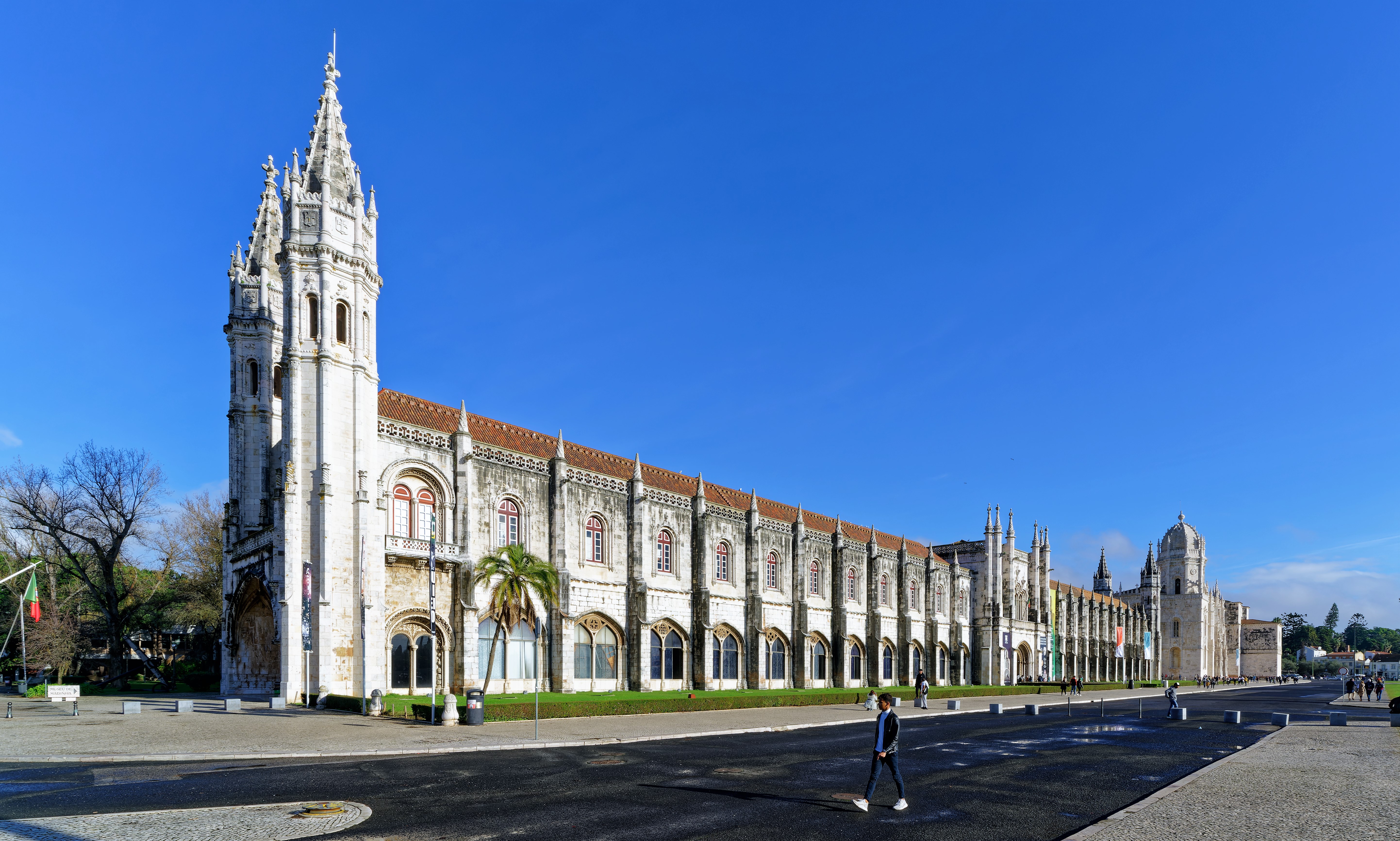
On a spring morning in 1501, workers broke ground on a monastery that would take nearly a century to finish. King Manuel I had ordered its construction to thank the Virgin Mary for Vasco da Gama's safe return from India, a voyage that had opened the sea route to the spice trade and transformed Portugal into a global power. The site they chose, in the riverside district of Belém, was an existing church where sailors had prayed before setting out on their journeys. The resulting building, the Jerónimos Monastery, became the definitive statement of Manueline style, a uniquely Portuguese blend of late Gothic, Renaissance, and Moorish ornament.
The monastery's stonework is its signature. Ropes, armillary spheres, coral, and royal emblems are carved into every surface, celebrating the maritime discoveries that paid for it all. The southern portal, designed by João de Castilho, is a dense, intricate masterpiece, while the two-story cloister is often described as one of the most beautiful in Europe. Inside the church, the tombs of Vasco da Gama and the poet Luís de Camões rest alongside those of King Manuel I and his wife, Queen Maria of Aragon.
Today the monastery is a national monument and museum, managed by the Portuguese state through the Museus e Monumentos de Portugal network. It draws millions of visitors each year, making it one of the most visited cultural sites in the country. In 1983, UNESCO listed it as a World Heritage Site together with the nearby Belém Tower, recognizing its importance as a symbol of Portugal's Age of Discoveries.
Mission
The Jerónimos Monastery preserves and interprets the legacy of Portugal's maritime expansion. As a museum-monument, it safeguards the building's Manueline architecture and its role as a royal pantheon, while offering visitors a window into the Age of Discoveries. The institution aims to balance conservation with public access, promoting research, education, and cultural programming that connect the monastery's past to contemporary audiences.
History
The idea for the monastery took shape in 1496, when King Manuel I petitioned the Pope for permission to build a monastery on the site of a modest church in Belém. That church, dedicated to the Virgin of Belém, had long served as a spiritual waystation for sailors. After Vasco da Gama returned from India in 1498, the project gained urgency. The king wanted a grand monument to the discoveries and a royal pantheon for his new dynasty, the House of Aviz.
Construction began in 1501 under Diogo de Boitaca, who laid out the church and cloister. João de Castilho took over in 1517 and completed the church's vaulted interior and the famous southern portal. Diogo de Torralva and Jerónimo de Ruão followed, with the work finally finishing in 1580. The funding came from a five percent tax on spices from the East Indies, excluding pepper, cinnamon, and cloves. The Hieronymite monks, who occupied the monastery, prayed for the king's soul and offered spiritual guidance to departing explorers.
The 1755 Lisbon earthquake shook the building but left it largely intact. More disruptive was the 1833 secularization, when the state expelled the monks and transferred the property to the Real Casa Pia de Lisboa, a charitable institution. The monastery was declared a National Monument in 1907. In 1983, UNESCO granted World Heritage status to the monastery and the Belém Tower together. Since then, it has become a centerpiece of Lisbon's tourism, drawing millions of visitors who come to admire its architecture and pay respects at the tombs of Portugal's heroes.
Subdivisions
Church of Santa Maria de Belém
The monastery's church, housing the tombs of Vasco da Gama, Luís de Camões, and Portuguese royalty.
Cloister
A two-story Manueline cloister renowned for its ribbed vaulting and intricate stone carvings.
Chapter House
A historic room used for monastic meetings and now part of the visitor route.
Refectory
The former dining hall of the Hieronymite monks, now an exhibition space.
Chapel of São Jerónimo
A separate chapel dedicated to Saint Jerome, integrated into the monastery complex.
Notable People
Vasco da Gama
Explorer · 1468–1524
First European to reach India by sea; buried in the monastery church.
King Manuel I
Founder · 1469–1521
Commissioned the monastery to commemorate Vasco da Gama's voyage.
Luís de Camões
Poet · 1524–1580
Author of Os Lusíadas; entombed in the monastery.
Diogo de Boitaca
Architect · c. 1460–1528
Original designer of the monastery, began construction in 1501.
João de Castilho
Architect · c. 1470–1552
Created the southern portal and vaulted church interior.
Milestones
1496
King Manuel I petitions for permission to build a monastery in Belém.
1501
Construction begins under architect Diogo de Boitaca.
1517
João de Castilho takes over and designs the southern portal and church vaulting.
1580
Construction is completed under Jerónimo de Ruão.
1755
The Lisbon earthquake causes minor damage, but the monastery survives.
1833
The monastery is secularized and transferred to the Real Casa Pia de Lisboa.
1907
Classified as a Portuguese National Monument.
1983
UNESCO designates the monastery and Belém Tower as a World Heritage Site.
Departments
Sources
Organization Info
- Founded
- 1501
- Headquarters
- Praça do Império 1400-206, Lisbon, Portugal
- Country
- Portugal
- Parent
- Museus e Monumentos de Portugal
- Type
- Museum
- Architectural style
- Manueline, late Gothic, Renaissance
- UNESCO World Heritage
- 1983 (with Belém Tower)
- National Monument
- 1907
Official Website
www.mosteirojeronimos.pt
Join the community
fans discussing