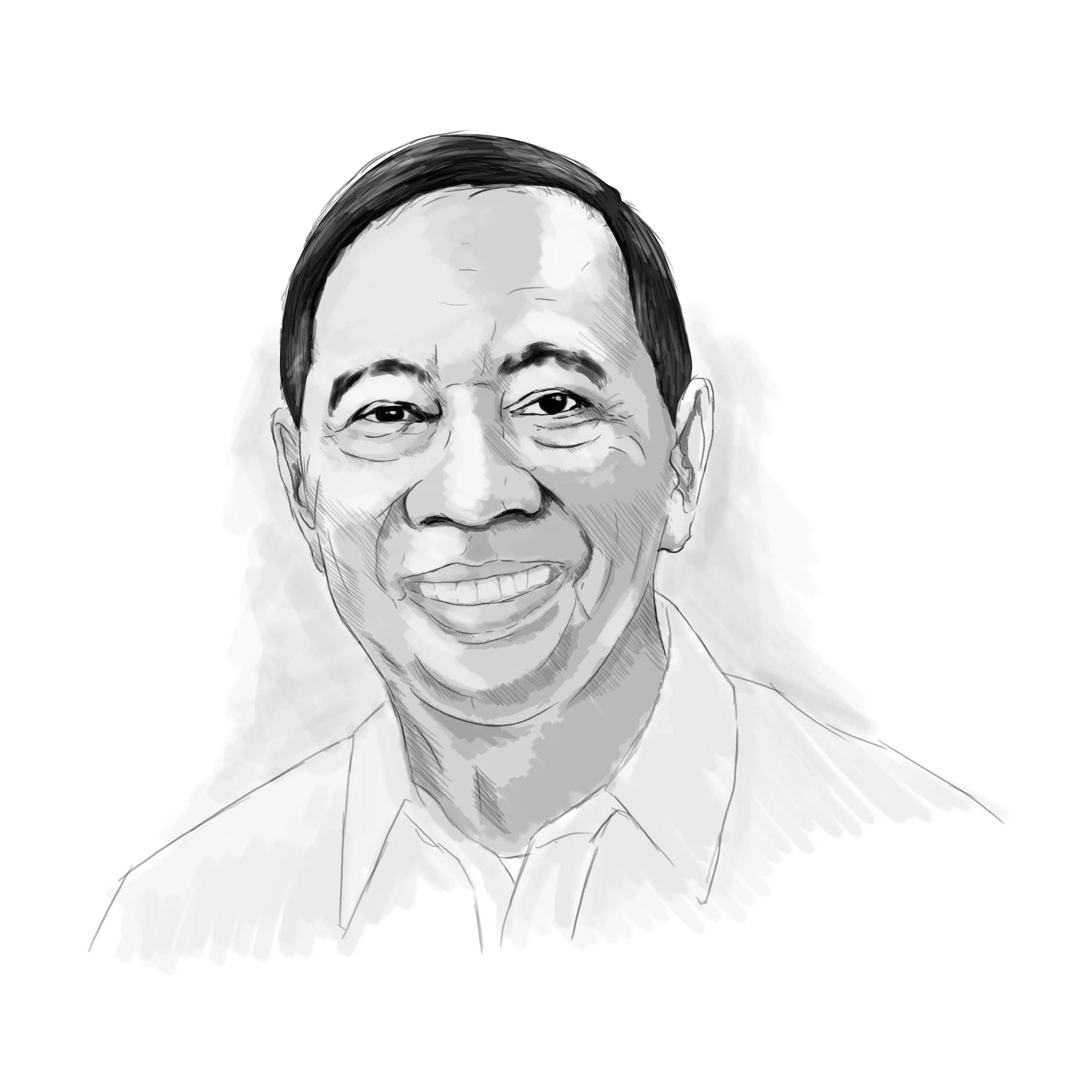
Jejomar Binay
 Philippines
politician•lawyer•badminton executive and administrator
Also known as: Jojo Binay, Jejomar C. Binay, Jesus Jose Cabauatan Binay
Birthday
November 11, 1942
Birth Sign
Scorpio
Birthplace
Manila, Philippines
Age
83 years old
About
Jejomar "Jojo" Binay Sr. is a Filipino lawyer and politician who served as the 13th Vice President of the Philippines from 2010 to 2016 under President Benigno Aquino III. Before his national ascent, he established himself as one of Asia's most effective city administrators by serving as the Mayor of Makati City for six consecutive terms between 1988 and 2010. His tenure transformed Makati into a global financial hub known for its efficient infrastructure and strict zoning laws.
Born in Manila to a working-class family, Binay entered public service immediately following the 1986 People Power Revolution when President Corazon Aquino appointed him as the Officer-in-Charge of Makati City. He later held the position of OIC Governor of Metro Manila before winning the mayoral election. As Vice President, he also chaired the Housing and Urban Development Coordinating Council and advised on overseas Filipino workers until resigning in 2015 due to policy disagreements with the administration. In 2026, he announced his return to politics running for a Senate seat under the United Nationalist Alliance.
Early Life & Background
Jesus Jose Cabauatan Binay was born on November 11, 1942, in Manila to Jesus Binay, a carpenter, and Josefa Cabauatan, a housewife. Growing up in a modest household instilled in him a strong sense of community and public service. He pursued higher education at the University of the Philippines where he earned a Bachelor of Arts degree in Political Science. He subsequently obtained his law degree from the Philippine Law School, laying the groundwork for a career that would blend legal expertise with administrative leadership.
His entry into high-level governance came abruptly in 1986 after the People Power Revolution ousted Ferdinand Marcos. President Corazon Aquino appointed him as the Officer-in-Charge of Makati City, making him the first Chief Executive of the city government following the regime change. From 1987 to 1988, he served as the OIC Governor of Metro Manila. These appointments marked his pivotal transition from a private citizen to a key figure in the nation's restored democracy, setting the stage for his historic run as an elected mayor starting in 1988.
Career Growth
Binay was elected Mayor of Makati City in 1988, beginning a historic run of six consecutive terms that lasted until 2010. During this period, he also chaired the Metropolitan Manila Development Authority (MMDA) from 1990 to 1991. His administration was characterized by major infrastructure projects and a focus on renewable energy, eventually converting city facilities to 100% renewable sources. This era cemented his reputation as a transformative local leader.
In 2010, he sought higher office and was elected Vice President of the Philippines alongside Joseph Estrada. Although Estrada lost the presidential race, Binay secured the vice presidency with 41.65% of the vote. He concurrently chaired the Housing and Urban Development Coordinating Council and acted as Presidential Adviser on Overseas Filipino Workers. He resigned from these posts in June 2015 citing disagreements with President Aquino and his cabinet. In 2016, he ran for President under the UNA partylist but lost to Rodrigo Duterte. He attempted a congressional bid in 2019 which he lost to Kid Peña. In 2022, he ran for the Senate, garnering over 13 million votes but placing 13th. By 2026, he has returned to campaigning for a Senate seat under the UNA partylist.
Career Timeline
Public Image & Style
Binay is portrayed as a resilient and pragmatic politician, often described as tough and unyielding. His public image is shaped by his long tenure in Makati and his willingness to challenge authority when necessary. Media coverage often focuses on his legal battles and political maneuvering, reflecting his status as a polarizing yet influential figure. His nickname "Jojo" is widely recognized across the country, serving as a brand of endurance and loyalty among his supporters.
Fame & Fandom (iFAMOUS Rankings)
Jejomar Binay is currently evaluated by the iFANN Global Fame Engine but holds no placement in the published rankings, meaning he does not appear on the Global Top 1,000 or any Top-100 scope list. This absence reflects a specific type of influence that transcends the metrics used to rank entertainment icons and global celebrities. While his name carries immense weight in Philippine political circles, it has not generated the sustained, cross-border consumption signals required for a numerical ranking this August.
The support base surrounding Binay operates entirely outside the realm of pop-culture fandoms. There is no formal fan club with a unique name, nor are there organized campaigns involving billboards or subway ads funded by enthusiasts. His followers identify primarily through his enduring nickname, "Jojo," or through their alignment with political structures like the UNA partylist. Unlike the fervent devotion seen among music stars, where crowds might shut down streets or fans might faint at appearances, Binay's interaction with his public occurs through official channels such as his Facebook page, which boasts over 2.2 million likes, and through tangible government initiatives.
This audience is rooted in traditional political loyalty rather than recreational adoration. Their engagement is demonstrated through massive voter turnouts in Makati City and nationwide elections rather than viral lore or ritualistic gatherings. The organization of his supporters mirrors the structure of a political machine, focused on policy outcomes like the city's transition to renewable energy or leadership within the Boy Scouts of the Philippines. Even the "nognog" reference found in recent advertisements serves as a campaign slogan connecting with the average Filipino voter rather than a piece of folk mythology born from spontaneous fan culture.
Interesting Facts and Legends
Jejomar Binay is a recognized badminton executive and administrator who has contributed significantly to the sport's development in the Philippines. His campaign ads in recent years utilized the term "nognog," a colloquial Filipino word meaning stubborn or persistent, which resonated deeply with voters regarding resilience. Under his leadership, Makati became one of the first cities in the Philippines to shift key government facilities to 100% renewable energy. He holds the record as the longest-serving mayor in Makati's history. The controversy surrounding confidential funds during his time as Vice President remains a defining narrative, with recent court cases in 2026 focusing on these allegations.
Notable Quotes
“I am returning to what I love most: public service.”
“The people of Makati have given me the mandate to serve them, and I will continue to do so with dedication.”
Family & Personal Life
Jejomar Binay has been married to Elenita Binay since their early days, long before his political prominence. The couple has remained together throughout his decades in public service. They have five children: Jejomar Jr., Jesus Jose Jr., Maria Elena, Jose Maria, and Jesus Jose III. The family is known for its close-knit nature, often appearing together at public events and political rallies. There are no publicly documented romantic relationships prior to or outside of his marriage to Elenita.
Notable Connections
Relationships & Dating History
Jejomar Binay has maintained a single, long-standing marriage throughout his life. He is married to Elenita Binay, and the couple has remained together since their early days, long before his rise to political prominence. They have five children together: Jejomar Jr., Jesus Jose Jr., Maria Elena, Jose Maria, and Jesus Jose III. There are no publicly documented romantic relationships prior to or outside of his marriage to Elenita. As of 2026, he remains married to Elenita Binay, and the family is known for its close-knit nature, often appearing together at public events and political rallies.
- MarriedElenita Binay1965 - presentCurrentLong-standing marriage; five children together.
Salary, Net Worth In 2026
$60 Million
iFANN Editorial Team estimate
iFANN currently estimates Jejomar Binay's net worth at approximately $60 million. This figure reflects a combination of real estate holdings, political salaries, and business ventures accumulated over decades of public service. His wealth is largely tied to significant property holdings in Makati and other prime locations in the Philippines. Additionally, his income stems from his long tenure as Mayor and Vice President, along with allowances and benefits associated with those offices.
Binay has also invested in various sectors including construction and utilities, linked to his administrative roles. Family wealth and potential inheritance contribute to his financial standing. While exact figures are not consistently reported by financial outlets due to the private nature of some assets. The iFANN Editorial Team's analysis of his earnings, ventures, and assets points to this valuation as of 2026.
Awards & Accolades
View 5 records, honours and achievementsKnown For
Vice President of the Philippines
2010 · Officeholder
Mayor of Makati City
1988 · Officeholder
Keywords
Sources
Quick Facts
- Profession
- politician, lawyer, badminton executive and administrator
- Born
- November 11, 1942
- Birthplace
- Manila, Philippines
- Gender
- Male
- Spouse
- Elenita Binay
- Birth Sign
- Scorpio
Personal Details
- Full Name
- Jesus Jose Cabauatan Binay
- Spouse
- Elenita Binay
- Children
- Jejomar Jr. · Jesus Jose Jr. · Maria Elena · Jose Maria · Jesus Jose III
- Education
- University of the Philippines (BA Political Science), Philippine Law School (JD)
Frequently Asked Questions
Who is Jejomar Binay?
How old is Jejomar Binay?
Is Jejomar Binay still in politics?
What is Jejomar Binay's net worth?
Has Jejomar Binay faced legal issues?
Social Media

Join the community
fans discussing