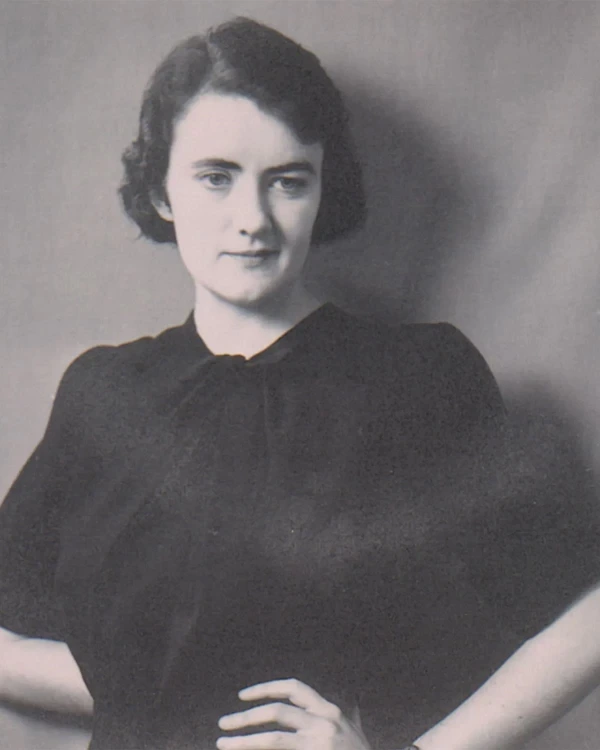
Jean Tatlock
 United States
Birthday
February 21, 1914
Birth Sign
Pisces
Birthplace
Ann Arbor, Michigan, USA
Age
Died at 29
About
Jean Tatlock was an American psychiatrist and political activist. She is primarily remembered for her intense romantic relationship with J. Robert Oppenheimer, the physicist who directed the Manhattan Project. Their connection, paired with Tatlock's membership in the Communist Party USA, drew intense FBI surveillance and later haunted Oppenheimer's security clearance hearings. Tatlock's story gained renewed attention after the 2023 film Oppenheimer, where Florence Pugh portrayed her. Despite her short life, Tatlock's influence on one of the most consequential figures of the 20th century ensures her place in history. She is portrayed as a complex, intelligent woman whose political activism and personal struggles intersected tragically with one of the most consequential scientific projects in history. Her story is known through historical accounts, biographies of Oppenheimer, and most recently the 2023 film that brought her to a global audience.
Early Life & Background
Jean Frances Tatlock was born on February 21, 1914, in Ann Arbor, Michigan, USA. She grew up in a scholarly household . Her father, John Strong Perry Tatlock, was a Harvard-trained philologist and a leading authority on Chaucer, who authored approximately 60 books . The family frequently relocated due to his academic career . When Jean was ten years old, they moved to Massachusetts, where she attended Cambridge Rindge and Latin School . During this period, she developed a close friendship with the future poet May Sarton, and their extensive correspondence revealed Tatlock's early exploration of her sexuality. She candidly wrote, "Last year there was a period where I thought I was a homosexual," though she later concluded, "I don't love you that way" . Tatlock also developed a fascination with actresses, often waiting at stage doors for autographs, and at one point considered pursuing an acting career herself .
After completing high school, Tatlock took a year off before commencing college, using the time to travel in Europe . This period proved formative, as she stayed with a friend in Switzerland who was a follower of Carl Jung . The unique experience of meeting and engaging with a community of psychoanalysts during this trip profoundly inspired her, shaping her future academic path and leading her to study psychology . Following her return, she enrolled at Vassar College in 1931, where she pursued her Bachelor of Arts degree, graduating in 1935. While she was at Vassar, her family moved back to California . During these college years, Tatlock began to experience significant mood swings and episodes of depression that would unfortunately persist and shadow her for the rest of her life . She corresponded extensively with friends in Massachusetts, openly expressing her concerns about her mental health and religious feelings . This foundational education paved the way for her professional training; following her graduation from Vassar, Jean Frances Tatlock continued her studies in medicine at Stanford University, specializing in psychiatry.
Career Growth
Tatlock's professional career as a psychiatrist was brief. After graduating from Stanford Medical School, she completed her residency at Mount Zion Hospital in San Francisco. She also wrote and reported for the Communist Party newspaper Western Worker, covering labor issues and leftist politics. Her political activism brought her into contact with J. Robert Oppenheimer in 1936, when she was a graduate student and he was a physics professor at UC Berkeley. Their relationship became the central drama of her adult life. She introduced Oppenheimer to Communist Party circles, which later became a liability for him during the Red Scare.
Tatlock's psychiatric practice was just beginning when her depression worsened. She broke off her relationship with Oppenheimer in 1939, but he visited her as late as 1943, spending the night at her apartment. The FBI had her under surveillance and tapped her phone. Her death in 1944 ended any further career development. In the decades since, her historical significance has grown, particularly after the 2023 film Oppenheimer brought her story to a new generation.
Career Timeline
Public Image & Style
During her lifetime, Tatlock was known to a small circle of academics, activists, and intelligence agents. She is not a figure with a fandom or celebrity image. In historical accounts, she is portrayed as brilliant, passionate, and tormented. Her appearance is rarely described in detail; photographs show a serious young woman with dark hair. The 2023 film Oppenheimer introduced her to millions, depicting her as Oppenheimer's intellectual equal and emotional anchor. Since then, she has become a subject of fascination for history buffs and film fans, who see her as a symbol of the personal costs of political suspicion and the tragic intersection of love and duty. No known magazine covers or awards existed during her lifetime. Her story is primarily known through historical accounts and the film.
Fame & Fandom (iFAMOUS Rankings)
Jean Tatlock currently holds no placement in the iFANN Global Top 1,000 rankings or any scope-specific list. The iFANN Global Fame Engine evaluated her profile in August 2026 and confirmed she does not occupy a numbered position among the world's most famous figures. While Florence Pugh brought her story to millions in the 2023 film Oppenheimer, this surge remains historical curiosity rather than active fandom engagement. There is no documented fanbase name for Jean Tatlock; her supporters are scattered observers of history rather than an organized collective with rituals or campaigns. Unlike living pop icons who drive chart pushes or birthday billboards, Tatlock lacks a community that organizes around her life through social media initiatives. Her legend is rooted in verified tragedy: the suicide on January 4, 1944, and her profound, albeit brief, intellectual bond with J. Robert Oppenheimer. Historians and biographers continue to debate whether her death was murder by intelligence agents or suicide by barbiturates, but the consensus remains on the latter. This narrative complexity keeps her relevant in cultural discussions without generating the commercial momentum required for a formal ranking. The absence of a named fandom reflects her status as a tragic figure from the mid-20th century, long before digital fan culture emerged. No fan campaigns have been launched in her name, nor do any rituals exist specifically for her legacy. Interest in her life persists as a quiet appreciation of a complex woman whose political activism and personal struggles intersected with one of history's most pivotal scientific endeavors.
Interesting Facts and Legends
Jean Tatlock died at age 29 in 1944, leaving behind no reliable financial records. As a psychiatry resident and part-time writer, she earned a modest income, and her estate held no commercial value. Her father edited the standard edition of Chaucer's Complete Poetical Works in 1912, and she inherited his love for literature, particularly John Donne's poetry. One of Donne's sonnets titled "Trinity" shares its name with the first atomic bomb test in 1945, leading many historians to believe the test was named partly as a tribute to her. Her suicide note included the line: "I think I would have been a liability all my life, at least I could take away the burden of a paralyzed soul from a fighting world." She also wrote: "I am disgusted with everything... To those who loved me and helped me, all love and courage. I wanted to live and to give and I got paralyzed somehow. I tried like hell to understand and couldn't." Her body was found by her father after he entered her apartment through a window when she did not answer the door. Some have suggested foul play, but most historians accept the suicide verdict. A widely retold story in her lore involves her role as Oppenheimer's "truest love," introducing him to Communist politics during their affair in the 1930s. Another persistent tale claims she was murdered by Manhattan Project security agents due to her political affiliations, though this remains a speculative conspiracy theory rejected by most scholars.
Notable Quotes
“I am disgusted with everything. To those who loved me and helped me, all love and courage. I wanted to live and to give and I got paralyzed somehow.”
“Last year there was a period where I thought I was a homosexual.”
“Adolescence is harder even than I had thought.”
“I think I would have been a liability all my life, at least I could take away the burden of a paralyzed soul from a fighting world.”
Family & Personal Life
Jean was the second child of John Strong Perry Tatlock and Marjorie Fenton Tatlock. Her father was a distinguished professor of English at the University of Michigan and a leading Chaucer scholar. Her mother had been one of his former students. Jean had an older brother, Hugh, who became a physician. The family moved frequently for her father's career, living in Ann Arbor, then San Francisco, then Cambridge, Massachusetts, before returning to California. Jean never married or had children. At the time of her death, she lived alone in a San Francisco apartment. Her father edited the standard edition of Chaucer's Complete Poetical Works in 1912 and authored The Mind and Art of Chaucer (1950). She inherited a great love of English literature from him, particularly the poetry of John Donne.
Notable Connections
Tatlock is most closely associated with J. Robert Oppenheimer, the physicist who directed the Manhattan Project. Their relationship from 1936 to 1939 was intense, and Oppenheimer later called her his "truest love." She also had a formative friendship with poet May Sarton, with whom she corresponded about sexuality and identity. Her father, John Strong Perry Tatlock, was a prominent Chaucer scholar. In popular culture, actress Florence Pugh portrayed Tatlock in Christopher Nolan's 2023 film Oppenheimer.
Relationships & Dating History
Jean Tatlock's most significant relationship was with J. Robert Oppenheimer, whom she met in 1936 when she was a graduate student at Stanford and he was a physics professor at UC Berkeley. She was 22, he was 32. Their connection was immediate and passionate; a friend described Tatlock as Oppenheimer's "truest love." Oppenheimer proposed marriage twice, but Tatlock refused both times. She introduced him to Communist Party circles, which later became a factor in his security clearance hearings. The relationship ended in 1939, but Oppenheimer visited her in San Francisco as late as 1943, spending the night at her apartment. Their relationship was under FBI surveillance, including phone tapping. Earlier, as a teenager, Tatlock had a close friendship with poet May Sarton that led her to question her sexuality. She explored these feelings in letters but ultimately concluded she was not homosexual. As of her death in 1944, Tatlock was single. No children resulted from her relationship with Oppenheimer.
- RumouredMay Sarton1928 - 1934Childhood friend; Tatlock questioned her sexuality in correspondence with Sarton.
- DatedJ. Robert Oppenheimer1936 - 1939Met as graduate student and professor; Oppenheimer proposed twice but Tatlock refused; FBI surveilled them.
Death & Aftermath
Died
January 4, 1944 (aged 29)
Death Place
Unknown
Cause of Death
Unknown
Net Worth (Estate Value)
$100 Thousand
iFANN Editorial Team estimate
Jean Tatlock died at age 29 in 1944, and no reliable records of her personal finances survive. As a psychiatry resident and part-time writer for a small newspaper, she would have earned a modest income. Her estate was not commercially significant. Posthumously, her story has not generated revenue; any interest is historical or cinematic. The 2023 film Oppenheimer brought renewed attention, but Tatlock's estate does not profit from it. Per iFANN's editorial analysis, her net worth in 2026 is estimated at $100 Thousand, reflecting the limited financial footprint of a short life cut short by suicide. No estate value is publicly documented, and her story is not commercially exploited for revenue.
Awards & Accolades
Known For
Relationship with J. Robert Oppenheimer
1936 · Romantic partner
Communist Party activism
1936 · Member and writer for Western Worker
Keywords
Sources
Quick Facts
- Profession
- psychiatrist
- Born
- +1914-02-21
- Birthplace
- Ann Arbor
- Died
- +1944-01-05
- Death Place
- San Francisco
- Gender
- Female
- Birth Sign
- Pisces
Personal Details
- Full Name
- Jean Frances Tatlock
- Education
- Vassar College (BA, 1935); Stanford University (MD, psychiatry)
Frequently Asked Questions
Who was Jean Tatlock?
What happened to Jean Tatlock?
Did Oppenheimer really love Jean Tatlock?
Was Jean Tatlock a Communist?
How is Jean Tatlock portrayed in Oppenheimer?
Similar People
Join the community
fans discussing