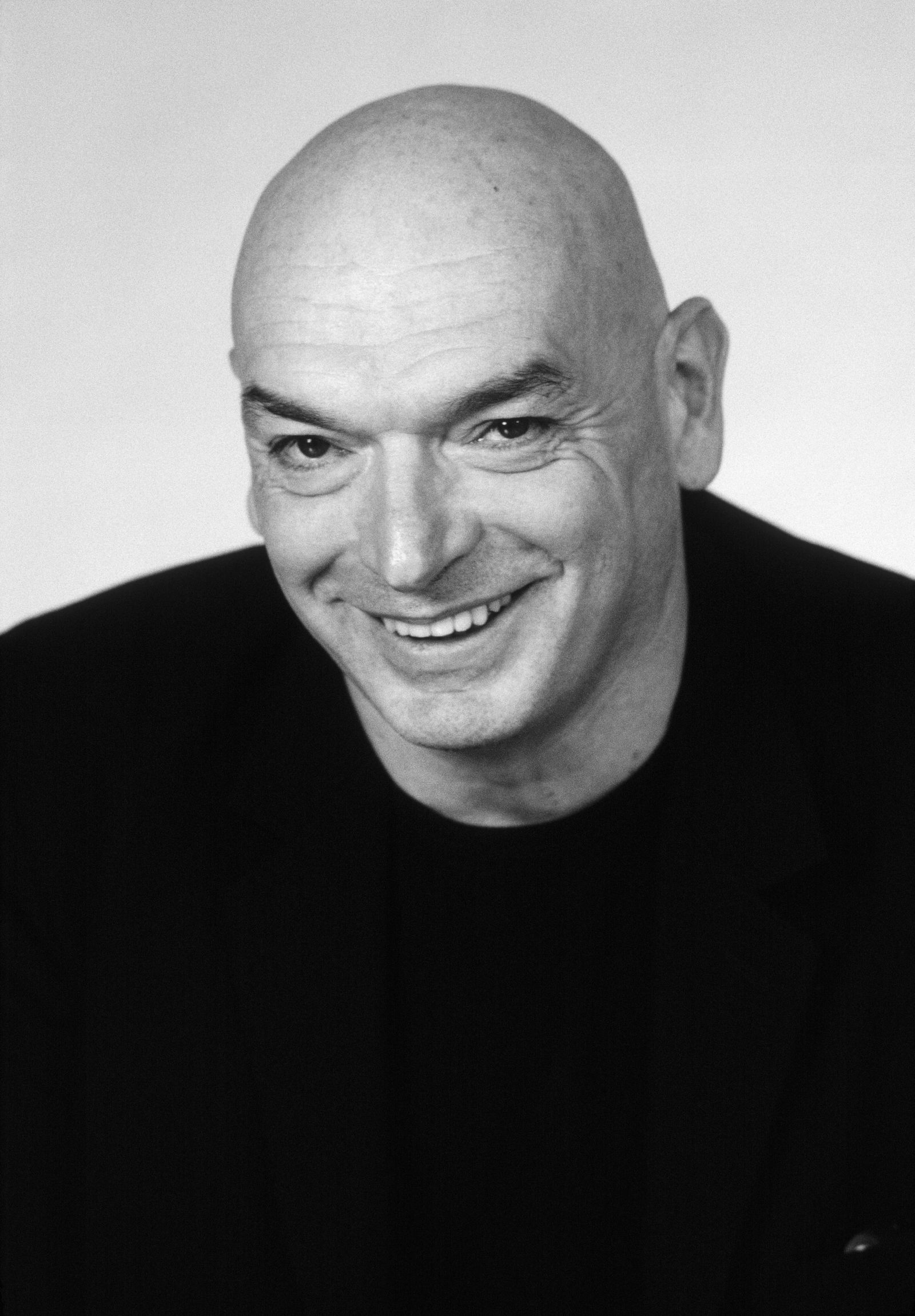
Jean Nouvel
 France
Birthday
August 12, 1945
Birth Sign
Leo
Birthplace
Fumel, France
Age
81 years old
About
Jean Nouvel is a French architect whose career has redefined how buildings interact with light, context, and illusion. Born on August 12, 1945, in Fumel, France, he is one of the most influential figures in contemporary architecture, known for projects that often defy easy categorization. Nouvel's work spans museums, concert halls, and skyscrapers across the globe, earning him the Pritzker Prize in 2008, the Wolf Prize in Arts, and the Aga Khan Award, among others. His designs frequently play with transparency, reflection, and the visual landscape of their surroundings, creating spaces that shift with the time of day and the viewer's perspective.
Today, Nouvel leads Ateliers Jean Nouvel, a large practice with offices in Paris, London, New York, and other cities, working on projects in over a dozen countries. He is celebrated for landmark buildings like the Institut du Monde Arabe, the Louvre Abu Dhabi, and the Torre Agbar. Fans and critics alike admire his ability to make each structure feel like a unique response to its site, rather than a signature style repeated. Nouvel's influence extends beyond architecture into product design and urban planning, and he remains a vital voice in discussions about the future of cities. His work often challenges conventional boundaries, using innovative materials and technologies to create buildings that are both functional and artistic.
Early Life & Background
Jean Nouvel grew up in southwestern France, the son of a history teacher and an English teacher. His family moved often because of his father's administrative role, and when Nouvel was eight they settled in Sarlat, a town he later described as a "medieval town with a lot of architecture." That early exposure to dense, historic urban fabric left a lasting impression.
His parents initially pushed him toward mathematics and languages, aiming for a career in education or engineering. But at sixteen, a professor introduced him to drawing and the arts, and Nouvel was hooked. A family compromise allowed him to study architecture, seen as a safer bet than pure art. He failed the entrance exam at the École des Beaux-Arts in Bordeaux, so he moved to Paris, where he won first prize in a national competition to attend the École Nationale Supérieure des Beaux-Arts in 1966. While studying, he worked as an assistant to architects Claude Parent and philosopher Paul Virilio, who made him a project manager on an apartment complex after just a year.
Nouvel earned his degree in 1971 and opened his first practice in 1970, initially with François Seigneur. In the mid-1970s, he co-founded the Mars 1976 movement, a collective that opposed corporatism in architecture, and helped establish the Syndicat de l'Architecture, France's first labor union for architects. These early years were marked by a desire to reform the profession from within, a theme that would continue throughout his career.
Career Growth
Jean Nouvel's breakthrough came in 1987 with the completion of the Institut du Monde Arabe in Paris. The building's south facade features a grid of metal screens that open and close like camera apertures, a striking fusion of technology and Arab geometric patterns. It won him the Aga Khan Award and set the tone for a career of bold experimentation.
In the 1990s, he completed the renovation of the Opéra National de Lyon (1993) and the Fondation Cartier pour l'Art Contemporain (1994), a glass-and-steel structure that blurs the boundary between inside and out. He also designed the Euralille shopping center and the Cartier Factory, experimenting with screen-printed glazing and holographic imagery. The Torre Agbar in Barcelona (2005) and the Guthrie Theater in Minneapolis (2006) followed, each pushing formal boundaries.
His later major works include the Copenhagen Concert Hall, One Central Park in Sydney with its vertical gardens, and the Louvre Abu Dhabi (2017), a museum with a dramatic domed roof that filters sunlight through geometric perforations. Throughout, Nouvel has formed multiple partnerships, eventually establishing Ateliers Jean Nouvel, a firm that grew to over 140 staff in Paris alone. As of 2008, the firm was working on more than 40 active projects in 13 countries.
Career Timeline
Public Image & Style
Jean Nouvel is widely regarded as one of the most prominent architects of his era, often placed in the "pantheon of architectural superstars." The media portrays him as a boldly experimental designer whose work defies easy labels. His signature style involves constructing spatial illusions, transforming the picture window into an image screen, and using glass curtain walls to create spaces that constantly reconfigure as light changes. He designs buildings to "create a visual landscape" that fits their context, sometimes by contrasting sharply with the surroundings. Fans and critics admire his intellectual rigor and his willingness to take risks, even when projects face delays or controversy. While he has no official fandom name, his buildings attract architecture enthusiasts who travel to see them.
Fame & Fandom (iFAMOUS Rankings)
Jean Nouvel commands a sphere of influence defined not by viral moments or collective rituals, but by the silent authority of his built environment. His audience consists primarily of architects, critics, and patrons who trace their inspiration through the glass and steel of his global portfolio rather than social media hashtags or fan clubs. Unlike pop stars, he cultivates no organized fandom with a specific name, nor do his supporters engage in coordinated streaming pushes or birthday campaigns. The reverence for his work manifests in the crowded galleries of his exhibitions and the professional discourse surrounding his firm, Ateliers Jean Nouvel. While the world watches his buildings rise from Paris to Abu Dhabi, there is no grassroots movement dedicated solely to him as an individual personality; the admiration belongs to the structures themselves. Recent retrospectives in Shanghai have highlighted this unique dynamic, where the architecture serves as the primary narrative without the need for celebrity mythology. Despite his status as a Pritzker laureate and a defining voice of contemporary design, the iFANN Global Fame Engine has evaluated his current standing and determined that he does not hold a placement in the published rankings, meaning he currently lacks a numeric rank within the Global Top 1,000 or any Top-100 scope list.
Interesting Facts and Legends
Jean Nouvel often slipped out to the cinema as a child, an experience that later shaped his architectural thinking about light and narrative. He designed a limited-edition flacon for Yves Saint Laurent's L'Homme fragrance in 2008, extending his creative reach beyond concrete into perfume bottles. His "Endless Tower" project was conceived to disappear into the Parisian sky by grading materials from black to gray to white. Nouvel frequently uses perforated metal and screen-printed glazing to evoke the pixilated quality of computer and television screens. Sometimes he makes buildings resemble boats, trains, or airport runways, as seen in the Onyx Center. He claims Mies van der Rohe as his "artistic father," admiring his mastery of glass and light. A defining legend of his career involves the Louvre Abu Dhabi, where he engineered a massive dome structure to create a "rain of light" effect over the museum floors. In June 2026, the Museum of Art Pudong opened "Jean Nouvel: Without the Artist, Architecture Disappears," the largest exhibition ever dedicated to him, further cementing the mythos that his buildings define skylines from Paris to Manhattan.
Notable Quotes
“Sarlat is a medieval town with a lot of architecture.”
“I try to create a visual landscape that fits the context.”
“Architecture is not about style, it's about the way light falls on things.”
Family & Personal Life
Jean Nouvel was born to Roger Nouvel, a history teacher who became a chief school superintendent, and Renée Nouvel, an English teacher. He has three children. His sons are Bertrand (born 1979) and Pierre (born 1981), both from his relationship with filmmaker Odile Fillion. Bertrand pursued post-doctorate work in computer science at the University of Chiba in Japan, while Pierre became a director, producer, and theater designer at his own company, Factoid. His daughter, Sarah (born 1994), is from his marriage to Catherine Richard. Nouvel currently lives with Swedish architect Mia Hägg, whose practice Habiter Autrement is based in Paris.
Notable Connections
Jean Nouvel trained under architect Claude Parent and urban planner Paul Virilio, both of whom deeply influenced his early thinking. His first architectural partner was François Seigneur, and he later collaborated with Michel Pelissie from 1994. Nouvel has often cited Mies van der Rohe as his "artistic father" for his mastery of glass and light. His personal life has included relationships with filmmaker Odile Fillion and architect Mia Hägg, the latter a practicing architect in Paris.
Relationships & Dating History
Jean Nouvel has been married twice and has had a long-term relationship with Swedish architect Mia Hägg. His first partner was filmmaker Odile Fillion, with whom he had two sons, Bertrand (born 1979) and Pierre (born 1981). The relationship ended, and he later married Catherine Richard, with whom he had a daughter, Sarah (born 1994). That marriage also ended in divorce. As of 2026, Nouvel is in a relationship with Mia Hägg, who runs the architecture practice Habiter Autrement in Paris. The couple has been together for several years, though they have not publicly confirmed marriage.
- DatedOdile Fillion1975 - 1985Filmmaker; mother of his two sons, Bertrand and Pierre.
- MarriedCatherine Richard1988 - 2000Second wife; mother of his daughter Sarah.
- In a RelationshipMia Hägg2005 - presentCurrentSwedish architect; partner as of 2026.
Salary, Net Worth In 2026
$50 Million
iFANN Editorial Team estimate
iFANN currently estimates Jean Nouvel's net worth at $50 Million. This figure reflects his decades of high-profile commissions and the global reach of his firm. The bulk of his wealth comes from architectural fees on major projects like the Louvre Abu Dhabi, the Torre Agbar, and the Copenhagen Concert Hall, each involving budgets in the hundreds of millions. Ateliers Jean Nouvel, with offices in Paris, London, New York, and other cities, brings in substantial revenue from its portfolio of museums, concert halls, and commercial buildings. Nouvel also earns from design work beyond architecture, such as the limited-edition Yves Saint Laurent fragrance bottle he created in 2008. His practice has grown steadily since the 1990s, and his net worth has climbed accordingly. While exact figures are private, the combination of large-scale projects, international reach, and high-profile awards has made him one of the wealthier architects in the world.
Awards Won (7)
Jean Nouvel has won architecture's most prestigious honors. He received the Pritzker Architecture Prize in 2008, the Aga Khan Award for Architecture for the Institut du Monde Arabe, and the Wolf Prize in Arts in 2005. He also took home the Arnold W. Brunner Memorial Prize and the International Highrise Award in 2006, and in France, the Gold Medal from the French Academy of Architecture and the National Grand Prize for Architecture.
2008 · Architecture
Lifetime achievement
2006 · Architecture
Torre Agbar
Known For
Institut du Monde Arabe
1987 · Architect
Fondation Cartier
1994 · Architect
Torre Agbar
2005 · Architect
Louvre Abu Dhabi
2017 · Architect
Keywords
Sources
Quick Facts
- Profession
- architect, teacher
- Born
- August 12, 1945
- Birthplace
- Fumel, France
- Gender
- Male
- Birth Sign
- Leo
- Children
- 3
- Education
- École Nationale Supérieure des Beaux-Arts
Personal Details
- Full Name
- Jean Nouvel
- Children
- 3
- Education
- École Nationale Supérieure des Beaux-Arts (ENSBA), Paris (degree in 1971)
Frequently Asked Questions
What is Jean Nouvel famous for?
Is Jean Nouvel still alive?
How many buildings has Jean Nouvel designed?
What style of architecture is Jean Nouvel known for?
What awards did Jean Nouvel win?
Similar People
Join the community
fans discussing