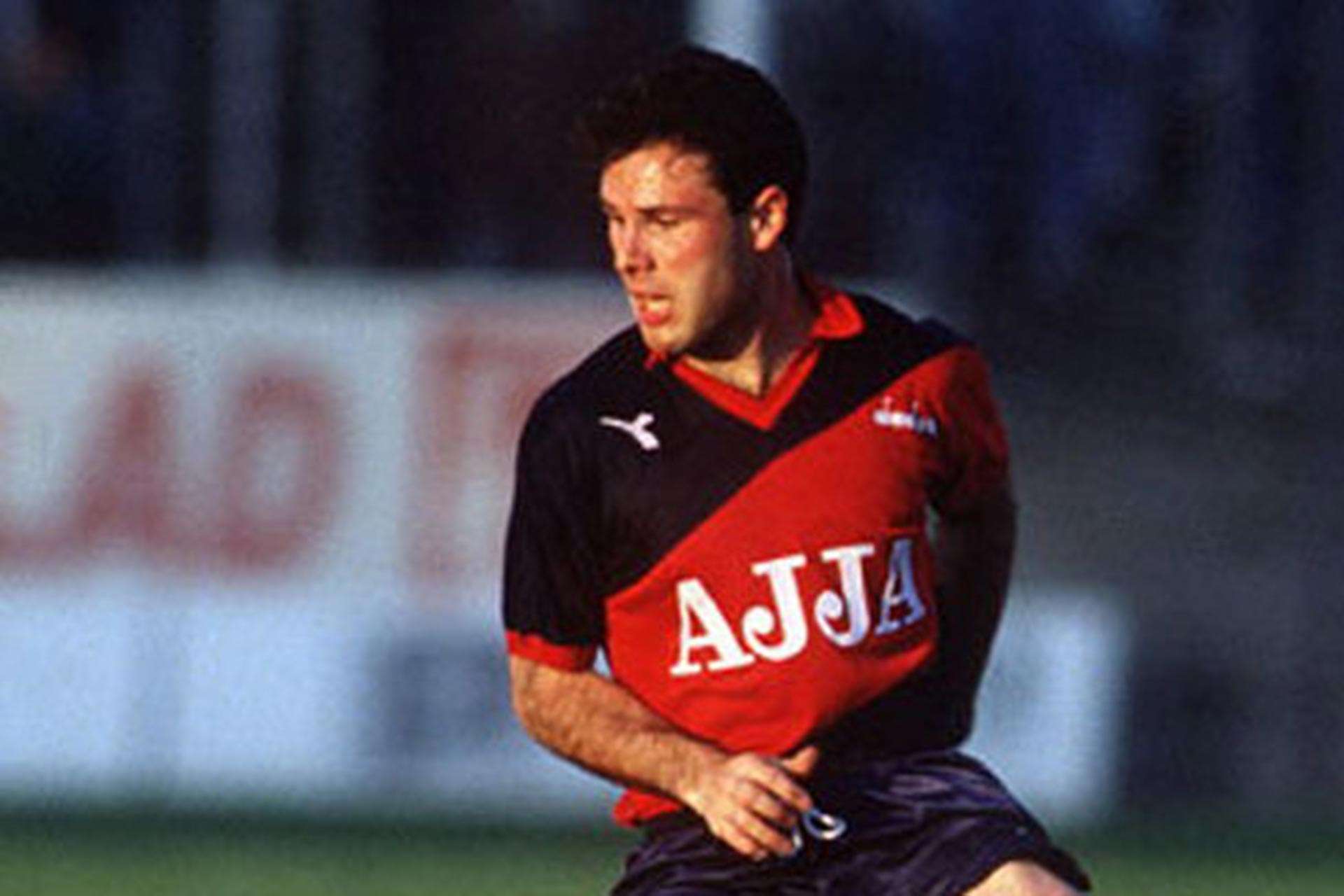
Jean-Marc Bosman
 Belgium
Belgian former professional footballer
Birthday
October 30, 1964
Birth Sign
Scorpio
Birthplace
Montegnée, Belgium
Age
61 years old
About
Jean-Marc Bosman is a Belgian former professional footballer whose name became shorthand for the most transformative legal ruling in modern sports. Born October 30, 1964, in Montegnée, Belgium, he played as a midfielder for clubs like Standard Liège and RFC Liège, but his playing career was modest. What made him historic was the 1995 European Court of Justice decision that bears his name, which abolished transfer fees for out-of-contract players and struck down quotas on foreign EU players. That ruling reshaped the economics of football across Europe, giving players unprecedented freedom of movement and bargaining power.
Bosman himself did not profit from the upheaval he caused. In the decades since, he has lived in relative obscurity near Liège, reportedly struggling financially while the industry he changed grew into a multibillion-euro business. His story is one of a reluctant revolutionary: a player who just wanted to switch clubs, ended up rewriting the rulebook, and was left behind by the very system he transformed.
Early Life & Background
Jean-Marc Bosman grew up in the Liège region of Belgium, where football was a way of life. He came up through the youth ranks and broke into the Belgian First Division as a midfielder, first with Standard Liège and later with RFC Liège. By 1990, he was a regular at RFC Liège, but his career was about to take a strange turn.
That year, his contract expired and he arranged a move to Dunkerque, a French second-division club. The transfer collapsed when RFC Liège demanded a transfer fee that Dunkerque refused to pay. Under the rules at the time, clubs could hold on to out-of-contract players by demanding fees, effectively trapping them. Bosman, who had no intention of becoming a test case, simply wanted to play in France. When the move fell through, he found himself without a club and without income. He decided to challenge the system, starting a legal fight that would consume five years of his life.
Career Growth
The legal battle that began in 1990 ended on December 15, 1995, when the European Court of Justice ruled in Bosman's favour. The decision, formally known as Union Royale Belge des Sociétés de Football Association ASBL v Jean-Marc Bosman, held that transfer fees for out-of-contract players violated the European Union's freedom of movement for workers. It also struck down restrictions on the number of foreign EU players clubs could field.
The ruling transformed football overnight. Players gained the right to move on a free transfer when their contracts ended, and clubs could no longer stockpile talent by blocking exits. The balance of power shifted from clubs to players, and transfer fees for in-contract players soared as clubs sought to secure talent earlier. The decision applied to all professional sports in the EU, not just football, and is still cited in sports law cases today.
Bosman's own playing career never recovered. He continued at lower levels, finishing at CS Visé, where he played until 2015, long after the ruling that made him famous. His legacy is not in goals or trophies but in the freedom every professional footballer now enjoys.
Career Timeline
Public Image & Style
Jean-Marc Bosman's public image is that of a tragic figure: a man who changed football forever but was personally left behind. Media portrayals consistently frame him as a reluctant revolutionary whose sacrifice benefited an entire industry. The Brussels Times described his story as 'a Belgian footballer's battle with the beautiful game,' while Goal.com called it 'bitter,' noting that he made every professional player richer while remaining a poor man himself. He has no official fandom, but his legacy is honoured through retrospectives and legal scholarship. His name is invoked whenever players move on free transfers, a constant reminder of the man who made it possible.
Fame & Fandom
Jean-Marc Bosman commands a unique form of reverence that exists entirely outside the traditional machinery of celebrity worship. He possesses no fanbase in the conventional sense, with no organized clubs, birthday billboards, or streaming chart pushes to his name. Unlike modern superstars who cultivate armies of followers, Bosman's legacy is defined by a singular legal victory rather than personal charisma. The collective body of professional footballers worldwide benefits from his ruling, yet they do not organize as a fan club dedicated to him personally. His public image remains that of a tragic figure: a man who changed the economics of an entire industry while remaining financially modest and anonymous near Liège. Media portrayals consistently frame him as a reluctant revolutionary whose sacrifice benefited millions while he stayed behind. This absence of a formal fandom distinguishes him sharply from athletes who dominate headlines through social media engagement or commercial endorsements. Despite the billions generated by the Bosman Ruling, there are no documented fan campaigns, charity drives in his name, or specific rituals performed in his honor. The story he tells is one of quiet endurance rather than loud celebration. iFANN has evaluated this profile thoroughly. Jean-Marc Bosman does not currently hold a placement in the published rankings (Global Top 1,000 or a Top-100 scope list). His standing reflects a global recognition of historical impact rather than active cultural consumption.
Interesting Facts and Legends
Bosman's legal battle was never about revolution; he simply wanted to move clubs when his contract expired. The fight lasted five years, stretching from 1990 to the final ruling in 1995. Before the decision, many leagues limited foreign players to just three per team, a quota that vanished overnight. Despite the ruling being worth billions to the football industry, Bosman himself did not benefit financially and reportedly lived in modest circumstances near Liège. The case's full name, Union Royale Belge des Sociétés de Football Association ASBL v Jean-Marc Bosman, remains a mouthful that law students across Europe still learn today. Bosman's last documented club was CS Visé, where he played until 2015, well into his 50s, a reflection of his enduring love for the game. A verified event centers on the 1990 incident where RFC Liège demanded a transfer fee for a player whose contract had ended, leading to his ban from playing. The European Court of Justice eventually declared these fees illegal, dismantling the traditional transfer system and allowing players to move freely at the end of their contracts. Recent news from late 2025 marks the 30th anniversary of the ruling, re-examining his legacy as players like Cristiano Ronaldo became billionaires while Bosman remained struggling. One unverified claim from December 2025 suggested he was under house arrest, but this appears to be a conflation with other reports describing his quiet life in Awans.
Notable Quotes
“I just wanted to play football. I never wanted to change the world.”
Family & Personal Life
Details about Jean-Marc Bosman's family are scarce. He has lived near Liège, Belgium, in recent years, but public records do not confirm whether he is married, has children, or has siblings. His personal life has remained private, with media coverage focused almost entirely on his legal case and its aftermath. Reports from the Brussels Times suggest he has felt betrayed by people who associated with him after the ruling, but specific family information is not documented.
Notable Connections
Relationships & Dating History
Public information about Jean-Marc Bosman's romantic life is extremely limited. No credible sources document any public relationships, marriages, or partnerships. His personal life has remained private, with media coverage focused almost exclusively on his legal case and its aftermath. As of 2026, his relationship status is unknown to the public.
Salary, Net Worth In 2026
$1 Million
iFANN Editorial Team estimate
iFANN currently estimates Jean-Marc Bosman's net worth at $1 Million, a figure that reflects his modest post-football life rather than the billions his ruling generated for the sport. Reports consistently describe him as living in relative poverty, with the Brussels Times and Goal.com both highlighting that he did not benefit financially from the changes he brought about. His income sources have been limited to his playing career at lower-level clubs and occasional media appearances related to his legal legacy. In 2026, his net worth remains modest, with no major business ventures or endorsements. The contrast between his impact and his personal finances is stark: he made every professional player richer, yet he has lived as a poor man. His estate, if any, holds no significant assets, and no posthumous earnings are expected.
Awards & Accolades
View 3 records, honours and achievementsKnown For
Bosman ruling
1995 · Plaintiff
Keywords
Sources
Quick Facts
- Profession
- Belgian former professional footballer
- Born
- October 30, 1964
- Birthplace
- Montegnée, Belgium
- Gender
- Male
- Birth Sign
- Scorpio
- Net Worth
- $1 Million
Frequently Asked Questions
What is Jean-Marc Bosman famous for?
What happened to Jean-Marc Bosman after the ruling?
How old is Jean-Marc Bosman in 2026?
Why did Jean-Marc Bosman take his case to court?
What is Jean-Marc Bosman's net worth?
Join the community
fans discussing