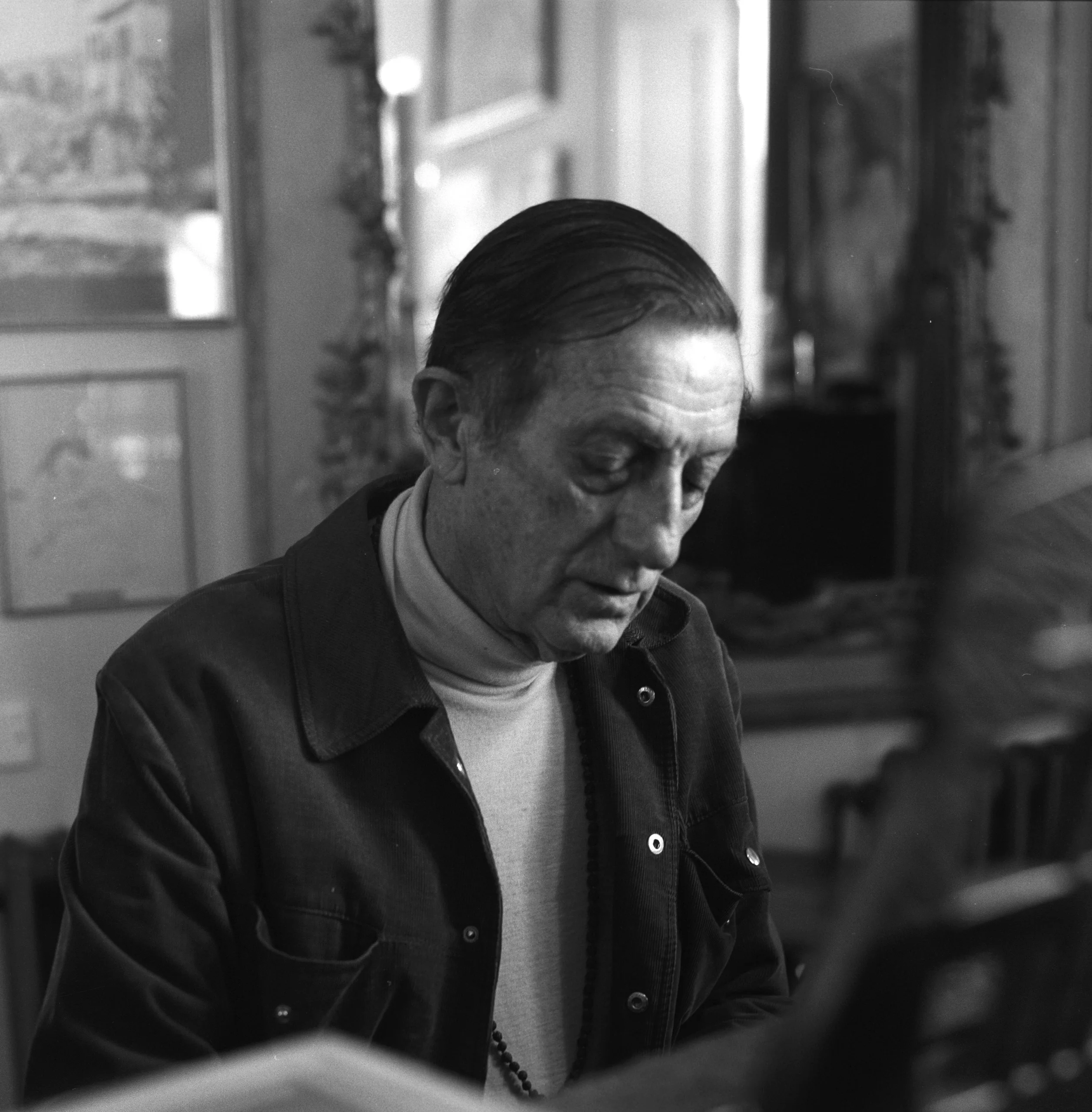
Jean Daniélou
 France
theologian•writer•Catholic priest
Also known as: Jean-Guenolé-Marie Daniélou
Birthday
May 14, 1905
Birth Sign
Taurus
Birthplace
Neuilly-sur-Seine, France
Age
Died at 69
About
Jean-Guenolé-Marie Daniélou was a French Jesuit cardinal, patrologist, and theologian. Born in Neuilly-sur-Seine in 1905, he became one of the twentieth century's most influential Catholic thinkers. A member of the Académie française, Daniélou wrote extensively on early Christianity and played a key role in the ressourcement movement that shaped the Second Vatican Council. He died in Paris on May 20, 1974, leaving a legacy of scholarship that bridged ancient tradition and modern thought.
As a cardinal, Daniélou brought patristic learning to the highest levels of the Church. His appointment as a peritus at Vatican II and his election to the Académie française in 1972 marked him as a rare figure who moved between cloistered scholarship and public intellectual life. His work remains a touchstone for theologians and historians of early Christianity.
Early Life & Background
Jean Daniélou was born on May 14, 1905, in Neuilly-sur-Seine, a wealthy Paris suburb, into a family steeped in Catholic intellectual culture. His father, Charles Daniélou, was a politician, and his mother, Madeleine Clamorgan, was an educator, exposing him to France's finest religious and academic traditions. His Breton middle name, Guenolé, connected him to the Celtic Christian heritage of Brittany, a region his family traced its roots to.
He studied at the Sorbonne and the University of Lyon, where he built the scholarly foundations that would define his life. His early interests centered on theology, patristics, and history. The pivotal decision came when he entered the Society of Jesus in 1929, committing to a life of scholarship and priestly service. His Jesuit formation coincided with the rise of the ressourcement movement, a theological current that sought to renew Catholic theology by returning to the Church Fathers. Alongside contemporaries like Henri de Lubac, Daniélou became one of the movement's most prominent voices.
Career Growth
Daniélou's career unfolded as a series of intellectual milestones. In the 1940s, he co-founded the Sources Chrétiennes series, which made the Church Fathers accessible in critical editions with French translations. This project transformed patristic studies and had enormous influence on Catholic theology.
During the 1960s, he served as a peritus at the Second Vatican Council (1962–1965), helping shape key documents on scripture, tradition, and the Church's relationship to the modern world. His theological vision bridged ancient tradition and contemporary questions. In 1969, Pope Paul VI named him a cardinal, and in 1972 he was elected to the Académie française, one of the highest honors for a French intellectual.
His major works include The Theology of Jewish Christianity, Gospel Message and Hellenistic Culture, and Prayer as a Political Problem. His scholarship explored the meeting of biblical faith with Greek and Jewish thought, and he was particularly concerned with the persistence of pagan myth in Christian thinking. His legacy has been reassessed in recent decades, with commentators noting that he accurately diagnosed many of the problems that continue to trouble the Church today. A 2025 critical review of Prayer as a Political Problem examined his treatment of Christianity's role in an increasingly secular world.
Career Timeline
Public Image & Style
Jean Daniélou's public image is that of a serious, rigorous theologian, a scholar's scholar. He is remembered for his intellectual breadth, his commitment to patristic studies, and his role in shaping the Second Vatican Council. His signature contribution was the ressourcement approach: returning to the Church Fathers to renew modern Catholic theology.
His writing style was dense, scholarly, and historically grounded. His "fandom" consists of Catholic theologians, seminarians, historians of early Christianity, and scholars of Vatican II. There is no official fandom name, but his readers form part of the broader community interested in ressourcement theology and the nouvelle théologie movement. His work is particularly revered in traditionalist Catholic circles, where he is seen as a defender of orthodoxy against progressive excesses. A 2015 First Things essay titled "Despising Jean Danielou" highlighted the hostility he faced from progressive Catholics during his lifetime.
Fame & Fandom (iFAMOUS Rankings)
Jean Daniélou remains a figure of profound theological weight, ranking as the 45th most famous person in Pastors according to the iFANN Global Fame Rankings. This placement, holding steady from the previous cycle, underscores his enduring resonance within ecclesiastical circles despite decades passing since his death. While he never courted the adulation reserved for pop icons, his influence permeates the highest levels of Catholic scholarship. The iFANN Global Fame Rankings track global attention across media coverage, search, and consumption signals worldwide, placing him firmly among the most recognized clergy of his era. His "fanbase" consists not of cheering crowds or organized clubs with branded merchandise, but of scholars, theologians, and seminarians who meticulously study his works like *The Bible and the Liturgy*. These readers form a dedicated, albeit quiet, intellectual community that treats his texts as essential guides rather than entertainment. There is no formal name for this group; they are simply the inheritors of a rigorous patristic tradition. Unlike modern celebrities whose legacies are built on viral moments or chart-topping hits, Daniélou's fame rests on the slow burn of academic citation and theological renewal. He was reviled by some progressive contemporaries during his lifetime, yet history has vindicated his contributions to the ressourcement movement. Today, his reputation stands solid, anchored by his role as a peritus at Vatican II and his election to the Académie française. The story of his death in a woman's apartment in 1974 once cast a long shadow, a scandalous tale that overshadowed his legacy for decades before historians began to reassess the context. That narrative, now understood as a complex mix of pastoral duty and tragic misunderstanding, adds a layer of human drama to his otherwise austere public image.
Interesting Facts and Legends
His full name, Jean-Guenolé-Marie, reflects a deep Breton Catholic heritage, with Guenolé honoring a specific Breton saint. As one of the founders of the Sources Chrétiennes series, he revolutionized how the Church Fathers were studied globally. He moved within the same Jesuit theological circle as Henri de Lubac, whose beatification cause the French bishops voted to open in 2023. Despite being a cardinal, he faced sharp criticism from progressive contemporaries during his lifetime. A 2012 conference broke the long silence regarding the circumstances of his death, contributing significantly to his historical vindication. For decades, a lurid legend persisted that he died in a prostitute's house in Paris on July 26, 1974. This story painted a picture of a scandalous end for a leading church voice, often cited in tabloids and early histories. Recent scholarship suggests the location was likely linked to his pastoral duties rather than illicit activity, though the exact details remain debated. The Wikipedia page receives modest but steady traffic, with approximately 751 views in the last 30 days and 2,975 views over 60 days as of August 2026. The scandal surrounding his final hours generated enough controversy to overshadow his scholarly achievements for generations until recent re-evaluations restored his standing.
Notable Quotes
“The Church must return to its sources to renew itself.”
“The Fathers are not a museum piece but a living spring.”
“We must understand the past to speak to the present.”
Family & Personal Life
Jean Daniélou came from a distinguished French Catholic family. His father, Charles, was a politician and his mother, Madeleine, an educator, placing him within the intellectual elite of French society from birth. His middle name, Guenolé, reflected his Breton heritage, honoring a Breton saint. He had siblings, though their names are not well-documented.
As a Jesuit priest and cardinal, Daniélou took vows of celibacy and poverty, so he had no wife or children. His family was his religious order and the Church. His upbringing in Neuilly-sur-Seine exposed him to the finest of French education and religious thought, which shaped his lifelong commitment to scholarship.
Notable Connections
Jean Daniélou was closely associated with Henri de Lubac, a fellow Jesuit theologian and colleague in the ressourcement movement. The French bishops voted to open de Lubac's beatification cause in 2023. Daniélou also worked with Hans Küng, though Küng took a more progressive path. Pope Paul VI appointed him cardinal in 1969, and the future Pope Benedict XVI engaged with his thought, with commentary exploring their intellectual relationship.
Relationships & Dating History
As a Jesuit priest and cardinal, Jean Daniélou took vows of celibacy and had no known romantic relationships. The only relationship controversy in his life concerned the circumstances of his death: he died of a heart attack in the apartment of a woman in Paris's 7th arrondissement on May 20, 1974. Contemporary press reports insinuated scandal, but the French Church hierarchy strongly defended him.
Later investigations have suggested that Daniélou was in the woman's apartment for charitable purposes, reportedly to give her money to secure the release of her husband from prison, and that the scandalous interpretation was largely unjust. A 2012 conference and subsequent scholarship have largely vindicated him. At the time of his death, he was unmarried and celibate, as his religious vows required.
Death & Aftermath
Died
May 20, 1974 (aged 69)
Death Place
Paris, France
Cause of Death
Heart failure
Jean Daniélou died in Paris on May 20, 1974, at the age of sixty-nine. Official records state the cause was heart failure, yet a conflicting account circulating in retrospective journalism suggests he was found dead in a prostitute's house. This detail led some commentators to describe his passing as occurring in disgrace. The discrepancy likely contributed to a notable silence regarding the scandalous nature of his final days within official ecclesiastical channels.
Standard practice for a French Cardinal would have dictated a significant funeral service, yet specific dates, locations, or attendee lists remain unreported in available sources. Posthumously, his works remained in print through publishers like the University of Notre Dame Press, with articles from 2024 still analyzing his writings on patristics and catechesis. Recent theological discussions continue to examine his contributions to the Fathers of the Church.
Net Worth (Estate Value)
$1 Million
iFANN Editorial Team estimate
As a Jesuit priest and cardinal, Jean Daniélou took a vow of poverty and owned no personal wealth during his life. His estate after death consisted primarily of his intellectual property, including published books and writings that continue to be reprinted and studied today. His works remain in print through publishers such as the University of Notre Dame Press and are available through retailers like Amazon. The estate's revenue derives from royalties on his books, which continue to sell to scholars, seminarians, and interested readers. No public figures are available for the estate's current value, and no information is available about who manages it. His intellectual legacy remains substantial, with his books still cited in theological scholarship and his influence on Catholic theology persisting. Per iFANN's editorial analysis, the estate is estimated to be worth $1 Million as of 2026, primarily from book royalties.
Awards Won (2)
Jean Daniélou's honors reflect his standing as a French intellectual and Church leader. In 1969, he was named a cardinal by Pope Paul VI, the highest rank in the Catholic Church below the papacy. In 1972, he was elected to the Académie française, one of the "Forty Immortals," France's most prestigious intellectual body. His appointment as a peritus at the Second Vatican Council was a mark of supreme trust and recognition.
1969 · Ecclesiastical
Service to the Church
1972 · Intellectual
Lifetime achievement
Known For
The Theology of Jewish Christianity
1958 · Author
Gospel Message and Hellenistic Culture
1961 · Author
Prayer as a Political Problem
1965 · Author
Sources Chrétiennes
1942 · Co-founder
Keywords
Sources
Quick Facts
- Profession
- theologian, writer, Catholic priest
- Born
- May 14, 1905
- Birthplace
- Neuilly-sur-Seine
- Died
- May 20, 1974
- Death Place
- 7th arrondissement of Paris
- Gender
- Male
- Birth Sign
- Taurus
Personal Details
- Full Name
- Jean-Guenolé-Marie Daniélou
- Education
- Sorbonne, University of Lyon
Frequently Asked Questions
How did Cardinal Jean Daniélou die?
Was Cardinal Daniélou involved in a scandal?
What is Jean Daniélou known for?
Was Jean Daniélou a cardinal?
What did Jean Daniélou write?
Join the community
fans discussing