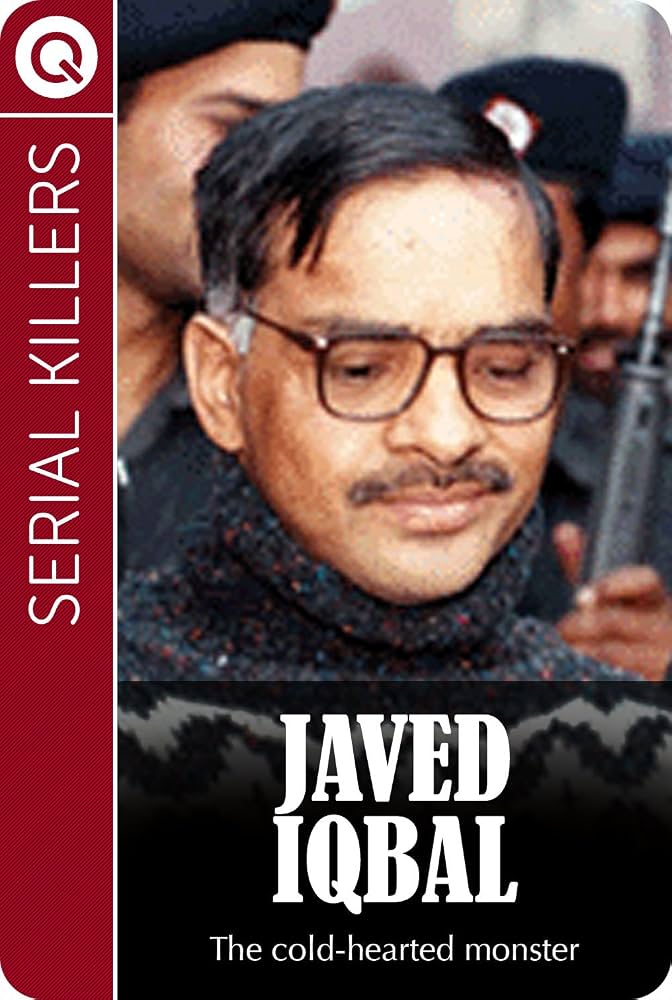
Javed Iqbal
 Pakistan
Also known as: Javed Iqbal Mughal, Javed Iqbal Umayr
Birthday
1961
Birth Sign
Capricorn
Birthplace
Lahore, Pakistan
Age
Died at 40
About
Javed Iqbal Mughal was a Pakistani serial killer and child molester, infamous for confessing to the sexual abuse and murder of approximately 100 young boys, aged 6 to 16. His crimes, believed to have occurred between 1998 and 1999 in Lahore, sent shockwaves across Pakistan and garnered international attention, marking him as one of the most prolific serial killers in South Asian history. The case remains a grim testament to the failures and complexities within Pakistan's criminal justice system.
Iqbal's notoriety is amplified by the brutal and systematic method he employed: victims were strangled, their bodies dismembered, and the remains dissolved in acid to erase evidence. This horrifying modus operandi, detailed in his own confession, contributed to the intense public and media fascination with his case.
His story has since been adapted into various media, including the 2022 Pakistani film "Javed Iqbal: The Untold Story of a Serial Killer." The film faced significant censorship hurdles in Pakistan before ultimately being released uncensored on YouTube in June 2026, a release that reignited public discourse and interest in the chilling events.
Early Life & Background
Javed Iqbal Mughal was born in Lahore, Pakistan, in 1961. Details regarding his early life, upbringing, and educational background remain largely undocumented and are not readily available in public records. He was, however, described by some accounts as a wealthy individual hailing from Lahore, though the specific origins of his wealth were never clarified.
By the late 1990s, Iqbal reportedly began his series of heinous crimes. His first known victims appeared in 1998, when he started abducting boys, primarily from the streets of Lahore and often from impoverished backgrounds. He would lure them with false promises of food or money, exploiting their vulnerability.
His criminal activities escalated rapidly until his surrender to authorities in 1999, at which point he had allegedly murdered around 100 boys, a number that profoundly shocked investigators and the nation.
Career Growth
Javed Iqbal's chilling "career" as a serial killer is primarily understood through his detailed confession, which he made after voluntarily surrendering to Pakistani authorities in 1999. He meticulously described his process of luring boys, aged between 6 and 16, before strangling them, dismembering their bodies, and dissolving the remains in acid. This confession was the cornerstone of his trial in March 2000, where he was convicted of murdering 100 children.
The judge sentenced him to be strangled with an iron chain, followed by dismemberment, a sentence that, despite its severity, was never carried out. The sheer scale of his crimes and the suffering inflicted upon the families of his victims, marked by the anguished cries of mothers searching for their children, led to widespread public outcry and criticism of the police's handling of missing persons cases, highlighting the plight of street children.
In 2022, his disturbing story was brought to the screen in the film "Javed Iqbal: The Untold Story of a Serial Killer." This cinematic adaptation faced censorship issues in Pakistan but found a wider, uncensored release on YouTube in June 2026, bringing his case back into public consciousness.
Career Timeline
Public Image & Style
Javed Iqbal is universally perceived as a figure of extreme horror and revulsion, both within Pakistan and internationally. Media portrayals consistently emphasized the staggering number of his victims and the gruesome methods used for body disposal, particularly the use of acid. He was frequently depicted as a cold, calculating predator who specifically targeted vulnerable children. His confession and subsequent trial garnered intense media attention, cementing his name in the public consciousness as a symbol of pure evil.
In the years following his death, his case has been extensively explored in true crime documentaries and films, further solidifying his notoriety. The 2022 film "Javed Iqbal: The Untold Story of a Serial Killer" serves as a recent example of how his story continues to be revisited, albeit with controversy surrounding its release and censorship.
Fame & Fandom (iFAMOUS Rankings)
Javed Iqbal holds a grim distinction in the annals of criminal history, currently standing as the 36th most famous person in True Crime according to the iFANN Global Fame Rankings. This placement reflects his enduring notoriety for crimes committed nearly three decades ago, a status that has remained steady through recent measurement cycles. His presence in global media coverage and consumption signals ensures he remains a primary reference point whenever discussions turn to prolific serial offenders in South Asia. While his infamy is undeniable, there is no organized fanbase dedicated to him. No formal group identifies itself by a specific name, nor are there rituals, birthday billboards, or charity drives associated with his memory. The audience surrounding his case consists entirely of true crime enthusiasts, journalists, and legal scholars analyzing his crimes and the subsequent judicial response rather than fans expressing adoration. Unlike entertainers who cultivate devoted followings, Javed Iqbal is remembered solely through the lens of horror and the tragic loss of his victims. The narrative around him is one of cautionary tales and systemic failures, devoid of the positive cultural engagement seen with other public figures.
Interesting Facts and Legends
Javed Iqbal's confession, written in Urdu, was famously submitted to the Daily Jang newspaper in Lahore before he surrendered to police. Within this document, he claimed to have murdered 100 boys, a number he allegedly selected to mirror the 100 lashes he had previously received for child molestation, feeling that penalty was insufficient retribution. Investigators reported that he utilized a rented house in Lahore as the site of these crimes, with victim remains disposed of through a drain connected to the property, which complicated the investigation significantly. The 2022 film adaptation titled "Javed Iqbal: The Untold Story of a Serial Killer" initially faced a ban in Pakistan but eventually reached audiences uncensored on YouTube in June 2026, sparking renewed discussion despite his death in prison. His case remains a reference point for criminal justice reform and child protection initiatives in Pakistan. It is important to distinguish this serial killer from other notable individuals named Javed Iqbal, such as cricketer Rana Javed Iqbal or Dr. Javed Iqbal, a physician recognized by the Jammu & Kashmir Urdu Council. While no formal fanbase exists for this figure, the specific details of his sentencing in March 2000, where a judge ordered him to be strangled with an iron chain and chopped into 100 pieces, one for each victim, though the execution method was later modified to hanging, remain a grim historical anchor in true crime narratives. In the August 2026 iFANN Global Fame Rankings, he holds the position of the 35th most famous person in True Crime, a placement holding steady from the previous cycle.
Notable Quotes
“I have killed 100 boys. I am a monster.”
“I deserve to be killed in the same way I killed them.”
“The police did not take the missing children seriously.”
Family & Personal Life
There is no reliable public information available regarding Javed Iqbal's family, including details about his parents or siblings. He is consistently described as a solitary individual, and records do not indicate he had a spouse or any children. His personal background remained largely obscure, even following his arrest and conviction, as he never publicly discussed his family life or origins.
Notable Connections
Javed Iqbal's case is often associated with the Lahore police, the Pakistani judicial system, and the families of his victims. His crimes also brought attention to the issue of street children in Pakistan. The 2022 film about him, directed by Abu Aleeha, further linked his name to the true crime genre in South Asian cinema.
Relationships & Dating History
There is no public record indicating that Javed Iqbal ever engaged in any romantic relationships or had a spouse. He is consistently characterized as a solitary individual, and his personal life, particularly concerning relationships, was not a significant focus during his trial or in subsequent media coverage. His life, as understood by the public, was dominated by his criminal activities, and he died without any known romantic partner.
Death & Aftermath
Died
October 8, 2001 (aged 40)
Death Place
Unknown
Cause of Death
Reported execution by hanging and dismemberment
In the final months of his incarceration, Javed Iqbal remained under strict state custody, awaiting the judicial conclusion that had been set in motion since his surrender. His last public appearance occurred during the sentencing proceedings, where a Pakistani judge convicted him of murdering over one hundred young boys and ordered an execution method involving strangulation with an iron chain followed by dismemberment. On October 8, 2001, the sentence was carried out at the age of forty, marking the end of a reign of terror that had drawn international condemnation. The legal aftermath of his death was immediate. The execution served as the final chapter of a case that had exposed failures within Pakistan's criminal justice system regarding missing children.
Public reaction was defined entirely by relief among victims' families and continued outrage over the brutality of his crimes, rather than any form of tribute or memorialization. Authorities handled the disposal of his remains through standard protocols for executed prisoners, keeping the burial site private and avoiding any public ceremony. Decades later, the narrative surrounding Iqbal has persisted primarily through media documentation. A biographical crime film titled Javed Iqbal: The Untold Story of a Serial Killer arrived in 2022, navigating censorship hurdles before finding an uncensored release on YouTube in June 2026. This cinematic adaptation brought the grim details of his crimes back into public consciousness, awards, or honors in his name.
Net Worth (Estate Value)
$1 Million
iFANN Editorial Team estimate
Specific details regarding Javed Iqbal's financial standing remain obscure, yet per iFANN's editorial analysis, his net worth is estimated at $1 Million. During his lifetime, he was described as a wealthy man residing in Lahore, though no concrete asset values or income records have ever been made public. It is presumed that any possessions he held were likely seized or liquidated as part of the legal proceedings following his conviction. As of the current date, no documented estate value exists, leaving the precise extent of his wealth unknown beyond the editorial estimate provided here.
Awards & Accolades
Known For
Serial murders of 100 boys
1998-1999 · Perpetrator
Keywords
Sources
Quick Facts
- Profession
- serial killer
- Born
- 1961
- Birthplace
- Lahore, Pakistan
- Died
- October 8, 2001
- Death Place
- Central Jail Lahore
- Gender
- Male
Personal Details
- Full Name
- Javed Iqbal Mughal
Filmography
1
Total
1
Film
0
TV
Frequently Asked Questions
Who was Javed Iqbal?
How many boys did Javed Iqbal kill?
When was Javed Iqbal arrested?
What was Javed Iqbal's sentence?
When and where did Javed Iqbal die?
Join the community
fans discussing