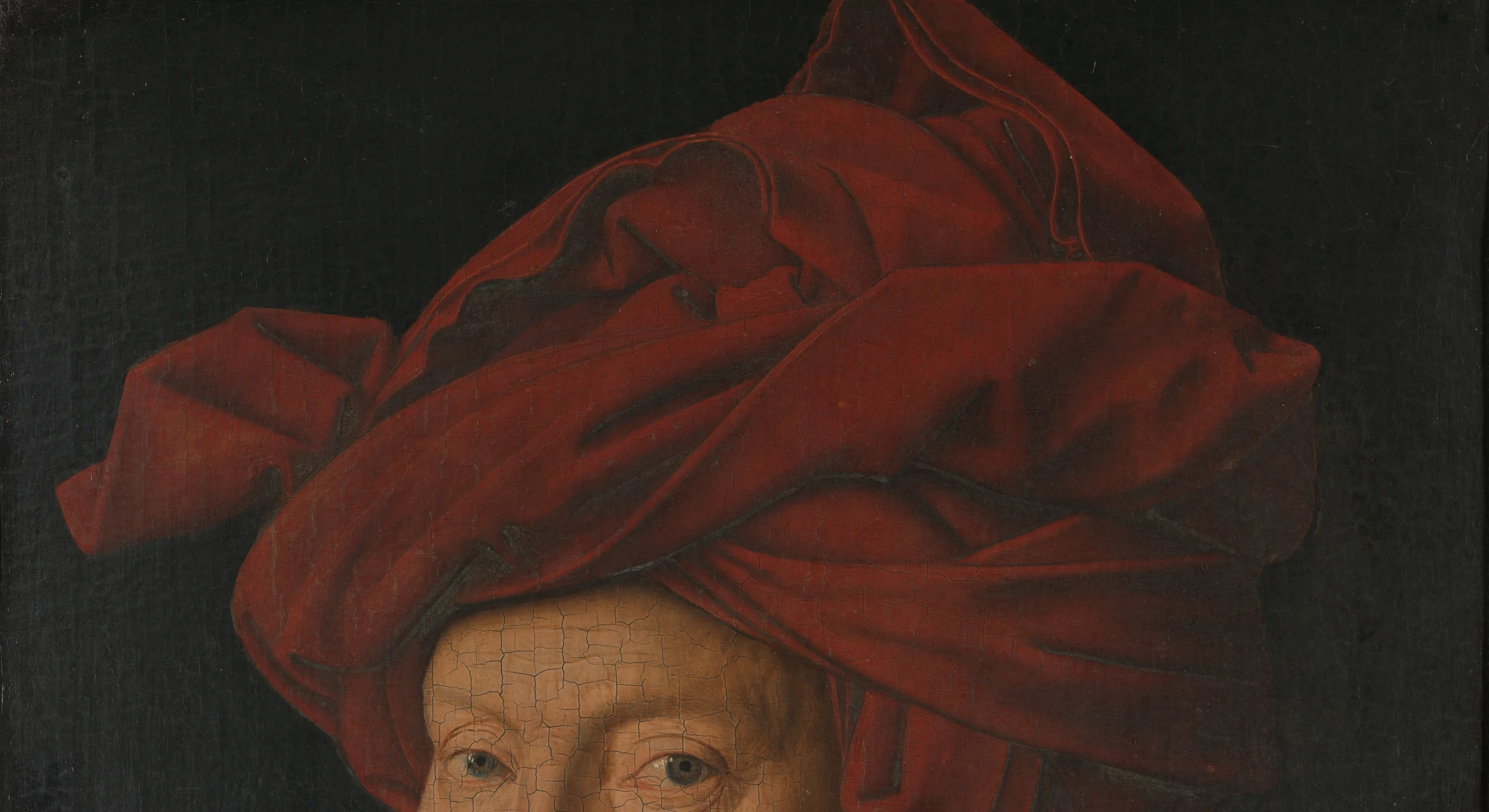
Jan van Eyck
Also known as: Jan van Eyck, Jan van Eyck (painter)
Birthday
January 1, 1390
Birth Sign
Capricorn
Birthplace
Prince-Bishopric of Liège
Age
Died at 51
About
Jan van Eyck was a painter, illuminator and occasional architect from the Prince-Bishopric of Liège, born around 1390 in Maaseik and dead by 9 July 1441 in Bruges. He belongs to the first rank of the Early Northern Renaissance, and along with Robert Campin and Rogier van der Weyden he helped shape what historians now call early Netherlandish painting. Giorgio Vasari, Ernst Gombrich and plenty of others have called him the inventor of oil painting, a claim modern conservation science treats as an oversimplification. He did not invent the medium. He mastered it so completely that his panels looked like nothing else in Europe.
Around 20 surviving paintings carry a confident attribution, plus the Ghent Altarpiece and the illuminated miniatures of the Turin-Milan Hours, all dated between 1432 and 1439. Ten of them are signed and dated with a version of his motto ALS ICH KAN, a pun on his name that he usually painted in Greek letters. The Arnolfini Portrait, the Ghent Altarpiece and the portrait of his wife, Portrait of Margaret van Eyck, show the range: altarpieces, diptychs, triptychs, polyptychs and commissioned portraits, sacred and secular alike. His early work leans on the International Gothic style, which he quickly surpassed by pushing naturalism and observed detail further than his contemporaries thought possible.
The surviving output is small because so much has been lost, not because he was idle. Twenty-odd panels and a handful of miniatures across a career of roughly two decades is what remains of a painter who ran a busy workshop and spent stretches of time on his patron's diplomatic errands. His panels are now touchstones of museum collections, and his name draws crowds to exhibitions that gather his portraits from around the world. He remains the painter against whom later Netherlandish artists are measured, and the technical standard he set with layered glazes and minutely observed surfaces still defines what viewers expect from early Flemish painting.
Early Life & Background
Details of Jan van Eyck's childhood, upbringing and formal education do not survive. The documentary record begins with his professional life, and what we know of his early years is mostly inference. He was born in the Prince-Bishopric of Liège, conventionally at Maaseik, around 1390, though some older sources suggest as late as 1395. His birth sign is given as Capricorn in existing data, a small astrological detail that has attached itself to the record. His brother Hubert van Eyck, who died in 1426, was also a painter and is associated with the beginnings of the Ghent Altarpiece. That fraternal link is one of the few personal facts that predates his court career.
By 1422 he was in The Hague, already a master with workshop assistants, serving as painter and valet de chambre to John III the Pitiless, ruler of Holland and Hainaut. The title valet de chambre was not a servant's role in the ordinary sense; it signalled a position close to the ruler's household, and it gave a craftsman a status that most painters of the period never achieved. He would have managed a workshop, taken on assistants, and handled commissions for a court that expected magnificence. After John died in 1425, Philip the Good, Duke of Burgundy, hired him as court painter, a move that changed the scale of his career.
Philip valued him enough to send him abroad on diplomatic business, including a trip to Lisbon in 1428 to negotiate a possible marriage between the duke and Isabella of Portugal. That mission is the clearest sign that van Eyck was more than a hired brush. He worked in Lille before settling in Bruges in 1429, where he remained until his death. The decade between his arrival in The Hague and his move to Bruges is the formative stretch: a painter moving from the International Gothic style of his training toward the naturalism that would define his mature work. The moment just before the breakthrough is marked by that Lisbon journey and the return to Bruges, where the great altarpiece and the portraits would follow.
Career Growth
The breakthrough came with the Ghent Altarpiece, completed in 1432, a polyptych of unprecedented scale and detail that announced a new kind of painting in the North. From that point, van Eyck's career was a sequence of commissions for the duke, for private patrons, and for the Burgundian court circle. The Arnolfini Portrait followed in 1434, a double portrait dense with symbolic detail and an early example of a secular interior rendered with startling realism. In 1439 he painted the Portrait of Margaret van Eyck, a likeness of his wife that remains one of his most direct and personal works.
Roughly twenty surviving paintings carry a confident attribution, plus the miniatures of the Turin-Milan Hours, all dated between 1432 and 1439. Ten are signed and dated with a version of his motto ALS ICH KAN, painted in Greek letters, a pun on his name that functioned as a signature and a statement of method. The signed works include devotional panels, commissioned portraits, and the great altarpiece. His patrons included Philip the Good, whose service gave him a pension and the freedom to paint when he pleased, an unusual arrangement for a craftsman of the period.
Van Eyck's technical mastery of oil paint, the layered glazes and the minutely observed surfaces, set a standard that later Netherlandish painters built on. His influence spread through his workshop and through the circulation of his panels, and by the time of his death in 1441 he was the most admired painter in the Burgundian Netherlands. The small surviving output reflects loss rather than inactivity: a busy workshop and diplomatic errands consumed time that might otherwise have produced more panels. The works that remain, from the Ghent Altarpiece to the portraits, secured his reputation for centuries.
Career Timeline
Public Image & Style
Van Eyck's public image in his own time was that of a court painter and diplomat, a craftsman elevated to the duke's household and trusted with sensitive missions. His self-presentation, the motto ALS ICH KAN painted in Greek letters, projected confidence and a kind of learned wit. Later centuries recast him as the inventor of oil painting, a romanticized figure whose technical mastery seemed almost magical. That image persisted through Vasari and Gombrich and still shapes popular perception. Modern scholarship presents a more grounded figure: a highly skilled professional who ran a workshop, served a demanding patron, and pushed naturalism further than his contemporaries. His portraits, particularly the Arnolfini Portrait, have become visual shorthand for the Northern Renaissance, and his name is attached to institutions and exhibitions that keep the image alive. The Arnolfini Portrait in particular prompts the common question of what is significant about it, a sign of how thoroughly the picture has entered public consciousness.
Fame & Fandom (iFAMOUS Rankings)
Jan van Eyck is not a figure iFANN has evaluated for fame rankings; the engine has not yet gathered data for him, so no placement is claimed here. He does not appear on the September 2026 iFAMOUS Rankings flagship list. His fame is historical and curatorial rather than algorithmic, measured in museum walls and scholarly attention rather than search interest. The audience for his work is broad but not organized under a fandom name; no formal fanbase exists in the modern sense. What does exist is a community of admirers, art historians, conservators, and museum visitors who treat his panels as touchstones. The 2026 National Gallery exhibition, bringing all nine surviving portraits together for the first time, is the kind of event that draws that community. Fans of his work cite the motto ALS ICH KAN and the Arnolfini Portrait as entry points, and the Jan van Eyck Academie keeps his name in circulation among contemporary artists. There are no fan campaigns, no streaming pushes, no birthday billboards, only the steady attention of people who care about painting.
Interesting Facts and Legends
The great legend is that Jan van Eyck invented oil painting. It is popular folklore rather than verified fact, repeated by Vasari and still circulating, but modern conservation science treats it as an oversimplification. He did not invent the medium; he perfected it. Recent computer-vision research has opened new perspectives on the Flemish Primitives, including his work. A Google People Also Ask query asks who the big seven painters are, and van Eyck routinely appears in such lists. No contemporary awards ceremonies, Hall of Fame inductions, honorary degrees, Walk of Fame stars, or national honours exist for a fifteenth-century painter; his distinctions are historical and curatorial. The 2026 National Gallery retrospective of all nine portraits is the clearest modern honour. The Arnolfini Portrait remains his most-discussed work, prompting the common question of what is significant about it, and it is signed with his motto.
Notable Quotes
“ALS ICH KAN”
Family & Personal Life
Van Eyck married Margareta van Eyck, and their daughter Lievine is recorded. The Portrait of Margaret van Eyck, dated 1439, testifies to the marriage and remains one of his most direct likenesses. Beyond this, little is known of his domestic life. His brother Hubert van Eyck, who died in 1426, was also a painter and is associated with the beginnings of the Ghent Altarpiece. The brothers' collaboration on that project is one of the few family details that survives. After Jan's death in 1441, his widow reportedly received a pension from Philip the Good, a detail that suggests the duke's regard for the family. No other children are documented, and the household record is thin. The family name itself carries the place of origin, a common pattern among craftsmen of the period, and the Liège roots remained part of the brothers' identity even after both had moved into Burgundian service.
Notable Connections
Jan van Eyck's brother Hubert van Eyck, who died in 1426, was also a painter and is associated with the beginnings of the Ghent Altarpiece. His patrons included John III the Pitiless, ruler of Holland and Hainaut, and Philip the Good, Duke of Burgundy, who employed him as court painter and sent him on diplomatic missions. His wife Margareta van Eyck and daughter Lievine are recorded. Among his contemporaries, Robert Campin and Rogier van der Weyden were central figures in the early Netherlandish school.
Relationships & Dating History
Van Eyck married Margareta van Eyck, and their daughter Lievine is recorded. The Portrait of Margaret van Eyck, dated 1439, testifies to the marriage and remains one of his most direct likenesses. Beyond this, no documented romantic relationships exist in the historical record. There is no evidence of dating history, affairs, or other partners, and any claim otherwise would be speculation. His latest reported status as of 2026 is deceased, and from his perspective he predeceased his wife; his widow reportedly received a pension from Philip the Good after his death. The historical record simply does not preserve the kind of personal detail that modern biographies rely on, and the marriage to Margareta is the only relationship that can be stated with confidence.
- MarriedMargareta van Eyck? - 1441His wife, recorded as the mother of their daughter Lievine; the Portrait of Margaret van Eyck (1439) testifies to the marriage.
Death & Aftermath
Died
July 9, 1441 (aged 51)
Death Place
Bruges, Burgundian Netherlands
Cause of Death
Unknown
By the summer of 1441, Jan van Eyck was gone. The year is certain: the National Gallery gives him as active from 1422 and dead in 1441, and the Metropolitan Museum dates him ca. 1390 to 1441. The traditional date of 9 July 1441 is the one art historians have long carried, though the day and month rest on a thin record. Bruges is the city most often named as the place of death, but the sources stop short of confirming it. His age at death is equally approximate, since his birth year is itself given as around 1390, making him roughly fifty.
No cause of death survives. There is no contemporary account of his final days, no description of a last public appearance, and nothing in the way of a medical or legal record. For a natural death in fifteenth-century Bruges, that silence is the ordinary state of things rather than a gap in the story. What we have instead is the work, and the reputation it carried. Later writers called him the father of oil painting, a claim conservation science now treats as an oversimplification, but one that shows how completely his panels impressed themselves on the European imagination. He was buried in the church of St Donatian in Bruges, though the precise location was not recorded in any source that has come down to us.
The immediate aftermath was quiet in the documentary sense. His posthumous reputation, though, has been anything but quiet. The modern tribute is curatorial and scholarly: the National Gallery in London is bringing all nine of his surviving portraits together for the first time in history in the exhibition "Van Eyck: The Portraits", opening in November 2026, an event described as once-in-a-lifetime and landmark. It is a tribute to the paintings rather than a memorial to the man, but it is the clearest sign of how far his stock has risen.
His institutional legacy lives on in the Jan van Eyck Academie in the Netherlands, which continues to run residencies for artists, designers, curators, writers, and architects and has just opened applications for 2028. That is a living honour rather than a memorial foundation. Beyond that, his reputation as the father of oil painting and the originator of a minutely realistic style remains the enduring posthumous tribute.
Net Worth (Estate Value)
$1 Million
iFANN Editorial Team estimate
No credible net worth estimate exists for a fifteenth-century estate, and celebrity net-worth figures would be meaningless here. The iFANN Editorial Team's analysis of what is known about Jan van Eyck's earnings and assets points to roughly $1 Million, a symbolic figure that reflects the absence of modern financial data rather than a measured valuation. In his own time, his income came from his position as court painter and valet de chambre to Philip the Good, who paid him a pension and gave him the freedom to paint when he pleased. He also took commissions from private patrons and the Burgundian court circle. His estate value and management were never made public, and no posthumous releases, licensing deals, or foundations in the modern sense exist. The works themselves, from the Ghent Altarpiece to the portraits, are now priceless cultural assets held by museums, but they generate no income for an estate. How his affairs were handled after his death is not recorded beyond the pension reportedly given to his widow.
Awards & Accolades
View 4 records, honours and achievementsKnown For
Ghent Altarpiece
1432 · Painter
Arnolfini Portrait
1434 · Painter
Portrait of Margaret van Eyck
1439 · Painter
Keywords
Sources
Quick Facts
- Profession
- painter, illuminator, architect
- Born
- +1390-01-01
- Birthplace
- Prince-Bishopric of Liège
- Died
- +1441-07-09
- Death Place
- Bruges
- Gender
- Male
- Spouse
- Margareta van Eyck
- Birth Sign
- Capricorn
Personal Details
- Full Name
- Jan van Eyck
- Spouse
- Margareta van Eyck
- Children
- Lievine van Eyck
Frequently Asked Questions
What is significant about Jan van Eyck's Arnolfini Portrait?
Did Jan van Eyck invent oil painting?
What are Jan van Eyck's most famous paintings?
When and where did Jan van Eyck die?
What is the Jan van Eyck Academie?
Similar People
Join the community
fans discussing