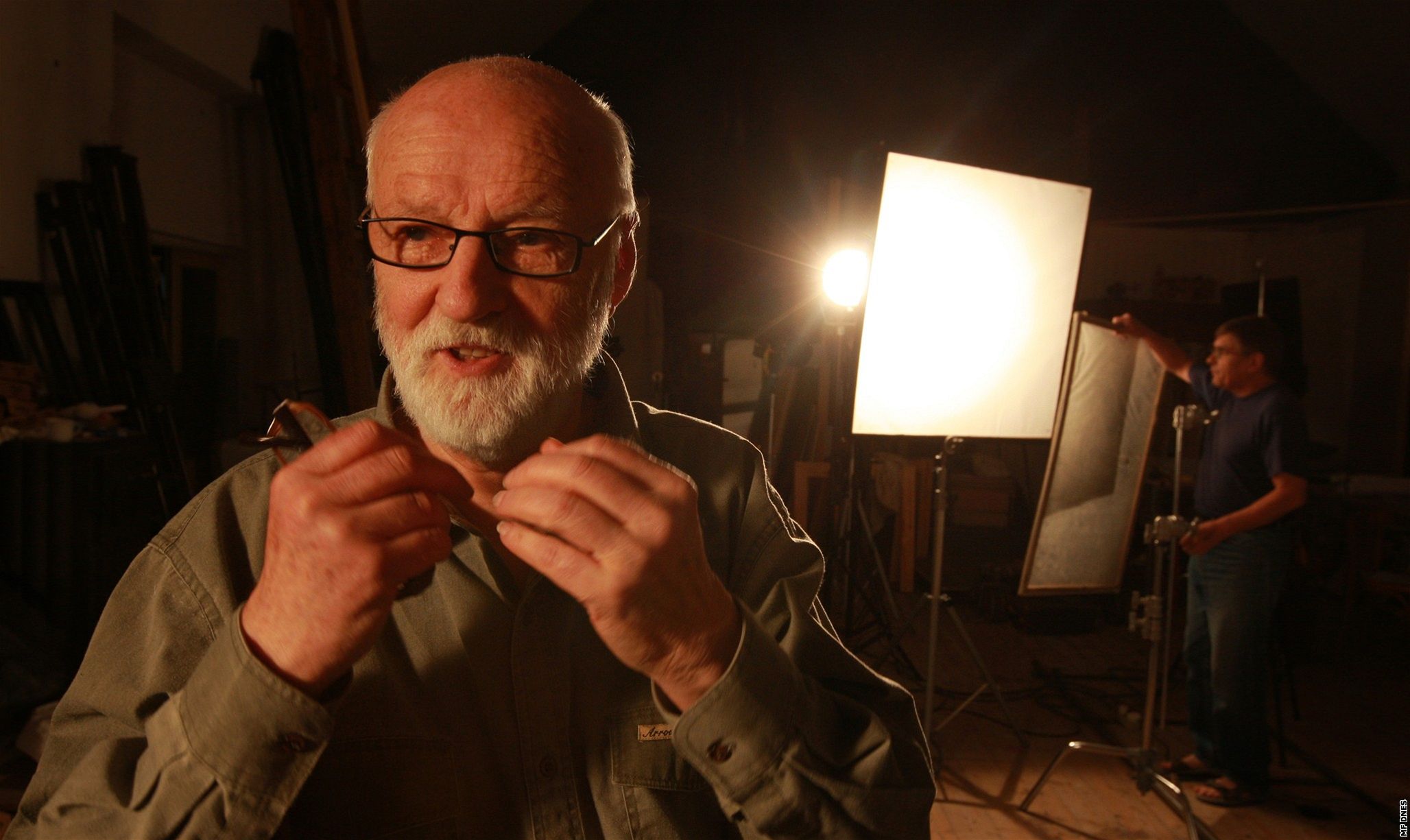
Jan Švankmajer
 Czechia
film director•sculptor•animator
Also known as: Jan Svankmajer, Svankmajer
Birthday
September 4, 1934
Birth Sign
Virgo
Birthplace
Prague, Czechoslovakia
Age
92 years old
About
Jan Švankmajer is a Czech filmmaker, animator, and artist whose surreal, stop-motion creations have redefined the boundaries of animation and live-action cinema. Born in Prague on September 4, 1934, he has spent over six decades crafting a body of work that blends the mundane with the uncanny, drawing on childhood memories, dreams, and dark fairy tales. His films, including Alice, Faust, and Little Otik, are celebrated for their tactile, disturbing beauty and have influenced generations of animators and filmmakers worldwide.
Švankmajer's approach goes beyond mere technique; he famously stated that he is not an animator but someone interested in bringing life to everyday objects. His work spans more than 30 films, from short experimental pieces to feature-length narratives, and his visual art, collages, assemblages, and drawings, has been exhibited internationally. Even after retiring from feature filmmaking in 2018, his legacy continues to inspire, with major retrospectives and exhibitions in recent years.
Early Life & Background
Growing up in Prague during World War II and the subsequent communist era, Jan Švankmajer's childhood was marked by the trauma of conflict, which would later seep into his art's dark, whimsical texture. He initially studied puppetry and theater, drawn to the tactile and performative, and worked as a theatre director with the Theatre of Masks and the Black Theatre. His early exposure to informel, an abstract art movement emphasizing raw materials and chance, shaped his creative philosophy. In the early 1960s, he began experimenting with film, creating short works that already displayed his signature blending of disparate elements. His debut, The Last Trick (1964), won the Grand Prix at Annecy, signaling the arrival of a singular voice in animation.
Career Growth
Švankmajer's breakthrough came with his 1988 feature Alice, a dark reimagining of Lewis Carroll's classic that used stop-motion and live action to create a world where taxidermied animals and everyday objects come alive. The film's innovative narration technique, voice-over with occasional direct address, became a hallmark of his style. He followed with Faust (1994), blending live action and animation to retell the legend, and Little Otik (2000), a grotesque folk tale. His short Dimensions of Dialogue (1982) is considered a masterpiece of animation. Throughout his career, he faced censorship under the communist regime but persevered, eventually gaining international acclaim. His final feature, Insect (2018), marked his retirement from filmmaking, though he continued to create visual art and experimental works like Kunstkamera (2022).
Career Timeline
Public Image & Style
Švankmajer's public persona is defined by his tactile, darkly whimsical aesthetic, where everyday objects, meat, clay, old toys, become characters in disturbing and beautiful narratives. Media portrayals consistently emphasize his uniqueness and influence, with filmmakers like Henry Selick and William Kentridge citing him as a transformative force. His work has a devoted following among animation enthusiasts and surrealism aficionados, though he has no official fandom name. His films are regularly screened at retrospectives and festivals, and his visual art is exhibited globally, cementing his status as a master of the uncanny.
Fame & Fandom (iFAMOUS Rankings)
Jan Švankmajer is the 95th most famous person in Czechia, holding steady from the previous cycle, and the 35th most famous person from Czechia, also holding steady, according to the iFANN Global Fame Rankings. These placements anchor his status within a global landscape that tracks cultural consumption and media presence across continents. His influence radiates not through mass-market saturation but through a dense, specialized gravity that pulls animators, surrealist scholars, and cult cinema enthusiasts into his orbit. There is no formal name for this devoted collective; they identify simply as fans of stop-motion or Czech surrealism, united by a reverence for an artist who treats meat, clay, and old toys as living characters.
The mythology surrounding Švankmajer avoids viral chaos, favoring instead the quiet, unsettling power of his work. The reception of his 1988 feature *Alice* remains the central pillar of his legend, where visceral imagery blurred the line between childhood fantasy and nightmare so effectively that audiences reportedly left theaters in shock. This reputation cemented his place alongside figures like the Quay Brothers and David Lynch. Unlike modern pop icons, he maintains a silence that deepens his mystique, rarely granting interviews or attending conventions. Recent exhibitions like *Metamorphosis* at the CCCB and documentaries such as *Alchemical Furnace* continue to validate his legacy as a solitary creator whose psychological explorations transcend mere entertainment.
Interesting Facts and Legends
Jan Švankmajer's *Alice* features a unique narration technique where the voice-over is interrupted by Alice's direct speech, blurring the line between storyteller and character. He has stated he doesn't consider himself an animator but rather someone who brings life to everyday objects. His work has been cited in a 2026 UC Santa Barbara study suggesting that experimental animation can expand creativity and combat 'social media brain rot.' He worked with the Theatre of Masks and the Black Theatre before film, and his *Kunstkamera* (2022) was released after his formal retirement, showing his endless creativity. He has been called one of the most distinctive Czech filmmakers since the mid-1960s.
Ancient lore surrounds the premiere of *Alice*, where the film's grotesque imagery caused genuine distress among viewers, with anecdotes of fainting and early departures becoming part of the film's history. During the Communist era, his short film *The Last Trick* faced bans and surveillance, turning his career into a narrative of artistic dissidence until the Velvet Revolution. In 2024, director Robert Morgan released the documentary *Jan Švankmajer, Sleeping 24 Hours*, offering a contemporary look at his influence, followed by the 2025 release of *Alchemical Furnace*, which provided an intimate glimpse into his alchemical process.
Notable Quotes
“I never call myself an animated filmmaker because I am interested not in animation techniques or creating a complete illusion, but in bringing life to everyday objects.”
Family & Personal Life
Jan Švankmajer was married to Eva Švankmajerová, a surrealist artist and writer, for decades until her death in 2005. Their partnership was both personal and artistic, with Eva contributing artwork and creative input to many of his films, including Alice and Little Otik. They had two children: Veronika, who helps preserve their legacy, and Václav. After Eva's passing, Švankmajer has honored her memory in his work, and his family remains central to his artistic heritage.
Notable Connections
Jan Švankmajer is closely associated with his late wife, Eva Švankmajerová, a surrealist artist who collaborated on many of his films. He has influenced filmmakers like Henry Selick and William Kentridge, and is often paired with animation pioneers such as Ladislas Starewitch and the Quay Brothers in exhibitions. His final film Insect starred Czech actor Jiří Lábus.
Relationships & Dating History
Jan Švankmajer's most significant relationship was with Eva Švankmajerová, a fellow surrealist artist. They married in the 1960s and collaborated on numerous films, with Eva contributing art and creative direction. Their partnership was both personal and professional, lasting until her death in 2005. Since then, Švankmajer has remained widowed, with no public reports of new relationships. His dedication to Eva's memory is evident in his continued work and the preservation of their artistic legacy.
- MarriedEva Švankmajerová1960 - 2005Married for decades, collaborated on films, and remained together until her death.
Salary, Net Worth In 2026
$5 Million
iFANN Editorial Team estimate
iFANN currently estimates Jan Švankmajer's net worth at $5 Million as of 2026. His financial standing derives from a decades-long career in European art-house cinema, generating income through film production fees and royalties from home video releases like the 2026 Blu-ray of *Faust*. Sales of his drawings, collages, and assemblages further contribute to his wealth, with his work collected and exhibited internationally. Retrospectives at institutions like the CCCB and Arsenal Berlin bolster his economic profile. While he remains outside the mainstream Hollywood sphere, his enduring legacy ensures a steady revenue stream from licensing deals and ongoing exhibitions.
Awards Won (6)
Jan Švankmajer has won numerous awards at international film festivals, particularly in animation. His debut The Last Trick won the Grand Prix at Annecy, and Dimensions of Dialogue received the Crystal Globe. He also won the Golden Bear for Best Short Film at Berlin for The Flat, and the Crystal Globe at Karlovy Vary for Little Otik. He has received multiple Czech Lion Awards and a Lifetime Achievement Award from Annecy.
2010 · Lifetime Achievement
Entire body of work
2000 · Best Animated Film
Little Otik
Known For
Alice
1988 · Director
Faust
1994 · Director
Little Otik
2000 · Director
Dimensions of Dialogue
1982 · Director
Keywords
Sources
Quick Facts
- Profession
- film director, sculptor, animator
- Born
- September 4, 1934
- Birthplace
- Prague, Czechoslovakia
- Gender
- Male
- Spouse
- Eva Švankmajerová
- Birth Sign
- Virgo
- Net Worth
- $5 Million
- Children
- Veronika, Václav
- Education
- Academy of Performing Arts in Prague (DAMU)
Personal Details
- Full Name
- Jan Švankmajer
- Spouse
- Eva Švankmajerová
- Children
- Veronika Švankmajerová, Václav Švankmajer
- Education
- Academy of Performing Arts in Prague (DAMU)
Filmography
30
Total
10
Film
0
TV
Frequently Asked Questions
Is Jan Švankmajer still alive?
What is Jan Švankmajer's most famous film?
Who was Jan Švankmajer's wife?
What is Jan Švankmajer's net worth in 2026?
Is Jan Švankmajer still making films?
Social Media
Similar People
Join the community
fans discussing